politics

  • Greek Ministry of Finance hacked

    Those clever people at Anonymous claim to have compromised the security of the Greek Finance Ministry and have issued the following statement, the essence of which is reproduced below.

    Greetings citizens of the world

    Greetings citizens of Greece

    We are anonymous.

    The Greek government is prepared to testify to a vote in the Greek Parliament the new package of economic austerity measures of 13.5 billion euros which are expected to prolong the recession in Greece.

    Under the austerity measures, pensioners have seen a 60 percent fall in their pensions – meaning their life savings are now less than half what they expected. Meanwhile, the government is considering more cuts, raising the retirement age and putting a cap on free healthcare provision of just €1,500 per person per year.

    Greece used to have one of the lowest suicide rates in the EU but since 2010, the number of people taking their own lives has increased by 40 percent, with a large proportion from the older generation.

    Sixty-eight percent of Greece’s population living below the at-risk-of poverty rate (ie, having an income below 60 percent of the national median) were spending over 40 percent of their income on rent or mortgage payments.

    More than 439,000 underage children are living below poverty level in Greece due to the ongoing crisis, according to a UNICEF report released on Oct. 16 on the occasion of the World Feed Day 2012 and the International Day for the Eradication of Poverty.

    The popularity of far right parties, including the neo-Nazi Golden Dawn, has risen in tandem.

    Your goverment failed you.

    Greek citizens, it’s time to revolt. Do it while you can.

    Stick it to the Man.

    You must resist. We stand by your side.

    We gained full access to the Greek Ministry of Finance. Those funky IBM servers don’t look so safe now, do they… We have new guns in our arsenal. A sweet 0day SAP exploit is in our hands and oh boy we’re gonna sploit the hell out of it. Respectz to izl the dog for that perl candy.

    The message concludes:

    Citizens of Greece you are paying Banks and international hedge funds. They own your lives. Revolt before it’s too late. The austerity measures should not pass. We need to say no more.

    Having spent my last few holidays on Crete (most enjoyable), I’ve been impressed by the stoicism with which ordinary Greeks have endured the last few years of austerity; they’ve been severely let down for years by their corrupt political class. Greek members of parliament have immunity from prosecution while in office. To save time at a later date, perhaps the parliament building at the end of Syntagma Square should be converted to a prison. 😉

    The security breach also took place on the day after journalist Kostas Vaxevanis was arrested for leaking the “Lagarde List”, a document containing the names of 2,000 wealthy Greeks with Swiss bank accounts, who could possibly be evading tax and about whom the Greek authorities have done nothing for 2 years. Coincidence?

  • The coalition at half time

    On Friday I received an invitation to a Bristol Festival of Ideas event, “The Coalition at Half Time“, at At-Bristol, featuring Gruaniad journalist Polly Toynbee, fellow journalist David Walker and a panel of local MPs – Kerry McCarthy (Labour), Charlotte Leslie (Conservative) and Stephen Williams (Liberal Democrat). The invitation was extended to me so I could cover proceedings live via Twitter and I duly tickled the laptop keyboard as quietly and unobtrusively as I could for the next hour and a half.

    After a brief introduction, proceedings started with a two-handed critique by Toynbee and Taylor of the coalition governments record to date, as reflected in their new report, Dogma and Disarray: Cameron at Half-Time. Taylor and Toynbee opened by taking the pre-election rhetoric of Cameron & co. and contrasting it with the reality since the election, including such clangers as the pasty tax and U-turns too numerous to mention. Toynbee and Taylor also drew attention to the opinions of the Tory Young Turks (those who thought Thatcher didn’t go far enough and who consider Cameron to be too soft) and their desires to dismantle and privatise the state. In addition, the ineffectiveness of the Labour opposition was also mentioned: for instance Toynbee opined that Labour were paralysed on opposition to benefit cuts, possibly due to public opinion; the demonisation of claimants as ‘scroungers’ has evidently been successful.

    Following the Toynbee-Taylor double act, each of the local MPs was invited to respond in turn, starting with Charlotte Leslie. She had a hard job to start with, defending the indefensible. However, she didn’t do herself any favours by starting off insulting the intelligence of the audience, suggesting that anyone who didn’t vote Tory was brainless. The exact words Charlotte used were: “If you’re not a liberal when you’re young, you have no heart. If you’re not a conservative when old, you don’t have a brain”. Charlotte’s love of boxing also got a mention later on. However, for all her love and knowledge of the pugilistic arts, she did a lot of leading with her chin.

    After Charlotte came Stephen Williams, who impressed me by his skill in making sweeping statements without providing any empirical evidence to back them up. One such sweeping assertion was: “What we have done is stabilise our economy and earned international respect.” We’re still waiting for the figures, Stephen. Perhaps Alex, your bag carrier, who was sitting next to me could oblige.

    Kerry McCarthy, last of the MPs to speak, had perhaps the easiest job of the night, gained the largest rounds of applause, and was not heckled by members of the audience shouting ‘rubbish’ or ‘nonsense’. Opening with, “Needless to say I disagree with pretty much everything Stephen Williams just said,” her commentary then went on to feature words we’d already heard from Toynbee and Taylor about the government: incompetence, ideological desire, Stalinism.

    Part three of the event was audience questions, which likewise proved awkward for Leslie and Williams and a walkover for McCarthy. Charlotte’s naivety on tax avoidance, loopholes and corporation tax was breathtaking. Answering one point, Kerry described workfare as ‘slavery’: immediately Williams tried to leap in to defend it; a Bristol MP defending slavery has not been seen for nearly 2 centuries. However, there was worse for Williams. One audience member prefaced his question, “I voted Lib Dem in last election and Stephen, I feel deeply betrayed by you and your party”. The room exploded in applause.

    My verdict: a most enjoyable event if you enjoy politics; supporters of the two coalition parties may have found themselves in a minority in the audience and might not have felt very comfortable. My verdict on the coalition at half time: the ref should abandon the match and take all the players off the pitch.

    My sincere thanks to Andrew Kelly and the Bristol Festival of Ideas team for the invitation. Next time you want an event covered live via Twitter… 🙂

  • Court Language Services Forum launched

    It’s not just the Public Accounts Select Committee that’s taking an interest in the court interpreting and translation services shambles currently being presided over by ALS/Capita (posts passim).

    The Justice Committee is naturally also taking an interest and has just launched a Court Languages Forum as part of its inquiry.

    The following notice was issued to coincide with the forum’s launch:

    The Justice Committee has launched an inquiry into the provision of interpretation and translation services since Applied Language Solutions (ALS) began operating as the Ministry of Justice’s sole contractor for language services in February 2012. The Committee had an excellent response to its call for written evidence. We have been given many examples which highlight apparent under-performance but most of these have been provided by third parties and relate to the first few months of operation.

    The Justice Committee has heard that some stakeholders may be reticent to provide formal written evidence. These may include: court and tribunal service staff; members of the judiciary and magistracy; legal practitioners and other practitioners; defendants in criminal cases and parties in civil and family cases and interpreters providing services on behalf of ALS. We would encourage these individuals to submit their experiences through this web forum using an anonymous user name.

    The Justice Committee would like to hear from individuals with direct experience of the provision of interpreting and translation services by Applied Language Solutions (ALS). The Justice Committee would particularly like to hear about direct examples of recent performance issues (during September and October 2012) surrounding the operation of the Framework Agreement between the Ministry of Justice and ALS.

    Comments will be pre-moderated before being posted on this web forum. Comments will be moderated at least every working day. Where possible we will aim to publish accepted posts within 24 hours. This forum is pre-moderated and comments that breach the online discussion rules will not be posted. Please avoid naming particular courts or court cases. Any such responses may not be posted on the forum by moderators. This forum will close on 2 November 2012.

  • Interpreting: courting disaster

    Earlier this year, the Ministry of Justice made a massive cock-up when it changed the method by which courts in England and Wales procured interpreters. It handed a £ 43 mn. contract for court interpreting services to an outfit called Applied Language Solutions (ALS), an outfit totally incapable of and unprepared for handling such a large contract.

    Once it had laid its hands on the court interpreting contract, ALS sought to change the terms and conditions under which interpreters are engaged, introducing a savage pay and expenses cut, resulting in a boycott of ALS which is still continuing as many interpreters are not prepared to do a professional job of work for a rate of pay that now works out at less than the minimum wage once expenses have been deducted.

    To attempt to make good the shortfall, ALS resorted to hiring unqualified translators, including a rabbit called Jajo.

    Earlier this week the House of Commons Public Accounts Committee examined the MoJ/ALS fiasco (footage here). The senior civil servants in charge of the project did not put in a good performance. To call them incompetent would be too praiseworthy.

    Just as the Select Committee were settling in to their deliberations, the latest edition of Private Eye had also picked up the ALS story.

    As the Eye piece points out, ALS has since been acquired by Capita and rebranded Capita Translation and Interpreting.

    Private Eye spells Capita with an additional ‘r’. Say no more.

  • More North Somerset Luddism

    There must be something in the water in North Somerset that induces idiocy and Luddism in that unitary authority’s councils.

    Not far away from schizophrenic Clevedon, where members of the public can use social media to their hearts’ content during council meetings, but councillors cannot (posts passim), is Nailsea.

    Today’s Bristol Post reports on yesterday’s meeting of Nailsea Town Council which, with typical bureaucratic perspicacity, voted to ban councillors from using iPads and laptops during meetings over concerns that councillors would use them to either surf the internet, send emails or post messages on networking sites.

    The move hasn’t gone down well with one member of the town council – Councillor Mary Blatchford, who also represents Nailsea on North Somerset Council. Cllr. Blatchford has good reason to feel aggrieved: she has a hand injury; the latter makes it hard for her to write. She therefore quite sensibly uses her iPad for taking notes during meetings. It’s therefore hardly surprising she described the move as “archaic” and has moreover threatened to resign in protest.

  • Bristol Mayor – employment special

    If you’re a Bristol resident, it cannot have escaped your notice – unless you’ve been on a drink and drugs bender for the last 6 months – that the city is due to go the polls in November to choose its first elected mayor, following an underwhelming referendum result in May 2012.

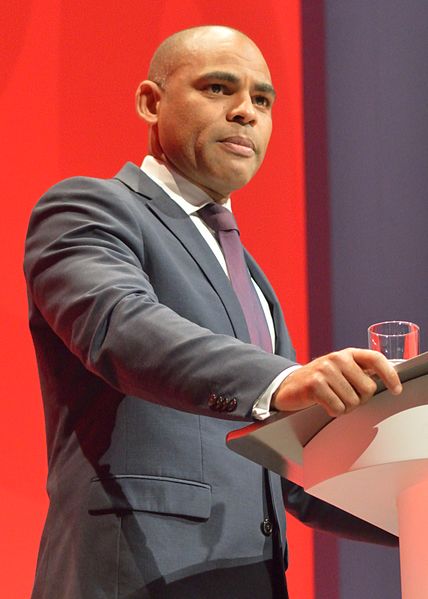
    My home has been mercifully spared too much attention to date by party animals, canvassers and leaflet drops. In fact, I only recently received my first leaflet, as it happens from Labour mayoral candidate Marvin Rees.

    Marvin Rees
    Picture courtesy of Wikimedia Commons

    As usual, the leaflet contains the conventional promises about how wonderful life would be if only the reader could be persuaded to vote for the candidate concerned, including the following about local employment:

    We are living in tough times. I will work to get jobs and growth in Bristol.

    That’s a very laudable and important aim to have for someone seeking election to a major public office in the city on a salary that will probably be in the region of £1,000 a week.

    However, Marvin’s commitment to “work to get jobs” in Bristol is shot totally out of the water by the very end of his leaflet.

    Yes, Marvin’s leaflet is printed in the far-flung Bristol suburb of Forest Farm, Cardiff, providing employment in CF14 in these “tough times”.

    Is it really difficult to get printing done in Bristol? Not really: a quick Google using the words Bristol, UK and “leaflet printing” returns over 2,300 results in a fraction of a second.

    However, Marvin is not alone in supporting employment anywhere but Bristol. The city council, of which Marvin will be in charge if elected, has form here too, as in spending £73,000 with a Manchester firm for logos.

    Update 6/10/12: Yesterday I received a joint leaflet featuring Marvin for mayor and John Savage for the elected Police & Crime Commissioner. This one was printed in an outlying district of Bristol, i.e. Laindon in Essex.

  • Social media induces municipal schizophrenia in Clevedon

    Clevedon on the Somerset Coast is not noted as a place of controversy. Indeed, the last earth-shattering event in Clevedon was perhaps when its Victorian pier collapsed one October night in 1970 during stress testing.

    However, in August 2012 the town made the national and international headlines when Clevedon Town Council, in an act of bureaucratic perspicacity, banned councillors from tweeting during council meetings.

    The main person affected by the ban is Councillor Jane Geldart.

    Since Clevedon Town Council enacted its ban, legislation has come into effect under which local councils are expected to provide reasonable facilities for members of the public to report the proceedings of council meetings as they happen. Indeed, the legislation was devised to “make it easier for new social media reporting of council executive meetings, thereby opening proceedings up to internet bloggers, tweeting and hyper-local news forums”.

    Tomorrow, 3rd October, Clevedon Town Council has its next meeting and the Bristol Democracy Project is urging people to turn up to help tweet about Clevedon Town Council.

    However, while members of the public will be able to report freely during the proceedings, Cllr. Jane Geldart has told me she will still be silenced, as per the following conversation on Twitter:

    @JaneGeldart I just read that Clevedon Town Council will allow live tweeting by public. Does ban on councillors tweeting still apply?

    @wood5y It does sadly. Despite new legislation they (Town Council) are hiding behind an Act from 1960 …….

    Given that MPs and peers regularly tweet the proceedings of Parliament and council meetings everywhere else in the country are covered by webcasts, local bloggers and Twitter, one must wonder what motives Clevedon Town Council has for its schizophrenic attitude.

  • Of patricians and plebeians

    Andrew MitchellGovernment Chief Whip Andrew Mitchell has been in a spot of bother recently for allegedly saying the following – according to The Sun – to a police officer in Downing Street who refused to let him ride his bicycle out through main security gate:

    Best you learn your f*cking place. You don’t run this f*cking government. You’re f*cking plebs.

    According to his Wikipedia entry, featuring public school, Cambridge and the world of high finance there’s no doubt that Mitchell is a patrician.

    The term patrician originally referred to the elite families in ancient Rome. They were the top of the social pile and had wider political influence than the citizens and residents below them. It has subsequently become a vaguer term used for the aristocracy and elite bourgeoisie in many countries.

    Below the patricians in ancient Rome’s pecking order came the plebeians. Plebeians were defined as “the non-aristocratic class of Rome, and consisted of freed people, shopkeepers, crafts people, skilled or unskilled workers and farmers“. Over the centuries, some plebeian families in Rome nevertheless became quite rich and influential. Pleb is now used – as above by Mitchell – as a derogatory term for someone thought of as inferior, common or ignorant.

    However, the plebeians were not the lowest of the low in Rome. Below them came the “Capite censi“, i.e. “those counted by head” in the census, and slaves. The largest group of the capite censi were the proletarii, literally “those who produce offspring”. Proletarii were therefore Roman citizens owning little or no property.

    So, looking back at the origins of “plebs”, by using it, was Mitchell actually (if unknowingly) abusing the middle classes, Middle England and the bedrock of Tory support?

  • Women and politics

    The piece below is one of the 4 winning entries for a recent Labour peers’ essay writing competition for young women (aged 17-18 years) on the topic of young women and politics.

    Young Women and Politics

    by Lucy Midgley

    I believe that one of the main problems in today’s society is that women simply do not have the confidence and self esteem to state their views. In this essay I will discuss reasons why I believe that women are afraid or unwilling to raise their voices.

    Self esteem is certainly a big issue; how can women feel empowered enough to speak out for what they believe in and to make their views heard when they have no confidence in themselves? In today’s society there is far too much focus on personal image. Women in particular are targeted by society to dress a certain way. In order to feel comfortable there is a certain image that has to be maintained: it’s a pack mentality and outsiders who don’t fit in a box will be excluded. The amount of pressure on young women is so great these days to, for example, wear fake tan and expensive clothes, that these are the only things that seem to fill their minds.

    In recent years narcissism has been increasing in young people with the growth of interest in Facebook and other social networking sites. A thing that only emerged as I was growing up has been something that many are growing up already fully accustomed to. This causes many young people to become extremely self conscious and obsessed. Many teens, particularly girls, spend most of their time on Facebook, checking their pages to see what other people have written about them, posting pouty photos and reading all the gushy comments about how pretty they look. This is all they essentially seem to care about. It’s hard to believe these young women really care about anything at all, so obsessed with their own very small bubble, and yet ninety years ago these would be the women campaigning for women’s right to vote. What can have happened for there to be such a fog of apathy to have descended on the female population during these last few years?

    The problem, highlighted by the 2009 report ‘We Care, But Will We Vote’ lies within the women themselves: young women are simply not interested in politics or in having their views heard. Is this, you may ask, because they are completely content with their lot and have no issues to be raised? I believe the problem is not a lack of issues but a repressed voice. I believe that the narcissism I mentioned is not born out of an intrinsic vainness but rather an intrinsic insecurity; born out of a need to reach the ridiculously high bar set by women’s magazines and celebrities. This insecurity is an insidious thing that will only grow and grow with the daily deluge of photos showing image conscious young women impossible expectations.

    This has recently been highlighted by the media frenzy following the release of topless photos of the Duchess of Cambridge by a French magazine. The amount of media hype surrounding these photos I find to be completely ridiculous; the fact that the biggest news story of recent times about a female public figure is still to do with her image and not any of the wonderful things she has been doing.

    I’m not saying I’m surprised by this, I’m simply disappointed in the amount of interest this has garnered. People still see women, even female public figures and politicians, as objects and care more about how they look and what they are wearing than about what they have to say. It feels like a step back, with the anniversary of the death of Princess Diana so close to the release of these pictures. It seems that we still care so little about what is important and the media are still much more interested in their private lives and their body image than their positive actions. The magazine Closer, which published the photos, had no qualms about showing them to its audience; no thoughts on how this would affect image conscious young women. How are we supposed to be getting women to feel empowered and interested in politics and raising their voices when these kinds of news stories are still viewed upon with such relish?

    A cancerous insecurity grows within many young women preventing them from feeling brave enough to speak out or to become politically involved. Insecurity in young women is not only caused by overexposure to stick-thin models but also to a lack of any real role models. With Margaret Thatcher the only woman in British history to become Prime Minister, many young women believe it is simply not possible to achieve a stable political career. Although the Suffragettes won the vote for women there is still a long and winding road to equality. I believe there is still a glass ceiling for women, preventing them from reaching top jobs, yet unlike the Suffragettes the problem is not mainly from authority figures but lies within. Many women believe positions in society are simply not possible for them. This is hardly surprising when you look at the statistics: the 2010 survey for women in politics worldwide found the UK in the 31st position with just 18% of female parliamentarians.

    This problem has not been improved upon by the recent cabinet reshuffle. In fact is has been exacerbated, with only four women in the whole of the cabinet, the highest in sixth position and two women extremely close to the bottom of the ministerial pecking order. Are women in Britain really supposed to believe that the political profession could be a possible path for them? Yet this creates a vicious cycle: women not getting into politics means future generations will still have few role models, so what can be done? Women need to feel that the political profession is open to them.

    One of the main causes of this political listlessness is a general feeling that society doesn’t care about young people in general. The recent rioting that occurred was a dramatic lashing out of a frustrated youth who used the anarchy to revert to primal instincts and simply enjoy the rebellion. Young people feel wronged by a government who promised not to raise tuition fees before they got into power and then broke their promises before they’d even got their foot in the door, is it any wonder young people felt frustrated? They attacked a society they believed was punishing the people that would eventually have to sort out its problems.

    The trouble is that the loudest voice is always the one that seems to be heard and the government is hardly likely to care about young people who throw a temper tantrum when they don’t get their own way, the problem is that other voices are not heard above the shouting. Young women in society today can not all feel apathetic towards political issues but many are intimidated by those with louder voices. These women should be listened to and, in order to do this, you have to engender an interest in politics for women by showing them that they can make a difference. In politics nobody cares how you dress or how loudly you speak, people only care about what you have to say.

    © Lucy Midgley, 2012. Reproduced by kind permission of the author.

    Lucy Midgley is my niece. Needless to say, I’m a proud uncle.

Posts navigation