Oddities

  • 5 decades on

    Last week I paid a brief visit for the day to Market Drayton in Shropshire, my home town. In the forty years since I left it has changed gradually but inexorably. For instance, its current population is now nearly 12,000, compared with 7,000 when I left the town for university in the early 1970s.

    Going through the family photograph albums, I came across this 1965 photograph of Market Drayton’s Salisbury Road, where the family used to live. We actually spent 10 years there in total and my youngest sibling Andrew was born at home at 87 Salisbury Road.

    picture of Salisbury Road, Market Drayton in the mid-1960s
    Salisbury Road, Market Drayton, in the mid-1960s. Click on the image for a larger version.

    You’ll see 2 boys standing by the lamppost outside no. 87; of these I’m the one on the right. I believe the other lad is Adrian Clarke who used to live round the corner. Note the complete absence of motor cars. A minority of working class people living in council houses (for that is what they were/are. Ed.) owned motor vehicles in those days, or seemed to. I believe at the time the picture was taken my late father had only recently acquired a moped to travel to work, having hung up his bicycle clips. The row of council houses shown was relatively new when the above photograph was taken, only having been built some 5 years earlier; I can recall the back gardens being levelled by bulldozer when we first moved in in 1960. Some of these houses are now privately owned and are currently changing hands for well over £100,000 as Drayton is a popular place for people to live while commuting to work in Shrewsbury, Telford or the Potteries.

    Now here’s a picture of the same road from roughly the same spot 5 decades on.

    image of Salisbury Road, Market Drayton, in 2014.
    Salisbury Road, Market Drayton, in 2014. Click on the image for a larger version.

    Note the increase in the number of motor vehicles evident – 8 in all – and the increased number of lampposts – from 1 in the 1960s to 3 now.

    Did you live in Salisbury Road or Market Drayton in the 1960s? Perhaps you still live there. Anyway, leave your memories in the comments below.

  • Sausages!

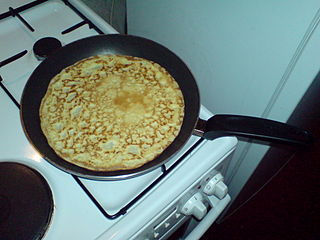
    pack shot of sausagesToday for breakfast I indulged in some sausages; not just any sausages, but Sainbury’s Outdoor Bred Pork Sausages. They were delicious and disappeared off the plate in double-quick time.
    However, there was one thing that stuck in my throat: the product name.

    Can inanimate objects – even ones made of once living matter – breed?

    If so, I should congratulate Sainbury’s on this fine achievement in the field of al fresco coitus? If not, should I condemn their marketing department for coming up with an idiotic product name that’s a complete physical impossibility?

    Digging further into this term, it is apparent that Sainsbury’s are not the only sinners here, as a quick image search for “outdoor bred” sausages will reveal. Moreover, if I had my way, Tesco, Waitrose, Rankin, Morrison’s, Marks & Spencer, Asda and many more suppliers should all be standing in the corner of the room with Sainsbury’s trying on the dunce’s hat for size. πŸ™‚

    Nevertheless, my suggesting that all these corporate grocers are a bunch of illiterates is perhaps being a bit hasty and an over-reaction. Time for some final research.

    Consulting the Good Housekeeping Institute’s site, I find that outdoor bred actually has a specific meaning in food labelling terms, as follows:

    As with Outdoor Reared, this tends to apply to pork and means the pigs are born outside. However, after a few weeks they’re brought inside for fattening.

    So, outdoor bred is a proper food labelling term, although I do wish people would think more clearly about the connotations of naming products.

  • How to make pancakes, 16th century style

    The Good Huswifes Jewell was an English recipe book written by Thomas Dawson which appeared in the late 16th century, of which the British Library has helpfully provided a transcript of the page covering pancakes for Shrove Tuesday, otherwise known in secular Britain as Pancake Day.

    pancake

    The transcript of the pancake recipe is as follows:

    To make Pancakes

    Take new thicke Creame a pine, foure or five yolks of egs, a good handful of flower and two or three spoonefuls of ale, strain them together into a faire platter, and season it with a good handfull of sugar, a spooneful of synamon, and a little Ginger: then take a friing pan, and put in a litle peece of Butter, as big as your thumbe, and when it is molten brown, cast it out of your pan, and with a ladle put to the further side of your pan some of your stuffe, and hold your pan …, so that your stuffe may run abroad over all the pan as thin as may be: then set it to the fire, and let the fyre be verie soft, and when the one side is baked, then turn the other, and bake them as dry as ye can without burning.

    This is the first time I’ve ever come across a pancake recipe featuring ale. πŸ™‚

    As regards the author, Thomas Dawson wrote a number of popular and influential recipe books including The Good Huswifes Jewell (1585), The good Hus-wifes handmaid for the kitchen (1594) and The Booke of Carving and Sewing (1597). These books covered a broad range of subjects, including general cookery, sweet waters, preserves, animal husbandry, carving, sewing and the duties of servants.

  • Bristol Post Balls – the invisible Widdecombe

    The Bristol Post has for years given favourable coverage to a North Somerset ‘zoo’ which has an interesting sideline in promoting creationism.

    Today’s edition continues this trend.

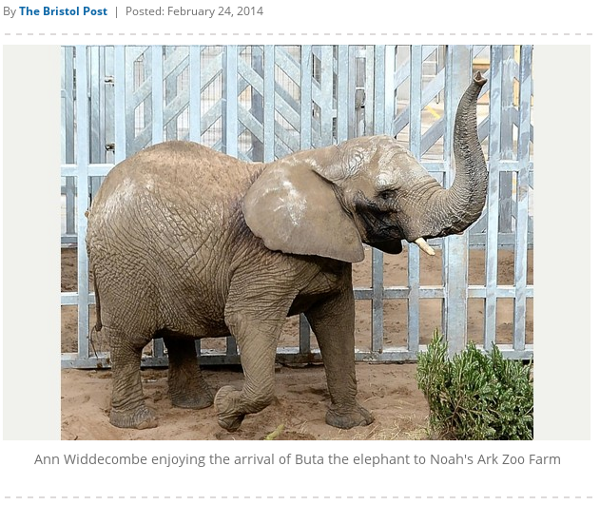
    Noah’s Ark ‘Zoo’ Farm has just taken delivery of a new African elephant and former Tory MP Ann Widdecombe was allegedly there to welcome its arrival, according to the photo caption in the report.

    Bristol Post screenshot

    I’d like to congratulate Ann on her choice of camouflage outfit!

    If you can see Ann in the picture, please let me know via the comments below.

  • Confusion in Castle Park

    So far winter in Bristol has been not like winter at all; it’s been mostly mild and rather wet.

    As a result some of the local trees – like this cherry in Castle Park (picture taken this morning. Ed.) – are somewhat confused and believe it’s spring already, judging by the display of blossom.

    Cherry tree in blossom in January
    Loveliest of trees, the cherry now is hung with bloom along the bough… (A.E. Housman)

    However, where Castle Park is concerned, it’s not just its cherry trees that are confused. Its custodians – Bristol City Council – are confused too.

    According to the council’s Central Area Action Plan (CAAP) the western end of Castle Park is a prime development opportunity and has been earmarked for covering in concrete at a time when the city has enough empty shops, offices and other commercial space to cope with another recession besides the one that is allegedly now at an end.

    This act of municipal largesse to developers comes in spite of the fact that over 95% of CAAP consultation responses relating to Castle Park were against any development that would mean building on the park and that it’s only some 5 or 6 years since the council encountered firm opposition from Bristolians the last time it proposed developing this bit of Castle Park.

    Once again, there’s a petition against the development of Castle Park. Its preamble reads as follows:

    As a resident of Bristol, I am dismayed at and object to the proposals in the current Bristol Central Area Plan to build on green space and to cut down some 40 mature trees in the St Mary le Port area of Castle Park and in the High St and Wine St which border it.

    Whilst the old disused buildings there are indeed in need of refurbishment and bringing into use, I do not accept that to do so it is necessary to build on any of the existing green space surrounding the buildings or to cut down the trees, which is what the proposals would mean.

    Further, this is hardly in line with Bristol being the European Green Capital in 2015.

    Sign the petition.

Posts navigation