Linux

  • Linux Kernel 3.7 Will Support All ARM Platforms

    Tux - the Linux kernel mascot
    Tux – the Linux kernel mascot
    It was recently announced that when it is released in some 6 months’ time, the forthcoming Linux 3.7 kernel will incorporate support for multiple ARM System on Chips (SoCs) platforms, Softpedia reports.

    Having all ARM platforms supported by a single kernel package is a good news for everyone from end users to hardware manufacturers who base their kit on ARM chips and the Android operating system.

    “This is a pretty significant branch. It’s the introduction of the first multiplatform support on ARM”, said kernel developer Olof Johansson on the Linux kernel Git commit page. “And with this (and the later branch) merged, it is now possible to build one kernel that contains support for highbank, vexpress, mvebu, socfpga, and picoxcell”.

    When Linux kernel 3.7 is released (the latest Linux kernel release at the time of writing is 3.6. Ed.), it will initially provide support the following ARM platforms: VExpress, Highbank, SoC FPGA, Picoxcell and Mvebu, although support for more ARM platforms will be added to subsequent kernel releases.

    Hat tip: Roy Schestowitz

  • Local youngsters get chance to win a Raspberry Pi

    Although my postal address says Easton, I’ve lived in Bristol’s Lawrence Hill ward for 35 years now and was delighted to see there was a competition to win a Raspberry Pi in the latest edition of Up Our Street, the quarterly regeneration and community matters magazine produced by Easton and Lawrence Hill Management.

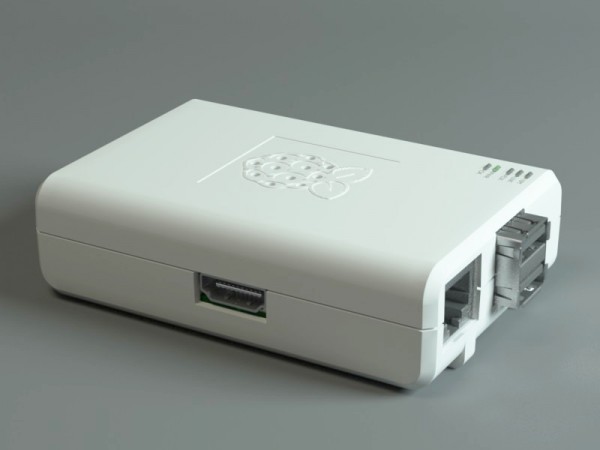
    The Raspberry Pi is of course a small Linux computer available at pocket money prices and aimed at young people who wish to learn programming.

    Raspberry Pi in a case

    To be eligible for the competition, entrants must be under 25 years of age and live in either Lawrence Hill or Easton ward in Bristol.

    Entries stating why you would like to win the Raspberry Pi should be sent by email to stacy (at) eastonandlawrencehill.org.uk by the closing date of 30th November and should also include your name, date of birth and address.

  • Today is Software Freedom Day

    Software Freedom Day logoToday, 15th September, is Software Freedom Day, an annual worldwide event to promote the role that free and open source technology can play in the modern world, where our everyday lives are increasingly dependent upon technology. At the time of writing, there are over 200 teams in 60 countries putting on events of which the closest to us in Bristol is being organised by the Herefordshire LUG.

    Free and open source software gives you, the user, access to the source code. This ensures that you can know (or get checked) what exactly a piece of software will do. It avoids nasty surprises, spyware and all kinds of problems that we can’t be absolutely sure are avoided in closed software. Proprietary software keeps the source code locked away from public scrutiny, meaning that there is no way to know exactly what the software actually does and no way to trust it to safeguard your human rights. Transparent technologies are about ensuring you can trust the results and operation of your technology.

    As an increasing proportion of the world’s population starts using technology, getting online and developing the next major life-changing event of the future (such as the birth of the internet was for many of us), it is vital to ensure open, transparent and sustainable approaches are considered best practice. This is important to a future where technology empowers everyone equally, where knowledge is forever and where our basic human freedoms are strengthened – not hampered – by technology.

    Software Freedom Day is a global celebration of why transparent and sustainable technologies are now more important than ever.

    NB: This post originally appeared on the Bristol Wireless blog.

  • Is there still a need for nice?

    Some time last week, the collective minds of Bristol Wireless were hunched over their pints down the pub when someone asked: “Is there still a point to nice?”

    For those unfamiliar with nice, it’s a means on a Unix/Linux system of giving a process more or less CPU time than other processes. A niceness of −20 is the highest priority and 19 or 20 is the lowest priority. The default niceness for processes is inherited from its parent process, usually 0.

    For an idea of how it works, here’s the nice man page:

    Name

    nice – run a program with modified scheduling priority

    Synopsis

    nice [OPTION] [COMMAND [ARG]…]

    Description

    Run COMMAND with an adjusted niceness, which affects process scheduling. With no COMMAND, print the current niceness. Nicenesses range from -20 (most favorable scheduling) to 19 (least favorable).

    -n, –adjustment=N
    add integer N to the niceness (default 10)

    –help
    display this help and exit

    –version
    output version information and exit

    NOTE: your shell may have its own version of nice, which usually supersedes the version described here. Please refer to your shell’s documentation for details about the options it supports.

    Author
    Written by David MacKenzie.

    Reporting Bugs

    Report nice bugs to bug-coreutils@gnu.org
    GNU coreutils home page: http://www.gnu.org/software/coreutils/
    General help using GNU software: http://www.gnu.org/gethelp/
    Report nice translation bugs to http://translationproject.org/team/

    Copyright
    Copyright © 2010 Free Software Foundation, Inc. License GPLv3+: GNU GPL version 3 or later http://gnu.org/licenses/gpl.html.

    This is free software: you are free to change and redistribute it. There is NO WARRANTY, to the extent permitted by law.

    See Also
    nice(2)

    The full documentation for nice is maintained as a Texinfo manual. If the info and nice programs are properly installed at your site, the command

    info coreutils aqnice invocationaq

    should give you access to the complete manual.

    Anyway, the main discussion centred around whether processes still needed to have their niceness adjusted (‘reniced’ in the correct terminology) in these days of processors and amounts of RAM that have capacities many multiples of the systems upon which Unix and Linux were originally designed to run, although no real conclusions were reached, apart from one instance mentioned: that of a process just starting up and slowing the whole system to a crawl. Perhaps readers would like to leave their opinions – if any – in the comments below.

    Putting on my language hat and looking at Wikipedia, it seems the etymology of nice is as follows. The name “nice” comes from the fact that the program’s purpose is to modify a process niceness value. The true priority, used to decide how much CPU time to concede to each process, is calculated by the kernel process scheduler from a combination of the niceness values of different processes and other data, such as the amount of I/O done by each process.

    The term “niceness” itself originates from the idea that a process with a higher niceness value is “nicer” to other processes in the system, as it allows the other processes more CPU time.

    Update: 27/09/12: Alex Butcher of Bristol & Bath LUG has suggested ionice is a more useful tool than nice.

  • MultiSave – a great LibreOffice extension

    As mentioned on the free/open source software for translation page, both LibreOffice and OpenOffice (the project from which it forked) can have their functionality increased by plug-ins known as extensions.

    Of the extensions I’ve tried so far, my favourite has to be MultiSave. MultiSave enables a file to be saved in up to 3 formats at once: ODF, MS Office and PDF.

    The MultiSave extension in action
    The MultiSave extension in action

    As I always work in ODF, but usually return work in MS Office format and submit my invoices as PDFs, you can imagine how much time this has saved me.

    Give it a try! I recommend it.

Posts navigation