Bristol

  • Takeaway turns up heat on fly-tippers

    Chinese takeaway Sun Hing on Stapleton Road must have had some trouble with fly-tippers in the past.

    As a commercial outlet, the takeaway is required by the council to have – and pay for – its own contract with a waste disposal service.

    If one has paid for a service, then one evidently doesn’t want others (ab)using it for free.

    The sign below has recently appeared above Sun Hing’s bins in Newton Street.

    photo of bins and sign outside Sun Hing takeway on Stapleton Road

    There actually is a CCTV camera covering the bins, but it is out of shot.

    Hat tip: Hannah Crudgington.

  • Travelodge produces guide to the West country accent

    Alright me babber? Have you heard that hotel chain Travelodge has produced a guide to the West Country accent? The Gloucestershire Echo has.

    The Echo article has a brief list of common phrases – presumably from Travelodge’s publication – to help visitors get by in the West:

    • Alright me Babber: How are you?
    • Oldies: Holiday
    • Fotawl: Photograph
    • Pown: Pound (Money)
    • Safternun: This afternoon
    • Laters: See you later
    • My luvver: A term of endearment
    • Tiswas: Confused
    • Gurt lush: Really good
    • Babba: Baby

    Adge Cutler
    Adge Cutler – an archetypal West Country man
    The West Country accent is the third most popular in the country, according to research, behind the Geordie and Yorkshire accents (don’t tell my Lancastrian brother-in-law! Ed.).

    One noticeable omission from the glossary above is ‘daps‘, Bristolian dialect for those shoes used for PE in schools, otherwise known as plimsolls or pumps. Bristolians also use the term to describe trainers.

    The research also found that people who speak in West Country accents are less likely to be able to understand the accents of other people from elsewhere in Britain than they could understand Spanish or Italian. Curious (Blige! As one would say in Bristol. Ed.).

    My copy of the Oxford Companion to the English Language, published 20 years ago, says the following about West Country accents:

    The range of accents in the West Country extends from broad in the working-class and in rural areas through accents modified towards RP in the town and the lower middle class to RP proper in the middle and upper classes. Local speech is rhotic, with a retroflex /r/ in such words as rap, trip and r-coloured vowels in words such as car/cart. Postvocalic /r/ is widely retained in such cities as Bristol and Exeter, despite the influence of RP, which is non-rhotic. In other cities, such as Plymouth and Bournemouth, rhoticity varies. Traces of variable r-pronunciation are found as close to London as Reading and Berkshire.

    The entry then goes on to deal extensively with local grammar, vocabulary and the literary West Country.

    Hat tip: Yelena McCafferty.

  • Coming soon: St Werburghs Christmas Market

    St Werburghs Community Centre will soon be holding its famous indoor Christmas Market, running this time in the evening between 5 and 8pm on Friday 12th December.

    publicity poster for Christmas market

    On offer will be gourmet burgers from the Stovemonkey Smokehouse, fresh Italian coffee and homemade cakes from Rolling Italy, St Werburghs Community Centre’s very own Glühwein and mulled apple juice, plus festive live singing from the brilliant BYOB and Bartones choirs. There will be 45 stalls offering a wide variety of unusual festive gifts, clothes and art, etc., plus mask-making and face painting for the kids and other games, as well as a tombola stall.

    For further details, contact 0117 955 1351 or email heather (at) stwerburghs.org.uk

  • TidyBS5: the word is spreading

    Down in untidy BS5, the fly-tipping is still continuing, as shown by this fine example of that environmental crime from Heron Road, Easton reported to the council this very morning.

    Heron Road fly-tipping

    However, word of this informal campaign by residents is spreading. Just ahead of Monday’s TidyBS5 residents’ summit (posts passim), news reaches my inbox that the litter picket organised in conjunction with the last Easton & Lawrence Hill Neighbourhood Forum (posts passim) has been discovered by CleanupUK.

    CleanupUK is a charity whose main focus is on helping those who are most in need, usually in areas of deprivation, to combat the litter problem where they are. Through involvement in this activity, people feel their communities are safer, more welcoming and friendlier.

    Read CleanupUK’s post on the TidyBS5 litter picket.

  • Save Avonmouth station building

    Living as I do near the Severn Beach line, I was pleased to read in the Bristol Post that the Victorian railway station building at Avonmouth has been given a temporary reprieve from demolition after campaigners lobbied the city council.

    Network Rail wants to demolish the building, but this seems a daft move given the huge increases in passenger numbers on the Severn Beach line in the last few years. As the building is not currently protected by listing or is in a conservation area, a full planning application would normally not be needed for demolition.

    Council officers say Network Rail has failed to give enough detail about their plans and have refused the demolition application, but could very well approve a new application.

    A petition has been set up asking both the city council and Network Rail to reconsider the future of the station building.

    Until quite recently the building was used as a hairdressers and there is no good reason – apart from the destructive intentions of Network Rail – why it should not be used for commercial purposes again (or even as a station building. Ed.).

    Avonmouth Victorian station building
    Avonmouth’s Victorian station building. Image courtesy of mattbuck/ Wikimedia Commons

    Local MP Charlotte Leslie has joined the ranks of campaigners trying to save it, remarking, “Avonmouth railway station is an irreplaceable part of our heritage and planning officers have a duty to ensure that our future generations benefit from its preservation. Indeed, it is my belief that the building should be subject to a Conservation Order or Listed status – owing to its local historical importance and obvious aesthetical [sic] qualities”.

    Charlotte has been a passionate campaigner throughout her term of office for local rail, including the reopening of the Henbury Loop (posts passim).

  • Tidy BS5 residents’ summit

    On Monday 24th November, a Tidy BS5 summit is being held for residents at Felix Road Adventure Playground, Felix Road, Easton, Bristol, BS5 0JW (map) from 6.45 to 8.45 pm.

    poster for residents' summit

    The aims of this meeting are:

    • To bring together residents who are concerned about fly-tipping, littering and rubbish and want to work together to do something about it;
    • To identify exactly what the problems are and generate ideas for how to solve them; and
    • To officially launch the Tidy BS5 campaign and a year of action to tackle these problems.

    The meeting is being organised by residents, councillors and Up Our Street and will be chaired by local resident Liz Jones.

    All are welcome and the local media have been invited.

  • Bristol opens Europe’s first speech lab for non-native English speakers

    Earlier this week Bristol University announced the opening in Bristol of Europe’s first speech laboratory designed to break down communication barriers faced by those who speak English as a second language.

    microphone and recording equipmentIn a linguistically diverse society, with many people speaking English as their second language, researchers at Bristol University are pioneering a new approach to help understand how factors such as accent influence communication.

    The speech lab, which is funded by the European Commission through a four-year €100,000 Marie Curie grant, uses state-of-the-art audio technology to capture and analyse second language speech samples and to train people to assess the speech in a purpose-built environment.

    The insights gained will then be used to train those who speak English as a second language and also to improve the teaching of English by targeting the elements of speech most likely to achieve successful communication.

    Dr. Talia Isaacs, Director of the Second Language Speech Lab, conducts research at the lab as part of a research programme with international collaborators to identify aspects of speech that are most important for engaging in effective communication when English is not the speaker’s primary language.

    general view of speech labShe said: “Reducing language barriers is a pressing social and educational challenge, especially in countries like the UK where the linguistic palette is very rich.

    “Improving oral communication skills for non-native English speakers will help with many aspects of everyday life – from success in the workplace and in education to improving social integration and accessing vital services.

    “Although accents are very noticeable to listeners and may lead to social stereotyping, someone who sounds different is not necessarily communicating ineffectively. In fact, a whole host of factors, such as pronunciation, grammar and vocabulary, contribute to the successful transmission of a message. So we often need to listen beyond the accent.

    “Research conducted at the lab will enable us to study the linguistic factors that contribute to breakdowns in communication in greater depth and identify ways to mitigate these.”

    By way of an example, future research could collect data from GP consultations, where either the doctor or the patient is speaking English as a second language. This could help to ensure such consultations are conducted with greater clarity.

    Furthermore, there could be instances where engineers from various countries are collaborating on a joint project and there’s a need to ensure that everyone fully understands each another and can communicate their findings effectively.

  • The pyromaniacs

    It’s been 10 years since Trinity Community Arts first asked me to help with their then new annual fireworks party, which has taken place ever since. Only once in a decade has the event been badly marred by rain; that was in 2013 when the bonfire had to be lit and the fireworks fired in a steady autumn downpour.

    For the first time in those 10 years, Emma from Trinity had the presence of mind to take a photo of the fireworks crew. Onj – the handsome chap in the red boiler suit – is the fireworks half of the crew. Your correspondent is in charge of the bonfire department.

    Steve Woods and Sparkker Onj on site at Trinity 2nd November 2014
    Picture courtesy of Emma Harvey

    It was a truly great event this year with a good crowd of some 1,250 people, plus food and fantastic music (you forgot to mention the spectacular fireworks! Ed.). The event also raised £1,100 for Trinity, which will go towards buying new drapes for the main hall. Your ‘umble scribe finally got home feeling very tired but happy at 11.30 pm after extinguishing the remains of the bonfire.

  • The British pub – undergoing gastration?

    I’m a great lover of no-frills, working-class pubs. They’re what I grew up with and frequented when I first started drinking. Indeed I still give them my custom and can often be found at the Little Russell in Barton Hill, Bristol (posts passim).

    One worrying development in recent years is the rise of the ‘gastropub‘.

    Eagle_Gastropub_Clerkenwell_2005
    The Eagle, Clerkenwell, London, reputed to be the first victim of gastration. Picture courtesy of Wikimedia Commons.
    The term gastropub is a portmanteau of gastronomy and pub, and originated in the United Kingdom in the late 20th century. The establishment itself is defined as ‘a bar and restaurant that serves high-end beer and food‘.

    My Bristol Wireless colleague Rich has devised the verb ‘to gastrate‘ to describe the phenomenon of converting boozers to gastropubs. I would define the verb as follows:

    gastrate (v.) – to ruin a perfectly good pub by converting it to sell small, overpriced portions of food.

    See also: gastration (n).

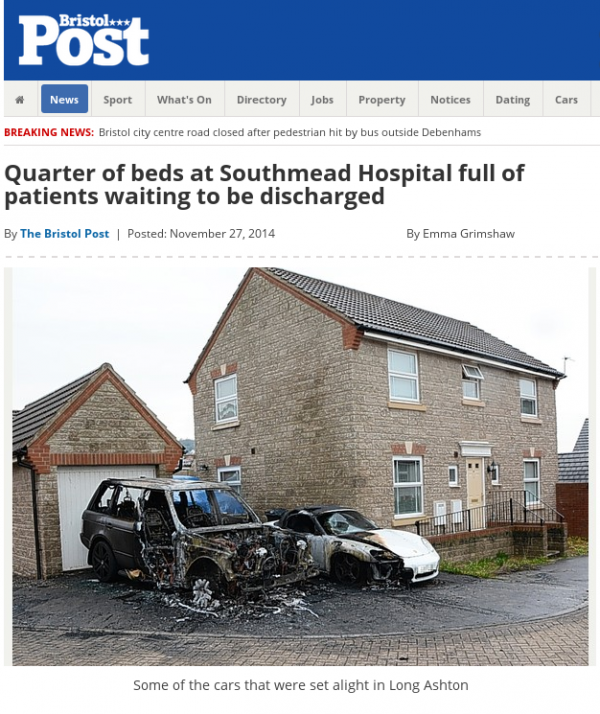
    The process of gastration is also being actively encouraged by the media, as shown in a piece last week on the Bristol Post website.

    Will traditional drinkers soon be struggling to find traditional boozers if this trend continues?

Posts navigation