Linux

  • Orca screen reader improves Braille functions

    Orca logoOrca, the screen reader for the GNOME desktop used on Linux machines, is now at the Beta 2 stage for its forthcoming 3.10 release. According to Softpedia, the 3.10 Beta 2 release fixes the broken text attribute presentation for Gecko, the new sliders are now present in GNOME Shell, partially-implemented value interfaces with range of 0 to 1 are now handled and a workaround has been added for Delete and Backspace text changed events.

    Moreover, Braille functions are now performed only when Braille is enabled and object:active-descendant-changed has been added to events that may be part of an “event flood”.

    Finally the Polish and Slovenian translations have been updated in Orca 3.10 Beta 2.

    See the fairly basic change log for all changes since the last release.

  • Linux for Munich

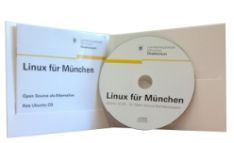
    Munich Linux CDMunich City Council has announced that a total of 2,000 Linux CDs featuring the Ubuntu 12.04 Long Term Support (LTS) distribution will be given away from next Monday in Munich’s public libraries according to the German technology news site Heise. The city’s Administration and Personnel Commission decided to take this step on 19th June 2013 because Microsoft is finally ending support for Windows XP on 8th April 2014 and will not be providing any more security patches for the operating system from that date onwards.

    Bavaria’s capital city thus wants to make sure first and foremost that computers which have been using Windows XP do not end up as electronic waste. Furthermore, Munich wants to be regarded as an “innovative expert in the open source sector”.

    Nevertheless, the council points out that it cannot provide any support at all for the chosen Linux distribution and that users should refer to for this to suppliers in the database of the local Chamber of Commerce & Industry (IHK) and ubuntuusers.de.

  • Canonical and Dell launching Ubuntu computers in 1,000+ shops in China

    The Canonical blog reports that Dell and Canonical will be launching Dell machines running Canonical’s Ubuntu Linux operating system in more than 1,000 outlets in China in the next few weeks.

    Dell and Canonical will be jointly extending a range of Dell hardware pre-loaded with the Chinese language version of Ubuntu 12.04 LTS across a swathe of major Chinese cities. Sales in the original stores have proven so successful that the companies have agreed to expand to beyond 1,000 outlets.

    Ubuntu's Chinese store promotional materials
    Ubuntu’s Chinese store promotional materials

    This is the latest of a series of developing partnerships in China for Ubuntu. In March 2013 it was announced that the Chinese Ministry for Industry & Information Technology had selected Ubuntu as the basis for its reference architecture for operating systems (posts passim).

  • LibreOffice 4.1.1 released

    The Document Foundation (TDF) has announced the release of LibreOffice 4.1.1, for Windows, Mac OS X and Linux. This is the first minor release of the LibreOffice 4.1 family, which features a large number of improved interoperability features with proprietary and legacy file formats.

    According to the developers, the new release is a step forward in the process of improving the overall quality and stability of LibreOffice 4.1. However, for enterprise adoptions and production environments, The Document Foundation recommends LibreOffice 4.0.5.

    LibreOffice menu screen
    LibreOffice menu screen

    LibreOffice 4.1.1 is available for immediate download from http://www.libreoffice.org/download/. Change logs are available at the following links: https://wiki.documentfoundation.org/Releases/4.1.1/RC1 (for bugs fixed in 4.1.1.1) and https://wiki.documentfoundation.org/Releases/4.1.1/RC2 (for bug fixes in 4.1.1.2).

  • Ebook manager Calibre reaches version 1.0

    Ebook management software Calibre has now reached version 1.0, seven years after it was first released and a year since the last major release. Lots of new features have been added to calibre in the last year — a grid view of book covers, a new, faster database backend, the ability to convert Microsoft Word files, tools to make changes to ebooks without needing to do a full conversion, full support for font embedding and sub-setting, and many more, which are listed below. However, it should be pointed out that many of the features listed below were actually introduced during the lifetime of Calibre’s 0.9.x series.

    • A grid view of book covers
    • A new, faster database backend
    • Virtual Libraries
    • Conversion of Microsoft Word documents (.docx files)
    • New metadata download sources
    • Full support for font embedding
    • An easy to use tool to edit the Table of Contents in ebooks
    • Rewritten PDF output engine
    • New “Polish books” tool that allows users to carry out various automated clean-up actions on ebooks

    image of calibre interface

    The developers of Calibre also believe now is an appropriate time to express their thanks to all the developers who have contributed many of the major new features listed above. An incomplete list of contributors is available here.

    Calibre 1.0 is now available for download for Linux, MacOS and Windows.

  • Happy 20th birthday, Debian

    Today, 16th August 2013, marks the 20th birthday of Debian GNU/Linux, one of the Linux world’s most venerable and respected distributions.

    Ian Murdock founded the Debian Project back in 1993 and since then it has turned out to be a truly free community project aiming to build a free Linux operating system – something that would have been impossible without Debian’s strong community of users and developers.

    In the intervening 20 years, Debian has grown to be one of the most influential and largest open source projects, used as a base in many popular Linux operating systems, such as Ubuntu.

    image of cake iced with Debian logo
    A cake with the Debian ‘swoosh’ logo

    Dubbed the “universal operating system” Debian is available in over 70 languages and supports an enormous range of computer types, with over 20,000 software packages for more than 10 different computer architectures.

    I use the latest version of Debian – codenamed ‘wheezy’ – on my laptop, whilst my main desktop machine runs Mepis, a Debian derivative featuring the KDE desktop. Over the years, I’ve found Debian (and derivatives) very stable, reliable and secure.

    Why not treat yourself on Debian’s birthday? Go and grab a disk image and install it! 🙂

  • Linux banking trojan spotted in the wild

    malware symbolUntil now, Linux users could sit back and relax when the talk turned to viruses, trojans and other malware: they weren’t a problem. As a result of the small numbers of Linux desktop users and the positive flipside of the the lack of Photoshop, iTunes et al., malicious software in the Linux world has been limited to two classes: demonstrations for exploits that have never been seen “in the wild” and targeted attacks on server software vulnerabilities.

    This golden age for Linux users could now be drawing to a close. Security specialist Limor Kessem from RSA has written on her blog about the “Hand of Thief” banking trojan, which only attacks Linux machines and is currently being offered for sale in underground forums for U.S. $ 2,000 with free updates. It has been developed by a cybercrime team based in Russia.

    The trojan’s developer claims it has been tested on 15 different Linux desktop distributions, including Ubuntu, Fedora and Debian. It includes a form grabber for both HTTP and HTTPS sessions; supported browsers include Firefox, Google Chrome and several other Linux-only browsers, such as Chromium, Aurora and Iceweasel. As for desktops, the malware supports 8 different environments, including Gnome and KDE.

    The malicious code also incorporates virtual machine detection designed to make it more difficult for security researchers to unpick its secrets, as well as routines to block access to security updates or access to the websites of anti-virus vendors..

    “Hand of Thief” exploits no special Linux security holes; the user has to install him/herself it by e.g. by opening an email attachment without checking it first or installing it from sources other than the recommended repositories of his/her Linux distribution.


  • GNOME raises $20,000 to enhance security and privacy

    Gnome logoThe GNOME project, one of the purveyors of the 2 main desktops and software for Linux, has announced that it reached its goal last weekend of raising $20,000 to help make its software even more secure and privacy aware.

    Individual software projects will now be invited to bid to secure some funding to make their products more secure and private. Areas that the GNOME project is interested in pursuing include the following:

    • application containment;
    • enhanced disk encryption support;
    • Tor integration;
    • user control over diagnostic reporting features;
    • robust VPN routing;
    • application integration with system-wide privacy settings;
    • controls for how GNOME devices are identified on local networks; and
    • anti-phishing features for Web, the GNOME browser.
  • Advertising’s acceptable face

    KDE is one of the 2 major providers of GUIs and applications for Linux systems (some KDE applications are also now available for Windows too! Ed.).

    It’s currently holding the KDE Akademy 2013, a free, non-commercial event organised by the KDE community, in Bilbao in the Basque Country of Northern Spain from 13th to 19th July.

    The local public transport company has also picked up on this event and is advertising it on its ticket machines; and in 3 languages too!.

    image of Bilbao public transport ticket machine
    Free software advertising – Bilbao

    Would London Underground or the UK’s train operating companies do likewise?

    I’ve written before of my dislike of advertising (posts passim), but advertising for community-based projects – even if those communities are scattered throughout the world – is something for which I’ll make an exception.

Posts navigation