The Call for Papers is still open until 15th July 15, 2015. Tracks for papers are based on Development, Quality Assurance, Localization, Documentation and Native Language Projects, Ease of Use, Design and Accessibility, Migrations and Deployments, Certifications and Best Practices, ODF, Document Liberation and Interoperability and Building a Business around LibreOffice.
The conference website also includes some practical info about travel and accommodation.
After the Russian Communications Minister Nikolai Nikiforov suggested a common approach by the BRICS states – Brazil, Russia, India, China and South Africa – to solving the dependency on imported software earlier this year, Russia recently announced a list of possible options, German IT news site heise reports. There is to be a concerted promotion of open source projects as a part of the national programme to ensure economic development. In addition to two Linux distributions developed by Russian companies, the ReactOS project has also been chosen as a Windows alternative worthy of promotion. However, what that actually means remains unclear for the time being. The Russian programme is only envisaging software alternatives being made available within 10 years.
Although the ReactOS project has no announced any major technical progress since the integration of rudimentary support for NTFS, the developers have nevertheless not been inactive: “Over 750 bug reports filed by the community have been processed, resulting in appreciably better software compatibility,” ReactOS developer Colin Finck remarked in a discussion with heise. In particular, the emulation implemented in the last year for executing 16-bit applications (NTVDM) and Java support have been improved.
ReactOS screenshot. Image courtesy of Wikimedia Commons.
Thus not only can the installation routine of Oracle’s Java Runtime Environment be executed with the current build of ReactOS, but also ancient software such as the FreeGEM desktop or previously barred applications such as Skype. Support for the UDF file system for reading optical data carriers is also new.
Grant showing results
Initial results are also being produced by the student scholarship system which had been selected by Verein ReactOS Deutschland e.V. after a successful funding campaign over the last year on fundraising site Indiegogo. “With the completion of the new Explorers and Shell32 with theme support, which has been rebuilt from the ground up, the system interface works more nimbly and is also more comfortable to use as regards Explorer,” Finck explains. He has now started work on a printer stack which should be ready by December 2015 and could become a component of ReactOS 0.4.0.
No deadline for new release
Although there is no definite deadline for a new release of ReactOS with all new features, the project is nevertheless making automatic daily build versions available for download. The ReactOS developers themselves classify both the daily builds and previous releases as alpha versions which are only recommended for testing.
The ReactOS community is hoping for a further surge in development from the first ReactOS Hackfest, which is taking place in Aachen, Germany from 7th to 12th August 2015. According to the organisers, more than half of the current ReactOS developers have already registered for the event. According to current plans, improving ReactOS’ hardware support and working on the forthcoming version 0.4.0 shall form the focus of the event.
Urban Media Space is described as “a flexible and dynamic sanctuary for everyone in search of knowledge, inspiration and personal development – an open and accessible learning environment supporting democracy and community and is also going to be an example of the library of the future.”
Conference communication channels
The official communication channel during the conference will be the conference mailing list, conference@global.libreoffice.org. All participants will automatically be subscribed to that list, whilst the archives can be browsed at http://listarchives.libreoffice.org/global/conference/.
Primary Danish conference contacts
The primary conference contacts in Denmark have likewise been announced; they are:
Nearly one decade and a half into the 21st century, Microsoft has announced that it is finally going to enter the 20th century by offering SSH support for its PowerShell offering.
Windows PowerShell session screenshot. Image courtesy of Wikimedia Commons.
This move means that users will in future also be able to access and administer other systems remotely using the SSH protocol.
In its implementation Microsoft will be backing the OpenSSH project, which is popular in the open source world; MS wants to join the project and contribute its own code. It is still not certain when the initial results of this work can be expected as things are currently in an early planning phase.
Microsoft becoming more open to open source
MS’ blog post also reports that the developer team has been attempting to extend PowerShell with SSH functionality for quite some time. This proposal was made as early as the first two versions of PowerShell, but was rejected. “Changes in the management and culture” of the company have now encouraged the development team to attempt it again. Pressure from the community and several requests via social media have resulted in the idea now having full senior management support.
The company has become more amenable to open source ever since Satya Nadella took over running the software giant and as a consequence the complete .NET framework has been released as open source.
The sad news arrived earlier this week that French Linux gurus Madriva were being wound up (posts passim).
One of its community spin-offs, OpenMandriva, has now announced that its next release will be a tribute to its Mandrake heritage.
OpenMandriva’s history is well known. It was born at the end of 2012 with the help of the community and Mandriva SA to continue the work on the distribution after Mandriva SA could not continue to do so.
OpenMandriva has expressed its thanks to Mandriva SA for the latter’s initial support and it has wished former Mandriva employees well for the future.
The OpenMandriva Association was created to unite the distribution formerly known as Mandriva (aka Mandrake) and to return it to its roots through listening to peoples needs and getting closer to its users and developers. Since then OpenMandriva has been independent (though it still remains open to cooperative effort). It will continue to do this and will be releasing a new release of OpenMandriva Lx 3 (2015) in the near future that will include new features and an update of many of the core components.
OpenMandriva states that Mandrake was the first Linux distribution to make a free operating system available which could be installed and configured by anyone who could use a keyboard and a mouse. When many people first entered the “Linux” world, there were two types of distro: the ones that gave you headaches as soon as you put the CD in the drive; and Mandrake. The vision of Mandrake’s founder Gaël Duval created an operating system which undoubtedly allowed many, many people access to modern technology and in doing so added greatly to the strength of the free software community.
The Document Foundation, the organisation behind LibreOffice, the most popular free and open source office suite, has announced the release of a native application for viewing ODF documents on Android devices.
LibreOffice Viewer also offers basic editing capabilities, like modifying words in existing paragraphs and changing font styles such as bold and italics.
Editing is still an experimental feature which has to be enabled separately in the settings, and is not stable enough for mission critical tasks. Full-blown editing will be enabled in the future with
the help of LibreOffice’s steadily growing developer community. The editing features provided in the current release have been developed thanks to donations to The Document Foundation.
Feedback and bug reports for the app are very welcome to help developers improve its quality en route to a fully-fledged editor. Users are invited to report problems, using the bug tracker and attaching files that have triggered the issue at http://documentfoundation.hosted.phplist.com/lists/lt.php?id=N09VVkUAB00ABgsI.
LibreOffice Viewer uses the same engine as LibreOffice for Linux, OS X and Windows. This, combined with a new front-end based on Firefox for Android, reads documents similarly to a desktop version of LibreOffice.
LibreOffice Viewer has been developed by Collabora and Igalia, backed by Smoose, with contributions from Google Summer of Code students, together with The Document Foundation and the LibreOffice community. SUSE provided a key foundation of cross-platform support, whilst the Mozilla Corporation – makers of Firefox- made several core components available.
Things were never easy for Mandriva, which was founded in 1999 as MandrakeSoft: with Mandrake Linux the company was originally aiming for a user-friendly desktop Linux. However, the major breakthrough for Linux on the desktop failed to appear and thus financial squeezes run like a strand through the company’s history in spite of the rapid expansion of the product portfolio for commercial solutions, German technology website heise reports.
The company did achieve a successful launch on the French stock market in 2001. However, MandrakeSoft had to apply for creditor protection only two years later. The company’s renaming as Mandriva took place in 2005 in the wake of the merger with Brazil’s Conectiva; Mandrake’s founder Gaël Duval left the company shortly afterwards due to a dispute.
There were financial problems once again in 2010 and Mandriva (at that time the company had over 70 employees) was looking for a buyer. Though an investor was eventually found, some 30 former Mandriva employees , developers and community members nevertheless founded the Mandriva fork Mageia at the end of that year. The fork was intended to ensure the continuity of Mandriva Linux since Mandriva’s commitment to its desktop Linux distribution had declined sharply. Insolvency loomed once again at the end of 2011, but was able to be repulsed ultimately with a recapitalisation.
The idea for OpenMandriva arose from the realisation that there was no money to be made with Linux for the desktop: an independent association was to continue producing Mandriva Linux as a community project. With Mageia and OpenMandriva there are now two community distributions, both of which have nevertheless lost some of their verve: the current Mageia 4 was released at the start of 2014; and OpenMandriva LX 2014.1 from September 2014. However, work is continuing on new versions of both distributions.
Mandriva is now in liquidation according to French company register societe.com. Lawyer Frédérique Lévy has been appointed as the administrator. The mandriva.fr and mandriva.com are no longer available.
Yesterday The Document Foundation announced the release of LibreOffice 4.4.3, the third minor release of the LibreOffice 4.4 “fresh” family, with over 80 fixes compared with the previous version, LibreOffice 4.4.2. The new features in LibreOffice 4.4.3 are listed on The Document Foundation wiki.
People interested in technical details about the release can access the change logs for RC1 fixes and RC2 fixes respectively.
Download LibreOffice 4.4.3
LibreOffice 4.4.3 is available for immediate download. By following the download link, more conservative users can find the more tested LibreOffice 4.3.7. The document Foundation recommends all users update their installations to one of these two LibreOffice releases for security reasons.
Get involved: LibreOffice 5.0 and LibreOffice Conference
The LibreOffice community is actively working at next major release, LibreOffice 5.0, expected in late July 2015 and your correspondent is already using a development release, LibreOffice 5.0.0.0 alpha1. Pre-release versions such as this are available from http://dev-builds.libreoffice.org/pre-releases/.
The LibreOffice community is growing, and the bug hunting session and conference represent exceptional opportunities to join the fun together with over 900 developers who have contributed to the code and over 3,000 volunteers who have localised the software, squashed bugs, written the manuals, spoken at conferences and acted as advocates for LibreOffice both at global and local levels.
The world’s first drone powered by the Ubuntu Linux distribution has arrived, Softpedia reports.
Erle Robotics, a Spanish company known for all types of robots powered by Linux, launched the world’s first Ubuntu-powered drone on 3rd May.
The Erle-Copter has a flight time of some 20 minutes and can handle a payload of 2 kg.
As regards price, the Erle-Copter Ubuntu Core special edition drone costs €399 for the very basic version, which won’t fly. If you want to buy an Erle-Copter that flies and has the basic components, you will have to pay at least €574.
“Erle-Copter Ubuntu Core special edition drone is a Ubuntu-powered quadcopter that includes official support for new app store for drones and robots. It has official ROS support, capable of the different flight modes and [is] ideal for outdoor operations,” says Erle Robotics’ Alejandro Hernández.
The version of Ubuntu used by the Erle-Copter is Snappy Ubuntu Core, a new version of Ubuntu for clouds and devices comprising a minimal server image with the same libraries as the conventional Ubuntu distribution, but applications are provided through a simpler mechanism.
Openwords, the foreign language learning app for the world’s open language data the world’s under-served languages, which was reported on some weeks ago by this blog (posts passim), recently launched a crowdfunding campaign on Kickstarter.
At the time of writing the Kickstarter campaign has 16 days to go and aims to raise $10,000 to take the project to the next stage.
Foreign language learning with open data
There are millions of people around the world who can’t learn the languages in which they’re interested.
While the learning of major languages like Chinese, Spanish and French are supported by large companies, these firms tend to ignore lesser-known languages.
Openwords is doing things differently to solve this problem. Openwords is mining data from the public domain assets like the Wiktionary to provide educational content for all the languages, large and small.
So far Openwords has mined data for 1,000 languages.
The Openwords app has various learning modules for vocabulary, hearing, typing, amongst others. In addition, the Openwords developers are working on simple sentence translation problems. Furthermore, learners have control over the content they want to learn.
Finally, Openwords will be an open source project.
The aim of the Kickstarter campaign is to raise $10,000, which will be enough to develop a beta model of the Openwords app.


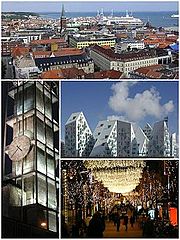 This year’s event will be held in
 LibreOffice Viewer also offers basic editing capabilities, like modifying words in existing paragraphs and changing font styles such as bold and italics.