politics

  • Don’t let the Snoopers’ Charter bounce back

    online spying imageIn the Queen’s Speech the Government announced it’s going to introduce an Investigatory Powers Bill (posts passim). This is the new Snoopers’ Charter and will more than likely comprise even greater powers for the police and GCHQ to spy on British citizens. (Will the Government’s longer term aim of a British Bill of Rights comprise the right to be spied upon by the State? Ed.)

    This is the fifth time a UK Government has tried to bring in a Snoopers’ Charter. The Home Office wants to give the police and intelligence services even more powers to look at what Brits do and who they talk to.

    Do Britons really want to live in a country where all their communications are monitored by the State?

    Precise details of the Home Office’s plans but there might be an attack on the encryption technology that helps keep our emails and online banking and shopping secure.

    The police and intelligence services should concentrate on targeting people suspected of crimes instead of collecting everyone’s data all of the time.

    It’s unclear whether the Home Office’s collect-it-all approach is effective or giving taxpayers value for money. The perpetrators of heinous crimes like the murder of Lee Rigby and the Charlie Hebdo attack were already known to the British and French intelligence services respectively, but those services decided to stop monitoring them due to lack of resources.

    ORG logoThe Open Rights Group (ORG) has set up a petition to campaign against the revived Snoopers’ Charter.

    The text of the petition reads:

    We demand an end to indiscriminate retention, collection and analysis of everyone’s Internet communications, regardless of whether they are suspected of a crime.

    We want the police and intelligence agencies to have powers that are effective and genuinely protect our privacy and freedom of speech.

    Sign the petition.

    The ORG will also be organising a lobby day soon so supporters can go to Parliament, get a briefing about the Bill and then talk to their MPs.

    Reposted from Bristol Wireless, with minor re-editing.

  • The return of the Snoopers’ Charter

    Like a boomerang curry, the Snoopers’ Charter (posts passim) is back – and with a vengeance this time.

    image of Theresa May
    Home Secretary Theresa May, the woman who wants to read all your emails
    Wired UK reports that this morning’s Queen’s Speech setting out the government’s legislative programme for the next year. In her speech in the House of Lords, the Queen said new legislation would “modernise the law on communications data.”

    The new legislation will be known as the Investigatory Powers Bill and will not only cover everything included in the previously-blocked charter, but also allow security services to intercept the content of communications in bulk.

    The Bill will allegedly “provide police and intelligence agencies with the tools” to keep people safe, whilst changes will also be made to close “ongoing capability gaps” that the government believes prevent law enforcement and intelligence services from tackling terrorism and serious crime. The new bill would also introduce “appropriate oversight and safeguard arrangements.” The latter are long overdue.

    Reposted from Bristol Wireless.

  • Help local councils take action against littering from vehicles

    Bristol litter bin
    Where litter belongs. Picture courtesy of Wikimedia Commons
    For as long as I’ve been going abroad to the mainland of Europe – some 45 years – one aspect that I’ve never failed to notice is just how clean other countries are compared with the United Kingdom. During my first visit to Germany in 1975 the streets – compared to those in UK – seemed clean enough to eat one’s dinner off.

    It’s unfortunate that despite the decades of campaign efforts of Keep Britain Tidy and local campaigners throughout the country, the United Kingdom remains the dirty man of Europe. A stroll down any street or road in the country will readily confirm this if readers have any doubts.

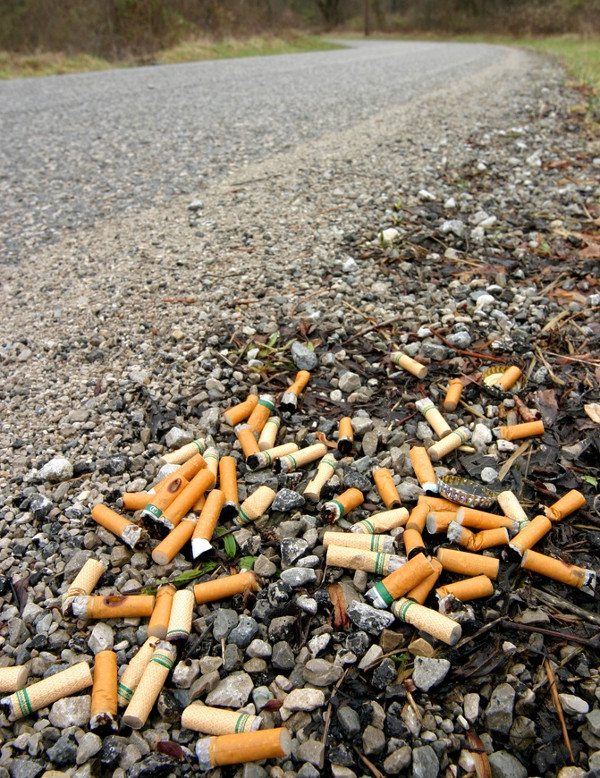
    A major element in littering is stuff dumped out of cars by the lazy and uncaring. This ranges from small stuff like cigarette butts to discarded fast food packaging from meals eaten on the move, right up to really nasty stuff such as used disposable nappies.

    cigarette ends dumped at the roadside

    The UK is a very scenic country – why trash it?

    Why indeed?

    38 Degrees Petition

    There are other people equally concerned about the amount of litter in the UK and a petition has just been posted on 38 Degrees.

    The introduction to the petition reads:

    This petition is calling for local councils in Yorkshire and across England to be given new powers to fine people who litter from vehicles. Littering shouldn’t be a consequence-free crime and enforcement acts as a deterrent as well as a punishment. The Government already approved the necessary legislation in 2014 but Defra has delayed producing the required regulations for over a year. This delay must end.

    Why helping councils with enforcement is important

    The petition’s explanatory text continues:

    Clearing up litter costs Yorkshire councils over £77m a year, contributing to the national figure of over £800m. Clearing roadsides is particularly costly and dangerous, so preventing littering from vehicles is extremely important. Local councils said for many years that they needed new powers to fine people who throw litter from vehicles, as a £75 fine will make most people think twice before throwing litter again.

    The existing law, in the Environmental Protection Act 1990, said the council needed to prove which person in the vehicle threw the litter – something that was mostly impossible. The Government agreed to introduce a new law, via the Anti-social Behaviour, Crime and Policing Act 2014, which meant local councils can issue a fine to the registered keeper of the vehicle, which is what happens when vehicles are caught speeding and or are parked in the wrong place.

    To make sure councils know how to implement this new law, the Government needs to provide them with regulations. However, the department responsible – Defra – has delayed these regulations for over a year and councils are no nearer to being able to take action against litterers. This also means there are now two pieces of legislation on litter that are essentially useless.

    The Secretary of State must make sure her officials are taking the required action to bring this legislation to life and to prevent further littering from vehicles.

    Sign the petition.

  • Afghan interpreters living in fear in UK

    Yesterday’s Mirror reports that Afghan linguists who assisted British troops in Afghanistan as part of George Bush Jr.’s so-called War on Terror (how can one wage war on an abstract noun anyway? Ed.) face a double dilemma.

    Firstly, there’s the threat of attacks by UK extremists.

    Secondly, there’s the threat of being killed by the Taliban if they return to Afghanistan.

    So even with the first threat hanging over them, most are now fighting for visas to remain in the United Kingdom.

    Regarding the threat from the Taliban, the Mirror writes:

    One, Mohammed Rafi Hottak, last week urged High Court judges to watch a video of the Taliban beheading translators [sic] as “traitors”.

    Talking of the threat facing him in the UK, one linguist told the Mirror:

    “There are a lot of lunatics in this country and I’m scared.

    “There are really extreme people here. I have met them. One told me he wanted to hang me by the tongue. That’s how much he hated me.”

    Other countries including the US and Germany have already granted their interpreters asylum while the UK continues to drag its feet, as per usual. Some 260 Afghan interpreters have applied for asylum in the UK but only a handful have so far been granted visas.

    Only last month The Guardian reported on the case of one Afghan interpreter who had been refused asylum in the UK. The Guardian piece quotes Stephen Hale, chief executive of the charity Refugee Action, as saying: “Afghan interpreters put their lives on the line to work with British forces, as well as the lives of their families. We cannot abandon them.”

  • A chance meeting

    Walking down Stapleton Road this morning, I stopped to take the picture below in readiness for reporting the fly-tipping to Bristol City Council.

    fly-tipping outside 96 Stapleton Road

    The gentleman passing on the right of the picture and half caught by the camera saw what I was doing, thanked me effusively and shook my hand when I told him I was reporting it to the council.

    We then had a brief conversation about how such anti-social behaviour detracted from the pleasantness of Bristol, which he described as a “beautiful city”, the health implications of fly-tipping and the way they encouraged the spread of vermin such as rats (posts passim).

    As we parted with waves, he asked me whether I was a member of the Green Party. Unfortunately I have no affiliation, but that’s no barrier to being an active and caring citizen.

  • The pavement pizza of politics

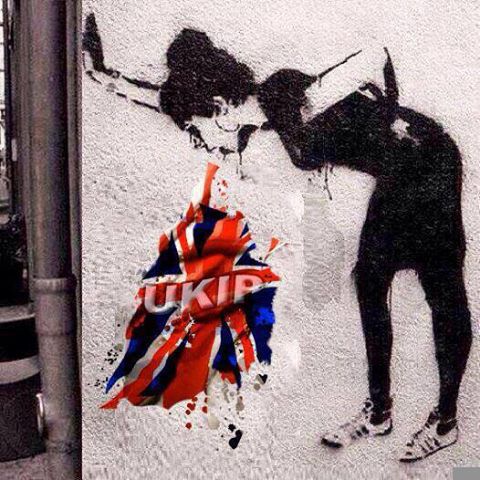
    Banksy, probably Bristol’s most visible artist since the days when noted portraitist Sir Thomas Lawrence (13th April 1769 – 7th January 1830) became President of the Royal Academy of Arts, has now given allegedly given his opinion on Mr Farage’s party of right-wing xenophobes; and I don’t think Nigel will be enamoured with it.

    stencil of UKIP being regurgitated by a vomiting woman

    This image will now be forever in my mind whenever the words ‘United Kingdom Independence Party‘ appear before me on a ballot paper.

  • The Wild Wild Bristol West Hustings

    ORG logoOn Friday 24th April 2015, the Open Rights Group is supporting the Wild Wild Bristol West Hustings, a chance for local voters to quiz the candidates for the Bristol West constituency – rated by commentators as either a 2-way or 3-way marginal constituency.

    The event will be from 7.00 p.m. to 10.00 p.m. and its venue is Bristol University’s Wills Memorial Building, Park Street, Bristol BS8 1RJ (map).

    In alphabetical order, the candidates attending as this post goes to press include:

    More information about the prospective Bristol West MPs is available at http//meetyournextmp.com/event/646-wild-wild-bristol-west-your-future.

    The event is free, but in order to allocate spaces fairly, you’ll have to register via EventBrite.

    The event is being supported by ORG Bristol as part of the organisers, the Greater Bristol Alliance, a coalition of local campaign groups.

    Reposted from Bristol Wireless.

  • Election special: Labour love hard work

    Ed Miliband
    Vote Labour, get a lifetime of hard labour?
    Political language relies to a great extent on clichés. Two of the most over-used terms of recent times is “hard work” and “hard working“, with the latter usually attached to the noun families and implying that the childless in society are incapable of arduous slogging.

    With some free time on my hands this morning, I spent a leisurely hour going through the main UK party manifestos (excluding regional parties such as Plaid Cymru, the SNP and the Northern Ireland parties) for the forthcoming general election looking for instances of “hard work“. The results for each manifesto are shown below.

    1st: Labour 5
    2nd: Conservatives 3
    3rd: Liberal Democrats & UKIP 1 each
    5th Green Party 0

    Both my parents were unskilled manual workers who left school at the age of 14 and worked all their lives. Indeed my father once told me that on his last day of schooling, he went to school in the morning, left at midday and went straight to work for a local farmer as an agricultural labourer in the afternoon.

    I remember the physical effect that hard work had on their bodies. Both were prematurely aged long before the official retirement age. My father died at the relatively young age of 67, whilst my mother, who although she lived to be nearly 82, was disabled from her mid-50s onwards by a debilitating stroke. I therefore do not regard hard work as such as the same great virtue as the closeted and cosseted inhabitants of the Westminster Village, who’ve probably never done a hard day’s physical graft in their lives.

Posts navigation