open source

  • Linux Kernel 3.7 Will Support All ARM Platforms

    Tux - the Linux kernel mascot
    Tux – the Linux kernel mascot
    It was recently announced that when it is released in some 6 months’ time, the forthcoming Linux 3.7 kernel will incorporate support for multiple ARM System on Chips (SoCs) platforms, Softpedia reports.

    Having all ARM platforms supported by a single kernel package is a good news for everyone from end users to hardware manufacturers who base their kit on ARM chips and the Android operating system.

    “This is a pretty significant branch. It’s the introduction of the first multiplatform support on ARM”, said kernel developer Olof Johansson on the Linux kernel Git commit page. “And with this (and the later branch) merged, it is now possible to build one kernel that contains support for highbank, vexpress, mvebu, socfpga, and picoxcell”.

    When Linux kernel 3.7 is released (the latest Linux kernel release at the time of writing is 3.6. Ed.), it will initially provide support the following ARM platforms: VExpress, Highbank, SoC FPGA, Picoxcell and Mvebu, although support for more ARM platforms will be added to subsequent kernel releases.

    Hat tip: Roy Schestowitz

  • 2012 LibreOffice Conference will be in Berlin

    LibreOffice logoOctober looks like being a busy month for the people at LibreOffice, the cross-platform, open source office suite.

    To begin with, there was the announcement of the release of LibreOffice 3.6.2; this will be followed by the annual LibreOffice Conference, which is a yearly gathering for the worldwide LibreOffice Community and interested developers, marketers, adopters, end-users and supporters.

    Following a public poll, this year’s conference will be held in Berlin from 17th – 19th October, where the venue will be the Conference Centre of the Federal Ministry of Economics and Technology.

    The conference programme reflects the broad engagement and diversity of the community and will include talks and workshops from various areas of the project.

    For updated information, you can subscribe to the conference mailing list, but if you’re thinking of attending registration ends on Monday, 8th October.

    Prior to the conference itself, Community Meetings will be held on Tuesday, 16th October 2012 at the same venue.

  • Italy’s Umbria region adopts LibreOffice

    Location map for Umbria
    Location map for Umbria. Picture courtesy of Wikimedia Commons
    It’s not just self-employed wordsmiths such as myself that are moving away from overpriced proprietary office suites towards free and open source alternatives: cash-strapped public sector organisations are doing so too.

    EU open source news website Joinup reports that the Administration the Italian region of Umbria has started a project to migrate an initial group of 5,000 users to LibreOffice. Osvaldo Gervasi, president of Umbria’s Open Source Competence Centre – CCOS – states that getting rid of IT vendor lock-in is one of the main motives for the migration.

    As part of the move, the region will also be adopting LibreOffice’s default Open Document Format as an open document standard.

    The legal basis for the migration is a 2006 regional law promoting the use of free and open source software by the public sector in Umbria.

    According to the Libre Umbria blog, the project involves the Provinces of Perugia and Terni, Local Health Unit no. 2 and the Region of Umbria, and is being co-ordinated by the Consortium of Umbrian Authorities (Consorzio SIR Umbria) and CCOS Umbria.

    The story is also covered by La Stampa (in Italian).

  • Local youngsters get chance to win a Raspberry Pi

    Although my postal address says Easton, I’ve lived in Bristol’s Lawrence Hill ward for 35 years now and was delighted to see there was a competition to win a Raspberry Pi in the latest edition of Up Our Street, the quarterly regeneration and community matters magazine produced by Easton and Lawrence Hill Management.

    The Raspberry Pi is of course a small Linux computer available at pocket money prices and aimed at young people who wish to learn programming.

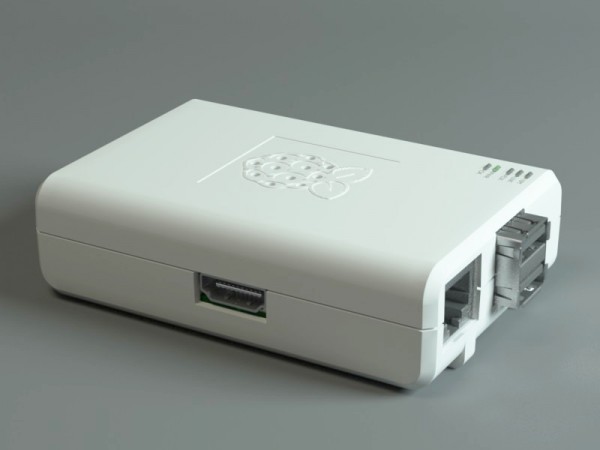
    Raspberry Pi in a case

    To be eligible for the competition, entrants must be under 25 years of age and live in either Lawrence Hill or Easton ward in Bristol.

    Entries stating why you would like to win the Raspberry Pi should be sent by email to stacy (at) eastonandlawrencehill.org.uk by the closing date of 30th November and should also include your name, date of birth and address.

  • Today is Software Freedom Day

    Software Freedom Day logoToday, 15th September, is Software Freedom Day, an annual worldwide event to promote the role that free and open source technology can play in the modern world, where our everyday lives are increasingly dependent upon technology. At the time of writing, there are over 200 teams in 60 countries putting on events of which the closest to us in Bristol is being organised by the Herefordshire LUG.

    Free and open source software gives you, the user, access to the source code. This ensures that you can know (or get checked) what exactly a piece of software will do. It avoids nasty surprises, spyware and all kinds of problems that we can’t be absolutely sure are avoided in closed software. Proprietary software keeps the source code locked away from public scrutiny, meaning that there is no way to know exactly what the software actually does and no way to trust it to safeguard your human rights. Transparent technologies are about ensuring you can trust the results and operation of your technology.

    As an increasing proportion of the world’s population starts using technology, getting online and developing the next major life-changing event of the future (such as the birth of the internet was for many of us), it is vital to ensure open, transparent and sustainable approaches are considered best practice. This is important to a future where technology empowers everyone equally, where knowledge is forever and where our basic human freedoms are strengthened – not hampered – by technology.

    Software Freedom Day is a global celebration of why transparent and sustainable technologies are now more important than ever.

    NB: This post originally appeared on the Bristol Wireless blog.

  • Is there still a need for nice?

    Some time last week, the collective minds of Bristol Wireless were hunched over their pints down the pub when someone asked: “Is there still a point to nice?”

    For those unfamiliar with nice, it’s a means on a Unix/Linux system of giving a process more or less CPU time than other processes. A niceness of −20 is the highest priority and 19 or 20 is the lowest priority. The default niceness for processes is inherited from its parent process, usually 0.

    For an idea of how it works, here’s the nice man page:

    Name

    nice – run a program with modified scheduling priority

    Synopsis

    nice [OPTION] [COMMAND [ARG]…]

    Description

    Run COMMAND with an adjusted niceness, which affects process scheduling. With no COMMAND, print the current niceness. Nicenesses range from -20 (most favorable scheduling) to 19 (least favorable).

    -n, –adjustment=N
    add integer N to the niceness (default 10)

    –help
    display this help and exit

    –version
    output version information and exit

    NOTE: your shell may have its own version of nice, which usually supersedes the version described here. Please refer to your shell’s documentation for details about the options it supports.

    Author
    Written by David MacKenzie.

    Reporting Bugs

    Report nice bugs to bug-coreutils@gnu.org
    GNU coreutils home page: http://www.gnu.org/software/coreutils/
    General help using GNU software: http://www.gnu.org/gethelp/
    Report nice translation bugs to http://translationproject.org/team/

    Copyright
    Copyright © 2010 Free Software Foundation, Inc. License GPLv3+: GNU GPL version 3 or later http://gnu.org/licenses/gpl.html.

    This is free software: you are free to change and redistribute it. There is NO WARRANTY, to the extent permitted by law.

    See Also
    nice(2)

    The full documentation for nice is maintained as a Texinfo manual. If the info and nice programs are properly installed at your site, the command

    info coreutils aqnice invocationaq

    should give you access to the complete manual.

    Anyway, the main discussion centred around whether processes still needed to have their niceness adjusted (‘reniced’ in the correct terminology) in these days of processors and amounts of RAM that have capacities many multiples of the systems upon which Unix and Linux were originally designed to run, although no real conclusions were reached, apart from one instance mentioned: that of a process just starting up and slowing the whole system to a crawl. Perhaps readers would like to leave their opinions – if any – in the comments below.

    Putting on my language hat and looking at Wikipedia, it seems the etymology of nice is as follows. The name “nice” comes from the fact that the program’s purpose is to modify a process niceness value. The true priority, used to decide how much CPU time to concede to each process, is calculated by the kernel process scheduler from a combination of the niceness values of different processes and other data, such as the amount of I/O done by each process.

    The term “niceness” itself originates from the idea that a process with a higher niceness value is “nicer” to other processes in the system, as it allows the other processes more CPU time.

    Update: 27/09/12: Alex Butcher of Bristol & Bath LUG has suggested ionice is a more useful tool than nice.

  • Companies asked to fight European software patents and unitary patents

    Companies within the European Union are being asked publicly to declare their opposition to software patents by signing a resolution (below) asking to the European Parliament’s Committee on Legal Affairs to amend the regulation on the unitary patent.

    This resolution, along with the list of signatories, will be sent to Members of the European Parliament on Tuesday, 13th September – a few days before the meeting of the Committee on Legal Affairs. More than 400 firms have already signed it.

    To sign the resolution, please send an email to: resolution-enterprises (at) unitary-patent.eu

    The text of the resolution is as follows:

    Our company is worried about the current plans to set up a unitary patent with a flanking unified patent court.

    The European Patent Office (EPO)’s practices to grant software patents, under the deceiving term of “computer-implemented inventions”, pose a threat to our professional activities.

    We are concerned that the regulation on the unitary patent, as agreed in December 2011 by the negotiators of the Council, the Commission, and the Committee on Legal Affairs of the European Parliament, leaves any and every issue on the limits of patentability to the EPO’s case law, without any democratic control or review by an independent court.

    The regulation on the unitary patent is an opportunity for the EU legislators to harmonise substantive patent law in the EU institutional and jurisdictional framework, and to put an end to the EPO’s self-motivated practices extending the realm of patentability to software. Failing to do so, this unitary patent will do more harm than good to the EU ICT firms.

    For these reasons, we urge MEPs to adopt amendments which clearly state that the EPO’s decisions are subject to a review from the Court of Justice of the European Union, and which reaffirm the rejection of software patentability, as expressed by the votes of the European Parliament on September 24th, 2003 and July 6th, 2005.

    Signatories are also being encouraged to contact members of the Committee on Legal Affairs by email.

    As company secretary of Bristol Wireless, I’m pleased to say BW’s already signed the resolution.

  • How not to do an ‘online’ consultation

    Today I posted the article below on the Bristol Wireless blog. It is reproduced here in its entirety.

    Yesterday, the last day for responses, Bristol Wireless responded to the Department for Education‘s consultation on internet blocking in the cause of keeping children safe online. The consultation arose from a campaign called ‘Safety Net‘, run by Premier Christian Media and SaferMedia, and supported by the Daily Mail. The campaign, and now the consultation is about requiring Internet Service Providers (ISPs) to block adult and other content at network level whilst giving adults a choice to ‘opt-in’ to this content.

    However, taking part in the consultation wasn’t easy. Consultees had to do the following:

    • Download consultation questionnaire;
    • Fill in questionnaire;
    • Upload completed questionnaire to Dept. of Education website.

    Sounds easy, doesn’t it? It wasn’t.

    Here’s why. Ignoring the rhetoric on open standards coming out of their Whitehall neighbours the Cabinet Office, Education Department civil servants only made the consultation questionnaire available as a Microsoft Word file (Wot? No ODF? Ed.). The author of the questionnaire had also stuffed it full of Word macros; this made it very difficult, if not impossible, to open using alternative office suites, such as LibreOffice. Many highly experienced openistas encountered this: Alan Lord (aka the Open Sourcerer) mentioned on Twitter that he couldn’t open it, whilst Glyn Moody could, but found the questionnaire impossible to fill in! On the chief scribe’s, machine attempting to open the file either stalled to a complete halt or crashed the office suite! 🙁 Ultimately, the chief scribe was only able to complete the questionnaire as he had access to a copy of MS Office.

    We cannot understand why the civil servants at the Dept. for Education couldn’t have designed the consultation questionnaire as an online survey. Bristol City Council has years of experience of doing online consultations in this manner – and they work very well indeed. Perhaps Sir Humphrey at the Dept. for Education should have called the Counts Louse for advice. As it is, out of 10 we’re giving this Education Dept. consultation a mark of 2. They’d better pull their socks up or it’ll be detention for them… 🙂

    Update 08/09/12: It seems that the consultation did originally start out as an online consultation, but was rejigged owing to extremely embarrassing security cock-ups, as The Register reports.

    The Register was first to reveal – within hours of the Department for Education publishing its parental internet controls proposal – that the DfE’s website was ironically exposing the email addresses, unencrypted passwords and sensitive answers submitted people who filled in the consultation’s questionnaire.

    As a result of this additional information, we’ve now reduced the DfE’s mark to minus 2 out of 10. 🙂

  • MultiSave – a great LibreOffice extension

    As mentioned on the free/open source software for translation page, both LibreOffice and OpenOffice (the project from which it forked) can have their functionality increased by plug-ins known as extensions.

    Of the extensions I’ve tried so far, my favourite has to be MultiSave. MultiSave enables a file to be saved in up to 3 formats at once: ODF, MS Office and PDF.

    The MultiSave extension in action
    The MultiSave extension in action

    As I always work in ODF, but usually return work in MS Office format and submit my invoices as PDFs, you can imagine how much time this has saved me.

    Give it a try! I recommend it.

Posts navigation