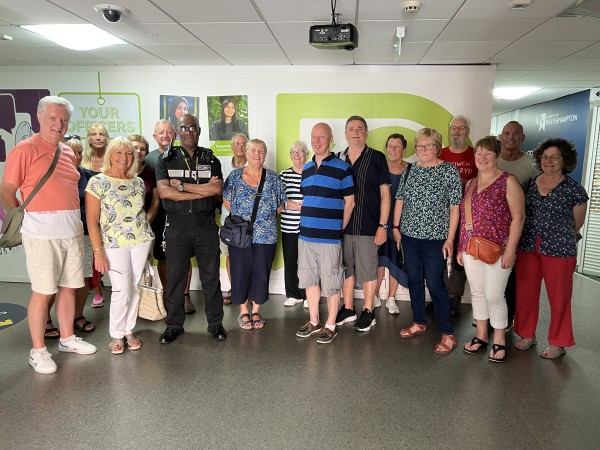
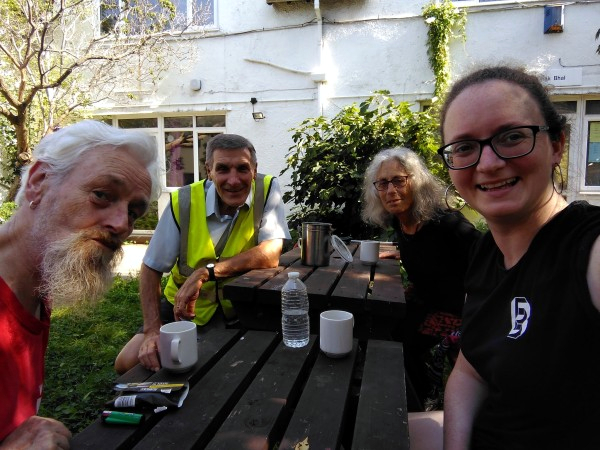
On Saturday 9th just gone, one of the hottest days of the year so far, four of us met at Barton Hill’s Wellspring Centre at 10 a.m. to take part in the monthly community litter pick organised by Shona Jemphrey (to whom thanks are die for the photos. Ed.).
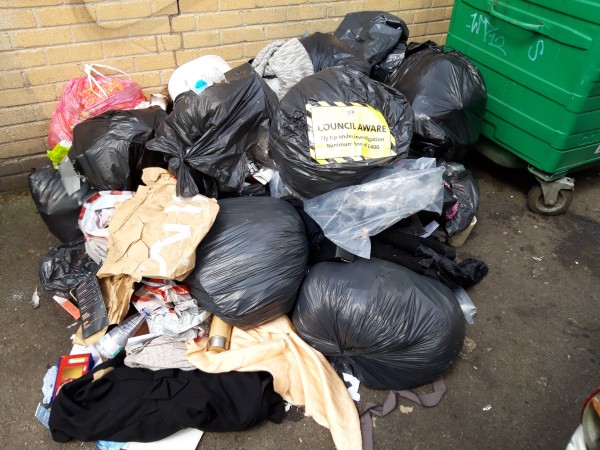
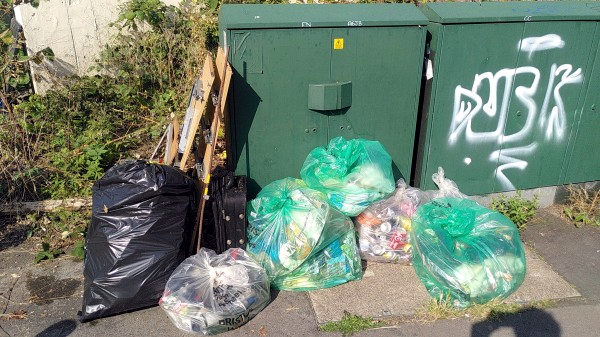
We covered part of the Urban Park and some of the surrounding streets, plus an alleyway off Victoria Avenue, which some desperate folk had been using as an emergency urinal. The ‘swag‘ we collected is shown below.
After an hour’s sweating and tidying, the team retired to the Centre for a well-deserved brew and some biscuits. As per usual, we got a few thanks and kind smiles from passers-by.
On Thursday the perpetual victim otherwise known as the disgraced 45th President of the United States of America, one Donald John Trump, surrendered to the authorities at Fulton County Jail, Georgia on more than a dozen charges stemming from his efforts to reverse the 2020 election results in that state, brining to four the number of times he has faced criminal charges in 2023.
During his 20 minutes in custody, the Fulton County Sherriff’s Department took the congenital liar’s fingerprints and photograph (aka a mugshot), the latter of which was released and in which the disgraced former commander in cheat shows off his compassionate and humane side to best advantage.
The Donald looking like his mother’s told the toddler him that he cannot have a cookie.
After leaving custody and returning to his perpetual hobby of cheating on the golf course, Trump found time to voice his continual grievances on his own Truth Social [sic] social media platform, griping yet again that the 2020 US presidential election being “RIGGED” (note block capitals. Ed.) and, er, “STOLLEN” (one more note block capitals. Ed.).
Stollen, Mr disgraced former president? According to Wikipedia, “Stollen is a cake-like fruit bread made with yeast, water and flour, and usually with zest added to the dough. Orangeat (candied orange peel) and candied citrus peel (Zitronat), raisins and almonds, and various spices such as cardamom and cinnamon are added. Other ingredients, such as milk, sugar, butter, salt, rum, eggs, vanilla, other dried fruits and nuts and marzipan, may also be added to the dough. Except for the fruit added, the dough is quite low in sugar. The finished bread is sprinkled with icing sugar.”.
Stollen. Image courtesy of Wikimedia Commons
It has yet to be determined by the courts whether a German Christmas speciality is less of a threat to the constitutional integrity of the United States of America than its 45th head of state and his credulous supporters.
If it did come to a vote and your ‘umble scribe was enfranchised, he would always vote for a German Christmas than someone who can’t even be honest when he plays golf.
Friday 25th August 2023 marked the end of an era and a sad day for Easton in Bristol. After 14 years of serving the public St Mark’s Community Café based at St Mark’s Baptist Church opened for the very last time after 14 years.
Of the local media outlets, only the BBC appears to have covered this event, but gave it a very sympathetic write-up.
Your ‘umble scribe has been going there 2 or 3 times a week for the past few years to enjoy baked potatoes, good cooking and the undisputed best cakes in all BS5, the latter baked by the remarkable Lesley, whose baking skills put my own late mother’s to shame (and that’s saying a lot, coming from a loyal eldest son!). My own particular favourites amongst her regular baked wares were farmhouse fruit, barra brith and anything with gooseberries or ginger. Furthermore, all the food served and the ingredients used to prepare it were ethically and locally sourced wherever possible.
However, this was a café with a difference: paying customers like your correspondent meant that the homeless could eat there for free. Below is a short video with interviews of both customers and café staff/volunteers to give an idea of what has now entered the annals of local history.
Although I’ll miss you all terribly, here’s wishing Lesley a happy retirement and I’d like to express my thanks to you, Nettie and all the café volunteers for keeping me fed over the years and being such wonderful people.
As a title in the Reach plc newspaper stable, the Daily Brexit (which some still call the Express. Ed.) has long inhabited an alternative reality, a world where the economic disaster otherwise known as Brexit is a roaring success (e.g. ‘Global Britain is thriving’).
In recent times the title has gained a reputation more of right-wing posturing than for the factual reporting of news and current affairs
A new charge must now be added to the title’s many crimes against reality and journalism – a crime against English, as seen in the headline below posted today on the paper’s website in its continuing campaign of hate against Harry Mountbatten-Windsor and his wife.
Wouldn’t it be a boon to journalism if those who write for the fourth estate – even on trivial, gossipy matters – had a basic level of competence in the language in which they are writing?
Your comments would be welcome below.
PS: for any passing illiterate Reach plc hacks in search of enlightenment, the grammatically correct version of the headline would read: “Harry’s six word response as to why he and Meghan won’t give up titles“.
Today’s Guardian reports that civil servants at Whitehall’s Ministry of Defence (MoD) inadvertently sent classified emails intended for the United States military to Mali.
How did this happen? Email addresses for the US military come under the .milTLD. By omitting the letter i from this TLD, one is left with the two letter country code top level domain.ml, denoting Mali.
To cover its blushes from this glaring example of digital dyslexia, the Ministry has commented as follows:
We have opened an investigation after a small number of emails were mistakenly forwarded to an incorrect email domain.
We are confident they did not contain any information that could compromise operational security or technical data.
All sensitive information is shared on systems designed to minimise the risk of misdirection.
The MoD constantly reviews its processes and is currently undertaking a programme of work to improve information management, data loss prevention, and the control of sensitive information.
Whitehall is currently illuminated bright red by all the embarrassed faces lurking behind all the impressive military statues of senior dead white squaddies fronting its main building in SW1.
Maybe such a cock-up would not have happened had the ministry’s civil servants paid proper attention to what they were typing on their email clients instead of constantly reviewing their processes!
Walking up Whiteladies Road this morning, your ‘umble scribe spotted a picket line outside Broadcasting Brainwashing House as local radio journalists down tools for the third time in recent months to protest about cuts to jobs in the corporation’s local radio stations.
NUJ picket line on White ladies Road, BS8
According to the NUJ, “Despite the dispute winning huge support among the 5.4m loyal local radio listeners, MPs and councillors of all parties, a huge range of charities, non-league football fans, and community groups, the BBC is going ahead with plans to cut local content by almost half, with many popular presenters losing their jobs or choosing to go“.
Can anything be gleaned from whom countries pick as their government ministers
Maybe
Until recently there was an interesting comparison to be made between Chile and the so-called United Kingdom in their choice of environment ministers.
Let’s compare and contrast…
In 2022 Chile appointed Maisa Heloísa Juana Rojas Corradi, a physicist and climatologist to the post of Minister for the Environment. As you can tell by the letters after her name, Ms Rojas is not exactly lacking in academic success.having graduated in physics at the University of Chile before going on to gain a Ph.D. in atmospheric physics from Lincoln College, Oxford. After gaining her doctorate, Rojas then pursued a career in academia, initially as a postdoctoral fellow at International Research Institute for Climate and Society at Columbia University in 2001, after which she then returned to Universidad de Chile as a postdoctoral fellow, researcher, eventually becoming a professor of geophysics. During that time, Rojas became an international leading climate change scientist. She was the lead author of the Paleoclimate chapter for the UN Intergovernmental Panel on Climate Change’s (IPCC) fifth report (AR5), and was also a coordinating lead author for the IPCC report (AR6). She has served on various presidential councils and committees on climate change.
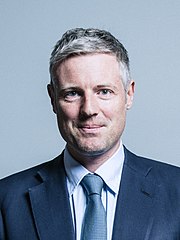
Now compare and contrast that record of achievement with the person who was until recently the UK’s Minister of State for Overseas Territories, Commonwealth, Energy, Climate and Environment, the improbably named Frank Zacharias Robin Goldsmith, Baron Goldsmith of Richmond Park. Zac is a scion of the corrupt (and corrupting. Ed.) British Establishment who was not just born with a silver spoon in his mouth, but a whole sterling cutlery service. As a rich boy, Goldsmith had the best education that money can buy (allegedly): 3 fee-paying preparatory schools, followed by Eton College (which ought to be put into special measures for the sake of the nation. Ed.), from which he was expelled after drugs were discovered in his room. Despite all that expensive tuition, Zac go no where near a degree, but did go on after Eton to gain four A Levels at the now defunct Cambridge Centre for Sixth-Form Studies.
With specific reference to the late 19th century, Dr Stone wrote:
Average wits notwithstanding, anyone emerging from Eton, Harrow, Winchester or Westminster at this time was afforded – as a ‘gentleman’ – an indisputable authority that allowed them to simply assume positions of leadership. Their authority remained mostly intact, even if the ‘blood’ so crucial to a gentleman’s nobility in the past had been severely diluted by the overwhelming expansion of the public school system and the middle-classes it helped to produce.
The idealised gentleman was brave, loyal, and chivalrous towards females, put public duty before his own interests, and took part in activities for love rather than financial gain. These values were applied to a wide range of activities during the nineteenth century. Science, politics and the arts were all defined by this hegemonic ideal of the ‘gentleman amateur’.
On 30 June Goldsmith resigned from his ministerial position, stating the government showed “apathy” towards environmental issues and that Prime Minister Rishi Sunak’s lack of interest had paralysed policymaking.
Who would you rather have looking after your environment, someone with impeccable connections and manners, or someone who knows their subject inside-out? Answers in the comments below, please. 😀
In October 1973, a large cohort of (mostly) young people aged 17-19 left their homes with varying levels of street wisdom under their belts and dampness behind the ears (not to mention essential life skills such as being able to manage money and cook. Ed.) to embark on something that was going to change their lives for ever – studying the BA Modern Languages course at Wolverhampton Polytechnic, now the University of Wolverhampton, a matter that was going to occupy us for the next four years until the summer of 1977.
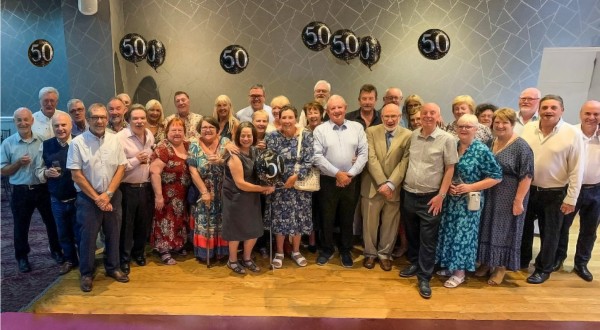
Just shy of 50 years later, twenty-two alumni plus partners (including some who are also Wolverhampton veterans. Ed.), some travelling from as far away as New Zealand, and seven of our lecturers all assembled for a significant anniversary celebration back in the city that grew up around the site of an abbey dedicated to St Mary founded by Wulfhere of Mercia in 659 and in which they studied from 1973 to 1977.
Alumni, lecturers and partners stand back from the bar. Photo courtesy of Paul, edited by photography wizard Tim.
The hair may be greyer or diminished in luxuriance, the limbs less lissome, the waistlines somewhat stouter, but the same personalities still shine through the physical changes and laughter and good times prevailed as they did all those decades ago, even though some of the party had not seen each other for over 45 years instead of the 5 years since the last reunion.
This time your ‘umble scribe travelled up to Wolverhampton on Friday afternoon; and it proved to be worth the effort, allowing plenty of time to settle in and relax instead of the mad rush of arriving on the day and then scrabbling to get ready in time before sitting down to meat. After a meal and a couple of lemonades at nearby hostelries, it was back to the hotel where we kept the barman busy serving us brown beverages of various shades.
Saturday dawned far too early, but any lack of sleep was cured by an excellent breakfast, assisted by the excellent company. At lunchtime, a small party gained access to the room where our revels were to take place, to decorate it, sort out the seating plan and ensure that the music and visuals worked properly.
Two o’clock on a warm Saturday afternoon saw a large group of alumni assembled in front of the oldest part of the university – known as The Marble for a campus tour led by David from the Alumni Office. Since our time, many of the university building that we remember have been demolished and replaced by more modern facilities. Long gone are the wooden huts and the perishing cold St Pater’s Hall (which the the polytechnic shared with a vegetable wholesaler. Ed.) Part of the tour took in secure parts of the campus and for this we were joined by David from security who’s worked for the university for nearly two decades. His tales of student high jinks revealed very little has changed over the decades/generations. Finally, any Wolverhampton Polytechnic/University of Wolverhampton alumni who have not provided their contact details to the Alumni Office or need to update them can do so here, whilst back copies of the alumni magazine can accessed online too.
Alumni on tour with Dave from security. Photo credit: David from the Alumni Office.
The traditional Saturday night celebratory meal saw new directions and a new dimension. Firstly, the usual disco was dispensed with and replaced with Sheila’s Spotify playlist as background music. This meant there was no need to SHOUT TO HOLD A CONVERSATION. 😀
Secondly, much mirth and merriment was occasioned by the presence of an inflatable Selfie Station photo booth complete with props – silly hats, inflatable musical instruments and the like.
Last but not least, your ‘umble scribe had volunteered to compile a video slideshow. Comprising mostly photos from our student days, this 32 minutes’ long movie was played on loop throughout the meal until coffee was served and we reached the speeches slot. For the nerds, the slideshow was compiled with Imagination, “a lightweight and easy to use slide show maker” for the Linux and FreeBSD operating systems. Similar software is available for other, more common operating systems. Those whose photos were not used will be pleased to hear there is mofre than enough material for another slideshow for the 50th anniversary of our graduating in 2027.
Feedback on the meal itself was most appreciative and it was possibly the best our gatherings have enjoyed to date.
With coffee served, it was speech time, with former assistant head of department Alan on his hind legs for a few well-chosen and thought-provoking words. These ranged from the benefits of a period of residence abroad, including not only gains in maturity, but also finding common ground with one’s hosts, primitive hygiene arrangements in 1960s Spain, the difficult relationship of Britain with the rest of Europe and the continuing need to teach and study other languages in a world where English in the de facto lingua franca.
Once the applause died away, MC Dave leapt up to respond and in amongst the anecdotes of student life during our mandatory year abroad, which featured broken sanitary fittings and a visiting England rugby league team, he found time to propose a heartfelt toast and tribute to absent friends – both staff and students – who had not survived to join our revels that weekend. Many remarked afterwards that Dave is a natural public speaker, so well done mate!
Celebrations continued well into the small hours on that warm and sunny June evening with the moon and stars shining down before it was finally time for bed.
All in all it was a brilliant weekend and my gratitude goes out to all my fellow attendees for their kindness, generosity and company. We now have a couple of years off until planning for the next event needs to start.
Thanks to…
Of course, events don’t happen of their own accord and a fair bit of time was spent planning in various Zoom sessions. Your correspondent would like to express particular thanks to the following:
Sheila, Paul & Gwenda for the bulk of the organising;
Sheila (again!) for the Saturday evening playlist;
Whoever arranged the flowers for Paul and Gwenda;
Dave for relieving Paul of master of ceremonies duties;
Alan for his speech;
Jill for her exhibition of course paperwork and photographs;
Jane for liaising with the alumni office and arranging the university tour; and last but not least
Anyone who bought me a drink! 😀
Final bouquets and brickbats
First the bouquets. Your ‘umble scribe is indebted to: the staff and management of The Mount Hotel for being so welcoming and accommodating (the food was excellent! Ed.); the Westacres for feeding nineteen of us on Friday evening; the Swan Inn for their splendid draught Banks’sMild and idiosyncratic urinals; David of the Alumni Office and David of security for the university tour; the weather gods for their lack of wrath; and finally, the good folk of Wolverhampton for filling my ears with the music of the Black Country accent and dialect.
Brickbats (so no links. Ed.) are awarded to: Cross Country Trains, First Great Western, London Northwestern Railway and Network Rail for making the British Railways Board of yore appear a model of efficiency and punctuality. Other attendees who endured railway hell are invited to add the names of the guilty parties in the comments below.
The Monty Python team had Johnson’s pusillanimous character type down to a tee way back in 1975 in Monty Python and the Holy Grail.
Like Sir Robin, “Sir” Boris has plenty of previously form, as recorded by the minstrels of the fourth estate.
“Sir” Boris is first and foremost famous for evading a journalist by hiding in a fridge; and while he was Foreign Secretary in Theresa May’s administration, Johnson typically avoided a Commons vote on the expansion of Heathrow airport (concerning which he had previously vowed to oppose, saying he would “lie down in front of the bulldozers“. Ed.) by disappearing to Afghanistan for the day
On Tuesday your ‘umble scribe was at a meeting of the Bristol Clean Streets Forum, which brings together community activists, council officers responsible for waste management and enforcement and the council’s own waste management company, Bristol Waste.
A frequent plea your correspondent has been making for years was again repeated on Tuesday, namely to make greater use of the local media to deter littering, fly-tipping and other environmental crimes. as per the example of neighbouring North Somerset and South Gloucestershire Councils, who frequently have successful enforcement actions written up in the local press.
The meeting was informed that press releases were indeed issued to highlight successful enforcement actions but the local press preferred stories from the two local authorities mentioned above to anything produced in the newsroom down the Counts Louse.
Well, something finally happened yesterday. Bristol Live reported that the council had agreed to increase the charges imposed under its FPN scheme for environmental crimes such as littering. fly-tipping and fly-posting.
The Jane Street fly-tipping hotspot looking unlovely – as per usual.
FPNs for littering will be increasing from £100 to £150, with the discount for early payment rising from £65 to £75.
Councillors also agreed to double penalties from £200 to £400 for breaches of the “household duty of care”, which requires residents to take reasonable steps to ensure waste produced at home is only handed over to licensed waste carriers for disposal.
Since 2017 the council has earned a surplus of £220,000 from these fines and these proceeds have been spent on measures to keep streets clean, including removing fly-posting, anti-littering campaigns, equipment to litter-picking groups, clearing graffiti and additional enforcement according to Kye Dudd, the Cabinet member for climate, ecology, waste and energy.




 Today’s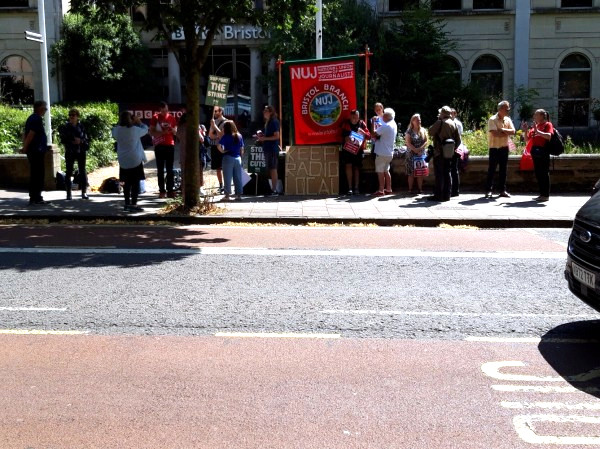
 In 2022 Chile appointed
  Now compare and contrast that record of achievement with the person who was until recently the UK’s Minister of State for Overseas Territories, Commonwealth, Energy, Climate and Environment, the improbably named