Language

  • Bristol Post: England invests £168 in roads

    Road works traffic signAccording to yesterday’s online edition of the Bristol Post, the Department of Transport is to invest the princely sum of £168 – the largest amount it has spent on tarmac for four decades – in England’s road network.

    Of this total, the amount earmarked for local authorities in the Bristol area swells magically to more than £2 mn., according to a this piece by an unidentified Post hack.

    The second paragraph of the report reads as follows:

    The handout from a £168 funding pot which will see more than £3 million potholes filled is part of what is being billed as “the biggest investment in roads since the 1970s”.

    For those who prefer their information unmangled by the illiterates of the local media, the original Department of Transport press release is available here.

  • Court adjournments continue due to interpreter absences

    A quick search of the local media reveals that every week courts all over England and Wales are having difficulty booking interpreters when they need them since Capita T&I gained the contract for providing them for the Ministry of Justice.

    On Tuesday The Bolton News reported that a suspected cannabis farmer had to have his court hearing adjourned because his Vietnamese interpreter did not attend.

    The defendant, Hiep Thai, was remanded in custody by Bolton Magistrates Court.

    Meanwhile in Swansea Crown Court, four Latvian defendants were unable to enter pleas in a case concerning an alleged kidnapping and assault in Carmarthen, according to the Carmarthen Journal on Wednesday.

    The defendants were unable to enter any pleas because the court had been unable to arrange for a Latvian interpreter to be present.

    Judge Peter Heywood ordered the 4 defendants to return to Swansea Crown Court on 5th September (will Crapita be able to arrange an interpreter at such short notice? Ed.) for their next hearing, when they will be asked to enter pleas. In addition, the court was informed that a Latvian, Polish and a Bulgarian interpreter would probably be required for the trial to take place.

    One defendant, Juris Udrins, remains on remand in Swansea Prison, whilst the other 3 – Aleksandrs Turcans, Armands Nikiferovs and Guntis Goldins were bailed.

  • Dorchester Crown Court: Crapita found in breach

    Earlier today barrister Charles MacLean Cochand tweeted the following from Dorchester Crown Court:

    It is understood that the replacement Portuguese interpreter booked via Crapita is travelling to Dorchester from Nottingham, a round trip of over 400 miles. This interpreter is due to arrive at 2.00 pm, according to Mr Cochand.

  • Juvenile errors

    Today’s online version of the Bristol Post carried a piece with a real howler of a typo in its headline, as shown by the following screenshot.

    screenshot of Post headline stating Bristol councillors' pay is BELOW the minimum age

    After reading the headline, I was uncertain as to whether our councillors are below the minimum age or ‘earn’ less than the minimum wage for their services.

    The typographical error in the headline has since been corrected.

    By equating the councillor’s allowance with a wage or salary, the Post is making yet another juvenile error. Elected members of the City Council receive allowances in recognition of the time, work and costs involved in allegedly representing the people of Bristol; a wage is defined by Collins English Dictionary as a “payment in return for work or services, esp[ecially] that made to workmen on a daily, hourly, weekly, or piece-work basis.”

    Furthermore, yesterday the Post lifted this story from The Guardian about probable nuclear targets in the UK in the 1970s and completely misinterpreted the map (PDF) produced by The Guardian to accompany the piece, which clearly shows Bristol as a probable nuclear target, one of 106 around the UK. Instead the Post confidently proclaimed in its story that “Bristol was not thought to be important enough to be a target for Soviet missiles, according to government papers made public yesterday”.

    Fellow local blogger Stockwood Pete commented this was “Horribly inaccurate reporting even by the Post’s low standards.”

    One has to wonder if quality control is beyond the abilities of the Bristol Post.

  • Crapita makes one L of a mistake

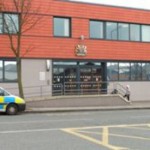
    image of Scarborough Justice CentreCapita Translation & Interpreting has made yet another linguistic cock-up, landing the taxpayer with a bill for £3,000 when asked to supply interpreters for a Lithuanian accused of stealing two bags for life worth 20p, according to Thursday’s Yorkshire Post.

    Tadas Tarkutis was accused of stealing these low value items from Sainsbury’s in Scarborough and arrested. A Lithuanian interpreter was arranged to attend the police station, making a 120 miles round trip from Harrogate.

    However, when Tarkutis appeared in Scarborough Magistrates Court the following morning the same interpreter was unavailable and Capita T&I arranged for a substitute – a Latvian interpreter who made a wasted 320 miles round trip from Rugby. Tarkutis was then remanded in custody overnight while a replacement interpreter was sought for the next day.

    This time Capita T&I were able to supply a Lithuanian interpreter, Tarkutis admitted the crime and was jailed for 6 weeks breach of a suspended sentence.

    One court source is reported by the Post as saying: “It was as if someone somewhere had just picked out a country that begins with ‘L’. It was ridiculous.”

    Quite.

    Capita describe as a company “you can rely on”. One can definitely rely on Capita to cock things up.

    The Yorkshire Post’s reporter refers throughout the piece to the linguists involved as translators. He or she – should they happen to visit this blog – definitely needs to read my illustrated guide to the difference between the two.

  • Greenwash: Bristol City Council’s favourite paint

    2015 sees the city of Bristol wearing the crown of European Green Capital.

    This award of European Green Capital is allegedly bestowed in recognition of the important role that local authorities play in improving the environment and their high level of commitment to genuine progress.

    However, is it deserved in the case of Bristol City Council?

    I have my doubts.

    Earlier today I discovered tree felling, thinning and scrub clearance had been going on within the last few days at Lawrence Hill roundabout.

    image of tree felling at Lawrence Hill

    image of tree works at lawrence hill

    This is the middle of the main bird nesting season in the British Isles.

    As regards protecting breeding birds and mitigating harm during the breeding season, Natural England’s advice (PDF, p. 4) is as follows:

    The main mitigation route to reduce the likelihood of harm to breeding birds is to undertake clearance or destruction of any vegetation or structure which may be used as a breeding site outside the bird breeding season when breeding birds are unlikely to be present (based upon habitat features) or where survey work has confirmed their absence. Avoidance of such features is best achieved through timing of work (see below) but may also be possible by temporarily preventing birds from using these features, before they start doing so. Examples include physical exclusion (preventing access to potential nest sites) or use of visual or audible deterrents. Such measures should only be undertaken following the advice of a suitably experienced ecologist, taking account of relevant legislation and welfare considerations.

    The bird breeding season will be dependent upon weather conditions and will vary from year to year, but in general is the period between early March and late August.

    Natural England is the government’s advisor on the natural environment, providing practical advice, grounded in science, on how best to safeguard England’s natural wealth for the benefit of everyone.

    Furthermore, a quick search of the city council’s website for scrub clearance bird nesting season returns 29,400 hits, with the first page seeming to consist of the council pontificating that no such works should be undertaken when birds are on the nest.

    However, it is clear from the pictures above that Bristol City Council’s clear modus operandi is “do as I say, not as I do“.

    The English language has a term for such an attitude: hypocrisy.

    There’s also a splendid fairly new English word specifically for a superficial or insincere display of concern for the environment shown by organisations: greenwash.

    Next year, Bristolians can bet their city will be coated in greenwash, liberally applied with big brushes and rollers by the city council, given its apparent hypocrisy when it comes to nature conservation.

  • Avon (still) calling

    The Heath government’s Local Government Act of 1972 radically overhauled local government arrangements in England and Wales.

    In particular, it redrew the map of the shire counties, some of which had been in existence in some form since medieval or Saxon times.

    coat of arms of Avon County CouncilOne of the Act’s results was the creation of the County of Avon, a non-metropolitan county, which survived from its creation on 1st April 1974 until its abolition on 31st March 1996, when it was succeeded by the present unitary authorities of Bristol, South Gloucestershire, Bath & North East Somerset.

    Despite its abolition and its failure to engage popular support during its existence (it was widely derided at the time as a “cardboard county”. Ed.), Avon is proving harder to eradicate than a vampire. Its legacy can be found all over the West of England and the defunct county’s former administrative area.

    In organisational terms, its name crops up in the following public and private bodies:

    In addition to the above, there’s still an Avon Coroner’s district, the Forest of Avon community forest project and one can by an Avonrider ticket on local bus services.

    Although it ceased to exist nearly two decades ago, many bodies still insist that Avon forms part of the postal address of places like Bristol in spite of the fact that the Royal Mail long since indicated that it was not necessary to include Avon as part of any address as Royal Mail itself had abandoned the use of postal counties in 1996.

    The inspiration for this post came from a conversation this morning on Twitter.

    Any further instances of the survival of Avon can be posted in the comments below.

  • Lack of interpreter delays Staffordshire court case

    image of gilded statue of Justice on top of Old BaileyMonday’s Stoke Sentinel reported that magistrates at the North Staffordshire Justice Centre in Newcastle under Lyme had to adjourn a case until 30th May to allow for an interpreter to be arranged for the defendant.

    Antonia Lakatos, of Gladstone Street, Basford, Stoke on Trent, is charged with theft of alcohol and clothing worth £345.15 from Asda in the Wolstanton district of Newcastle under Lyme, as well as going equipped for theft with an item used for de-tagging shop merchandise on 31st March.

    Will an interpreter turn up? After all, some of the interpreters working for Capita T&I cannot even be bothered to turn up for a case being heard by someone as senior as the President of the Family Division of the High Court of England and Wales (posts passim).

  • A ‘concerning state of affairs’

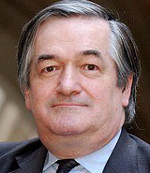
    image of Sir James MunbyYesterday’s Law Gazette reports that senior judge Sir James Munby, who is the President of the Family Division of the High Court of England and Wales, has described the arrangements for providing court interpreters under the contract between Capita and the Ministry of Justice as “unacceptable” after he was forced to abandon a final adoption hearing after Capita was repeatedly unable to provide interpreters for the Slovak-speaking parents.

    Sir James ordered Capita to explain why neither of the 2 interpreters booked for the 7th May hearing had attended. He described the response to the points he raised in his judgement (PDF) from Capita’s relationship director Sonia Facchini, as disclosing a “concerning state of affairs”, with 3 points “demanding notice”.

    In the first instance he noted: “The contractual arrangements between Capita and the interpreters it provides do not give Capita the ability to require that any particular interpreter accepts any particular assignment or even to honour any engagement which the interpreter has accepted.”

    Secondly, he drew attention to the short notice courts were given of any cancellation of a booking by a interpreter (2 pm on the day before the hearing). This gives the court insufficient time to make alternative arrangements.

    Thirdly, he noted the lack of suitably qualified interpreters. On the day in question, Capita needed 39 Slovak interpreters to cover the workload requested by the courts; Capita only had 29 suitably qualified Slovak interpreters on its books for court hearings that day, of whom a mere 13 were within a 100-mile radius of London’s Royal Courts of Justice.

    Defending his adjournment, Sir James stated: “Anyone tempted to suggest that an adjournment was not necessary might care to consider what our reaction would be if an English parent before a foreign court in similar circumstances was not provided with an interpreter.”

    Quite.

    When approached for a response to the learned judge’s remarks, both Capita and the MoJ made their usual, meaningless soothing noises that are not worth transcribing, let alone reading.

    In political terms, the responses by the MoJ to concerns about its contract with Capita are akin to the “Big Lie“. However, the lies told by its various spokespersons over the years are so preposterous, no-one with any sense is buying their propaganda.

Posts navigation