Media

  • The rubber stamp of approval

    Approved stampGoing back to my schooldays over 5 decades ago, I recall being taught in English language classes that to rubber stamp means officially to approve a decision without giving the matter in question any proper scrutiny or thought.
    Rubber stamping is indicative of lack of care, attention and is indicative of perfunctoriness.

    Furthermore, the definition I was taught all those long years ago is confirmed by Collins Dictionary, which states:

    When someone in authority rubber-stamps a decision, plan, or law, they agree to it without thinking about it much.

    Nevertheless, there seems to be a general trend nowadays in the press to use this verb routinely for the approval of any decision, whether or not it is preceded by lengthy or indeed any debate at all.

    It’s as if to rubber stamp has become synonymous with to approve, which is really isn’t.

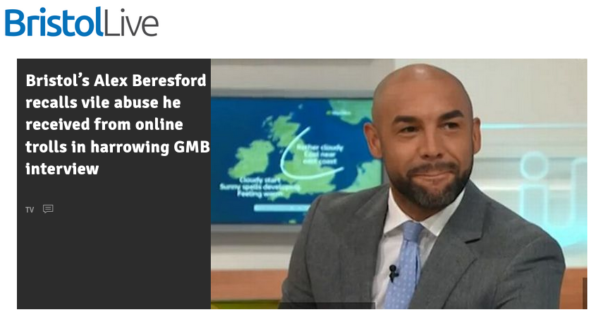
    One very guilty party in this respect is the Bristol Post, now rebranded as Bristol Live by its Reach plc masters, as per this example from 12th February, where we read:

    The plan is due to be rubber stamped at a council meeting on Monday (February 15).

    If there’s one thing I know about planning meetings (having attended them. Ed.), it’s that their decisions are never rubber stamped, as councillors serving on planning committees generally tend to consider all applications in the most minute detail. There’s no waving agenda items all through in a couple of minutes, so members can retreat early to the pub or somewhere else more interesting than a council meeting room.

    I hope any passing member of the fourth estate will take note of – and act upon – the content of this little post.

  • Premises, premises

    When related to property, the noun premises is defined by Collins Dictionary as:

    a piece of land together with its buildings, esp considered as a place of business.

    When related to property, premises has since time immemorial (or even longer. Ed.) been a plural noun.

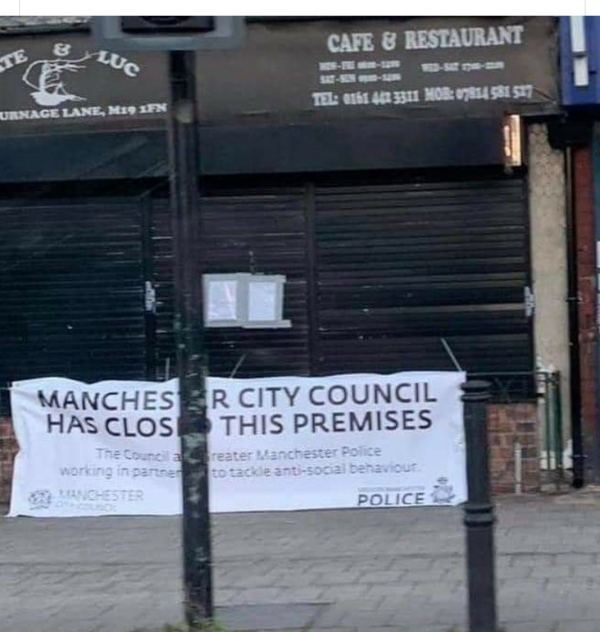
    However, it is a source of constant surprise how many people these days regard premises as a singular noun, as shown by this recent example, courtesy of Manchester City Council.

    Banner in image reads: Machester City Council has closed this premises
    A singular example

    However, it should be remembered that premise does exist as a singular noun, in which instance it takes the following definition:

    something that is supposed to be true and is used as a basis for developing an idea.

    Local authorities are not the only people to get confused about premises and premise as regards use of the plural and singular.

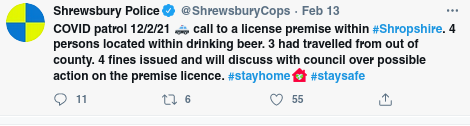
    Take this example on Twitter courtesy of the constabulary in Shrewsbury.

    Tweet reads: COVID patrol 12/2/21  🚓  call to a license premise within #Shropshire. 4 persons located within drinking beer. 3 had travelled from out of county. 4 fines issued and will discuss with council over possible action on the premise licence.
    A singular licence

    That’s right. Why have a premises licence when a premise licence will do just as well? I’m sure Mr Plod meant the former, but having a licence for a premise raises many new questions indeed.

    Professor Paul Brains of Washington State University has included the confusing of premises and premise in his book, Common Errors in English Usage. Read his simple, eloquent distinction.

    Premises are also quite particular about where any action takes place too. Anything that happens always, always takes place on them, not in them.

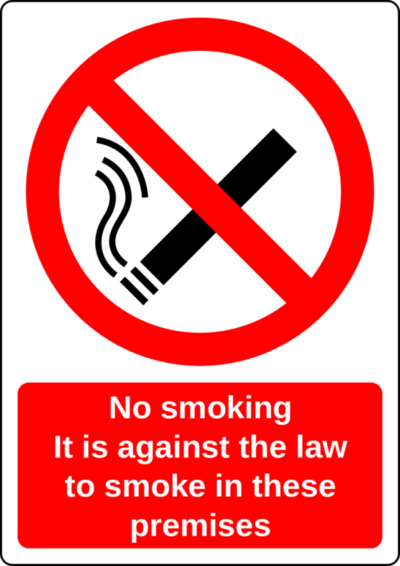
    The introduction of a blanket ban on smoking indoors gave rise to a wave of illiteracy, as exemplified by this typical example.

    Sign reads No smoking. It is against the law to smoke in these premises
    Image courtesy of Wikimedia Commons

    It does feel as though those of use who are held to higher standards of language use and/or were taught proper English (Ahem! Ed.) are fighting a losing battle. Will premises become increasingly singular? Will actions take place in them ( or it? Ed.) in future?

    For the answers to such questions, one must wait and see.

    Only time can tell as language always has been dynamic, i.e. a moving target: and what is regarded as proper usage will always be subject to change, just like language itself.

  • Gloucestershire Live reveals truth about The Independent Group

    Gloucestershire Live is a sister title of the Bristol Post/Bristol Live and as such provides a similar mediocre quality of journalism to its victims readers.

    Yesterday, it shook off that veil of mediocrity – albeit briefly – as its website published an item confirming what many believed concerning the main politics news story of the week: the exit of right-wing MPs from the Labour Party to form a breakaway group, as shown in the screenshot below.

    Header for piece about Chuka Umunna reads Conservatives

    My Gloucestershire friends have this morning confirmed via social media that as far as the governance of the county is concerned, politics inevitably equals the Conservatives and the Blue Team dominate what is effectively a de facto one-party state.

    Hat tip: Westengland.

  • Meet Victor

    In Ireland, any predominantly Irish-speaking area is known as a Gaeltacht (plural: Gaeltachtaí). The island’s Gaeltachtaí are shown in green on the map below.

    Map of Irish-speaking areas of Ireland

    The green-shaded area beneath the Dingle Peninsula is the Iveragh Peninsula (Irish: Uíbh Ráthach) in County Kerry and an interesting appointment has just been made here.

    Yesterday Irish broadcaster RTE reported that a Russian had been appointed as an Irish language officer there and would be leading efforts to revive the Irish language there.

    RTE states:

    Victor Bayda, a native of Moscow, has taken up the post with Comhchoiste Ghaeltacht Uíbh Ráthaigh, a community organisation in the south Kerry Gaeltacht of Uíbh Ráthach.

    Mr Bayda is a fluent Irish speaker and has been teaching it in Moscow for about fifteen years. In addition to Irish, Mr Bayda also speaks Dutch, Scots Gaelic, Welsh, Swedish, French, German and Icelandic.

    His duties in his new post will include implementing a comprehensive language plan aimed at arresting the decline of the language on the peninsula, where 60% of the residents claim the ability to speak Irish.

    According to the 2016 Irish census, just 7% of the Gaeltacht population speak Irish daily outside the education system.

    Mr Bayda becomes the tenth Irish language planning officer to be appointed so far in Gaeltacht areas.

    In 2017, Victor posted the video below on Youtube.

  • Telegraph exclusive: Brits using ducks to negotiate Brexit

    The right-wing Telegraph newspaper has enjoyed a long and close relationship with the Conservative Party. So close indeed that it is often referred to as the Torygraph.

    This close relationship means that developments within the Tory Party are frequently reported first in the Telegraph.

    It is therefore no surprise that the latest developments on the state of the UK’s Brexit negotiations popped into my Twitter feed this morning with the following Telegraph headline and abstract.

    Image text reads Brexit latest news: Theresa May will meet Jeremy Corbyn today as she prepares to send a revamped negotiating teal back to Brussels.

    Yes, that’s why the negotiations have been so disastrous. They’ve been handled by ducks, or more specifically a Eurasian teal, a male specimen of which is shown below.

    Male Eurasian teal
    A top international negotiator according to the Telegraph. Photograph courtesy of Wikimedia Commons.

    How a duck or ducks actually managed to deal with the question of the Irish backstop remains a mystery and is probably why the Tory right wing is so obsessed with it. And quite what a revamped negotiating teal is, one could indulge in conjecture. Was it taken to some backstreet ornithologist and given the plumage of, say, an Arctic skua, together with a bit of beak remodelling?

    Please Torygraph, tell me it’s not a typo! 😀

  • A penny for your thoughts?

    If there’s one thing that can be said about language, it’s that it’s dynamic. Blink for a second and you might miss the coining of a neologism or an old turn of phrase becoming obsolete.

    The latter in particular can have amusing consequences, especially if re-used by someone possibly too young to appreciate the original connotations of the word or phrase.

    One such most likely occurred today in a Bristol Post piece about free travel in the Bristol area on Unibus services.

    The item’s second paragraph reads as follows:

    Passengers will able to hop on the Unibus U2 service, from Monday February 18 until Friday, February 22 without spending a penny.

    To someone of my age (rapidly approaching where I qualify for a pass for free bus travel. Ed.), the phrase has connotations other than obtaining buckshee travel.

    As Collins Dictionary helpfully points out:

    If someone says that they are going to spend a penny, they mean that they are going to go to the toilet. [British, old-fashioned, politeness]

    old coin-operated public toilet lockThe origins of the phrase stretch back to the Victorian era and refer to the use of coin-operated locks on public toilets in the UK. Such locks were first used in a public toilet outside London’s Royal Exchange in the 1850s.

    The phrase “to spend a penny” has now largely died out and been forgotten, except by those with greying hair, due to changes to public toilets themselves (many of which have been closed by austerity-hit local authorities. Ed.) and changes in the charges to use a toilet. Last time I looked while on my travels, the toilets at Manchester Victoria railway station cost an exorbitant 20p, i.e. 4 shillings or 48 times the original cost of one penny.

  • Northampton or Novosibirsk?

    Via Twitter, the following image arrived in my timeline this morning. It’s a below the piece comment, ostensibly from someone called DAZ21, from the mobile version of the Daily Mail website.

    Text of comment reads White British in London 45 percent, white British in Birmingham 50 percent..Our 2 largest cities don't belong to us anymore, we have been very tolerant and are probably the least racist country on Earth. But these ideologies we import are incompatible to our own... I give it 5 years before civil war breaks out.

    As you can see, at the top of the comment DAZ21 would like us all to think he’s from the fair English county town of Northampton.

    However, there are a couple of problems with locating dear ole DAZ21 there if one examines the text of the comment closely; and the vowels in particular.

    Look first near the bottom of the comment. Is that a letter “a” with diaresis (ä), I see before me?

    The letter “a” with diaresis is quite common in German (as in Käse – cheese. Ed.), but not in English.

    However, there’s a real clincher in the text that shows DAZ21 is more likely to hail from Novosibirsk than Northampton: and once again it’s a vowel that gives the game away, namely the “i” with diaresis “ï“).

    According to Wikipedia, “Yi (Ї Ñ—; italics: Ї Ñ—) is a letter appearing the Cyrillic script, as used by Russian, amongst other languages.

    In English this is a very uncommon character and is used when ⟨i⟩ follows another vowel and indicates hiatus (diaeresis) in the pronunciation of such a word.

    There have been questions about the reliability of the the Daily Mail for decades. Last year it was banned as a source by Wikipedia due to its “reputation for poor fact checking and sensationalism“.

    One wonders how much further that reputation has slumped if its below the piece comments are now full of bots or actual Russians pretending to be Brits posting provocative and/or misleading content.

    By the way, Novosibirsk is Russia’s third most populous city after Moscow and St Petersburg.

  • The value of understanding

    It seems we live in a society that knows the cost of everything and the value of nothing.

    On Monday Kent Online reported that Kent County Council is expecting to spend £1.5 million more than the central government funding it has received to support unaccompanied asylum-seeking children (UASC) who left the care system during the current local authority financial year.

    The county has received a total of £6.9 million from the Home Office and Department for Education to help more than 900 young people who have entered the UK unaccompanied, but is looking at costs of £8.4 million.

    According to council officers, part of the problem is apparently “a shortage of translators [sic] living in the area.”

    However, one reason for the higher costs can be laid firmly at the government’s door. The government has decided to extend support for all care leavers up to the age of 25 years; it was previously 21.

    Legal costs and the immigration application process are also factors that have resulted in higher costs.

    Kent’s Director for children’s integrated services, Sarah Hammond, seems to understand the value of interpreters. She is reported as saying the following:

    It’s absolutely critical both for the young people and social workers that there is no window of doubt what the young person is saying. For that reason, we have to use trained and certified interpreters.

    The validity of the assessment work we do would fall away if we were not able to demonstrate we had the right quality and accreditation of a translation body – and that comes with significant costs.

    The reality is the majority of interpreters are coming from outside of the county, so we are incurring travel costs as well as their professional fees.

    The very words Kent Online quoted Sarah Hammond as saying shows that she at least recognises the value of understanding. Young refugee people leaving care might not always have had much opportunity to become fluent enough in English to deal with whole panoply of officialdom and bureaucracy one has to deal with once past the age of majority in the UK; and one way to ensure both parties achieve full comprehension is by using qualified linguists.

    The consequences of using unqualified interpreters has been amply illustrated down the years by the Ministry of Justice’s disastrous outsourcing of police and court language services, which is still continuing, as shown by this example from the north east of England.

    Ms Hammond’s comments are in marked contrast to the reaction of the sole councillor quoted, Conservative Rosalind Banks, who remarked: “I suspect if the translation costs were made known to the average resident of Kent, they might turn around and say I’m sure this could be done a lot cheaper“.

    Cheaper, councillor? We linguists are skilled professionals, in case you hadn’t noticed.

    Needless to say, the councillor’s ignorant, penny-pinching sentiments are reflected in the comments below the piece, the majority of which are xenophobic, if not bordering on the racist.

Posts navigation