politics

  • Content liability: Big Tech squares up to Uncle Sam
    US Supreme Court sealFollowing the announcement anti-trust action by the United States Department of Justice along with the Attorneys General of California, Colorado, Connecticut, New Jersey, New York, Rhode Island, Tennessee, and Virginia against Google, Meta (owners of Facebook and Instagram), Microsoft and Twitter have all made statements seeking to defend their actions.

    In their legal opinions, the big US tech giants, including Microsoft, Meta and Twitter, are warning the Supreme Court against amending Section 230 of the Communications Decency Act (CDA). This would enable actions against content recommendation algorithms, French IT news site Le Monde Informatique reports.

    One week after Google’s filing of a defence statement with the US Supreme Court warning that amending Section 230 of the Communications Decency Act (CDA) “would upend the internet“, several companies including Twitter, Meta and Microsoft, have filed their own legal opinions. They support Google’s argument that a restriction of the law could have disastrous consequences for the content editors. By virtue of the 1996 CDA, the companies are shielded from liability for content posted by their users, including comments, criticism and advertising.
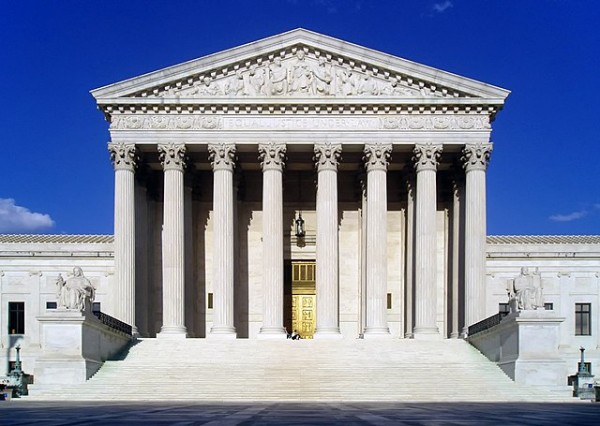
    US Supreme Court west facade
    US Supreme Court.
    Image courtesy of Wikimedia Commons and UpstateNYer

    However, the Supreme Court has been asked to examine whether Section 230 was still pertinent and appropriate, given that it was promulgated before the internet became part of everyday life. The law was subject to a minute before the suit filed by the family of Nohemi Gonzalez, a 23 year-pld US citizen killed in Paris during the 13th November 2015 terrorist attacks claimed by ISIS. The Gonzalez family asserts that the algorithms should be regarded as editorial content not covered by the immunity from liability granted by Section 230 and thus Google’s YouTube subsidiary has violated the US Anti-Terrorism Act (ATA) when its algorithms have recommended ISIS-linked content to users. The Supreme Court is set to hear oral arguments in the case on 21st February next.

    Criticisms of the protections of Section 230 for websites

    Both Democratic and Republican members of Congress have criticised the protections provided for by the law. The Republicans believe that those in respect of liability make websites take partial decisions regarding content removal, whilst the Democrats would like the same sites to take more responsibility as regards moderation. In a statement President Biden has stated that his administration would support the position that Section 230 protections should not apply to recommendation algorithms. In its petition of 19th January, Microsoft asserts that if the Supreme Court makes amendments to Section 230, it would “strip these digital publishing decisions suit—and it would do so in illogical ways that are inconsistent with how algorithms actually work.“.

    The company added that any decision aimed at restricting the law “thereby expose interactive computer services to liability for publishing content to users whenever a plaintiff could craft a theory that sharing the content is somehow harmful“. In its own petition Meta stated that the plaintiffs’ argument is “deeply flawed from a legal point of view”; by interpreting Section 230 as a means of protecting sites from liability for content posted by its users whilst removing protection from content “ignores the way in which the internet works“. The company continued by describing the plaintiffs’ position as “regrettable from a practical point of view” and by stating that a ruling in their favour would ultimately prompt “online services to remove important, provocative and controversial content on matters of general interest“.

    Protection from liability essential for website operation according to Twitter

    Twitter has said that the current interpretation of Section 230 “ensures that sites such as Twitter and YouTube can work in spite of the unfathomable amount of information they make available and the potential liability that might result from this“. Since Twitter’s acquisition by Elon Musk, the site has been criticised for having reinstated the accounts of people it previously banned, such as disgraced former president Donald Trump or alpha male par excellence and all-round amateur human being Andrew Tate who is currently under investigation in Romania for alleged human trafficking.

    However, the review of several other high-profile cases will have to take place before the law is changed. Last week the Supreme Court was set to discuss its jurisdiction in two cases that challenge Texas and Florida laws prohibiting online platforms from removing certain political content. In addition, a Twitter vs. Taamneh case, which has many similarities with the Gonzalez vs. Google case, is due to oral pleadings on 2nd February. In this case Twitter, Facebook and YouTube are accused of having aided and abetted another attack claimed by Islamic State.
  • A family with the wrong members in control

    In 1941 in the midst of World War 2, George Orwell wrote his essay The Lion and the Unicorn on the state of England in wartime and examining what the England of the 1940s could have in common with the England of 1840.

    His line of reasoning resulted in him penning the following paragraph.

    England is not the jewelled isle of Shakespeare’s much-quoted message, nor is it the inferno depicted by Dr Goebbels. More than either it resembles a family, a rather stuffy Victorian family, with not many black sheep in it but with all its cupboards bursting with skeletons. It has rich relations who have to be kow-towed to and poor relations who are horribly sat upon, and there is a deep conspiracy of silence about the source of the family income. It is a family in which the young are generally thwarted and most of the power is in the hands of irresponsible uncles and bedridden aunts. Still, it is a family. It has its private language and its common memories, and at the approach of an enemy it closes its ranks. A family with the wrong members in control – that, perhaps, is as near as one can come to describing England in a phrase.

    There is so much in that one paragraph that is still pertinent today: the cupboards bursting with skeletons; the poor relations who are horribly sat upon; deep conspiracy of silence about the source of the family income; and above all a family with the wrong members in control.

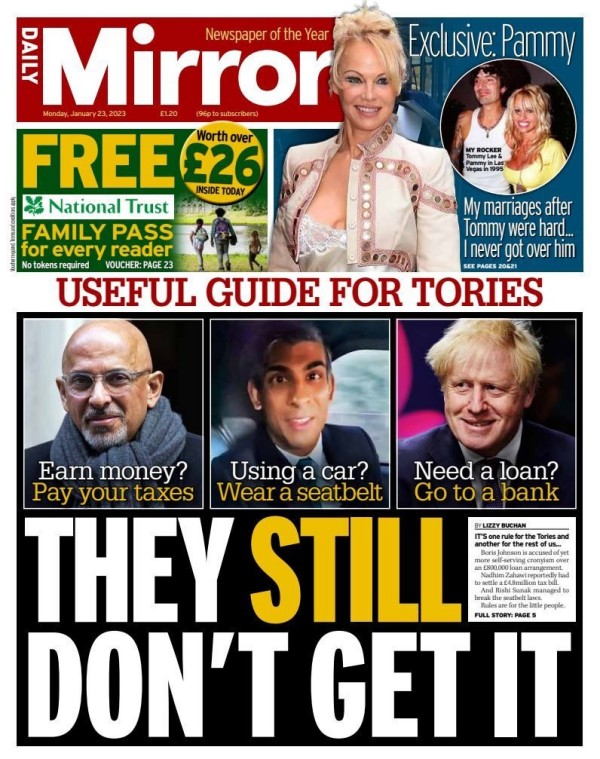
    Which brings us very neatly to today’s Daily Mirror font page with some blunt advice for the current “wrong” members in control.

    Headline reads they still don't get it
    The ‘irresponsible uncles’ mentioned by Orwell

    When alleged prime minister Rishi Sunak entered Number 10 he promised: “this government will have integrity, professionalism and accountability at every level.”

    His words have rung hollow, as revealed by his own actions – not wearing a seat belt in a moving car whilst being over 17 years of age – and those of others such as disgraced former alleged prime minister Alexander Boris de Pfeffel Johnson’s cronysim. Furthermore, Sunak has revealed himself to be particularly foolish. Who else would video themselves breaking the law and then post the evidence on social media?

    However, perhaps far worse than that is the case of present Tory Party chair Nadhim “Stable Genius” Zahawi. It has now come to light that he was under investigation by the Revenue for tax irregularities while he was Chancellor Chancer of the Exchequer. It has emerged today that Zahawi actually had to pay overdue taxes as well as a penalty.

    Last time your ‘umble scribe looked, those who handle their tax affairs with integrity generally have to pay penalties to the taxman.

    Sunak’s fine words in respect of integrity, professionalism and accountability have a distinctly hollow ring, reminiscent of a phrase of Orwell’s regarding political speech in his 1946 essay Politics and the English Language.

    Political language – and with variations this is true of all political parties, from Conservatives to Anarchists – is designed to make lies sound truthful and murder respectable, and to give an appearance of solidity to pure wind.

    One wonders whether Sunak’s answer to all the sleaze, corruption and general misbehaviour rife in his party with an updated version of John Major’s 1990s Back to Basics campaign. However, your correspondent doubts Sunak has the political skills.

  • Spending other people’s money

    One Mary Elizabeth Truss has the distinction of being the prime minister of the English Empire (which some still call the United Kingdom. Ed.) with the shortest term of office, staying in post a mere 49 days.

    However, that did not stop her crashing the economy with the budget cooked up by her and her Chancer of the Exchequer Kamikwasi Kwarteng‘s disastrous 2022 mini-budget, as well as being profligate with other people’s – i.e. taxpayers’ – money.

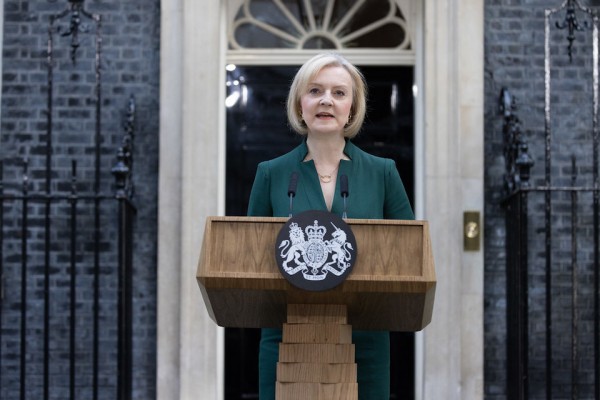
    The Mirror reveals that Truss’ so-called ‘Jenga‘ lectern specially made for her cost the public purse £4,175. That equate to an ependiture of £85 for each of the forty-nine days she served. The Mirror piece reveals that Truss also had a second similar lectern made, but that was paid for by those gullible people who pay membership subscriptions and donate to the Tory Party.

    Truss and the Jenga lectern
    Mary Elizabeth Truss and that lectern. Photo credit: gov.uk

    It wasn’t as if Downing Street had a dearth of lecterns at the time; current alleged prime minister Rishi Sunak never bothered to have a bespoke lectern made and is using a predecessor’s cast-off that “was purchased under a previous administration” at a cost of £3,050. What an absolute bargain the former Goldman Sachs asset is.

    When she was pretending to be the Secretary of State for Foreign, Commonwealth and Development Affairs (FCD), Truss gained quite a reputation for her spendthrift ways. These included using half a million pounds of public funds to hire a private jet for a visit to Australia. At the time Truss was roundly criticised for her reluctance to use a regular, cheaper and faster scheduled service. The most expensive business-class ticket for the former foreign secretary’s entire itinerary on Qantas would have come at a cost of £7,712 to the public purse.

    Mary Elizabeth’s final months as Foreign Secretary were likewise characterised by a similar propensity for spending others’ money, racking up £2m worth of air miles in six months on 20 overseas trips..

    However, it was not just Truss’ love of air travel that drew the media’s attention. Back in September 2022, Sky News reported that Foreign Office expenditure during Truss’ tenure included 2 trips to the hairdresser for her at a cost to the taxpayer of nearly £3,400. Then there was nearly £2,900 spent by her department at the Norwich City online store – £1,318 on 21 October last year and £523.50 on 21 March 2022 by an unknown purchaser for unknown goods. Truss is allegedly the Member of Parliament for South West Norfolk, so that might explain this anomalous FCD expenditure.

  • Stolen sculpture – city council prevaricating over return

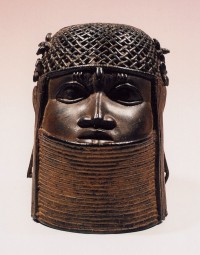
    Bristol museum's Benin bronze head of an ObaIn 1897 British troops attacked, burned down and looted the palace of the Oba (king) of Benin in West Africa. The former Kingdom of Benin (1180–1897) is now part of present-day Nigeria.

    Amongst the squaddies’ loot was a huge haul of bronze sculptures, many of which found their way into museums, galleries and onto the western art market.

    One of these was acquired in Bristol City Museum & Art Gallery in 1935, where it is described as Object Number Ea7821.

    Back in 2020 Prince Edun Akenzua of the Royal Court of Benin made a direct appeal to Bristol to return the looted artwork to Nigeria, as reported at the time by the Bristol Post.

    Since then many fine words have been written by the city council about repatriation both on the museums website and the museums blog with the latter stating the following regarding the fate of the sculpture:

    Although we have still not been able to make contact directly with Royal Court officials, we have been looking at the work of the British Museum and the Benin Dialogue Group and discussing options with the Legacy Restoration Trust. To be clear, we are not bound by the thoughts or decisions of any of these bodies, nor the UK government.
    We have been gathering information about the best way to take on board the variety of thoughts and concerns of different groups in Nigeria. There has been a lack of consensus about the best place to hold objects that return to the country. The new, but yet to be built, Edo Museum of West African Art is one option that many do agree with.

    Since then things have gone very quiet indeed. Bristol University student newspaper Epigram has even accused the city council’s museums service of “heel-dragging.

    Your ‘umble scribe also believes the city council’s museums service could have moved a little quicker and has today filed the following FoI request with the city council.

    Dear Bristol City Council,
    This is a request for information under the Freedom of Information Act.
    The City Museum & Art Gallery contains in its collection a Benin bronze head (Object Number: Ea7821) looted by the Oba’s palace in 1897 and acquired by the museum in 1935.
    Some years ago, the local media reported that this object was to be repatriated to Nigeria.
    There have been no subsequent reports of its repatriation, so I am assuming this has still to happen.

    Kindly provide an explanation for the delay in repatriating this object to where it belongs despite the city museums website (source: https://www.bristolmuseums.org.uk/collections/action-on-decolonisation/repatriation/) stating: “Bristol City Council acknowledges and recognises that the possession of historic Benin Bronzes is highly contentious and that there are calls for repatriation to Benin (Nigeria). As a consequence, Culture team staff are establishing contact with the interested parties in Nigeria and those who are currently negotiating with them across Europe as part of the Benin Dialogue Group and through the Legacy Restoration Trust in Nigeria”.

    Yours etc.

    In the past couple of months museums in the United States of America and Germany respectively have repatriated far more Benin bronzes than one bronze head, so come on Bristol, it’s time for you to exdigitate or if you can’t manage that, get your finger out! 😀

  • Defensive on donations

    Today’s Guardian reports that donations to the alleged natural party of government (©: the CONservative Party. Ed.) have declined by 40% in just 3 months (although in that quarter it still managed lay its paws on £3m.), according to the latest figures released by the Electoral Commission.

    By way of contrast, donations to the Labour Party have risen by almost 25%.

    Fifty pound note
    “Hello! Let me introduce you to the powerful and influential person holding me…”

    During this time the Tories have worked their way through 3 prime ministers – the disgraceful Alexander Boris de Pfeffel Johnson, one Elizabeth Mary Truss and now Goldman Sachs cheerleader Rishi Sunak – and two budgets, including a fiscal disaster from short-lived Chancer of the Excheqeur Kamikwasi Kwarteng.

    The Tory spokesperson quoted by The Guardian seems to be very much on the defensive, if your ‘umble scribe’s reading between the lines is accurate.

    The Conservative party only accepts donations from permissible sources, namely individuals registered on the UK’s electoral roll or UK registered companies. Donations are properly and transparently declared to the Electoral Commission, openly published by them and comply fully with the law.

    If as stated the Tories are only accepting donations from permissible sources, that represents a quick volte-face from six months ago when, as Open Democracy reported, it was still donations from Russian sources linked to the gangster regime of Vladimir Vladimirovich Putin.

  • A tale of two cities

    Bristol’s so-called Clean Air Zone, which has been long delayed and much contested, comes into force at the end of the month, with the usual doom-mongers predicting it will spell the death of the city centre and its shopping facilities in particular. Leaving aside those whose idea of transport policy involves sitting at the steering wheel of a mostly empty motorised three-piece suite, the scheme has caused some concern, particularly when coupled with the city’s dreadful public transport, exacerbated as it is at present due to a shortage of bus drivers.

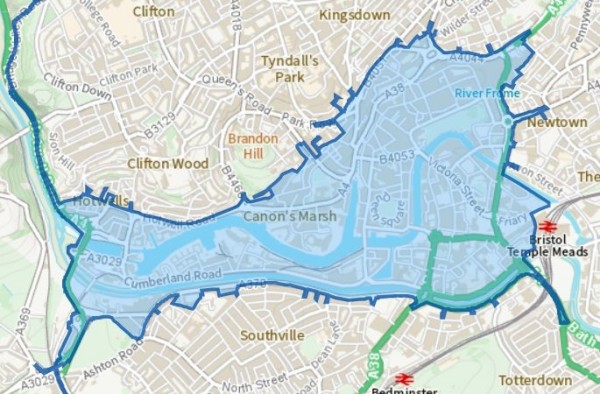
    A map of Bristol’s Slightly Less Polluted City Centre Air Zone is shown below.

    Bristol's central clean air zone
    Image courtesy of Bristol City Council

    Some might consider it timid and unambitious, especially if the aim is to get people out of their cars and walking and cycling (so-called active travel. Ed.) or using public transport.

    The argument is that the city vastly needs to improve facilities for cycling and walking* – providing far more dedicated infrastructure for both – as well as doing rather more in the way of enforcement against pavement parking (posts passim). As regards public transport, millions of pounds in public money have been poured into the city’s bus network over the years (e.g. Metrobus) with very sign of improvement and with the whole system now suffering from a driver shortage, the area’s bus network is even more unreliable than it has ever been. As for local rail services, Bristol’s are a disgrace compared with other major cities. It took decades of campaigning just to get a reasonably frequent service on the Severn Beach Line, whilst improvements to services to towns and cities surrounding local authorities have hardly improved at all. Then there’s the long-running saga of the reopening of the Bristol to Portishead railway line, where in over 2 decades progress can only be described as sub-tectonic, i.e. the earth’s tectonic plates, which shift by mere millimetres a year, are outstripping the bureaucrats. Meanwhile, the country is also failing to deal with a record cancellations of train services.

    Could these be the real reasons why Bristol’s implementation of a congestion charging scheme looks so timid and unambitious?

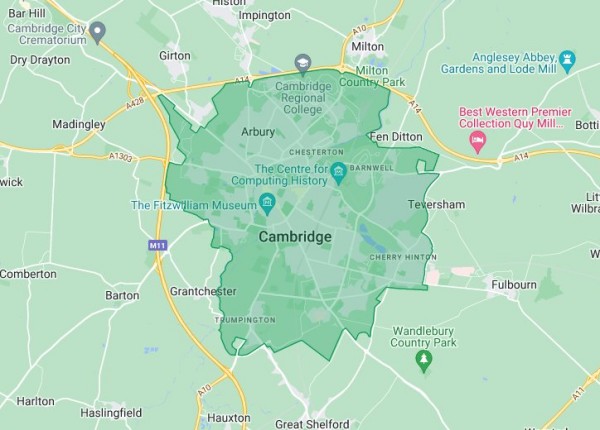
    Looking around the country, Bristol’s congestion charging zone appears to be trifling, a mere inconvenience to the majority who can continue to drive without impunity, particularly when one looks at what is being proposed in Cambridge, for example, as shown below.

    Map on Cambridge congestion charging zone covering most of the city's built-up area
    Cambridge’s congestion charging zone. Somewhere under the dark green shading is (most of) the city.

    As can be seen, the Cambridge scheme covers most of the city’s built-up area, as well as some surrounding villages. It too has attracted criticism, with it being described as town versus gown and car versus bike, pitting the city’s ordinary residents against the dreamers in the spires of Academe.

    Your ‘umble scribe just wonders what the reaction of Bristol would have been, had a Cambridge-style scheme been proposed for the city.

    * = One of the biggest changes that the council could do to make walking a more practicable mode of transport would be to change the timings on pelican crossings so that the signals change to allow pedestrians to cross within seconds of the button being pressed. This was first suggested over 30 years ago by one of the city’s cycle campaigners, the late Chris Hutt of Cyclebag. The council is keeping it persistently out of sight, having filed it in its bureaucratic oubliette otherwise known as its extensive Not Invented Here filing system.

  • Goodbye Snowdon. Hello Yr Wyddfa

    Snowdonia National Park Authority committee members have voted to use the Welsh names of Eryri (Snowdonia) and Yr Wyddfa (Snowdon) in both Welsh and English contexts Nation.Cymru reported on Wednesday.

    Yr Wyddfa (Snowdon) from Crib Goch, Parc Cenedlaethol Eryri National Park
    Yr Wyddfa (Snowdon) from Crib Goch,

    Image from Llywelyn200 courtesy of Wikimedia Commons

    The receipt of a five thousand signature calling on the authority to formalise the use of the Welsh names Eryri and Yr Wyddfa helped to prompt the latter to take decisive action. The petition was received after the authority had already established a commission to examine the use of place names.

    Cardiff University’s Dr Dylan Foster Evans was was asked to compile a series of principles for use as guidance when referring to geographical names in the Eryri / Snowdonia National Park.

    A start on using the Welsh names in an English context started some years ago when many of the park authority’s English versions of publications and digital media started using the names Eryri and Yr Wyddfa with the English names following in brackets.

    Naomi Jones, the Snowdonia National Park Authority’s Head of Cultural Heritage remarked:</p

    Many public bodies across Wales have moved to use both the Welsh and English names, or the Welsh name only, when referring to Yr Wyddfa and Eryri, as have many of the mainstream English-language press and filming companies.
    This is very encouraging and gives us confidence that this change in the authority’s approach will be accepted for the benefit of the Welsh language and as a mark of respect to our cultural heritage.

    Update 20/11/22: This news has not been universally welcomed east of Clawdd Offa/Offa’s Dyke. A typical reaction comes from monoglot, prejudiced Shropshire Star ‘readers‘. Take and look below the piece and cringe.

  • German Federal Ministry promotes open source

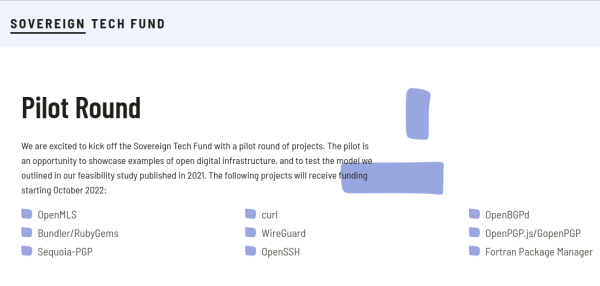
    Min. of Economic Affairs and Climate Action sponsorship logoThe German Federal Ministry for Economic Affairs and Climate Action’s Sovereign Tech Fund (STF) is promoting seven open source projects in a pilot round. The Fund shall therefore be increasing safety and data security on the internet, as well as digital sovereignty, according to German IT news site heise.
    A vulnerability in the Log4j open source Java library at the end of last year resulted in millions of potentially endangered systems. A discussion ensued about open source projects, which often represent crucial elements of the digital infrastructure.

    In the pilot round the Fund is supporting the OpenMLS library, which is used for end-to-end encryption, curl, the popular command line data transfer tool and an open implementation of the BGP internet routing protocol, which communicates between network segments and autonomous systems. The Ruby package manager RubyGems and Bundler, which facilitates the integration of Ruby packages in applications will also be supported, as will the WireGuard VPN software. In addition to this, the Fund is supporting GopenPGP, a modern OpenPGP implementation in Go, and OpenPGP.js, which can be executed in the browser. Furthermore, a projects is being promoted with OpenSSH, which is the standard for secure remote connections and is one of an administrator’s most important tools. STF pilot round projects as shown on STF website

    Software must adapt

    The STF characterises the projects as software belonging to digital base technologies and used extensively in business, the public sector and civil society. In a feasibility study (DE, PDF) the STF justifies the need to promote open basic technologies by the fact that although the importance and use of open source software is high, the projects nevertheless do not ‘adapt‘ accordingly and maintenance is often dependent upon committed individuals, thus increasing the risk of safety-critical vulnerabilities.

    In their coalition agreement, the SPD, the Greens and the FDP emphasise the importance of open source software for strengthening digital sovereignty.However, no funds were originally earmarked for the Sovereign Tech Fund in the federal government’s draft budget for 2022. In the end, coalition partners increased the funds provided so that the fund can now get started.

    The STF is promoting the above-mentioned projects until the end of the year with a total of €1 mn. Fiona Krakenbürger, the STF’s joint chief executive said: “This pilot round makes a small contribution to the sustainability of these important projects, which we hope to be able to expand in the years to come.” Projects worth funding will in future be determined in future by a committee of experts and an open application process. The STF intends to publish details of the application process in 2023.

  • COP27 – a laugh from the past

    The world’s top greenwashing event COP27 is currently taking place in Sharm El-Sheikh in Egypt.

    To give an idea of the under-achievement of previous UN conferences on climate change, it’s worth pointing out that activist Greta Thunberg is boycotting the event, stating that it will be an opportunity for “greenwashing, lying and cheating“. Greta is famously critical of politicians as her “blah, blah, blah” speech showed.

    Anyway, in anticipation of a lack of any serious commitments and outcomes from the world’s political elite allegedly having a conferenceshores of the Red Sea, here’s a reminder from the past, in the shape of Ronnie Barker’s Ministry of Pollution sketch from the second season of The Two Ronnies, first aired in 1972.

  • Badly raised boys

    Official portrait of over-promoted fireplace salesman Gavin WilliamsonYour ‘umble scribe likes to think he was properly brought up: polite, courteous, not swearing people, particularly women, and such like. As regards swearing, his sister has more than once revealed that when she and my late father were on a bus once, he admonished fellow passengers for swearing because women were present.

    As regards swearing, step forward over-promoted former fireplace salesman “Sir” Gavin Alexander Williamson CBE MP, the dishonourable member for South Staffordshire who has been inexplicably elevated to cabinet rank (again!) as Minister of State without Portfolio, who appears to have been taught and abide by completely different standards of social conduct to those of your correspondent.

    News has emerged over the weekend that Williamson sent ‘expletive-laden’ text messages to the then Conservative chief whip Wendy Morton all moaning about not being invited to attend the late queen’s funeral.

    The right dishonourable Oliver DowdenAccording to the messages published by today’s Sunday Times, Williamson accused Morton of exploiting the Queen’s death for political purposes, particularly as he was out of favour at the time with the English Empire’s shortest serving ever prime minister, one Elizabeth Mary Truss, now safely removed from high office and returned to the back benches.

    The actual words quoted by the press reveal that Williamson has a fine command of monosyllabic swear words having their roots in Old English (which some still call Anglo-Saxon. Ed.), particularly ones beginning with f and s.

    Not only did Williamson use foul language towards a woman, but this morning his cabinet colleague Oliver Dowden (also inexplicably honoured with a CBE like Williamson. Ed.)defended Williamson on Sky News’s Sophy Ridge on Sunday programme, claiming Williamson’s offensive text messages were sent ‘in the heat of the moment‘.

    I blame both of their sets of parents.

Posts navigation