English usage

  • Gourmet baked goods

    The story of baked pastry dough wrapped around is tasty filling is a long one. Sometime before 2000 BCE, a recipe for chicken pie was written on a tablet in Sumer – the earliest known civilisation – in southern Mesopotamia (now south-central Iraq. Ed.), according to Wikipedia.

    Moving forward a couple of millennia, the 1st century Roman cookbook Apicius includes several recipes involving a pie case.

    It would therefore seem evident humans have been munching pastry baked around a filling for at least two millennia.

    Coming right up to date, one of today’s largest producers of baked goods in the Untied Kingdom is Greggs, founded in the Gosforth area of Newcastle upon Tyne in 1939. From the 1970s onwards, Greggs embarked on a string of acquisitions and mergers. In June 2025 the chain had 2,649 outlets and also employs over 33,000 staff. Some items are only sold in particular regions, whilst the company also sells some of its products (e.g. bakes, melts and pasties) through the Iceland supermarket chain.

    As a mass market supplier, Greggs is frequently mocked for being down-market and this brings us neatly to humour and punning, a social media staple.

    Post reads 'What’s the matter babe? You've not even touched
your Gregg’s Benedict.'

    Greggs Benedict?

    Sounds delicious!

    However, there was once – but no longer – an actual Greggs Benedict available under a fine dining ‘experience’:

    For breakfast and brunch, don’t miss out on the “Greggs Benedict” – the Greggs Sausage, Bean and Cheese Melt reimagined with smoked ham, poached Cacklebean eggs and a velvety Hollandaise sauce. Our ‘Full English’ celebrates the icon that is the Greggs Sausage Roll alongside bacon, mushroom, tomato, baked beans and a choice of eggs – scrambled, poached or fried. The dish also comes as a vegetarian and vegan option.

    Bon appétit !

  • Making America Grater Again

    In political science lectures many decades ago, one of the myriad facts we students absorbed was that authoritarian and totalitarian regimes in the 20th century had a tendency to rewrite history along the lines of the Ministry of Truth in George Orwell‘s dystopian novel Nineteen Eight-Four.

    Whilst it may be argued that all nation states include total fabrications and distortions in their national fairy stories (e.g. the fictional King Arthur in English/British history. Ed.), some are more accomplished than others in their incorporation of lies and events that never occurred, some are more prone to this practice than others; and the United States is a past master of telling itself fibs. Some of the US of A’s biggest lies were examined in a three part documentary series by historian Lucy Worsley in 2019.

    Indeed, one might say that the American national story is dominated more by the lies it contains than by the ugly truths of the course of American history if it chooses to omit, such as the genocide and dispossession of the indigenous inhabitants and the cruelty and exploitation inherent in chattel slavery and the plantation system.

    Having spoken extensively above of American lies, it’s time to move to Washington, DC and the presently blinged-up man cave otherwise known as the Oval Office, currently occupied by the country’s Liar-in-Chief, the disgraced former 45th president and current disgraceful 47th president of the United States of America, insurrectionist, convicted felon, adjudicated sexual predator, business fraudster, congenital liar and golf cheat commonly known as Donald John Trump, who is on a personal mission to Make America Grate Again (or something similar. Ed.).

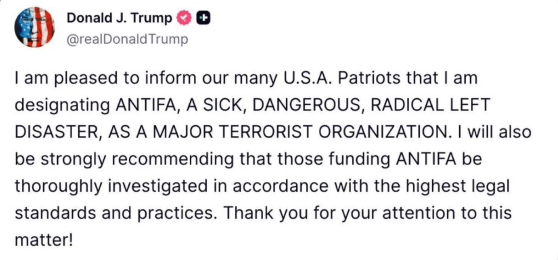
    The Donald has taken to his Truth Social* social media echo chamber earlier this week railing that museums and universities were not telling ‘proper’ US history and were too “WOKE” [sic]. He wrote the following.

    Post reads The Museums throughout Washington, but all over the Country are, essentially, the last remaining segment of “WOKE.” The Smithsonian is OUT OF CONTROL, where everything discussed is how horrible our Country is, how bad Slavery was, and how unaccomplished the downtrodden have been — Nothing about Success, nothing about Brightness, nothing about the Future. We are not going to allow this to happen, and | have instructed my attorneys to go through the Museums, and start the exact same process that has been done with Colleges and Universities where tremendous progress has been made. This Country cannot be WOKE, because WOKE IS BROKE. We have the “HOTTEST” Country in the World, and we want people to talk about it, including in our Museums.

    As regards one of Tangerine Insurrectionist’s targets, the Smithsonian’s National Museum of American History, this was on the receiving end of his ire for having the temerity, much to Trump’s wounded pride, of mentioning his two impeachments in his first term of (subsequently removed. Ed.) from its exhibit on The Limits of Presidential Power.

    What Trump’s social media post merely indicates he wants bully US institutions into doing in order to pander to his own exceedingly vain, distorted, white, racist, privileged world view. This line of action has a name: historical revisionism, something to which the now defunct Soviet Union was prone during its existence from 1922–1991 (e.g. prominent but out-of-favour individuals being deliberately edited out of photographs and the remainder of the official record).

    Wikipedia defines the phenomenon as follows:

    Historical revisionism is the reinterpretation of a historical account. It involves challenging the orthodox (established, accepted or traditional) scholarly views or narratives regarding a historical event, timespan, or phenomenon by introducing contrary evidence or reinterpreting the motivations of the people involved. Revision of the historical record can reflect new discoveries of fact, evidence, and interpretation as they come to light. The process of historical revision is a common, necessary, and usually uncontroversial process which develops and refines the historical record to make it more complete and accurate.

    One form of historical revisionism involves denying the moral significance or accuracy of the historical record. This type of historical revisionism is called historical negationism, and is contentious as it often includes denying the veracity of genuine documents, or deliberately manipulating statistical data to reach predetermined conclusions. The destruction or alteration of cultural heritage sites is also considered a form of illegitimate historical revisionism when it serves to deny the cultural or historical claims of ethnic groups.

    Trump’s social media post shows all the hallmarks of historical revisionism, but at the same time, he seems determined to make America safe again for ignorant, racist, insecure, selfish and entitled old white men like himself.

    Note in particular the word again. Trump is harking after an imagined lost past. As for museums and the future, The Donald doesn’t realise that museums serve to collect, preserve, interpret, and display objects of cultural, historical, or scientific significance. Their primary functions include safeguarding heritage for future generations and facilitating education. If the future is involved, the role of museums and the like should be educating people about the mistakes of history, not airbrushing or erasing them.

    * = No irony was intended in the naming of the platform. Ed.

  • Gemsbok

    One neoligism (posh for new word. Ed.) that has become prominent in recent times is doomscrolling, defined as the activity of spending a lot of time looking at your phone or computer and reading bad or negative news stories.

    This can naturally be extremely depressing, hence the tendency of folk to seek comfort in online content not concerned with people’s inhumanity to their fellows to alleviate the feelings of despair, be this fluffy cat and dog photos, even fluffier photos of sheep (yes, I’m looking at you, Mastodon! Ed.). These are joined by wildlife and avian photography.

    One of the sources of wildlife images that turns up in your ‘umble scribe’s timeline comes courtesy of Namibia Weather. This features a live webcam at a waterhole in the Gondwana Namib Park, which claims to be Namibia’s first live webcam and regularly posts stills from the feed on Mastodon.

    Waterhole in the Namib Desert with drinking wildebeest

    The wildlife varies by the minute if you watch the live Youtube feed. Besides wildebeest, other large mammals that regularly visit the waterhole are South African oryx, otherwise known as gemsbok Note the striking monochrome facial markings.

    Gemsbok at the watering hole

    Sometimes cats, dogs or even sheep are just not a good enough antidote… Happy browsing! 😀

  • Coloured curvaceousness

    Some consumer clickbait from yesterday’s Bristol ‘Live’, a Reach plc local news title.

    Screenshot of article from Bristol Live with the headline Flattering £38 Next dress that looks great if you're curvy in four colours

    Articles for the same product also appeared in other Reach plc titles such as the Manchester Evening News and Birmingham ‘Live’, although their readers were not informed that curvaceousness comes in four colours, as were the good burghers of Bristol.

    The reason for this is because the headline writers on those papers can recognise ambiguity, unlike those at the Temple Way Ministry of Truth.

  • The entire history of English in 22 minutes

    After Mandarin Chinese and Castilian Spanish, English is the third most spoken native language in the world today, as well as the world’s most widely learned second language, according to Wikipedia.

    How it reached that position is a long and complicated story which has been reduced to a 22 minutes’ historical romp by the excellent Rob Words on YouTube.


    Rob’s story of English from its earliest origins to the present day starts a long way from the shores of present-day England or even the eastern shores of the North Sea of what is now Frisia, northern Germany and Denmark where most of the origin stories for English start.

    No, Rob starts in Asia around the shores and land between the Black Sea and Caspian Sea where it is believed the original ancestral language of English began, before moving both west and east to become the ancestors of the modern European languages and those of the Indian sub-continent based upon Sanskrit, the so-called Indo-European languages. For want of an actual name that has survived down the centuries, this ancestral language is referred to as Proto-Indo-European.

    On the move westwards, the branch of Proto-Indo-European from which English developed is known as Proto-Germanic, which predated not just English and German, but also Dutch, Frisian and the Nordic/Scandinavian languages, Norwegian, Swedish and Danish.

    The story of English on the island of Britain actually begins in the 5th century after the departure of the Romans and mercenaries from across the North Sea who eventually settled are involved.

    The influences of subsequent invasions – such as the Vikings and William the Invader‘s wine-drinking, Francophone former Norse marauders are also noted, as are the roles of Shakespeare, Caxton‘s printing press (especially Chancery standard English. Ed.) are all covered as is the effect on English of England’s/Britain’s role in invasion, conquest and colonisation since the mid-sixteenth century.

    Anyway, I hope you enjoy the video as much as me; and learn something too, which I definitely did.

  • Ambiguity

    The dictionary definition of ambiguity is “the fact of something having more than one possible meaning and therefore possibly causing confusion“.

    Any sensible person would therefore believe that ambiguity has no place in a newspaper headline.

    However, newspapers are not written nowadays by sensible people: or so it would seem.

    This is exacerbated by the modern media practice of trying to cram the entire story into the headline in a condensed form, as shown by the screenshot below of this piece from the Daily Post, a title in the Reach plc stable which serves the north of Cymru.

    Headline - Prisoner on run with smiley face tattoo and links to North Wales

    For the benefit of passing illiterate Reach ‘journalists’, an unambiguous version of the headline would read “Prisoner with smiley face tattoo and links to North Wales on run”.

    It has since been rumoured that the smiley face tattoo has been recaptured by police. 😉

  • Spot the difference

    From my social media timeline.

    Two road signs both dealing with ice. The Canadian sign warns of frozen water, the US one of the actions of a racist federal government agency

    For those unaware of the actions of the racist US Immigration and Customs Enforcement agency under the less than benign presidency of the disgraced former 45th president and current disgraceful 47th president of the United States of America, insurrectionist, convicted felon, adjudicated sexual predator, business fraudster, congenital liar and golf cheat commonly known as Donald John Trump, the mock-up US road sign is on the right (naturally. Ed.).

    The cruel actions of ICE are all part of The Felon’s chief mission to Make America Grate Again (or something like that. Ed.).

  • First… for greenwashing

    First Group has a virtual monopoly on public transport in Bristol via its buses and GWR Trains. However, its inability to run any service to timetable – no matter how important – has earned it the nickname of Worst Group.

    First Bus was all over the local media at the start of June when it announced the opening of a new bus depot in the city’s Hengrove area for servicing its fleet of electric buses which will eventually total 74 vehicles.

    One of Worst's new electric double decker buses.

    Your ‘umble scribe recently tried out one of the new double decker electric buses on the Number 24 route, which runs between Ashton and Southmead Hospital. On the whole the experience was very positive. The bus was clean, the ride silent and smooth. However, at this point a significant however enters the picture, namely that your correspondent was less than impressed by the greenwashing on the sides of the bus.

    Text reads I'm a zero-emission electric bus

    According to Wikipedia, greenwashing may be defined as follows:

    Greenwashing (a compound word modeled on “whitewash”), also called green sheen, is a form of advertising or marketing spin that deceptively uses green PR and green marketing to persuade the public that an organization’s products, goals, or policies are environmentally friendly. Companies that intentionally adopt greenwashing communication strategies often do so to distance themselves from their environmental lapses or those of their suppliers.[6] Firms engage in greenwashing for two primary reasons: to appear legitimate and to project an image of environmental responsibility to the public.

    Whilst the engines of the new buses produce zero greenhouse gases or particulate emissions, that does not necessarily mean the vehicles are entirely free of emissions, especially when significant elements of the vehicle produce particulates due to wear and tear caused by their function. The two components involved are the brakes and tyres.

    Until First acquires vehicles with zero tyre and brake wear, they should continue to be called out for being less than honest with the (travelling) public.

  • Car park to be replaced by jargon

    In a further perceived blow to Bristol’s allegedly long-suffering but volubly vocal motoring lobby, Bristol City Council has announced it is investigating alternative uses for two current car parks, according to Bristol247.

    One of the two, near the SS Great Britain down the city docks and known as the Maritime Heritage Centre Car Park, is being investigated as a site for up to 150 flats. However, the fate of the other behind the Counts Louse (which some insist on calling City Hall. Ed.) is completely different; it’s due to be superseded by, er, jargon, i.e. special words or expressions used by a profession or group that are difficult for others to understand, in this instance something termed a last-mile micro-consolidation hub.

    Thankfully a picture showing what this could look like has been provided by WSP, the city council’s chosen gibberish partners.

    Yer tiz, as we say in Bristol.

    Image of the so-called last-mile micro-consolidation hub.
    Image courtesy of WSP

    According to WSP, the gibberish “will provide a sustainable solution for freight deliveries, reducing reliance on traditional vans and supporting the city’s decarbonisation goals”.

    Note how yet more jargon has to be used to explain the initial gobbledygook. If two loads of jargon are required to explain a fairly simple concept, perhaps the verbal diarrhoea merchants need to have a long sit down and a rethink. 😀

  • BBC exclusive – bronze rusts!

    The BBC loves to boast about the quality of its journalism.

    However, every now and again, it manages to publish an untruth so egregious and also stupid that one wonders how it gained a reputation for high class output in the first place.

    To continue our story, we must travel to Nottinghamshire and the banks of the River Trent.

    In April members of the police Underwater Search Team found a corroded ship’s bell during a routine training exercise and brought it ashore for a closer look, where the name Humber Prince emerged after the item was cleaned.

    The bell was formerly attached to a vessel originally known as the Esso Nottingham, which was built in 1956 and subsequently re-registered as the Humber Prince in 1964 by Hull-based company by John H Whitaker Tankers, which used to ferry hydrocarbons on the river.

    The ship's bell - before and after cleaning
    Photo courtesy of Nottinghamshire Police

    When the BBC published its version of the story, a remarkable thing happened; the bell had turned rusty.

    However, there is no mention of rust or any other metallic corrosion in Nottinghamshire Police’s original press release.

    From the photos on the police press release, it is obvious that the bell is made of brass or bronze, not a ferrous metal such as iron or steel, which typically rusts as it corrodes.

    Wikipedia’s page on the ship’s bell gives full details of the typical materials used.

    The bell itself is usually made of brass or bronze, and normally has the ship’s name engraved or cast on it.

    May I suggest that the BBC’s author writes out 100 times “Iron and steel rust. Other metals corrode!

Posts navigation