Yesterday’s Bristol Post reports:
A huge new floor mural celebrating Bristol’s ‘past, present and future’ has been unveiled in The Centre as the focus for the area that previously had fountains on it.
This new artwork, produced by the artist Oshii and a team of fellow artists put together by the Bedminster urban art festival organisation UpFest, is absolutely stunning and covers an area more than 700m2.
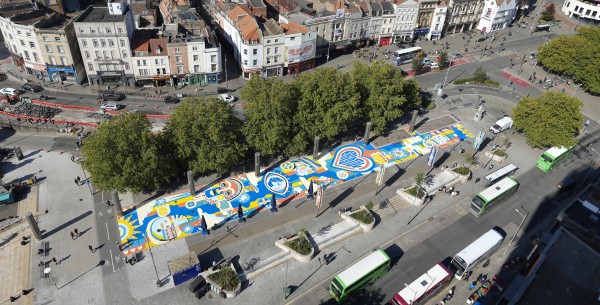
But is it mural? asks the wordsmith who resides inside your ‘umble scribe.
The answer is a definite no in the strictest sense. The Tate, somewhat of an authority in the art world defines a mural as follows:
A mural is a painting applied directly to a wall usually in a public space.
Bristol’s latest public artwork is executed in paint and is in a public space, but it’s on the ground, not a wall or ceiling, so is not strictly a mural in the accepted sense of the word, hence the less than accurate floor mural devised by the Post.
It’s not a mosaic, one of the only forms of decorative artwork applied to a flat horizontal surface as no tiles (also known as tesserae. Ed.) are used in its creation.
Perhaps the term painted pavement would be a better term in view of the existence of the Cosmati Pavement before the grand altar in Westminster Abbey.
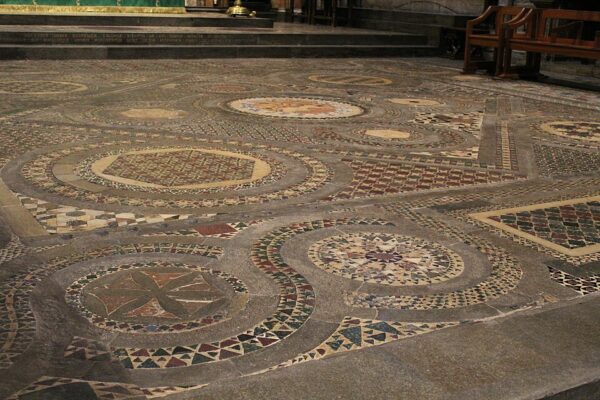
Image courtesy pf Wikimedia Commons
If readers can come up with a more accurate and apposite term for the Centre’s newest artwork (which makes a refreshing change from statues of the dead white males so beloved of our Victorian forebears. Ed.), please feel free to post suggestions in the comment below.