Tory leadership – a campaign message
Other than ‘All hail kakistocracy‘, no further comment required.
Bristol is a city in which, according to the 2011 census data, more than 90 languages are spoken: no surprise for the UK’s tenth most populous city.
Given its proximity to Wales – a mere train ride or short drive away over one of the two bridges spanning the Môr Hafren (aka the Severn Sea. Ed.), there’s always been more than a bit of friendly rivalry between the city and county and South Wwales, with a topping of mutual parochial condescension reserved for near neighbours.
Given the diverse nature of east Bristol’s population, it’s not unusual to see shop signs in languages other than English, but the Tenovus Cancer Care charity shop in St Mark’s Road (kindly note the apostrophe you prefer to ignore, Bristol City Council. Ed.), has achieved what to your ‘umble scribe’s recollection a first for BS5: a Welsh/English bilingual sign offering – on one side at least – a free health check. The reverse of that bilingual offer is in Welsh only.


This is not the time that Welsh signage has turned up in use to the east of Offa’s Dyke. Back in June a Welsh bilingual road works sign was observed doing splendid work in Coventry, as Wales Online reported.
Bragg’s Lane, Bristol, BS2.
No further comment necessary.
The release was announced today of LibreOffice 7.4 Community, the latest version of the free and open source office suite. It is available immediately for download for Linux, MacOS (Apple Silicon and Intel processors) and Windows.
The new release comes packed with many new features and improvements.
The new features are summarised in the following video.
LibreOffice 7.4 provides a large number of improvements and new features targeted at users sharing documents with MS Office or migrating from MS Office: such users should check regularly for new LibreOffice releases since the development progress is so fast, that each new version offers dramatic improvements compared with its predecessor.
LibreOffice provides the highest level of compatibility within the office suite market segment, with native support for the OpenDocument Format (ODF) – beating proprietary formats for security and robustness – to superior support for MS Office files, to filters for a large number of legacy document formats, thus returning ownership and control to users.
For business deployments, TDF strongly recommends approaching the LibreOffice Enterprise family of applications from its partners – for desktop, mobile and cloud – with a large number of dedicated value-added features and other benefits such as SLAs; see the dedicated business page for details.

Yesterday the GNOME Foundation announced the happy news that the project had reached the venerable age of 25 years old, with special thanks to its founders, Miguel de Icaza and Federico Mena Quintero, plus its contributors and supporters over the last quarter of a century.
As is fairly common within the technology world, the GNOME name is an acronym for GNU Network Object Model Environment.
In its lifetime,GNOME has the default desktop environment of many major Linux distributions, including Debian, Endless OS, Fedora Linux, Red Hat Enterprise Linux, SUSE Linux Enterprise, Ubuntu and Tails; it is also fulfils the same role for Solaris, a Unix operating system.
What began as a two-person project has certainly grown and flourished over the years, attracting support from not only volunteers but major players in the free and open source world such as Red Hat. Furthermore, there’s a new, special commemorative website to visit too: https://happybirthdaygnome.org/.
Many happy returns!
According to the Woodland Trust, “Horse chestnuts, with their mahogany-bright conkers, are the very essence of autumn.
Here in inner city BS5, the local horse chestnut trees in the centre of Lawrence Hill roundabout and on Lawrence Hill itself have decided that autumn has come already, judging by their dry and brown falling leaves and general frowzy appearance.


The horse chestnut is native to the Pindus Mountains mixed forests and Balkan mixed forests of south east Europe; it was first introduced to the UK from those areas then under the administration of the Ottoman Turks in the late 16th century, being widely planted in parks, gardens, streets and on village greens.
The tree gets its English name of horse chestnut from the scars the leaves leave on the twig when they fall, which resembles an inverted horse shoe with nail holes.
Besides the children’s game of conkers, conkers are also used horse medicines, as additives in shampoos and as a starch substitute. Chemicals extracted from conkers can be used to treat strains and bruises.
Just like the local hawthorns are an indicator of the approach of spring for your ‘umble scribe (posts passim), the these horse chestnuts fulfil a similar role for the approach of autumn. Below is a Woodland Trust video of the life of a horse chestnut throughout the year.
Rhyl on the North Wales coast attracts many non-Welsh-speaking visitors to its golden sands (your ‘umble scribe was once a regular visitor there as a child since our Sunday school outings all went there. Ed.) and views of the Liverpool Bay wind farms. However, its council-run car parks have pay and display machines set to Welsh as the default language; and this has been frustrating those who cannot read, speak or understand even basic instructions in Welsh, as yesterday’s Nation Cymru reports.
According to the article, “Queues developed as non-Welsh speakers struggled to work out how to pay for their parking at Rhyl’s central underground car park near the promenade, which is administered by Denbighshire County Council.”
Furthermore, the council’s machinery also seemed to have difficulty recognising bank debit cards.
A local with basic Welsh fluency described the experience of one monoglot: “The man stormed off when the machine repeatedly failed to accept his bank card. ‘Why are the instructions only in Welsh. Not many people in Rhyl speak Welsh’.”
A spokesperson for the local authority defended the default Welsh language option, stating:
We would like to remind people that there are two other machines available in the Rhyl Central car park and people can use the pay-by-phone smartphone app with location code 804281 as an alternative way of paying.
Our pay and display machines default to Welsh, but there is a large grey “language button” that people can press to change the language. This is explained on the machines.
Perhaps grey is not a suitable colour for the language button; perhaps the council need to change this to red and white in the style of the English flag or red, white and blue in the style of the Bloody Butcher’s Apron (which some still call the Union Jack or Union flag. Ed.). 😀
Update 15/08/22: Monday’s Nation Cymru has yet another story on the inability of users to operate a second parking machine ‘in bloody Welsh’, this time from the other end of the country, Caswell Bay, on the Gower peninsula near Swansea.
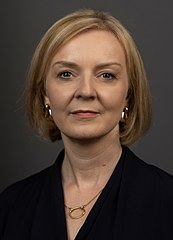
While the interminable Conservative Party leadership contest between the 2 tenth-rate rivals, one Mary Elizabeth Truss and rich boy Rishi Sunak, draws tediously on, with government administration seeming to have almost ceased despite drought, rampant inflation, surging energy prices (with the promise of higher prices to come. Ed.) and the outgoing party-time alleged prime minister Alexander Boris de Pfeffel Johnson is hardly anywhere to be seen, not even for a photo opportunity as he dives into the dressing-up box to indulge his inner Mr Benn, a new phrase has been coined – zombie government.

As Wikipedia states: “A zombie (Haitian French: zombi, Haitian Creole: zonbi) is a mythological undead corporeal revenant created through the reanimation of a corpse.” The English word zombie was first recorded in 1819, in a history of Brazil by the romantic poet Robert Southey, in the form of zombi. The Oxford English Dictionary gives the word’s origin as West African and compares it to the Kongo words nzambi (god) and zumbi or nzumbi (fetish).
Comparing Conservative Party ministers to reanimated corpses is disingenuous, as the latter have far more compassion.
All the crises mentioned in the first paragraph all seem to be coming to a head and combining during what is traditionally known in Britain as the silly season, which occurs during the long parliamentary summer recess, when, having no – or very little – politics to report, the newspapers and other media resort to more frivolous and lightweight items of ‘news‘.
However, all is not yet lost.
Yesterday the Metro reported that the notoriously work-shy Johnson (remember those missed COBRA meetings at the start of the pandemic? Ed.) had actually managed to turn up for a meeting, although the outcomes of the meeting stated to accompany the headline hardly seem to have made the gathering worth the effort of organising and attending.
And to think all this will continue until after the closure of the leadership poll for the 160,000 or so Tory Party members at 5pm on Friday 2nd September…
A piece of artwork has appeared on the parched grass of Peel Street Green Space, which occupies the ground between Pennywell Road and Riverside Park on the far side of Peel Street Bridge over the Frome (aka the Danny in east Bristol. Ed.).

Its arrival seems to have pre-empted the Bristol Post, which today wrote:
A new public art trail reflecting on colonial histories and the impact of the slave trade is coming to Bristol.
More than 100 artist-designed globe sculptures will appear in seven cities across the UK from Saturday and will be free to view by the public until October 31.
The project, which is organised by The World Reimagined, aims to explore the UK’s relationship with the Transatlantic slave trade, its impact on society and how action can be taken to make racial justice a reality. The designs of the globes produced by the commissioned artists explore themes such as the culture of Africa before the slave trade and an ode to the Windrush generation.
The World Reimagined has sited 103 unique Globes across the 10 trails in 7 host cities across the UK – Bristol, Birmingham, Leeds, Leicester, Liverpool, London and Swansea. All the trails will be connected to a digital platform that enables visitors to explore the collection and the history it reflects.
The Peel Street globe is entitled Like The Sun and was created by Felix ‘FLX’ Braun, a Bristol-based a contemporary fine artist and muralist

The Bristol trail is handily shown on a map by The World Reimagined on which the globe installations are termed ‘Learning Globes‘.

French IT news site Le Monde Informatique reports that DuckDuckGo has decided to block Microsoft’s trackers in its mobile browser applications and browser plug-ins in an effort to extend its approach to privacy protection. It had already been criticised at the start of the year on the matter.

Protecting internet users from tracking and protecting their anonymity is not simple. DuckDuckGo is part of this move and was very upset to find out that as part of its agreement with the Bing search engine, Microsoft had given the green light for user tracking. This is no longer the case since from that date onwards DuckDuckGo’s CEO, Gabriel Weinberg, has stated that blocking the loading of scripts on websites by the browser was extended to Microsoft’s scripts in DuckDuckGo browser applications for iOS and Android and browser extensions (Chrome, Firefox, Safari, Edge and Opera) and that beta applications will follow next month.
DuckDuckGo is attempting to block tracking scripts from search engines and sites such as Facebook, as well as other types of tracking scripts or software. It uses what it calls third-party tracking loading protection to prevent these third-party scripts or cookies from being loaded into the browser. If they did, they could track movements on the web and build a profile of the user, their preferences, etc. If other browsers and browser plug-ins also enable users to protect their privacy, DuckDuckGo has made privacy its priority.
Mr Weinburg’s decision was taken after the discovery at the start of the year by security researcher Zach Edwards that DuckDuckGo was blocking trackers from Google and Facebook, but was allowing some of Microsoft’s trackers via Linkedin and Bing. The discovery was then reported by BleepingComputer. “Previously, we were limited in how we could apply our third-party tracker download protection to Microsoft tracking scripts due to policy requirements related to our use of Bing as the source of our private search results,” Weinberg explained, adding that, “We’re glad that’s no longer the case. We didn’t have and don’t have similar restrictions with any other company.”
DuckDuckGo still has an advertising relationship with Microsoft, which it will maintain. Clicking through on advertisements on DuckDuckGo is anonymous and Microsoft has undertaken not to profile DuckDuckGo users. If Microsoft continues to save the user’s link, it will not associate them with a profile. On an updated support page, DuckDuckGo has provided a summary of everything which its its browser authorises and does not authorise, as well as providing details of web tracking protection.