Bristol

  • Snooper’s Charter – my letter to my MP

    Below is the text of an email I’ve written today to my constituency MP, Stephen Williams, regarding the coalition Government’s vastly invasive draft Communications Data Bill, also known as the Snooper’s Charter.

    Dear Mr Williams

    Subject: Draft Communications Data Bill

    I am writing to you express my concerns about the draft Communications Data Bill, also known popularly as the Snooper’s Charter, and how I regard it as harmful to the interests of the UK population in general. I understand that the joint Lords and Commons Parliamentary Committee examining the draft Bill will be reporting shortly.

    At this point I wish to point out that I’m also the Company Secretary of Bristol Wireless, a community co-operative that functions as a small ISP (which resells bandwidth to clients who are our network) and telecommunications provider (supplying VoIP telephony services) which is based in Bedminster. I have already written to Bristol Wireless’ constituency MP, Dawn Primarolo, to make her aware of the concerns of the co-operative.

    The draft Communications Data Bill raises significant issues connected with human rights, privacy, security and the nature of the society in which we wish to live. These issues are raised by the draft Bill’s fundamental approach, not its detail. Addressing them would, in our opinion, require such a significant re-drafting of the bill that the better approach would be to withdraw the bill in its entirety and rethink the way that internet security and monitoring are addressed.

    According to Liberty, the draft Bill will turn a nation of 60 mn. citizens into a nation of 60 mn. suspects. It won’t matter if citizens have never got so much as a speeding fine, personal information about them will be stored just in case it may prove useful one day. Put in another way, would you – as an upright, law-abiding citizen – be happy if the police popped by tomorrow to install a CCTV camera in your living room just in case they one day suspect you have committed a crime? Crime prevention arguments must not unquestionably trump the privacy of law-abiding citizens.

    The general public has been misled by the government and the mainstream media as to the purpose of the draft Bill. It is not about tackling serious crime, paedophilia or terrorism. Access to communications data is granted to local authorities and hundreds of other public bodies for a wide range of purposes that have nothing to do with crime fighting.

    The Government assumes too much in assuming it has an automatic right to keep track of all of citizens’ electronic communications with each other: what we’re looking at online and who we’re emailing, talking to on Skype or texting. It doesn’t. If this is HMG’s logic, why does it not demand that we all report to it every day, telling them who we’ve met for lunch?

    Stockpiling large amounts of data indiscriminately simply amounts to blanket surveillance. Experience shows that amassing large databases of personal information inevitably leads to discrimination. The retention process lends itself to the great temptation of “data mining” – fishing expeditions based on clumsy stereotypes rather than reasonable suspicion of individual wrongdoing. In addition, there are already problems with unauthorised access to sensitive information with existing systems such as the Police National Computer DVLA database and local authority and health records. These problems would be multiplied many times over with the amounts of stored data envisaged by the draft Bill.

    Furthermore, any increase in the level of surveillance would inevitably result in an increased use of encryption (and other circumvention techniques too) by ordinary internet users, thus rendering the surveillance useless, unless public sector technicians are skilled in the art of cracking encryption. Moreover, those alleged terrorists and organised criminals – if they are using the internet at all for their nefarious activities – are probably already using encryption and other security measures to obfuscate their activities.

    Finally, I’d point out that given the technology that’s likely to be needed, the Government may well end up building the technical infrastructure to intercept all our communications.

    I would be happy to discuss these matters in further detail with you should you so wish. In addition, there is plenty of other information available via the Open Rights Group website (http://www.openrightsgroup.org).

    Yours, etc.

  • Introducing Vinux

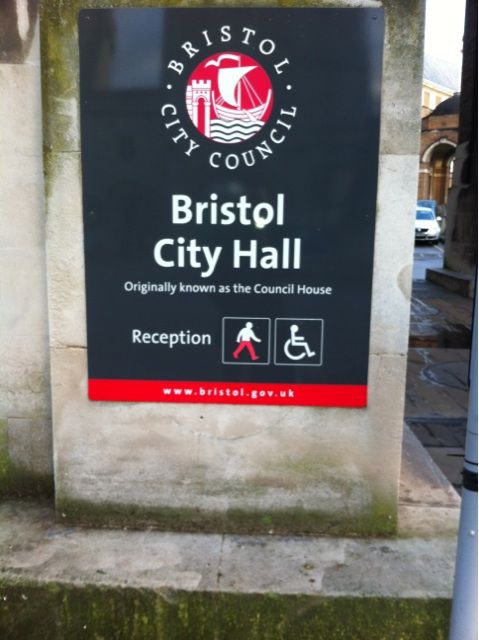
    Yesterday evening I was down Bristol’s City Hall attending an event to launch Accessible Bristol (read my account of the event for Bristol Wireless).

    Vinux logo

    While there I was talking to the City Council’s Stephen Hilton and happened to mention Vinux – Linux for the Visually Impaired – which Stephen had never heard of, despite being visually impaired himself.

    Vinux is a remastered version of the Ubuntu Linux distribution optimised for visually impaired users. It provides a screen-reader, full-screen magnification and support for Braille displays out of the box! It can be run from a Live CD on an existing machine without making any changes to your hard drive. It can also be installed to a USB pen drive or to a hard drive; as a hard drive installation this can be done either alongside Windows (dual boot) or as a complete replacement for the Hell of Gates. 🙂

    The system requirements for the main (as opposed to the command line interface) version of Linux are:

    • 1 GHz x86 processor;
    • 1 GB of system memory (RAM);
    • 15 GB of hard-drive space (although this can be split onto 2 drives, a 5Gb / and a 10Gb /home partition fairly easily);
    • Graphics card and monitor capable of 1024 X 768 resolution;
    • Either a CD/DVD drive or a USB socket (or both);
    • Internet access is helpful though not vital.

    Vinux 3.2.1 is the current experimental release and disk images of various vintages can be downloaded from the Vinux project’s downloads page.

  • Bristol Festival of Economics

    It’s nigh on four decades since I was taught basic economics by Lew Davies at Wolverhampton Polytechnic in the first year of my degree. Lew, who always described himself as a ‘labour economist’ (by which I’ve always understood to be related to toil rather than anything partisan), didn’t have an easy job, trying to instil an understanding of economics into a diverse bunch of freshers who’d never encountered it before; and let’s face it, economics can be terribly dry and dusty.

    However, Lew did a splendid job. For instance, he taught us all about the law of diminishing returns with an anecdote about a favourite nephew and his love of strawberry ice cream! I still have a collection of his more outrageous sayings from his lectures; even nowadays these raise a wry smile.

    Since those undergraduate days economics has not featured largely in my life. Until now.

    Tonight the Bristol Festival of Economics starts and I’ve been kindly offered a season ticket by organiser Andrew Kelly (thanks Andrew!). The first session starts at 6 pm tonight with a panel session entitled ‘The Future of Capitalism’.

    I shall be covering the festival live on Twitter, using the festival hashtag #economicsfest.

  • Trains of thought

    As I never learnt to drive, I’m reliant for getting around on my own motive power or the use of public transport, particularly trains.

    To the best of my knowledge I’ve been using the railway for some five decades now, starting from my earliest recollections of junior school trips in the early 1960s to Whipsnade Zoo and London Heathrow Airport hauled by steam locomotive.

    Train travel has changed immensely since my early days. Trains themselves no longer carry mail or parcels and there’s no such thing as the guard’s van either, where the mail and parcels were stowed along with wicker baskets of racing pigeons.

    Train announcements have likewise mutated. Nowadays, they are bland and sound like they’ve been cobbled together in a studio, rather than delivered live by a live human being. My all-time favourite was that of a now long-gone male announcer at Bristol Temple Meads. When on duty, he announced the impending departure of any service with the words: “The X train on platform Y is now ready to depart. Close the doors and stand clear, please!” Announcements of this kind have now been rendered redundant by the introduction of centralised carriage door locking, which is activated some 30 seconds or more before departure.

    The language of the railways has changed over the decades too. The guard – a member of the proletariat – has been superseded by the modern ‘train manager’; presumably letting British management, a well known industrial disease, have charge of trains is a continuing reason for their failing to run to timetable. 🙂

    If you go looking for refreshment, the good old buffet car has gone, replaced by the bland, utilitarian ‘shop’. Who’s there to serve you? Not the steward: he or she has been replaced by a lumpen, jargon-ridden creature called the customer service host. How appetising. Talking of food, when was the last time passengers (sorry, ‘customers’ in the shiny newspeak of the train operating companies) saw a restaurant car?

    When on the train one can always spot the ‘train managers’ who started their working lives as guards or ticket collectors by their announcements over the speaker system: these are the ones whose trains “arrive at” the station, rather than the grammatically incorrect “arrive into”(on this side of the Atlantic at least; US aircraft frequently do this at their destinations).

    Bon voyage!

  • Forbidden food

    Throughout human history there has always been forbidden food – the fruit of the tree of knowledge in the Old Testament, the various dietary restrictions imposed upon devotees by religion (e.g. kosher, halal, etc.) and the like.

    In addition to these there are other prohibitions imposed by other considerations, such as the cost of getting something to market. Other factors include whether something is (or is regarded as) a local speciality and is hence doesn’t travel – or not very far anyway. One such English local speciality is not available as far south as Bristol*, although it does travel north into Lancashire (it’s available in Sainsbury’s in Darwen by Blackburn. Ed.); and that’s the North Staffordshire oatcake.

    Staffordshire oatcake before filling
    North Staffordshire Oatcake awaiting filling

    According to Wikipedia, a North Staffordshire oatcake is a type of pancake made from oatmeal, flour and yeast. It’s cooked on a griddle or ‘baxton’. The oatcake is a local speciality in the North Staffordshire area of England. They are normally referred to as Staffordshire oatcakes or possibly Potteries oatcakes by non-locals, because they were made in this area. In and around Staffordshire and Cheshire they are often simply known as oatcakes.

    North Staffordshire exiles are fortunate that they can now order this local delicacy online from such companies as Newcastle’s North Staffs Oatcakes Ltd and Biddulph’s Povey’s Oatcakes, to name but two.

    As regards the location of oatcake shops in the Potteries and surrounding area, My Tunstall has helpfully provided an oatcake shops map. Earlier this year, a legendary oatcake shop, the Hole in the Wall closed due to a council compulsory purchase order. It was so called because the oatcakes were served to customers in the street via the front window and Stoke City Council should hang its head in shame at its destruction of the area’s heritage. Vic, my late stepfather, used to buy his oatcakes at the Hole in the Wall.

    The furthest recorded oatcake shop from the banks of the Trent can be found in Auckland, New Zealand, where an expatriate Leek resident has set up business.

    My oatcakes were bought from TJ Oatcakes & Sandwich Bar of 589 Leek Road, Hanley, ST1 3HD (map), just a short walk down the hill from my mother’s place. At TJ’s the oatcakes come in half dozen packs and are packaged in unbranded, anonymous clear plastic bags.

    Turning to the oatcake’s history, the oatcake is believed to date back to at least the 17th century when the oatcake was the staple diet of North Staffordshire people. It is thought that due to long hard winters, farmers grew oats instead wheat; the farmers’ wives would then bake the milled flour mixture on a bakestone for family members and farm workers. At that time oatcakes were quite likely to be eaten with lard, fat or cheese. During the 19th Century a cottage industry sprang up, with oatcake makers often making more than was needed and taking them in baskets to sell in the markets and streets. In the 20th century the more successful bakers built brickrooms in their yards in which to bake oatcakes from. Their front rooms would then serve as the the shop front, selling oatcakes through the sash windows, as in the Hole in the Wall above.

    Oatcakes are traditionally served with fillings such as cheese, tomato, onion, bacon, sausage and egg, plus brown or tomato sauce. They can also be eaten with sweet fillings such as golden syrup, jam or banana, but this is less common and is frowned upon by traditionalists. Mine were consumed in traditional manner, but with mushrooms added to the sausage/bacon filling. 🙂

    * = If anyone does find anywhere in Bristol selling North Staffordshire oatcakes, please let me know. Thanks!

  • Italy’s Emilia Romagna prefers open source for smart city projects

    Emilia Romagna flagI was recently invited to take part in some smart city sessions organised in Bristol by Knowle West Media Centre, so I was most interested to learn of recent smart cities developments in part of Italy.

    According to the EU’s Joinup open source news site, open source software is a key element in many of the Smart City projects developed by a group of IT specialists and researchers for Italy’s Emilia Romagna region. Lucia Mazzoni, an IT project manager involved the region’s smart city projects said: “We prefer to use open source modules. This type of software allows scalable and easy to configure combinations.”

    The group is building applications to monitor atmospheric conditions and air quality and collect and present data on surface waters. They are also working on IT solutions to increase energy efficiency and are building software to monitors the condition of cultural monuments and help preserve them.

    Mazzoni gave a presentation on Emilia Romagna’s smart city research projects at the Smart City Exhibition held in Bologna between 29th and 31th October last.

    One application presented was ‘Smart Catcher’, a location-aware Android phone application which allows users to locate useful urban objects, such as bookshops, filling stations, hospitals, restaurants and hotels.

    The smart city developers are also involved in building middleware software for use in vehicle to vehicle communication. The idea is to create smart vehicles that can use the information to plan their routes more efficiently. Other projects are working on using smart sensors, video cameras and personal sensors.

    NB: This is an edited version of a post originally appearing on the Bristol Wireless site.

  • Election special: 80% of voters don’t bother

    It cannot have escaped anyone’s notice that there was an election for an elected Mayor in Bristol on Thursday.

    The fact that George Ferguson – affectionately known as Red Trousers after his preferred choice of leg coverings – received a total 37,353 votes and was declared the winner.

    George’s win is being described by all the political pundits as a consequence of the people of Bristol being fed up with party politics.

    However, there’s another analysis. Turnout in the mayoral election was under 28%. That means George was elected by a tiny minority of electors who could be bothered to turn out and vote for him. Indeed, George’s winning total means just 11.7% of Bristol’s 320,000 voters put a cross next to his name.

    Meanwhile the vast majority of voters – 78% of the on Bristol’s electoral roll – stayed away from the polls.

    The figures for the Police and Crime Commissioners suffered from even lower turnouts right across the country, with a national average of 15% in the 41 English and Welsh police areas. In the Avon and Somerset area, turnout was 19.59%, meaning 80% of the electorate didn’t bother and winning candidate Sue Mountstevens, who received a total of 125,700 votes, was likewise given a mandate by about 10% of voters.

    Representative democracy doesn’t seem to be faring very well at present and one must question the legitimacy of the mandates received.

  • “Cutlass supplied”

    Skull and crossbonesEvery now and again there’s a job advertisement that’s so unusual it deserves wider circulation: and there’s a great example on the tourist business website Destination Bristol at the moment.

    Bristol Pirate Walks are looking for an Assistant Pirate to join Pirate Pete.

    The Assistant Pirate should be confident and outgoing with a bubbly personality and be ready to meet and greet visitors to Bristol from across the world, from children and families to corporate groups.

    This is a part-time role with full training given on the history of this port, and would be of interest those who enjoy meeting people and leading walking groups around the harbour.

    Cutlass supplied

    As pirates are typically portrayed as folk whose speech requires little grammar, I wonder if the “full training given” will include lessons in ignoring English syntax. 😀

    Of course, Bristol, being a port city, has close associations with the sea and hence maritime crime of all kinds, including piracy, as well as having pirates amongst its sons and daughters. Edward Teach, otherwise known as Blackbeard, was born in the (now comfortably fragrant and middle class) Redland area of the city in 1680.

  • Bristol Post exclusive: city has a literate cricket ground

    Ever since I arrived in Bristol, I’ve been both dismayed and amused in equal amounts by the abysmal standards of English in the local press.

    This ancient tradition’s greatest proponent has been the alleged local paper of record, the Bristol Evening Post, whose publication is now reduced to 5 days a week as sales of the dead tree edition decline; its name has likewise been truncated to the Bristol Post.

    Today the Post revealed an exclusive. Bristol has a literate cricket ground, presumably able to speak and write, as evidenced by the following Post quote:

    The ground, in Nevil Road, St Andrew’s, released a statement this morning.

    If the ground really does talk, Gloucestershire [County] CC should be very proud of it since this particular skill is far more impressive than its cricketing record. 😉

    Update: 6th November 2012: Jon Eccles has since remarked that the County Ground is “the first sports facility of any kind to pass the Turing test“.

  • The coalition at half time

    On Friday I received an invitation to a Bristol Festival of Ideas event, “The Coalition at Half Time“, at At-Bristol, featuring Gruaniad journalist Polly Toynbee, fellow journalist David Walker and a panel of local MPs – Kerry McCarthy (Labour), Charlotte Leslie (Conservative) and Stephen Williams (Liberal Democrat). The invitation was extended to me so I could cover proceedings live via Twitter and I duly tickled the laptop keyboard as quietly and unobtrusively as I could for the next hour and a half.

    After a brief introduction, proceedings started with a two-handed critique by Toynbee and Taylor of the coalition governments record to date, as reflected in their new report, Dogma and Disarray: Cameron at Half-Time. Taylor and Toynbee opened by taking the pre-election rhetoric of Cameron & co. and contrasting it with the reality since the election, including such clangers as the pasty tax and U-turns too numerous to mention. Toynbee and Taylor also drew attention to the opinions of the Tory Young Turks (those who thought Thatcher didn’t go far enough and who consider Cameron to be too soft) and their desires to dismantle and privatise the state. In addition, the ineffectiveness of the Labour opposition was also mentioned: for instance Toynbee opined that Labour were paralysed on opposition to benefit cuts, possibly due to public opinion; the demonisation of claimants as ‘scroungers’ has evidently been successful.

    Following the Toynbee-Taylor double act, each of the local MPs was invited to respond in turn, starting with Charlotte Leslie. She had a hard job to start with, defending the indefensible. However, she didn’t do herself any favours by starting off insulting the intelligence of the audience, suggesting that anyone who didn’t vote Tory was brainless. The exact words Charlotte used were: “If you’re not a liberal when you’re young, you have no heart. If you’re not a conservative when old, you don’t have a brain”. Charlotte’s love of boxing also got a mention later on. However, for all her love and knowledge of the pugilistic arts, she did a lot of leading with her chin.

    After Charlotte came Stephen Williams, who impressed me by his skill in making sweeping statements without providing any empirical evidence to back them up. One such sweeping assertion was: “What we have done is stabilise our economy and earned international respect.” We’re still waiting for the figures, Stephen. Perhaps Alex, your bag carrier, who was sitting next to me could oblige.

    Kerry McCarthy, last of the MPs to speak, had perhaps the easiest job of the night, gained the largest rounds of applause, and was not heckled by members of the audience shouting ‘rubbish’ or ‘nonsense’. Opening with, “Needless to say I disagree with pretty much everything Stephen Williams just said,” her commentary then went on to feature words we’d already heard from Toynbee and Taylor about the government: incompetence, ideological desire, Stalinism.

    Part three of the event was audience questions, which likewise proved awkward for Leslie and Williams and a walkover for McCarthy. Charlotte’s naivety on tax avoidance, loopholes and corporation tax was breathtaking. Answering one point, Kerry described workfare as ‘slavery’: immediately Williams tried to leap in to defend it; a Bristol MP defending slavery has not been seen for nearly 2 centuries. However, there was worse for Williams. One audience member prefaced his question, “I voted Lib Dem in last election and Stephen, I feel deeply betrayed by you and your party”. The room exploded in applause.

    My verdict: a most enjoyable event if you enjoy politics; supporters of the two coalition parties may have found themselves in a minority in the audience and might not have felt very comfortable. My verdict on the coalition at half time: the ref should abandon the match and take all the players off the pitch.

    My sincere thanks to Andrew Kelly and the Bristol Festival of Ideas team for the invitation. Next time you want an event covered live via Twitter… 🙂

Posts navigation