Photo courtesy of Bristol City CouncilLocal ‘superhero’ schoolchildren are the stars of a new publicity campaign to reduce litter in Bristol.
As part of Mayor Marvin Rees’ Clean Streets campaign, children from schools across Bristol have been taking part in litter picks to improve their neighbourhoods and now they’re encouraging all Bristolians to do their bit by not dropping litter in the first place.
Each year Bristol Waste Company collects 3,700 tonnes of litter from the city’s streets, not including rubbish that is fly-tipped or residents’ residual waste. That’s equivalent to the weight of over 290 double-decker buses.
Chesney, one of the children taking part in the campaign, has been helping with the clean-up as he felt sad at seeing litter in the park. “You try to make a difference but then people just litter again, and it’s like a consistent circle.” says Chesney.
Taking inspiration from these youngsters, the council is asking everyone in Bristol to help keep the city clean. The message is simple: Use a bin or take your litter with you.
DRM is the software that comes bolted to your digital media and computerised devices and tries to police your behaviour. The major media companies are its masters, and they justify it as a necessary evil to prevent file sharing.
However, it does more than that and also does worse than that: DRM gives its owners power over our cars, medical devices, phones, computers and more; in addition, it opens a deep crack in our digital rights and freedoms – a crack will only get wider and more dangerous as our societies continue to interweave with technology.
I support the global campaign led by the Free Software Foundation (FSF) to raise the awareness of issues related to the so-called Digital Rights Management software. As any other proprietary technology, DRM is killing user freedom of choice and should therefore always be avoided.
As a linguist one of the great developments in the way I work has been the development of online resources in recent years.
These vary from dictionaries to terminological databases and it’s one of the latter that this post is about.
Last week, IATE celebrated its tenth anniversary of being accessible to the public and proudly publicised its entry into double figures.
As can be seen from the screenshot IATE is short for InterActive Terminology for Europe; and it’s a great resource. Searches can be conducted in language pairs from the following languages:
Bulgarian
Czech
Danish
German
Greek
English
Spanish
Finnish
French
Irish
Croatian
Hungarian
Italian
Latin
Lithuanian
Latvian
Maltese
Dutch
Polish
Portuguese
Romanian
Slovak
Slovenian
Swedish
Searches can also be refined by picking specialist subject areas from, for example, accounting to the wood industry.
It’s a particularly good resource for terminology involving the European institutions, political matters and international relations in general, but is also no slouch when it comes to specific terms for, say, forestry.
History & background
IATE is the EU’s inter-institutional terminology database. IATE has been used in the EU institutions and agencies since summer 2004 for the collection, dissemination and shared management of EU-specific terminology. The project partners are:
European Commission
European Parliament
Council of Ministers
Court of Justice
Court of Auditors
Economic & Social Committee
Committee of the Regions
European Central Bank
European Investment Bank
Translation Centre for the Bodies of the EU
The project was launched in 1999 with the objective of providing a web-based infrastructure for all EU terminology resources, enhancing the availability and standardisation of the information.
IATE incorporates all of the existing terminology databases of the EU’s translation services into a single new, highly interactive and accessible inter-institutional database. Legacy databases from EU institutions have been imported into IATE, which now contains some 1.4 million multilingual entries.
The IATE website is administered by the Translation Centre for the Bodies of the European Union in Luxembourg on behalf of the project partners.
Download the database
Having been produced at public expense, the entire database has been opened up to the public can be downloaded, all 1.4 million entries!
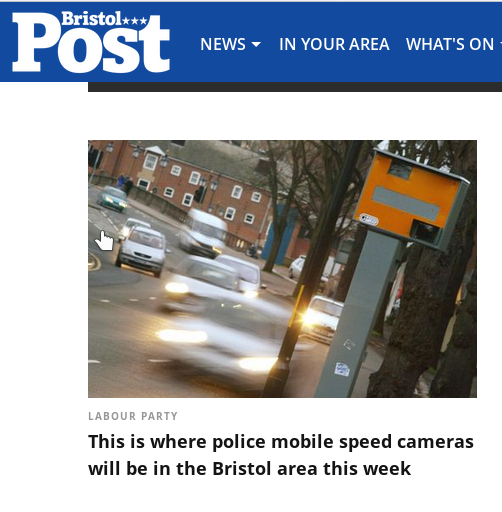
The Bristol Post, the city’s newspaper of (warped) record, hasn’t had and doesn’t have a reputation for accuracy in reporting – a situation which has not improved since it and all the other Local World regional newspaper titles were taken over by Trinity Mirror.
This is more than evident in the title’s reporting of politics today.
The last (New) Labour government had a reputation for authoritarianism and what can best be described as “control-freakery“, so it is no surprise to see the Post assigning the comrades an authoritarian and control freak role amongst today’s headlines.
Mind how you go now! 😉
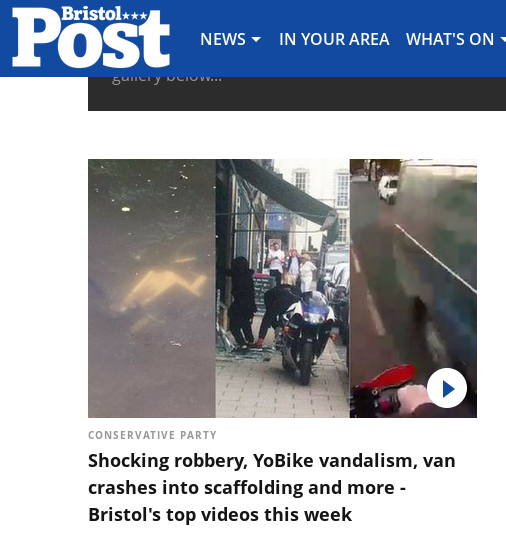
Furthermore, for the sake of balance and impartiality, the Post also includes some news of the Conservatives, as per the following screenshot.
At this point, a small history lesson might be in order.
The nickname of the Conservative and Unionist Party – to give them their full name – is the Tory Party.
As a piece of English vocabulary, Tory has interesting origins. Etymologically, it’s derived from the Middle Irish word tóraidhe, which equates in modern Irish to tóraí and to tòraidh in modern Scottish Gaelic. It has the meaning of outlaw, robber or brigand, from the Irish word tóir, meaning “pursuit”, since outlaws were “pursued men”.
It appears that since the term was coined, the Conservatives’ outlawry has expanded to encompass vandalism and careless driving. 😀
If more classes of crime can be ascribed to the party, please mention them in the comments below.
Update: as of this afternoon, one of these howlers has been corrected by the residents of the Temple Way Ministry of Truth. However, the Conservative Party are still responsible on the Post website for robbery and mayhem. 🙂
There are 6 days to go until the polls open for Theresa May’s snap election that she wasn’t going to call and the war of words is really hotting up.
This blog has previously drawn attention to Theresa May’s description of the Conservatives as the “Nasty Party” (posts passim) and how under her premiership, she and her members have striven to be as nasty as they can.
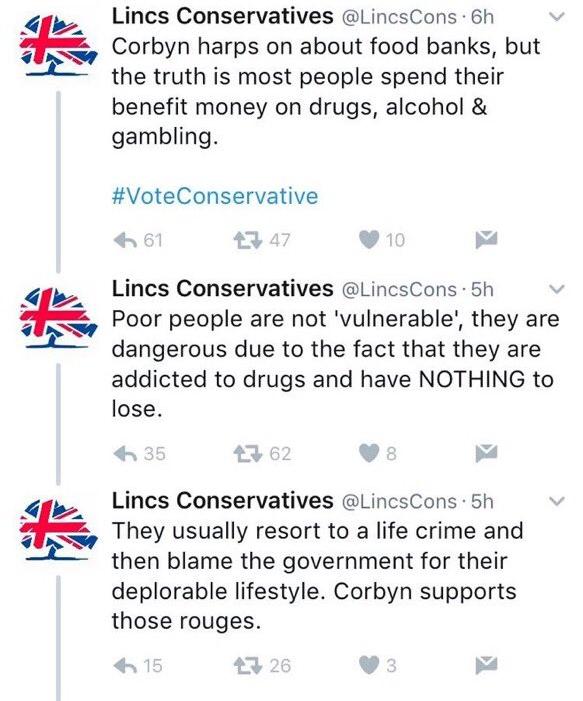
This has continued with increasing fury during the election campaign and has intensified as the Tories’ lead in the opinion polls has narrowed, as shown by this series of tweets by the party’s faithful in Grantham, birthplace of the grocer’s daughter who went on to become the Conservatives’ revered Leaderene (once known as the “Milk Snatcher”. Ed.).
In that series of postings, Lincolnshire Tories have been faithfully parroting the bile the party has been encouraging their allies in the right-wing mainstream media since their return to government in 2010.
Note too, the spelling error in the final tweet: “rouges” instead of “rogues“. It must be an orthographical error as I can conceive of no predictive text application that would come up with such a substitute.
Any rouge, otherwise known these days as blusher, is a cosmetic product and thus quite appropriate to this load of made-up nonsense. 🙂
Since the posting of those tweets, the account has been suspended by Twitter, most likely for abusive tweets and/or behaviour.
Following on from the last rather gloomy post on residents’ efforts to get Bristol’s Easton and Lawrence Hill wards (roughly covered by the BS5 postcode. Ed.) tidier, some more positive news has been received from Up Our Street.
Celia, the community engagement officer, has emailed to report on a meeting she organised with some traders on Stapleton Road and commercial waste contractors earlier this week.
She writes:
It was a lively meeting, but some progress I think was made, and SUEZ, Bristol Waste and Biffa are going to visit their clients on the road to encourage people to move away from large bins on the highway to sack collection. Most traders seemed to agree that removal of the bins would help by taking away the focal points which attract so much dumping. Bristol City Council are going to have two additional enforcement officers working in the area soon, with a focus on collecting evidence so hopefully this will increase the speed and number of enforcement actions against illegal waste dumping.
Additional enforcement is coming to Nicholas Road and the rest of Easton & Lawrence Hill
Getting traders to stop using the 1280-litre Eurobins (also known by some as skip bins. Ed.) would be great news, besides which additional enforcement from the city council will also be welcome. It might just help to break the back of the fly-tipping problem. However, one has to ask what’s being done about education and encouragement, the 2 other words beginning with an “e mentioned in my previous post.
There’s nothing on education measures in Celia’s email but there is some encouraging news on other matters.
Celia continues:
Another area of progress was that we got our first two businesses to sign the Tidy BS5 Pledge! Tovey’s Seafood and First Choice Florists. I think it would be timely to visit all businesses on Stapleton Road inviting them to sign the pledge.
Finally, Up Our Street, local residents and Easton councillor Afzal Shah, amongst others, are also working on a motion to be presented to Bristol City Council for a cumulative impact area*. This would amongst other things stop planning permissions for new hot food takeaways of which both wards already have plenty and which are a major source of litter (not to mention food for the local gull and rat population. Ed.). Celia concludes by noting this proposals was also supported at the meeting with local traders.
For the last five months, The Document Foundation, the non-profit organisation behind the popular free and open source LibreOffice productivity suite, has made use of OSS-Fuzz, Google’s effort to make open source software more secure and stable, to improve the quality and reliability of LibreOffice’s source code still further. Developers have used the continuous and automated fuzzing process, which often highlights problem just hours after they appear in the upstream code repository, to solve bugs – and potential security issues – before the next binary release.
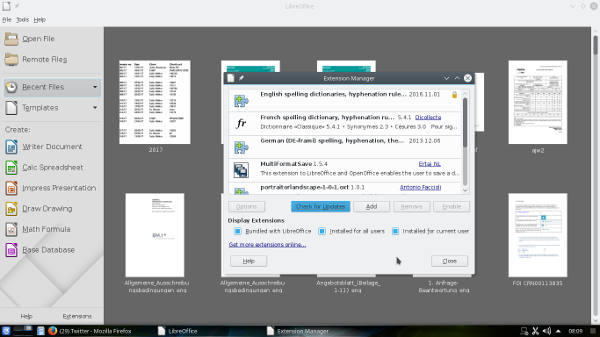
LibreOffice 5.3.3 running on the author’s Debian GNU/Linux laptop
LibreOffice is the first free office suite in the marketplace to make use of Google’s OSS-Fuzz. The service, which is associated with other source code scanning tools such as Coverity, has been integrated into LibreOffice’s security processes – under the leadership of Red Hat – to improve the source code’s quality significantly.
According to Coverity Scan’s last report, LibreOffice has an industry leading defect density of 0.01 per 1,000 lines of code (based on 6,357,292 lines of code analysed on 15th May 2017). “We have been using OSS-Fuzz, like we use Coverity, to catch bugs – some of which may turn into security issues – before the release. So far, we have been able to solve all of the 33 bugs identified by OSS-Fuzz well in advance over the date of disclosure”, says Red Hat’s Caolán McNamara, a senior developer and LibreOffice’s security team leader.
Germany’s federal state of North Rhine-Westphalia (NRW) has decided to cut out part of an English exam including a speech by a a member of Britain’s so-called royal family after thousands of students complained that they could not understand him, The Local reports.
On Tuesday North Rhine Westphalia’s school ministry announced it would be discarding part of a final English exam for 100,000 16 year-olds which involved their listening to a speech by young ‘Arry and then answering questions on it.
More than 45,000 examination candidates signed a petition after the test last week calling for a retake because of Mr Wales’ “mumbly” enunciation and the recording’s poor quality.
Regional teachers’ organisation Lehrer NRW commented that even mother tongue English teachers struggled to understand what he was saying.
There were also complaints about poor vocabulary preparation for other parts of the examination.
In response to the controversy, the NRW education ministry explained that markers would be given more leeway in assessing other areas of the test to account for what was taught in class.
In a press release (German), Lehrer NRW said that what was being proposed was a “fair solution“.
There’s a phrase in English politics – crossing the floor. The floor is that of the House of Commons and it means that an elected MP has switched allegiance from one party to another.
One former MP – Sir Hartley Shawcross – was rumoured to be constantly on the point of changing allegiance throughout the early and mid-1950s and was consequently nicknamed Sir Shortly Floorcross. 😀
It is a practice normally indulged in by rank and file MPs, not party leaders, unless Bristol’s newspaper of (warped) record is to be believed as per the following screenshot.
A proper Red Tory?
Yes, your eyes are not deceiving you. According to the Bristol Post, Labour leader Jeremy Corbyn has joined the Conservatives just 3 weeks away from a general election.
Your correspondent is now awaiting confirmation of this report from other mainstream media outlets.
Update: 14.00 hrs, 21st May – The header over the link has now been changed to read “Politics”. However, use of a special creative writing technique would have avoided the original gaffe. Its name: proofreading! 😀
The original title of this post was going to be “How seriously are Bristol Clean Streets and a tidy BS5 being taken?” However, the title of Sergio Leone’s 1966 Spaghetti Western seemed more appropriate.
The good
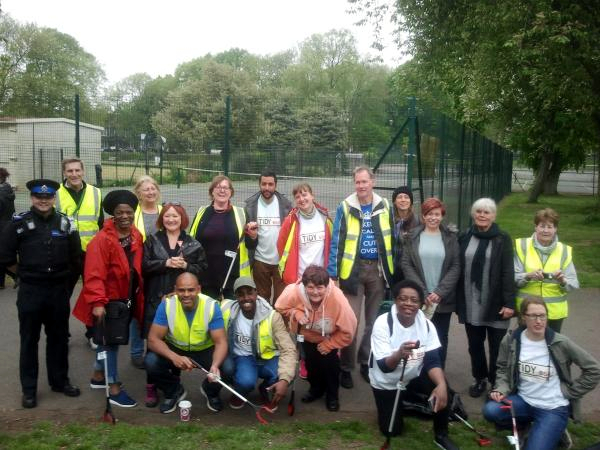
Two weeks ago on Saturday on 6th May, there was a great community effort in East Bristol to clean up local streets and public open spaces as part of the Tidy BS5 “Beating the Bounds” event (posts passim).
This event attracted some high-level support from, amongst others, Bristol Mayor Marvin Rees, Kurt James who’s leading the council’s Bristol Clean Streets initiative, Bristol East MP Kerry McCarthy, and local councillors, with whom your ‘umble scribe was able to discuss matters.
Some of the Beating the Bounds litter pickers in St George Park
It should be noted for the record that both Marvin and Kurt completed the whole 5 km route, clearing loads of crud on their way.
The bad & the ugly
Serious doubts are now being expressed, not just by local campaigners but councillors too, about the official commitment to tidier streets in Easton and Lawrence Hill wards, as something is clearly going amiss between the fine words coming out of the Counts Louse (aka City Hall. Ed.) and what is actually happening on the streets.
These doubts are being reinforced by recent press coverage that the council and its agents cannot even keep city centre amenities clean and tidy, in addition to which another report suggests that citizen action to remove litter is being discouraged.
Fly-tipping seems to be on the increase again; and that which is reported is not always collected in a timely manner (within 2 working days of being reported, according to the council’s website. Ed.) or the first time it is reported. On the latter point I speak from personal experience, having had to report one site three times before it was finally removed.
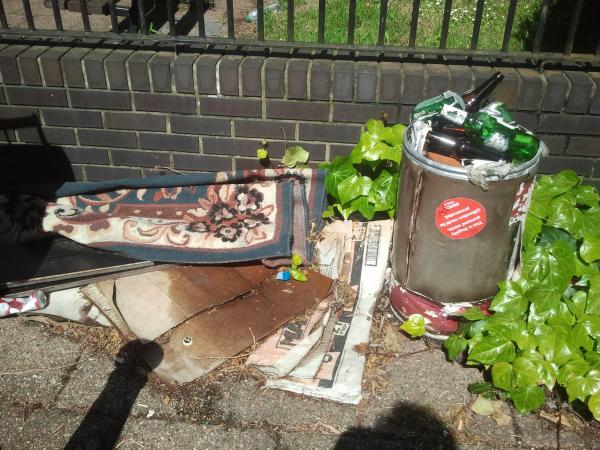
However, third time lucky is not the worst of it. Look at the picture below. You may notice the round pink sticker on the bin. That, ladies and gentlemen, is a sticker that was affixed by Bristol Waste to fly-tipped waste for collection as part the communal bins trial near the end of last year (posts passim). That means that particular instance of fly-tipping has been awaiting collection for over 6 months!
Tagged as fly-tipping in November 2016 by Bristol Waste, still awaiting removal in May 2017
When we started campaigning some years ago, Tidy BS5 supporters were informed that bin lorry crews and street sweepers are supposed to report fly-tipping for collection. Clearly those paying their regular visits to St Mark’s Grove are suffering from either actual or selective blindness and illiteracy.
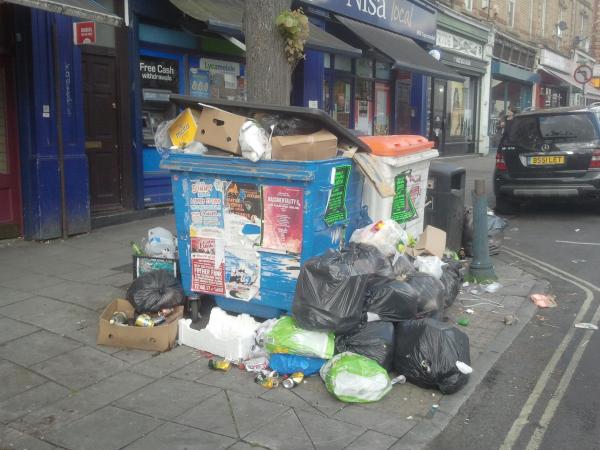
Although the communal bins for household waste have now all disappeared from the Stapleton Road corridor, the trade bins still remain and – just like the ones that were removed – are still acting as magnets for fly-tipping.
Trade bins on Stapleton Road are still attracting both fly-tipped trade and domestic waste
I’ve asked the council whether there’s any legal means of removing the trade bins from the street as they’re not only attracting fly-tipping, but fly-posting and graffiti too – two more targets for the Bristol Clean Streets initiative. Not only that, but they look ugly and take up a lot of public space. Should the public purse be subsidising local business by providing public storage facilities for private property?
Litter and street cleaning also fall under the Bristol Clean Streets initiative. Just how well are they going?
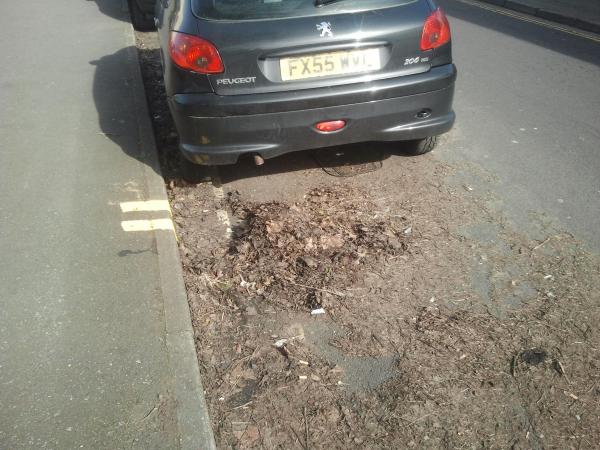
The answer would appear to be that they’re not really going anywhere. All streets are supposed to be cleaned regularly, but this photograph of conditions on the ground in Croydon Street in March 2017 tells a different story. The leaves came off the trees during autumn storms in November 2016. This clearly illustrates how infrequently and/or badly that street is cleaned.
Croydon Street, March 2017. Leaf litter left uncleared 4 months after autumn storms
When contacted, the council acknowledged the the level of cleanliness was below standard, but that parked vehicles make it difficult to get street cleansing vehicles in to deal with it. However, one doesn’t have to be a genius to consider viable and acceptable alternatives… like sending in a bloke with a brush instead!
It’s not just above ground that litter accumulates. One of my regular routes is the pedestrian subway under from Easton Road under the Easton Way dual carriageway. This 1960s planning mistake is not the most pleasant pedestrian facility to use. However its use is made even less attractive by it seemingly being permanently full of litter (we won’t mention the persistent and all-pervasive smell of urine. Ed.). This state of affairs only seems to be alleviated somewhat a few days after I or other public-spirited residents report it as requiring attention.
Finally, let’s turn to fly-posting, another target for Bristol Clean Streets. This too, like dirty streets and fly-tipping, is supposed to be removed within 2 working days of being reported according to the council website. But what’s actually happening on the ground?
Fly-posting on Easton Road. Reported at Easter. Still there in mid-May.
Your ‘umble scribe reported the above instance at Easter. However, one month later in mid-May it was still there. I understand it has now been removed by a local resident taking matters into their own hands. In addition, I’m aware that other local residents bothered by fly-posting do likewise and remove it themselves without involving the council’s enforcement team who on the available evidence are too busy to deal with BS5 or incapable of doing so.
Conclusion
It would appear that Bristol City Council and Bristol Waste have taken their eye off the ball locally following the initial flurry of enforcement activity and education that accompanied the communal bins trial and matters are once again slowly declining.
Whilst regular litter picks and other action by local residents should be continue to be encouraged, there also needs to be consistent action and pressure on the less tidy and civic-minded of our local residents by both Bristol City Council and Bristol Waste.
In addition, to encouragement, this action and pressure can be summarised in a further two words starting with “e“, i.e. education and enforcement; education to treat our local streets better and enforcement when the encouragement and education are insufficient.
Without additional effort the Bristol Clean Streets initiative and aspirations for a Tidy BS5 will just end up on the bonfire of council failures funded by local residents out of their increasingly unaffordable and poor value for money council tax.
Do you agree or disagree with the above analysis? Comment below.

 Today, Sunday 9th July, is the Day against DRM.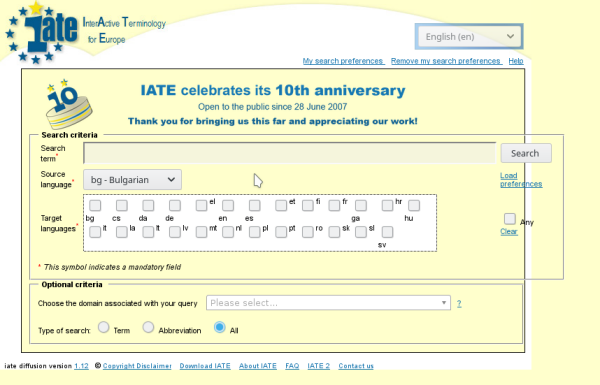
 Following on from the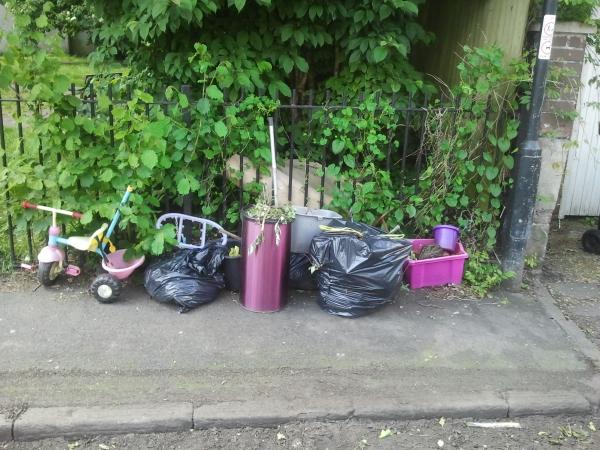
 Germany’s federal state of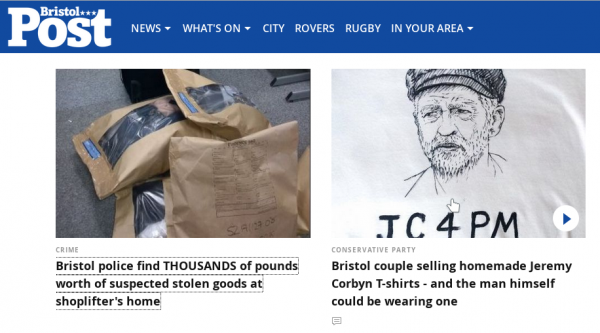
 Two weeks ago on Saturday on 6th May, there was a great community effort in East Bristol to clean up local streets and public open spaces as part of the Tidy BS5 “Beating the Bounds” event (