The BBC reports that Tesco is to introduce collection points for soft plastic packaging such as crisp packets, pet food pouches and bread bags at its stores in England and Wales.
This follows a successful trial in 2018 at 10 stores.
The roll-out will start with facilities being installed in 171 stores in south-west England and Wales.
Tesco is hoping to collect 1,000 tonnes of soft plastic a year and customers may return packaging from other retailers as well as its own packaging provided all packaging presented for collection is clean.
Soft plastic is notoriously hard to recycle and most currently ends up going to landfill or being incinerated.
Given Bristol’s wide range recycling collections, this type of plastic makes up the majority of my residual waste collected by the refuse lorry.
With this move, Tesco is finally living up to its “Every little helps” motto.
Another day and every regional newspaper in the country is replete with examples of one of its mainstays – reports of criminal cases being processed through the local courts of justice.
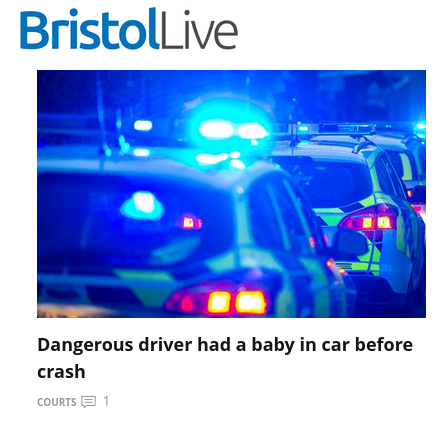
The details of one case in particular on the Bristol Live (formerly the Bristol Post. Ed.) website caught my eye for one single sentence.
In the relevant sentence we are told that the defendant*
stole his dad’s car keys without consent last October.
I have never before heard of an item being stolen with its owner’s consent, so let’s examine that sentence in detail.
We are told the defendant “stole his dad’s car keys“.
The dictionary definition of the verb to steal is “to take (the property of another or others) without permission or right, especially secretly or by force“. That definition includes the words without permission, i.e. without consent.
The lack of consent is implicit in verb’s definition, hence the qualification without permission is superfluous.
This brings us to another concept with which the author of the piece in question will be unfamiliar: tautology, i.e. “needless repetition of an idea, especially in words other than those of the immediate context, without imparting additional force or clearness“.
To some it may seem that I’m being overly pedantic, but as a linguist I’m all too aware that words matter as they are the only tools we have to convey meaning and in being the main source of information the press has a duty to use them properly.
* = Name omitted as having his name pop up once for a youthful misdemeanour in search engine results is enough without my adding to his woes.
We were discussing a press report on long-term plans for Bristol Temple Meads, the city’s main railway station and its environs.
The report itself was written up from a press release issued by the literary geniuses employed in the Bristol City Council Newsroom down the Counts Louse (which some people now call City Hall. Ed.).
Bristol Temple Meads. Image courtesy of Wikimedia Commons
Thus the surrounding area âwill be rejuvenated with housing, shops and hospitality outlets creating a new area of the city where people can live, shop, visit and socialiseâ.
Note the exemplary use of rejuvenated.
In addition, how a new area of the city can be created by covering an existing but derelict city area in architecturally contrived arrangements of building materials is beyond me. If you have any clues, dear reader, please enlighten me via the comments.
Then there’s that essential element for anything involving urban planning – the vision thing. This is ably provided in this case in a quotation by Network Rail’s spokesperson: “We are delighted to be working with our partners on this significant regeneration project and Bristol Temple Meads station is at the heart of this vision.”
Helmut Schmidt, who served as the West German chancellor from 1974 to 1982, had a thing to say about visions: “Wer Visionen hat, sollte zum Arzt gehen“. In English: People who have visions should go to the doctor. Genau! Sie haben Recht, Herr Schmidt.
Needless to the whole glossary of hackneyed phraseology seems to have been upended into the phraseology mixing bowl to create something not only unappetising, but indigestible: ambitious; innovative; rejuvenate/rejuvenation; regeneration; gateway; transformation/transformative; integrate; blueprint; showcase.
There are nevertheless a couple of absolute gems in the piece to compensate for all this guff.
Firstly,there’s the timescale for the plans. We are are informed that “work is not expected to start for another decade with the expected completion not until 2041 at the earliest“. Thus all that hot air is being expended on something whose actual implementation is two decades in the future; if not more.
A well-known adage springs to mind: pigs might fly.
Secondly, there’s the promise of an integrated transport hub. Basically this means creating a major public transport interchange (as seen in sensible city’s where the local bus/tram serve the railway station). To my knowledge, there’s been talk of a transport hub/interchange at Temple Meads for at least 3 decades already, so for it actually to become a reality within 5 decades would entail the city’s infrastructure planning process moving at more than their usual slower than tectonic plates speed.
Nearly 80 years ago, Conservative leader Stanley Baldwin laid into the press on 17th March 1931 accusing them of wanting “power without responsibility â the prerogative of the harlot throughout the ages“.
When it comes to harlotry combined with lack of responsibility, it’s hard to emulate the Express.
For years these purveyors of xenophobia have actively campaigned for the country to leave the European Union, telling all manner of lies in the process.
Since achieving that aim the xenophobia has not abated in the slightest; and neither have the lies.
Yesterday the Daily Brexit – as it is otherwise known – reported (if it can indeed be called that. Ed.) on the the progress post-Brexit UK-US trade deal; or rather the lack of any progress.
However, anyone expecting a rational, balanced account would have been sorely disappointed.
The only con is the poor quality of Express reporting
‘It’s a CON!’ Britons react with fury after Biden puts brakes on post-Brexit trade deal‘ screamed the headline.
What? All Britons? Hardly.
In total, five Britons were quoted, all of them Express readers, hardly a scientifically selected cross-section of British society.
There is no input to the piece from the alleged government, not even a nudge or wink from the usual unidentified Whitehall source.
Not that such a minor detail matters to the bigots in the Express’ editorial office, who just wanted another opportunity to rant at these beastly foreigners and whose readers were more than happy to assist, especially as a trade deal with the USA was a major objective of Johnson’s Vote Leave government and, if achieved, would represent a major face-saver for a hardline administration whose tanking of the economy by its extremely poor deal with the EU has so far been masked by the damage done by coronavirus.
Furthermore, the piece is an opportunity for the Express to put the boot in on Katherine Tai, President Biden’s nomination for United States Trade Representative, both of whose parents were born in China, so enabling yet more causal bigotry from the Express.
Finally, it’s been a matter of general fact even before his election as president that Joe Biden does not regard the clinching of a trade deal with a post-Brexit United Kingdom as a high priority. Whereas previous US presidents have tended to use the UK as a bridge when dealing with the EU, a UK outside the EU is of less utility to Washington, since Biden has already bypassed the UK and has already been talking directly to Brussels.
If there has been a con, it’s been all the lies and British exceptionalism nonsense that the Express – exercising its power irresponsibly – has published for years.
How many of us pay that much attention to road signs when out and about on our daily business on foot as pedestrians?
I mean really pay attention, not just to the instruction being given or the advice being offered by the road sign itself, but the actual words used.
Take the two examples below, both taken during this past week on the streets of Bristol. Both are on a part of the highway used by pedestrians and generally referred to by the general public as the pavement (on which more anon. Ed.). But which – if any – is the correct term? Are footways and footpaths the same?
To answer the second question first, no; they are not the same.
If there’s one thing many decades of being a linguist has taught me, it is that terminology is important – the correct word used in the right context.
One generally has be a legislator, highway engineer or transport campaigner to know the difference between a footway and a footpath.
Fortunately, it is clearly defined in legislation, in this case the Highways Act 1980, which provides the following definitions:
âfootpathâ means a highway over which the public have a right of way on foot only, not being a footway; âfootwayâ means a way comprised in a highway which also comprises a carriageway, being a way over which the public have a right of way on foot only.
In addition, Cheshire East Council provides the following information on its webpage entitled “What Are Public Rights of Way?“
You should be careful to distinguish between ‘public footpaths’ and ‘footways’. Pavements beside public roads are not public footpaths – it is better to refer to them as footways or simply pavements. Footways are not recorded on the Definitive Map as Public Rights of Way. A footway is really a part of the main highway which has been set apart for pedestrians.
Nevertheless, a caveat needs to be added to the clause where Cheshire East Council advises that “it is better to refer to them as footways or simply pavements“.
The caveat is that there’s a world of difference between what “pavement” denotes to ordinary mortals and professionals such as civil and highway engineers: for the former it’s the footway; for the latter more specialised use, Britannica gives the following definition:
Pavement, in civil engineering, durable surfacing of a road, airstrip, or similar area. The primary function of a pavement is to transmit loads to the sub-base and underlying soil.
Who would have thought two words on two such simple temporary road signs deployed for road works could be such a terminological minefield? đ
In the 18th, 19th and early 20th centuries, Welsh children who used their native tongue in schools were subject to a particular form of punishment and humiliation – the Welsh Not.
The Welsh Not (also Welsh Knot, Welsh Note, Welsh Stick, Welsh Lead or Cwstom) was an item used in Welsh schools in the 18th, 19th and 20th centuries to stigmatise and punish children using the Welsh language, according to Wikipedia.
Typically “The Not” was a piece of wood, a ruler or a stick, often inscribed with “WN“. On any schoolday, it was given to be worn round the neck to the first pupil to be heard speaking Welsh. When another child was heard using Welsh, “The Not” was passed to the new offender: and on it went. Pupils were encouraged to inform on their classmates. The pupil in possession of “The Not” at the end of the lesson, school day or week – depending on the school – received additional punishment besides the initial shaming and humiliation.
In recent times the Welsh Not seems to have transformed from being a physical object to a mental one, but one that is nevertheless still used to stigmatise speakers of one of the country’s oldest languages – one that was already old when Old English (which some call Anglo-Saxon. Ed.) first became established as England’s common tongue.
The persistence of stigmatisation is just one matter covered in a Metro opinion piece by Lowri Llewelyn entitled Why the Welsh language deserves respect not ridicule.
Looking specifically at stigmatisation, Lowri, who learned Welsh as a child and grew up in a bilingual household, writes:
I canât count how many times English folk have jeered about my âdead languageâ.
At least it wasn’t referred to as “gibberish“, Lowri!
To reinforce her point, she continues:
Fuelled by anti-Welsh sentiment from England, the Welsh even came to oppress and disrespect themselves.
She then goes on to point out how, as a teenager she would only speak English to friends and be dismissive of her native culture, before going on to point out how she has since changed her attitude and welcomes efforts to increase the presence of Welsh.
Lowri concludes by pointing out some of the encouraging signs of a renewed interest in Welsh.
For instance, in recent times Welsh has become the fastest growing language in the UK on the Duolingo language learning platform. One explanation might be a renewed interest in the cultures and history of the nations that make up Great Britain, given the severe restrictions on foreign travel imposed as a result of the coronavirus pandemic.
in my first job after graduation (translator and marketing analyst for Imperial Tobacco in Bedminster, Bristol), part of my employer’s house style I had to absorb was an avoidance of all and any ambiguity.
I well remember my chagrin at being admonished for it by my line manager, who had left school at 14 with no qualifications, started out as a messenger boy in the post room and worked his way up to senior middle management.
Collins Dictionary defines ambiguity as “the possibility of interpreting an expression in two or more distinct ways” and “vagueness or uncertainty of meaning“.
This is a lesson that the employees of the Bristol Post/BristolLive (also known by some locals as the Temple Way Ministry of Truth. Ed.) have yet learn, as shown by the latest example below.
For many years the garage sitting at the apex of the junction of Russelltown Avenue, Cannon Street and Whitehall Road in BS5 has featured a changing sequence of slogans painted by Stan Jones, who lives in the house to which the garage belongs.
It was 2017 when I first noticed it and, at that time, it focussed on the madness of Brexit.
Exit Brexit
In 2019 its message was still focussed on Brexit but had been repainted to featur the wording “Buck Foris” (fine use of a Spoonerism there. Ed.) and “Fromage not Farage“, so I think it’s fair to say Stan is not impressed with the right-leaning part of what passes for Britain’s political class.
In 2019 Stan’s efforts accidentally suffered the attentions of Bristol City Council’s fight against graffit. There was, however, a happy outcome as Stan received an apology and some paint from the corporation, as the Bristol Post reported at the time.
Below is Stan’s latest contribution, which really needs no further comment from me.
Going back to my schooldays over 5 decades ago, I recall being taught in English language classes that to rubber stamp means officially to approve a decision without giving the matter in question any proper scrutiny or thought.
Rubber stamping is indicative of lack of care, attention and is indicative of perfunctoriness.
Furthermore, the definition I was taught all those long years ago is confirmed by Collins Dictionary, which states:
When someone in authority rubber-stamps a decision, plan, or law, they agree to it without thinking about it much.
Nevertheless, there seems to be a general trend nowadays in the press to use this verb routinely for the approval of any decision, whether or not it is preceded by lengthy or indeed any debate at all.
It’s as if to rubber stamp has become synonymous with to approve, which is really isn’t.
One very guilty party in this respect is the Bristol Post, now rebranded as Bristol Live by its Reach plc masters, as per this example from 12th February, where we read:
The plan is due to be rubber stamped at a council meeting on Monday (February 15).
If there’s one thing I know about planning meetings (having attended them. Ed.), it’s that their decisions are never rubber stamped, as councillors serving on planning committees generally tend to consider all applications in the most minute detail. There’s no waving agenda items all through in a couple of minutes, so members can retreat early to the pub or somewhere else more interesting than a council meeting room.
I hope any passing member of the fourth estate will take note of – and act upon – the content of this little post.