open source

  • New ReactOS version available

    ReactOS logoReactOS is an open source operating system based on Windows NT architecture with a Win32 subsystem, which is striving to achieve full compatibility with Windows XP (NT 5.1) and Windows Server 2003 (NT 5.2) up to hardware driver level. The developers describe the new 0.3.16 version as “the prelude to many new features which will considerably improve user-friendliness in future”. By way of an example, these new features also include support for themes.
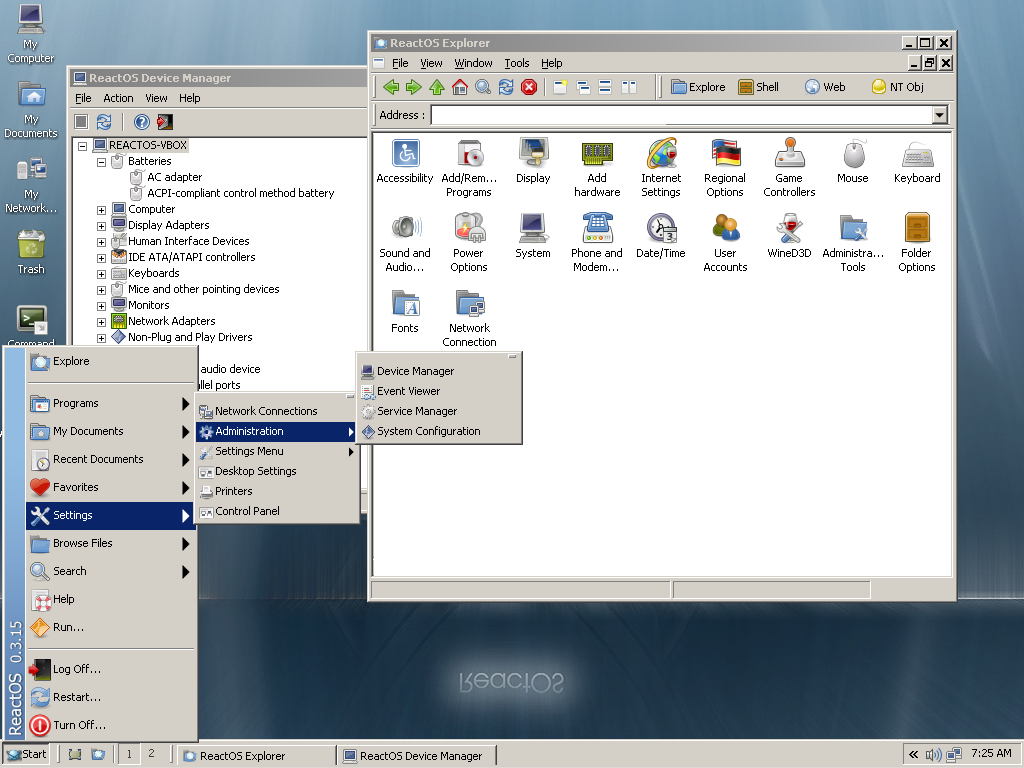
    ReactOS screenshot
    ReactOS screenshot. Click on the image for the full-sized version.

    The most significant new technical feature is the completion of a new version of the Client/Server Runtime Subsystem (CSRSS), an important part of the Win32 subsystem. Thanks to a new driver for the RTL8139 network chip, there is no longer any need to emulate a NE2000 network chip when running under current Qemu versions.

    The developers are currently seeking to bring forward a commercial spin-off with a crowdfunding campaign on Kickstarter (posts passim). However, to date only some $25,000 of the $120,000 being sought has been pledged.

  • No further development of Sigil e-book editor

    Sigil logoSigil, the open source editor for epub files, is not be developed any more, German IT news site Heise reports. John Schember, who has been Sigil’s maintainer since 2011, is taking stock after a few months: he had been hoping for a revival in the cross-platform editor’s development after moving Sigil’s code to Github in September 2013. However, there have only been a few commits which also mostly concerned minor matters. However, the most recent version of Sigil – 0.7.4 of October 2013 – can still continue to be used as long as it still works.

    screenshot of Sigil
    Sigil in use on Windows. Image courtesy of Wikimedia Commons

    As an alternative to Sigil Schember is recommending the open source Calibre e-book manager, which has also incorporated an e-book editor in the meantime. Calibre is stable and already comprises many, but not all of the functions provided by Sigil. Calibre’s editor is also being actively developed. Although Calibre’s e-book editor is not using any of Sigil’s code, Schember nevertheless views it as Sigil’s spiritual successor.

  • LibreOffice 4.2 offers increased performance and interoperability

    The Document Foundation has announced the release of LibreOffice 4.2 for Linux, Windows and Mac OS X. The new version is better integrated into Windows 7 and 8, as it now groups the preview of opened documents on the taskbar by application. A list of the last documents opened can now be displayed on the taskbar with a right mouse click.

    According to The Document Foundation, Calc – the spreadsheet application – has undergone the most extensive changes in its history, which should result in considerable increases in speed when calculating large volumes of data. A new optional formula interpreter enables massively parallel calculation of formula cells using the GPU via OpenCL.

    In addition to this, LibreOffice developers have improved interoperability with Microsoft Office, particularly when reading and writing .docx files. Amongst other things, LibreOffice 4.2 interprets MS SmartArt graphics better than the previous version. New import filters now also read Abiword documents and Apple Keynote presentations. A new start screen now shows a preview of recently opened documents.

    screenshot of new start screen in LibreOffice 4.2 running on Ubuntu Linux
    New start screen in LibreOffice 4.2 running on Ubuntu Linux

    The improvements also include the option in Windows environments the ability of centrally managing and locking down the configuration with Group Policy Objects via Active Directory and blocking individual options.

    On the mobile side, LibreOffice now supports an Impress Remote Control for iOS – in addition to the already available Impress Remote Control for Android – which allows visual management of presentation delivery on the laptop using the screen of an iPhone or iPad. The app is currently waiting for review from Apple, and will be announced as soon as it is available on iTunes Store.

    Moreover, the development team has also cleaned up and tweaked the user interface and revised 70% of dialog boxes. It will also look more modern due to the new flat Sifr icon set.

    All the new and improved features of LibreOffice 4.2 have been summarised here.

  • Swiss canton of Bern focuses open source

    Bern coat of armsWith a massive majority of 130 in favour, 0 against and one abstention, the Grand Council (Grossrat), the parliament of the Canton of Bern, has passed the motion “To exploit synergies when using software in the Canton of Bern”, Computerworld.ch reports. The cantonal administration had previously announced its support for the request by the Evangelical People’s Party (EVP), Social Democratic Party (SP), Conservative Democratic Pary (BDP), the Green Party (GPS) and the Green Liberal Party (GLP). The individual points of the motion will now go to the Canton’s chief civil servant for implementation.

    With this motion the parliament wants the Cantonal Office for Computing and Organisation (KAIO) and Bedag Informatik AG, which is owned by the Canton, to co-operate in the information technology sector with other authorities on open source projects. Its own developments for which the Canton holds the copyright shall be released as open source software where reasonable so that other authorities can use the software and future development costs can be shared.

    In addition, managers for each new IT project must disclose in future which open source alternatives have been investigated during procurement. If none is included, this must be justified. The same criterion shall be applicable to every new specialist application or one that is to be adapted. Either a release under an open source licence must be planned here or a justification given as to why it should not be released as open source.

    Finally, the Canton of Bern is to be more actively involved in existing and new open source development and specialist applications and their respective organisations.

  • An open source messenging service for French universities and elite schools

    Blue-Mind, the French open source collaborative messaging solution, has been adopted for French universities and other associated establishments, including scientific and technical public institutions, Le Monde Informatique reports today.

    screenshot of Blue-Mind software

    The Ministry for Higher Education and Research has signed a four-year framework agreement with French software supplier Blue-Mind. Its collaborative open source messenging solution is therefore now available with a specific pricing structure to all French universities, elite schools (the so-called ‘grandes écoles‘), scientific and technical public institutions such as the CNRS, INSERM, INRA, INRIA, etc. and public sector research and computing centres.

    The Blue-Mind offering is positioned as a competitor to Google Apps as regards functionality. Its features include messenging/email, contact management, calendars, etc. for all types of devices, including mobiles.

  • Free Windows clone ReactOS needs support

    German IT news website Heise writes that the developers of ReactOS, the free and open source Windows clone, have launched a Kickstarter campaign to advance the development of their Windows-compatible operating system. The campaign’s target is to collect $120,000 for the development of a commercial version of ReactOS called “Thorium Core”. The developers state that everything which is developed in Thorium will also be fed back into ReactOS. The Kickstarter campaign will run until 21st February and had realised over $18,000 at the time of writing.

    screenshot of ReactOS
    ReactOS screenshot. Image courtesy of Wikimedia Commons.

    The ReactOS project has the aim of building an open source operating system based on Windows NT architecture with a Win32 sub-system. The current development aim is compatibility with Windows NT 5.2, so that 32 bit hardware drivers and applications for Windows XP (NT 5.1) and Windows Server 2003 (NT 5.2) can be used. Finally, ReactOS should provide a leaner and more flexible environment for Windows applications than that provided by current versions of Windows. Nevertheless, the developers warn that the most recent version of ReactOS – 0.3.15 – is still an alpha version and advise against using it for day-to-day work.

  • Wikipedia community votes on MP4

    Wikimedia Commons logoContent on Wikipedia should not only be made available under a free licence, but also in free formats. As this is associated with limitations the Wikimedia multimedia team has launched a request for comment to integrate the H.264 MP4 codec, Heise reports.
    Such proprietary codecs have so far not been allowed in Wikipedia and its sister projects; even MP3 files are not allowed. Videos can only be uploaded in Ogg Theora format and the open WebM format developed by Google.

    In the opinion of the multimedia team, this limitation is significantly preventing the use of videos. Although the Chrome and Firefox browsers can play WebM, other browsers have still not implemented the format. It looks even worse as regards mobile devices: according to an analysis, two-thirds of mobile calls to Wikimedia servers originate from devices which cannot play the video formats made available on Wikipedia. Even the uploading of videos is made more difficult since contributors must first convert their videos before they can upload them. The result is that only 38,000 videos can be found on the Wikimedia Commons multimedia platform, whereas YouTube makes 6.5 million videos available in the education category.

    The proposal is not meeting with much approval in the community. On the first day of the discussion which started a month ago, must users spoke out against any support for MP4; however, supporters are not occupying too inferior a position. In particular, the secret licence agreements and any licensing payment due for commercial use of videos are being criticised. A compromise in which the Wikimedia Foundation will convert all uploaded MP4 videos into open formats is only supported by very few contributors.

    The multimedia team must now put more effort into convincing people if it wants to convert its plans into reality. Heise says the Wikimedia Foundation is adopting a neutral official position.

  • How to write user help

    A product’s user guide or help is an essential element of most items of software or consumer products today.

    Well-written help can save hours of confusion and frustration as new users get to grips with tools. It should be concisely written but cover all aspects of the use of the software or product.

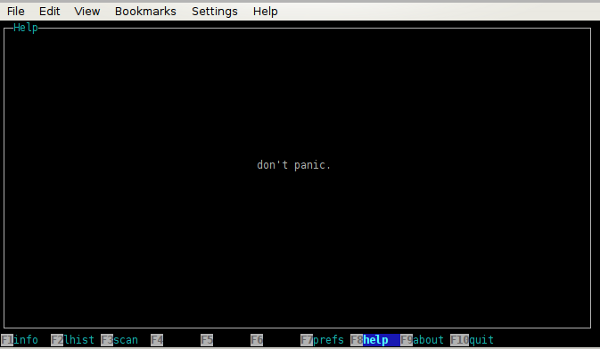
    The wavemon program for Linux is a monitor for wireless devices. It allows users to watch the signal and noise levels, packet statistics, device configuration and network parameters of their wireless network hardware.

    Here’s wavemon’s help file.

    screenshot of wavemon help file

    Concise isn’t it?

  • UK’s CESG finds Ubuntu most secure OS

    Ubuntu logoUbuntu 12.04 LTS proved to be the most secure product in a client operating system investigation by British security body Communications Electronics Security Group (CESG), which is part of GCHQ and provides assistance to government departments on their own communications security, according to a report today in Germany’s Linux-Magazin.

    The test field consisted of 11 desktop and mobile operating systems, including Windows 7 and 8, Windows RT, Android 4.2, Apple’s iOS 6 and Mac OS X 10.8, as well as Google Chrome OS 26. CESG investigated the security of the systems in various categories, e.g. VPN, hard drive encryption, secure boot, sandboxing, implementation of security policy and update policy.

    No system was able to meet all demands for use by the British authorities, but Ubuntu 12.04 LTS was shown to be the most secure system of those tested. Windows Phone 8 has the most critical vulnerabilities.

    Ubuntu supplier Canonical has summarised the results as it sees them in a PDF. The company is hoping to do even better with the forthcoming Ubuntu 14.0 LTS version of its operating system, particularly by supporting secure boot.

    More detailed information about the test is available on the CESG website, including CESG’s Ubuntu-specific report.

    First published by Bristol Wireless.

Posts navigation