The administration of the Italy’s Emilia-Romagna region will switch to the open source OpenOffice productivity suite, Joinup reports. It thus hopes to save some €2 mn. euro on the licences that it would have spent for updating the ubiquitous MS Office suite. To prepare the migration, a three-month pilot involving 300 workstations has started at the region’s Directorate-General for Agriculture; all other regional departments will switch over to OpenOffice by the end of 2014. The region employs some 3,545 office staff.
The region is currently using a ten year-old version of MS Office. Instead of spending €2 mn. to upgrade 3,200 proprietary licences that are due to expire next year, the province decided to switch to OpenOffice which “offers basically the same functionality”.
The region has set aside a budget of €220,000 for the switch to OpenOffice; this budget includes a staff training element.
The next version (8.0) of Debian GNU/Linux, codenamed Jessie, will be released in the first half of 2015. Debian’s developers have now announced the freeze date and freeze policy for Debian Jessie. An extract of the announcement (entitled “Bits from the Release Team (Jessie freeze info)”) is reproduced below.
We are happy to announce that we will freeze Jessie at 23:59 UTC on the 5th of November 2014. To avoid any confusion around exactly how we will freeze, we have prepared a draft of the Jessie Freeze Policy in advance
FREEZE POLICY
Notable changes to the policy include:
Well-defined stages in the freeze policy at certain dates.
After 3 months of freeze, we will no longer allow remove packages to re-enter testing
We only accept fixes for important bugs in the first month.
etc.
Proactive automated removals 3 months into the freeze.
Note that bug-free packages will be removed if they (build-)depend on a RC-buggy, non-key package.
Also note the interval of 7 days between each removal run.
Inclusion of “do” and “don’t” guidelines for uploads and unblock bugs.
Currently, we are undecided whether to maintain “carte blanche” freeze exceptions at the start of the freeze. For now, exceptions are *not* included in the freeze policy (i.e. do *not* rely on them). This means that changes have to migrate to testing *before* the freeze date if they are to be included in the release.
*If* such exceptions are added, they will *not* apply for packages where migration would change the “upstream” version.
Native packages are at a disadvantage here, since all uploads of native packages are considered a new “upstream” version.
It should go without saying, but “urgency” abuse is not an acceptable way of getting your latest changes into the release.
It should also go without saying that embedding a new upstream release in a patch just to get a such “carte blanche” exception is also considered abuse.
As noted we are dealing with a draft, so there may be changes to the actual freeze policy. Should we change the policy in a substantial way, this will be included in subsequent “bits”.
On Tuesday 15th October, Bristol Radical History Group and Bristol Stop the War Coalition are jointly organising a public meeting entitled Remembering the Real WW1 at the Hydra Bookshop, 34 Old Market St, Bristol, BS2 0EZ (map). The event starts at 7.00 pm and entry is free, although there’ll probably be a whip-round for donations. More details here.
The talk is being organised in advance of next year’s centenary of the start of World War 1, for which The British government plans to spend £55 million marking the occasion (and the centenary of other stages of the war). Comments from Prime Minister David Cameron calling for a ‘truly national commemoration’ stressing our ‘national spirit’ already suggest what he has in mind. He has even compared the government’s plans with last year’s Diamond Jubilee celebrations.
What Cameron is forgetting is a phrase that I recall from 40 years ago this month, when I had just started doing political science as part of my Modern Languages degree, i.e. ‘war is the destruction of the fittest’. Indeed, the First World War is credited with being the first war in history where slaughter was conducted on an industrial scale due to advances in technology. In the Battle of the Somme alone (1st July-18th November 1916) claimed more 1,000,000 casualties, making it one of the bloodiest battles in the history of mankind.
German dead at Guillemont, September 1916. Picture courtesy of Wikimedia Commons
For the majority of people in Europe, whether or not they were directly involved, WW1 was one of the twentieth century’s greatest disasters (and one whose repercussions are still being felt in international relations. Ed.). Already historians like Max Hastings have begun to argue that this was a war that had to be fought against German militarism and the costs in human life and destruction were worth paying. In contrast, radical historians have begun to uncover a multitude of both individual and mass forms of resistance to the war on all sides of the national divides. This resistance took the form of desertion, fraternisation, strikes and mutinies.
Like most families, members of my own were involved in the conflict. Ted, my paternal grandfather was involved in the Gallipoli campaign, which by itself claimed 34,072 British dead and 78,520 wounded. On my mother’s side, my grandfather Alfred was rejected for military service on medical grounds, although my Auntie Doris informed me in a letter that one of Alfred’s brothers – whose name I cannot remember – deserted in France and was never heard from again by the family.
Those British service personnel who survived the conflict were promised a ‘country fit for heroes to live in’ by ‘Welsh Wizard’ David Lloyd George‘s postwar government. They were sadly let down.
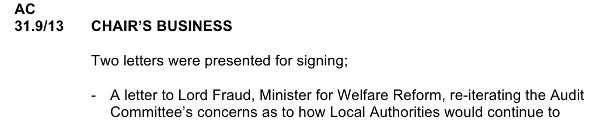
I’m not a regular reader of the minutes of meetings of Bristol City Council’s Audit Committee. However, there’s an absolute corker of a typographical error on page 3 of the draft minutes of its 24th September 2013 meeting (PDF).
Will anyone down at the Counts Louse (as real Bristolians call or) or City Hall (as the Mayor has renamed it) be eagle-eyed enough to notice?
Under no circumstances Lord Fraud should not be confused with Lord Freud, a Conservative peer who only pretends to be a Parliamentary Under-Secretary at the Department for Work and Pensions with responsibility for welfare reform. 😉
Make is a utility that automatically builds executable programs and libraries from source code by reading files called makefiles which specify how to derive the target program.
This latest version provides support for Guile integration as an embedded scripting language for makefiles, as well as other new features and many bug fixes and performance improvements. There are also some backward-incompatibilities.
Potential users are advised to read the NEWS file that comes with the GNU make distribution for complete details on changes visible to the user.
Distro Astro has features for almost all astronomy uses — from observatories, planetariums – and for all users from professional researchers to astro-photographers and amateur enthusiasts; and that’s why it’s called Linux for Astronomers. The project’s website has a full review of Distro Astro’s features.
Bristol Radical History Group have announced their autumn programme of talks, gigs and meetings. Full details can be found at http://www.brh.org.uk/site/events/.
The events themselves are as follows:
‘We are all in the gutter but some of us are looking at the drains’: An alternative explanation of the public debt
Vampires are a mainstay of horror films. Seemingly dead, they rise again unbidden under the right circumstances – usually nightfall – to carry on their (non-)existence.
The press equivalent of the vampire is the story which is initially posted online, only to be deleted (with its expectant reader served up a 404 error page instead. Ed.) and then reappear at a later date.
This happened with the Bristol Post story featured in the screenshot below.
Controversial or what? The Bristol Post’s latest vampire article
This story originally appeared online first thing on Friday morning, only to be pulled a couple of hours later. It has now risen from the dead bearing a Sunday timestamp.
Why was it pulled in the first place, some may be wondering, particularly as it seems like a fairly innocuous tale of an elderly gentleman moaning about parking and especially since those with an intimate knowledge of the Bristol Post will be well aware of its passion for the motor car and all matters motoring.
Tomorrow (5th October) the City Academy in Russell Town Avenue (map) will be holding a free community event from 12.00 noon to 4.00 pm. All proceeds from the event will be going to the campaign to save Felix Road Adventure Playground (posts passim), which is threatened with closure.
There will be live music & performances, food, an active zone including bouncy castle & soft play and face painting.
For further information contact Ananda Kellett by email on kelleta (at) cityacademy.bristol.sch.uk or telephone 0117 9413800.
The official geodata of the Berlin Land Surveying Administration are now available free of charge, Heise reports. The data, such as the automated property register map, topographical official map series, aerial photographs and rectified digital photographs derived from these and information about standard land values, may be used for any commercial or non-commercial purpose according to a notice from Berlin’s Senate Administration for City Development & the Environment. The data can be acquired from the geodata portal.
The previous complex terms of use have been abolished and replaced by new uniform terms of use, which permit commercial and non-commercial use of the data free of charge. Modest charges are levied for the provision of data that can only be made available offline. Fees are still charged for official information and extracts from the land register, as well as for permits and certifications.
“Social topics relevant to the future such as climate, energy, mobility or demography are dependent on geodata. Berlin’s implementation of its open data initiative is being continued with the release of official geodata and an important contribution being made to the continuing opening up of the State,” explains Ephraim Gothe, State Secretary for Urban Development and the Environment.
Mathias Schindler of Wikimedia Deutschland sees the move as a small revolution. “In particular, the (meta)data may be copied, printed out, used in presentations, processed and passed on to third parties, merged with one’s own or others’ data, associated with independent data sets and integrated in internal and external business processes and applications in public and non-public electronic networks – all with a source attribution obligation”, he explains in a blog post.
The Berlin Senate published its open data strategy in February 2012. It set up its open data portal – the first in Germany in April 2012.
 The administration of the Italy’s Emilia-Romagna region will switch to the open source OpenOffice productivity suite, Joinup reports. It thus hopes to save some €2 mn. euro on the licences that it would have spent for updating the ubiquitous MS Office suite. To prepare the migration, a three-month pilot involving 300 workstations has started at the region’s Directorate-General for Agriculture; all other regional departments will switch over to OpenOffice by the end of 2014. The region employs some 3,545 office staff.
 The next version (8.0) of
 The GNU Project has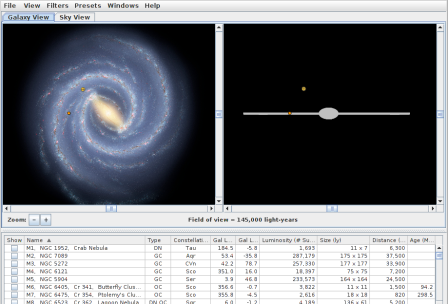
 Bristol Radical History Group have announced their autumn programme of talks, gigs and meetings. Full details can be found at

 The official geodata of the Berlin Land Surveying Administration are now available free of charge,