Steve Woods

Written by a human.

  • Crapita loses contract in double-quick time

    Transport Extra reports that our friends at Capita (posts passim) have lost a contract with a term of 5 years, an option on a further 2 years and worth £100 mn. just eighteen months into the contract.

    The contract was with the DVLA and concerned vehicle excise duty enforcement.

    The contract has now been awarded to rival outsourcing outfit NSL.

    Well done Crapita. How much longer before you lose the courts interpreting contract with the Ministry of Justice? Let’s face it, you’ve been under-performing on that one ever since you took over the under-performing ALS (subsequently rebranded as Capita Translation & Interpreting. Ed.)?

  • France’s Big Brother revealed

    Originally posted on Bristol Wireless yesterday.

    online surveillance imageFollowing recent revelations about massive extent of telecommunications and internet traffic surveillance carried on by the USA’s NSA and the UK’s GCHQ (news passim), revelations have now emerged in Le Monde, one of France’s leading national newspapers.

    In a post today entitled “Revelations about the French Big Brother”, Le Monde reveals that France has a large scale snooping apparatus. The DGSE, the French secret service, is systematically collecting the electromagnetic signals emitted by computers or telephones in France, as well as the traffic between the French and abroad: all of the French population’s communications are spied upon. French politicians are aware of this, but secrecy is the rule: this French Big Brother is clandestine and evades all control.

    What the intelligence service is looking is the metadata; their aim is to know who is talking to whom, allegedly to piece together the links between targets and thus to identify “cells”. The DGSE is thus collecting data on millions of telephone subscribers, plus emails, text messages, faxes, etc., plus all internet traffic sent to the likes of Google, Facebook, Microsoft, Apple, Yahoo, etc. The apparatus is alleged to be invaluable for fighting terrorism, but also enables snooping on anybody.

    The DGSE is therefore collecting billions of items of data which are compressed and stored in Paris on three floors in the basement of its headquarters on the boulevard Mortier. The intelligence service has a supercomputer capable of handling tens of millions of gigabytes, according to Le Monde.

    Other French intelligence services have fully discretionary access to this enormous database; this is termed the “pooling infrastructure”. Certain information can even be used by the police under the cover of “anonymous information”.

    French law has made no provision for the bulk storage of technical data by the secret services. “For years we’ve had virtual authorisation,” one old intelligence services boss confides, “and each agency is happy with it.” A French parliamentarian confirms “that a large part of the electronic communications network in France is actually intercepted and [the data] stored by the DGSE”.

    However, officials deny that the “pooling infrastructure” actually exists.

  • Bristol and birds of prey

    It’s always a good idea to keep one’s ears open walking around the city – or anywhere for that matter.

    Yesterday lunchtime when crossing St Philips Bridge (below) my ears heard a real treat – a peregrine falcon in the heart of Bristol.

    St Philips Bridge and the former Bristol Tramways power station.
    St Philips Bridge and the former Bristol Tramways power station. Picture courtesy of Wikimedia Commons

    peregrine falcon image
    Peregrine falcon
    Following the sound, I spotted the peregrine perched on a ledge near the top of the old Bristol Tramways power station, the building whose end is covered in scaffolding in the picture.

    I’ve seen peregrines before near Bristol, particularly down the Avon Gorge, where I’ve spotted them nesting in the Gorge’s old quarries, but never before in the heart of the city.

    Naturally, I was quite excited by this and asked Bristol’s Twitter users how unusual this was. After a couple of hours, I received a reply from naturalist and broadcaster Ed Drewitt, who informed me there was a “family of 3 chicks around Cabot Circus way” (they might help keep the city centre’s gull and feral pigeon population under control. Ed.).

    Around my home patch of Easton I have over the years seen both sparrowhawks and kestrels, whilst moving further afield the patchwork of open grassland and woodland on Purdown and Stoke Park is ideal buzzard territory.

    Finally, there’s one bird of prey I believe I’d heard that I’d really love someone else to corroborate. Returning home some years ago, I could have sworn I heard a tawny owl hooting in the vicinity of the railway embankment between Stapleton Road and Lawrence Hill railway stations. If anyone else has heard hooting there too, I’ll know I wasn’t imagining things. 🙂

  • Version 2.0 of OGL released

    Reposted from Bristol Wireless.

    OGL symbolThe British National Archives announced last week that it has released version 2.0 of the Open Government Licence (OGL) following consultation on how the licence could be developed further to reflect new and emerging thinking on the licensing of public sector information.

    The OGL is an open licence allowing information to be used and re-used with virtually no restrictions. It is also part of the UK Government Licensing Framework (UKGLF), which was launched in 2010. A wide range of government and other public sector information can be used and re-used under the OGL, which also forms part of the UK government’s policy on transparency and open data.

    The basic terms and conditions of the Open Government Licence version 2.0 remain the same as the previous version in that it continues to:

    • permit use and re-use of information in any format for both commercial and non-commercial purposes without charge;
    • require re-users to publish an acknowledgment of the source of the information;
    • exclude personal information from the licence;
    • be compatible with other licensing models, such as Creative Commons, and conforms to the Open Definition*.

    What has changed is that National Archives have introduced a separate section of the licence headed ‘Non-endorsement’. This is designed to make it clear that the licence does not permit the re-user to suggest that their versions of the information enjoy any official status or have departmental endorsement.

    The National Archives is also introducing the OGL symbol, a simple way of identifying when information can be used and re-used under the terms of the Open Government Licence. The OGL symbol was developed by The National Archives with help from the Government Digital Service. The OGL symbol, at a glance, shows that information can be used and re-used under open licensing.

    * The definition seeks to define the terms “open”, “open data” and “open content” precisely in the context of data and content so as to ensure “interoperability between different pools of open material.”

  • AMD joins The Document Foundation Advisory Board

    the LibreOffice logoThe Document Foundation (TDF), the organisation behind the free and open source LibreOffice suite, has announced that chip maker AMD is now a member of its Advisory Board. AMD is a leading designer and integrator of pioneering technologies that are at the heart of the digital devices people use every day, pushing the boundaries of what is possible.

    “It is great to work on LibreOffice with The Document Foundation to expose the raw power of AMD GPUs and APUs, initially to spreadsheet users,” said Manju Hegde, corporate vice-president, Heterogeneous Solutions at AMD. “Bringing the parallelism and performance of our technology to traditional, mainstream business software users will be a welcome innovation for heavy duty spreadsheet users, particularly when combined with the compute capabilities of the upcoming generation of AMD Heterogeneous System Architecture (HSA) based products.”

    “It is exciting to work together with AMD and their ecosystem to take advantage of AMD’s cutting edge innovation right inside LibreOffice,” said Michael Meeks, SUSE Distinguished Engineer and TDF Board Member, “The growth in performance and parallelism available in the GPUs of today, and particularly with AMD’s revolutionary APUs of tomorrow, is something we’re eager to expose to LibreOffice users.”

    With the addition of AMD, The Document Foundation’s Advisory Board now consists of eleven members: AMD, Google, RedHat, SUSE, Intel, Lanedo, the King Abdulaziz City of Science and Technology (KACST), the Inter-Ministry Mutalisation for an Open Productivity Suite (MIMO) from France, the Free Software Foundation (FSF), Software in the Public Interest, and Germany’ Freies Office Deutschland e.V.

  • Over 80% of email is spam

    email imageA study of emails carried out between 1st and 30th June 2013 and covering 200,000 mail accounts generating 8.5 mn. emails a day has revealed that over 80% of email traffic is spam and only 9% is legitimate traffic, according to today’s Le Monde Informatique.

    The study’s authors – email security specialists Vade Retro – have revealed that 81.38% of the world’s email traffic is in fact unsolicited and unwanted spam. Of the remainder, 9.40% is advertising, 9.18% are legitimate messages and 0.04% of emails harbour viruses.

    The study reveals its subjects made 1.6 million unsubscribe requests with a compliance rate of 97.7%. Half the time cancelling a subscription involves sending an email to a generic address.

  • French stay connected on holiday

    Nearly one in two French citizens takes a computer on holiday to connect to the internet, reports Le Monde Informatique.
    A survey has revealed that 47.2% of the French may take a computer on holiday this summer, with a peak of 60% in the 18-24 years old group. A majority of them plan to use the computer for an average half an hour a day (46.1% between 30 minutes and 1 hour; 17.3% more than one hour).

    Once connected, 87.5% of holidaymakers will use their computer to surf the internet, 57.6% for leisure (watching films or listening to music), 37.4% for saving or retouching their photographs and 19.8% for work.

    Although 91.2% of holidaymakers will be connecting from where they are staying (hotel, rented accommodation, camp site), 29.8% also want to make use of places offering wifi connections, 11.7% for surfing while travelling and 4.2% are even going to be brave enough to use their computer on the beach. A majority of them (64.3%) also complain regularly of the lack of wifi or its poor quality.

    Even though the majority of holidaymakers (71.9%) give priority to relaxing during summer, spending time in front of a computer or another device has now become a priority form almost one in 10 French citizens (9.3%).

    This survey was conducted by Easy Panel for Crucial.fr via the internet from 23rd to 26th April 2013 using a sample of 1,015 people owning a computer and representative of the French population.

  • Put Ada on a bank note

    Reposted from Bristol Wireless.

    The Bank of England recently announced that social and prison reformer Elizabeth Fry, who currently graces the English five pound note, is to be replaced by Sir Winston Churchill, leaving Elizabeth Windsor as the only woman shown on an English bank note – and that’s merely due to an accident of birth.

    Since the announcement, there have been calls from various quarters for another woman on English bank notes, in response to which the Bank of England (also known as “the Old Lady of Threadneedle Street“. Ed.) has hinted that 18th century novelist Jane Austen may be next to grace the back of the ten pound note.

    Naturally, this safe, predictable choice by the Bank of England hasn’t met with universal approval. Why stick with a female representative from the arts when there are plenty available from the sciences?

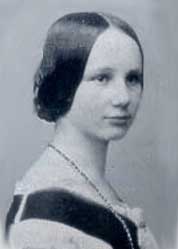
    image of Ada Lovelace
    Ada Lovelace
    We’ve written before about Ada Lovelace (news passim), who was an English mathematician and writer chiefly known for her work on Charles Babbage‘s early mechanical general-purpose computer, the analytical engine. Her notes on Babbage’s engine include what is recognised as the first algorithm intended to be processed by a machine; thanks to this, she is sometimes considered the world’s first computer programmer.

    A petition has now appeared on the government’s e-petitions site calling for Ada Lovelace’s achievements to be recognised by putting her on a bank note. The petition’s text reads as follows:

    Mervyn King, the Governor of the Bank of England, has announced Winston Churchill will replace social reformer Elizabeth Fry as the face of £5 notes. This means that, other than the Queen, there will be no women featuring on our English bank notes.

    A campaign is already underway to support women on English bank notes:

    http://www.change.org/en-GB/petitions/bank-of-england-keep-a-woman-on-english-banknotes

    We would like to propose Ada Lovelace – Founder of Scientific Computing – as the new face for the £10 note. A true champion of women in science and technology.

    The petition could do with your support. As this post goers to press, it has under 300 signatures (you might like to support the other petition to keep women on English bank notes too. Ed.)

    While we’re talking women on bank notes, how about these women from the sciences and engineering?

    Can you think of any more worthy candidates? Add them in the comments below.

  • France’s MIMO joins Document Foundation Advisory Board

    MIMO logoMIMO, the French inter-ministerial group devoted to the promotion of open source within government, has become a member of the Advisory Board of The Document Foundation, which produces the free and open source LibreOffice productivity suite, Numerama reports.
    MIMO, which was set up in 2005 by ADAE to facilitate the adoption of OpenOffice and then LibreOffice by civil servants, is thus becoming one of the 10 members of the Advisory Board with Google, Intel, Lanedo, Red Hat, SUSE, Freies Office Deutschland e.V., Software in the Public Interest (SPI), the Free Software Foundation (FSF) and the King Abdulaziz City for Science and Technology (KACST).

    The Document Foundation’s Advisory Board has no decision-making function within the Documentation Foundation, but has been established to represent the project’s major donors. It makes its recommendations to the Foundation’s Board, which makes the final decisions on the direction of LibreOffice. However, since its members support the project financially to the tune of $5,000-20,000 per year, the opinion of the Advisory Board does receive special attention.

    At present MIMO brings together the Ministries of Agriculture, Culture, Defence, the Economy, Ecology, Education, Finance, the Interior and Justice. Several public sector organisations have also joined the group, including CAF, DILA, ENA and the National Assembly. In total, 500,000 workstations have been equipped with free and open source office suites distributed by MIMO.

Posts navigation