Today’s fourth estate is densely populated with irresponsible harlots whether one peruses the national or local press.
At this point your ‘umble scribe, would refer readers to a piece in today’s Daily Post/North Wales Live, which reviews an Indian restaurant in Corwen and whose headline is shown in the following screenshot.
The first comment below the piece at the time of drafting also uses the insult to describe the flippant use of comparison and hyperbole in it, whilst the other 2 reader comments were similarly dismissive.
A restaurant winning an award for its food is hardly a match for the feats of Owain Glyndŵr, the last Welsh of Wales proclaimed by popular support, who lead an armed rebellion and 15 years long war of independence against the English colonisers during the late Middle Ages. Amongst his other achievements, he was He also an educated lawyer and formed the first Welsh Parliament (Senedd Cymru), which sat in Machynlleth.
Owain’s body was famously never found, so his date of death is unknown; he just vanished into the hills, although it is not known whether Welsh curry houses retreat into the uplands when their time is up.
Anyway, in case any passing restaurant reviewers working for Reach plc’s Welsh titles happen to be reading this, please find below a handy reference guide showing the difference between Welsh heroes and restaurants to avoid further confusion. 😉
It might be the festive season, but the mission of Reach plc titles all over the country to murder the English language and sow confusion instead of enlightenment continues unabated.
Christmas Eve saw the publication of the piece shown in the screenshot below where the person responsible for the headline seems oblivious to the fact that there are differences in meaning between chances and changes and doesn’t have the nous to check their copy after drafting
.
I wonder if the ‘journalist‘ responsible will be tucking into roast turnkey this Christmas Day lunchtime. 😀
Your ‘umble scribe has not bothered with social media since the obscenely wealthy and undertaxed man baby masquerading under the name Elon Musk took the helm of Twitter and promptly set about trashing it with his control freak approach to company management, sacking lots of the tech staff that keep the platform running and demanding those that survive show their dedication to the company by working excessive hours.
This was a big wrench for your correspondent, as time not spent working was generally filled with social media discussion and debate, and so entailed a wholesale change in his daily activities (Note to self: must get round to getting on Mastodon some time soon. Ed.).
Following his acquisition of the platform, Musk installed himself as Twitter’s CEO and now seems to have reached the conclusion his rather doubtful skills are up to the job.
In recent days Musk held a Twitter poll to ask Twitter users whether he should remain as the platform’s boss. The results were not flattering if Musk has – as I suspect – a narcissistic streak.
One candidate springs to my mind immediately: an egomaniac with current experience of running a social media platform (albeit one misnamed Truth Social. Ed.). Step forward one Donald John Trump, disgraced 45th president of the United States, who spends a large share of his time playing golf (as he did whilst supposed to be occupying the Oval Office. Ed.).
I do hope these two prime examples of the Dunning-Kruger effect play nicely with one another. 😀
Reach plc, owners of the Mirror and the Daily Brexit (which some still call the Express. Ed.), also control a large swathe of the local regional press across the English Empire (which some still call the United Kingdom. Ed.).
One of the accusations frequently levelled against Reach’s regional titles is that the news they carry has been dumbed down, particularly since the ousting of sub-editors who until some years ago provided a modicum of quality control over what was actually printed.
A further criticism often directed in Reach’s direction is a lack of investigative journalism, i.e. form of journalism in which reporters deeply investigate a single topic of interest, which may involve months or years researching and preparing a report.
Your ‘umble scribe does not know if months or years of research have gone into preparing the flurry of seasonally inspired investigations that have appeared in various Reach title in the past week, but they do show the great sacrifice that has been made around the country by the waistlines of the reporters involved.
A small selection of this fearless sleuthing is shown below.
First up the Bristol (Evening) Post
The budget supermarkets Aldi and Lidl seem to have attracted particular attention, as per this poultry effort from The Daily Post/North Wales Live.
In the south of Cymru, Wales Online, formerly the Western Mail, has opted for a hyper-local approach, focussing its rapier-like skills on Cardiff’s independent retail catering sector. Note the whole story squeezed into the headline, thus saving the reader the bother of engaging with the piece, all apart from the verdict.
Finally in this brief excursion around some of the local titles in the Reach stable, we arrive at the Liverpool Echo, which goes in for a comparison of Marks & Spencer with our old friends Lidl. Note the glaring grammatical error in the headline, as well as the use of the first person singular in the verb conjugations.
On a trip to town in recent days, your ‘umble scribe was intrigued by the digital soup spotted in a shop display window,
My initial thought was “What is digital soup?“
Is it made of fingers? Or are ones and zeroes involved? Is the digital a defiant gesture to all soup makers marketed before?
As it turns out, ones and zeroes are indeed involved and the digital part of the apparatus refers to the device’s digital control panel, as depicted below.
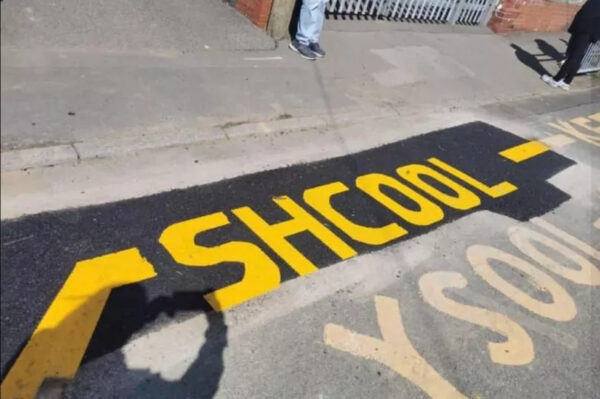
Today’s South Wales Argus reports that Caerphilly County Borough Council in South Wales has been grappling with the matter of ballgames[sic], leading to them being “band“
After her compulsory period of exile in Homophone Corner, Local Democracy Reporter Rhiannon James (or the Argus’ headline writer, if different. Ed.) also ought to ask bosses for a keyboard with a working space bar and/or a functioning spellchecker. 😀
By way of contrast, donations to the Labour Party have risen by almost 25%.
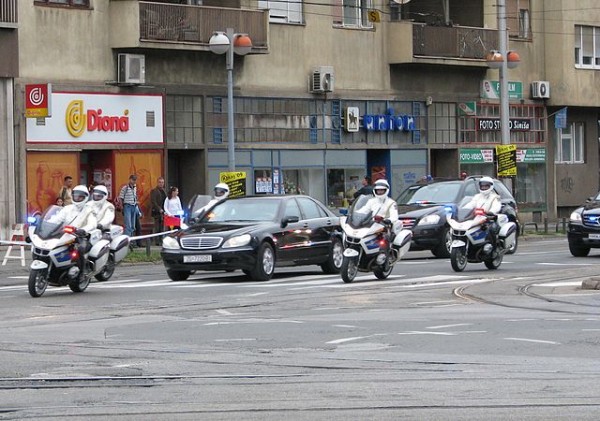
“Hello! Let me introduce you to the powerful and influential person holding me…”
During this time the Tories have worked their way through 3 prime ministers – the disgraceful Alexander Boris de Pfeffel Johnson, one Elizabeth Mary Truss and now Goldman Sachs cheerleader Rishi Sunak – and two budgets, including a fiscal disaster from short-lived Chancer of the Excheqeur Kamikwasi Kwarteng.
The Tory spokesperson quoted by The Guardian seems to be very much on the defensive, if your ‘umble scribe’s reading between the lines is accurate.
The Conservative party only accepts donations from permissible sources, namely individuals registered on the UK’s electoral roll or UK registered companies. Donations are properly and transparently declared to the Electoral Commission, openly published by them and comply fully with the law.
If as stated the Tories are only accepting donations from permissible sources, that represents a quick volte-face from six months ago when, as Open Democracy reported, it was still donations from Russian sources linked to the gangster regime of Vladimir Vladimirovich Putin.
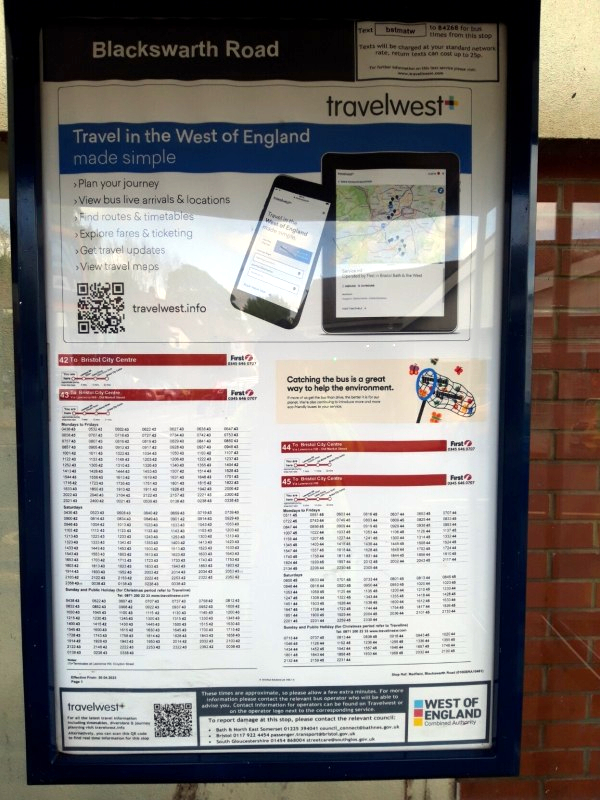
Bristol’s so-called Clean Air Zone, which has been long delayed and much contested, comes into force at the end of the month, with the usual doom-mongers predicting it will spell the death of the city centre and its shopping facilities in particular. Leaving aside those whose idea of transport policy involves sitting at the steering wheel of a mostly empty motorised three-piece suite, the scheme has caused some concern, particularly when coupled with the city’s dreadful public transport, exacerbated as it is at present due to a shortage of bus drivers.
A map of Bristol’s Slightly Less Polluted City Centre Air Zone is shown below.
Image courtesy of Bristol City Council
Some might consider it timid and unambitious, especially if the aim is to get people out of their cars and walking and cycling (so-called active travel. Ed.) or using public transport.
The argument is that the city vastly needs to improve facilities for cycling and walking* – providing far more dedicated infrastructure for both – as well as doing rather more in the way of enforcement against pavement parking (posts passim). As regards public transport, millions of pounds in public money have been poured into the city’s bus network over the years (e.g. Metrobus) with very sign of improvement and with the whole system now suffering from a driver shortage, the area’s bus network is even more unreliable than it has ever been. As for local rail services, Bristol’s are a disgrace compared with other major cities. It took decades of campaigning just to get a reasonably frequent service on the Severn Beach Line, whilst improvements to services to towns and cities surrounding local authorities have hardly improved at all. Then there’s the long-running saga of the reopening of the Bristol to Portishead railway line, where in over 2 decades progress can only be described as sub-tectonic, i.e. the earth’s tectonic plates, which shift by mere millimetres a year, are outstripping the bureaucrats. Meanwhile, the country is also failing to deal with a record cancellations of train services.
Could these be the real reasons why Bristol’s implementation of a congestion charging scheme looks so timid and unambitious?
Looking around the country, Bristol’s congestion charging zone appears to be trifling, a mere inconvenience to the majority who can continue to drive without impunity, particularly when one looks at what is being proposed in Cambridge, for example, as shown below.
Cambridge’s congestion charging zone. Somewhere under the dark green shading is (most of) the city.
As can be seen, the Cambridge scheme covers most of the city’s built-up area, as well as some surrounding villages. It too has attracted criticism, with it being described as town versus gown and car versus bike, pitting the city’s ordinary residents against the dreamers in the spires of Academe.
Your ‘umble scribe just wonders what the reaction of Bristol would have been, had a Cambridge-style scheme been proposed for the city.
* = One of the biggest changes that the council could do to make walking a more practicable mode of transport would be to change the timings on pelican crossings so that the signals change to allow pedestrians to cross within seconds of the button being pressed. This was first suggested over 30 years ago by one of the city’s cycle campaigners, the late Chris Hutt of Cyclebag. The council is keeping it persistently out of sight, having filed it in its bureaucratic oubliette otherwise known as its extensive Not Invented Here filing system.
Image from Llywelyn200 courtesy of Wikimedia Commons
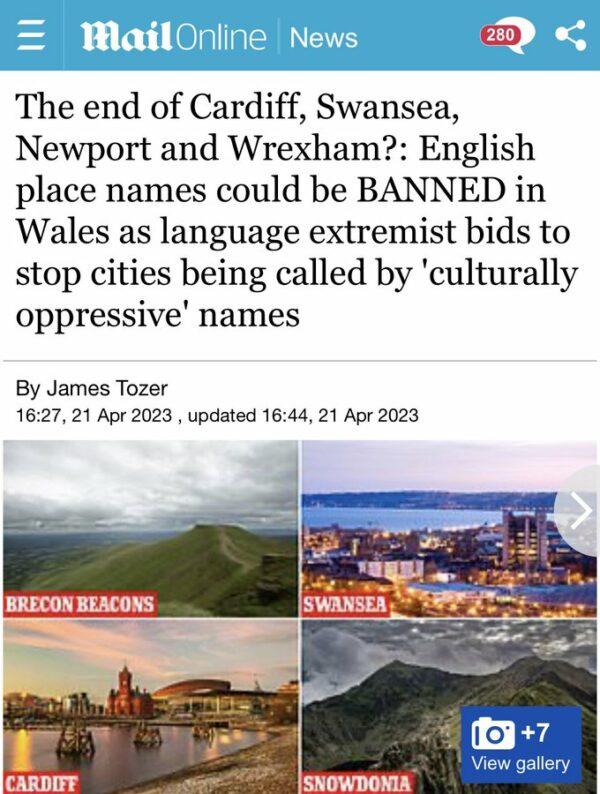
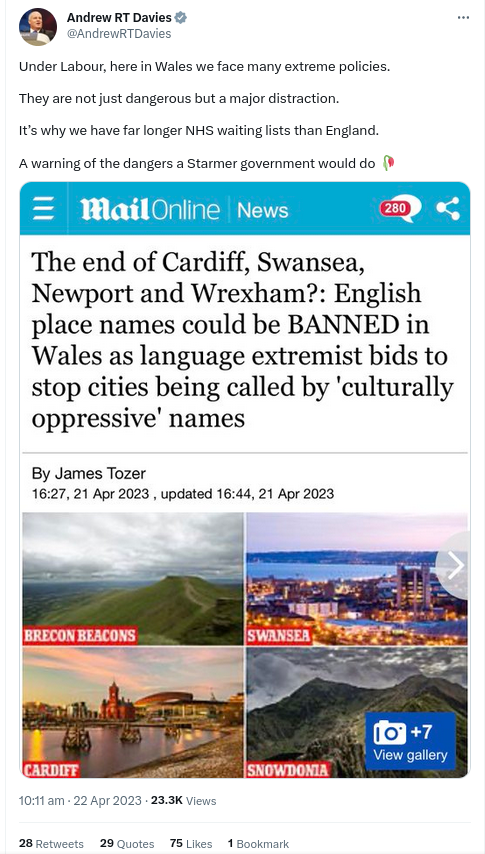
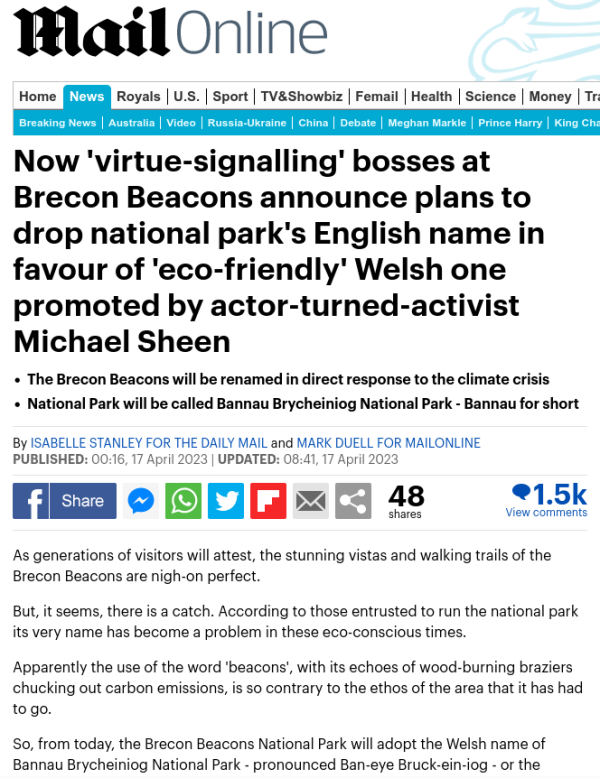
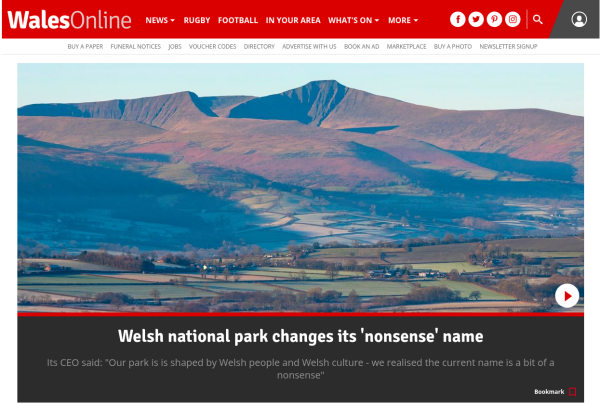
The receipt of a five thousand signature calling on the authority to formalise the use of the Welsh names Eryri and Yr Wyddfa helped to prompt the latter to take decisive action. The petition was received after the authority had already established a commission to examine the use of place names.
Cardiff University’s Dr Dylan Foster Evans was was asked to compile a series of principles for use as guidance when referring to geographical names in the Eryri / Snowdonia National Park.
A start on using the Welsh names in an English context started some years ago when many of the park authority’s English versions of publications and digital media started using the names Eryri and Yr Wyddfa with the English names following in brackets.
Naomi Jones, the Snowdonia National Park Authority’s Head of Cultural Heritage remarked:</p
Many public bodies across Wales have moved to use both the Welsh and English names, or the Welsh name only, when referring to Yr Wyddfa and Eryri, as have many of the mainstream English-language press and filming companies.
This is very encouraging and gives us confidence that this change in the authority’s approach will be accepted for the benefit of the Welsh language and as a mark of respect to our cultural heritage.
The German Federal Ministry for Economic Affairs and Climate Action’s Sovereign Tech Fund (STF) is promoting seven open source projects in a pilot round. The Fund shall therefore be increasing safety and data security on the internet, as well as digital sovereignty, according to German IT news site heise.
A vulnerability in the Log4j open source Java library at the end of last year resulted in millions of potentially endangered systems. A discussion ensued about open source projects, which often represent crucial elements of the digital infrastructure.
In the pilot round the Fund is supporting the OpenMLS library, which is used for end-to-end encryption, curl, the popular command line data transfer tool and an open implementation of the BGP internet routing protocol, which communicates between network segments and autonomous systems. The Ruby package manager RubyGems and Bundler, which facilitates the integration of Ruby packages in applications will also be supported, as will the WireGuard VPN software. In addition to this, the Fund is supporting GopenPGP, a modern OpenPGP implementation in Go, and OpenPGP.js, which can be executed in the browser. Furthermore, a projects is being promoted with OpenSSH, which is the standard for secure remote connections and is one of an administrator’s most important tools.
Software must adapt
The STF characterises the projects as software belonging to digital base technologies and used extensively in business, the public sector and civil society. In a feasibility study (DE, PDF) the STF justifies the need to promote open basic technologies by the fact that although the importance and use of open source software is high, the projects nevertheless do not ‘adapt‘ accordingly and maintenance is often dependent upon committed individuals, thus increasing the risk of safety-critical vulnerabilities.
In their coalition agreement, the SPD, the Greens and the FDP emphasise the importance of open source software for strengthening digital sovereignty.However, no funds were originally earmarked for the Sovereign Tech Fund in the federal government’s draft budget for 2022. In the end, coalition partners increased the funds provided so that the fund can now get started.
The STF is promoting the above-mentioned projects until the end of the year with a total of €1 mn. Fiona Krakenbürger, the STF’s joint chief executive said: “This pilot round makes a small contribution to the sustainability of these important projects, which we hope to be able to expand in the years to come.” Projects worth funding will in future be determined in future by a committee of experts and an open application process. The STF intends to publish details of the application process in 2023.