Oddities

  • How to confuse the reader

    The output of the English Empire’s free and fearless press has in recent decades undergone several changes: and so it should; they are working with something that is dynamic and ever-changing – language.

    One of the most recent of these changes appears to be to attempt to get all the salient facts of a story crammed into its headline. This could have the saving grace of readers being spared plodding through paragraphs of more dreadful prose.

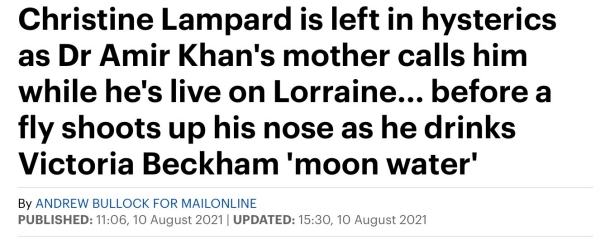
    Which brings us neatly to yesterday’s Daily Mail and the fine example below of an overstuffed headline.

    Headline reads: Christine Lampard is left in hysterics as Dr Amir Khan's mother calls him while he's live on Lorraine... before a fly shoots up his nose as he drinks Victoria Beckham 'moon water'

    Are you sure you didn’t leave out any minor detail that could still have been crammed into the headline, Mail Online? 😉

  • Trump in Bristol

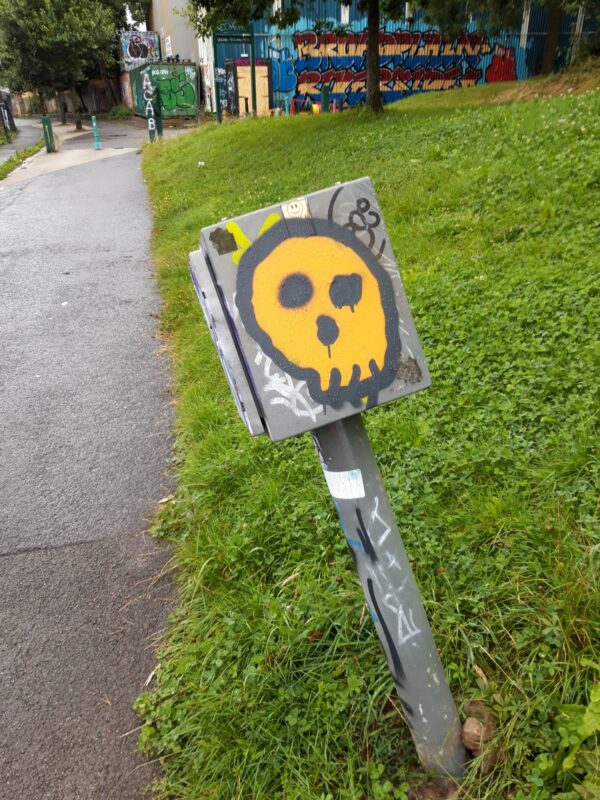
    Yesterday while walking through Riverside Park into town, your ‘umble scribe encountered some street art which immediately reminded him of Donald J. Trump, a tax dodger and serial sexual predator who was inexplicably elected as 45th President of the United States of America.

    Grafitti on street furniture in Riverside Park

    Your correspondent believes it is flattering to its subject as is shown by a comparison with a photograph of the Orange One captured in a typical denigratory pose.

    The Orange One courtesy of Wikimedia Commons

    Do you agree? Have your say in the comments below.

  • Whitehall BS5 sends a message to Whitehall SW1

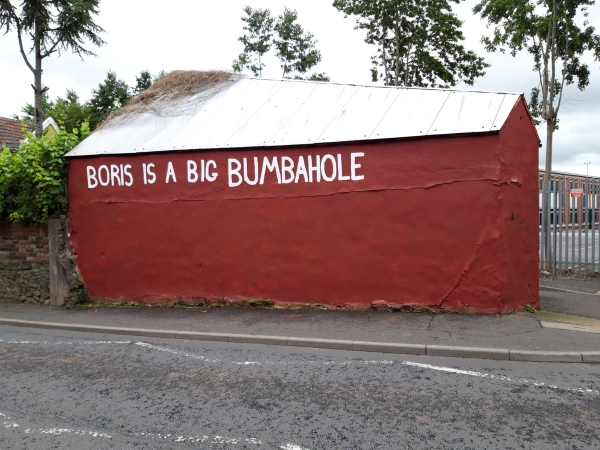
    This blog has written before about the changing messages that appear on a garage wall at the apex of the junction of Russelltown Avenue, Cannon Street and Whitehall Road (posts passim).

    The message has now changed again and reads as per the photo below.

    Text in photograph reads Boris is a big bumbahole

    According to Urban Dictionary, bumbahole is a synonym of arsehole in British English and asshole in American English.

    One can safely assume that the Boris being referenced is none other than the superannuated Billy Bunter-like figure of one certain Alexander Boris de Pfeffel Johnson, who has been inexplicably promoted beyond his competence to the office of Prime Minister of the English Empire, a job he fulfils to his own satisfaction on a part time basis.

    Among the less favourable characteristics of Bunter’s personality are gluttony, laziness, racism, deceit, sloth, self-importance and conceit, all of which have been extensively documented down the decades by others more eloquent than your ‘umble scribe (e.g. his former employer Max Hastings) as also being present in the part-time alleged prime minister’s character.

  • Boats grow legs

    Since the widespread dismissal from newsrooms of sub-editors, the very people who would have spotted and corrected any inaccuracies and/or anomalies, many more hidden exclusives are being reported nowadays by our free and inaccurate press, provided one knows where to look and reads carefully.

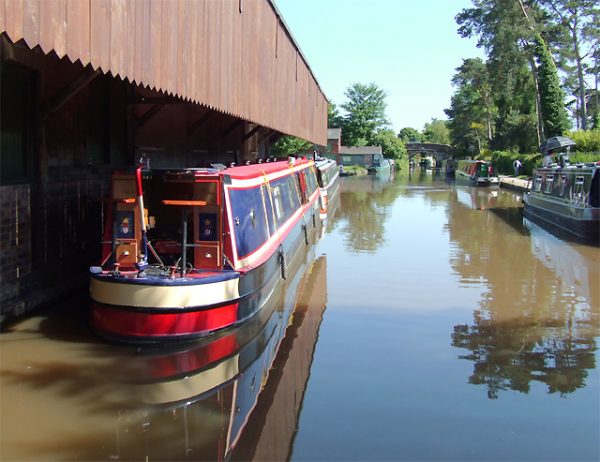
    Last week, the Shropshire Star had a hidden exclusive buried deeply in a piece on towpath repairs to the Shropshire Union Canal and local traders’ fear of loss of footfall in my home town of Market Drayton.

    Shropshire Union canal in Market Drayton
    Betton Mill on the Shropshire Union Canal in Market Drayton. Image courtesy of Wikimedia Commons.

    The Canal & River Trust, which manages the waterway, is planning to close the towpath through Market Drayton for repairs lasting two months. This will also entail a loss of moorings during the works.

    The fact that is has chosen do these works in the ten weeks from July 5 to September 10 hasn’t gone down too well with the director of one local boatyard, who is quoted as intimating that the closure would be a hammer blow to the summer trade, preventing visitors from mooring in the town and visiting shops and restaurants.

    In a quotation in the report, she said the following:

    It is basically the full length of the canal that goes through the town. Boats that would normally moor up and walk round the town, they won’t be able to do that.

    Boats that would normally moor up and walk around town?

    These two actions surely would be consecutive and not concurrent?

    When did boats evolve the means of locomotion to be able to walk round the town?

    Why have the national and international media not picked up the Star’s exclusive? After all, it is not every day that aquatic craft evolve enough to generate limbs.

    If you have an answer to any of the above questions, please leave them in the comments below. 😀

  • How the forget-me-not got its name

    Forget-me-nots (Myosotis) are a genus of flowering plants. The name Myosotis derives from the ancient Greek μυοσωτίς meaning mouse’s ear, which the leaves are said to resemble.

    According to its English Wikipedia page, the colloquial English name of forget-me-not has been in use since the late 14th century and is a direct translation from the German Vergißmeinnicht.

    Photo of forget-me-nots
    Myosotis. Image courtesy of Wikimedia Commons.

    However, it is to the French Wikipedia article on the foget-me-not that one needs to turn for the presumed origins of this commemorative colloquial plant name.

    According to one legend, a knight was walking by a river with his lady. He bent over to pick her a flower, but toppled over due to his armour and fell into the water. While he was drowning, he tossed the flower towards her crying out “Forget me not!”

    It goes without saying that the legend fails to explain why the hapless knight felt the need to don his armour for what was ostensibly a safe situation. No health and safety risk assessments or technical standards for PPE in those days!

    Talking of risky situations, the forget-me-not has become a flower of remembrance in the Canadian provinces of Newfoundland and Labrador where it is used to commemorate those who were killed in the First World War.

    Similarly in Germany the forget-me-not became a flower of remembrance for those who fell in conflict from WW1 onwards.

    In other countries, the forget-me-not has assumed a different commemorative function, one dealing with those suffering from Alzheimer’s disease and dementia, as happens in the Netherlands and New Zealand.

  • Maesteg remembers Tryweryn despite council

    In 1965 the village of Capel Celyn in the valley of the Afon Tryweryn valley in Gwynedd was flooded to create Llyn Celyn reservoir to supply water to the towns of Wirral peninsula and the city of Liverpool in England.

    Needless to say, this act of colonial vandalism met with almost universal condemnation in Wales, represented a pivotal moment and event in Welsh nationalism and gave a huge boost to the Welsh devolution cause.

    In addition, the drowning of the Tryweryn valley had a wide cultural impact.

    In response to the impending flooding of the Tryweryn Valley, author Meic Stephens decided to paint “Cofiwch Tryweryn” (sic), Welsh for “Remember Tryweryn“, on a rock. Eventually he settled on the wall of a ruined cottage named Troed-y-Rhiw for his artwork. Because the original Cofiwch Tryweryn is grammatically incorrect, subsequent restorations of the wall have repainted the message correctly as Cofiwch Dryweryn, adding the consonant mutation.

    Cofiwch Dryweryn mural after 2019 restoration
    The original mural in Llanrhystud after 2019 restoration. Picture courtesy of Wikimedia Commons

    The mural has since gone on to be reproduced on T-shirts, pitchside banners at Welsh international football fixtures and replicated at other sites in Wales.

    Which brings us to Maesteg and Bridgend County Borough Council.

    Today’s Wales Online reports that Maesteg resident Sian Thomas-Ford’s Cofiwch Dryweryn, painted in 2019, had incurred with displeasure of Bridgend County Borough Council, which, in that accommodating manner peculiar to all local authorities, had ordered the mural’s removal.

    original Bridgend Cofiwch Dryweryn mural
    Picture courtesy of Yes Maesteg

    Since 2019 the Bridgend mural has undergone some changes. Firstly, the two dragons – one red and one white – of Welsh legend have disappeared, whilst the Welsh independence slogan “Yes Cymru” has been added.

    Bridgend Council took the attitude that the mural was an advertisement and notified Ms Thomas-Ford last summer that she could be prosecuted if she did not paint over the mural. Furthermore, the council told Ms Thomas-Ford that their highways department found the mural is a “distraction to drivers”. The council’s planning fees for advertisements range from £120 to £460. Ms Thomas-Ford’s response to the council was defiance, stating she did not intend applying for planning permission because the mural is not an advertisement, but rather a celebration of Welsh history and a reminder of an event that should not be forgotten.

    Ms Thomas-Ford told Wales Online that the mural had sparked lots of conversations locally about Welsh history and culture.

    Some 3,000 people signed a petition in support of keeping the mural.

    The council has now dropped its bureaucratically absurd position of regarding the mural as an advertisement. In a bit of municipal face-saving, a council spokesperson is quoted as saying:

    From the council’s perspective, advertising consent is required to protect the householder, but we do not currently intend to take any further action. It remains open to the owner if they wish to regularise the matter.
  • May blossom

    We’re now in May and one reliable natural occurrence of the time of year is the flowering of common hawthorn (Crataegus monogyna), which is also known as the oneseed hawthorn, or single-seeded hawthorn.

    Other common names include may, mayblossom, maythorn, quickthorn, whitethorn, motherdie, and haw.

    The Woodland Trust have produced a short video depicting one year in the life of the hawthorn.

    The specimen below can be found in the Easton section of the Bristol & Railway Path near the Brixton Road access point.

    Hawthorn tree on Railway Path in Easton

    Hawthorn is amongst the first trees to start budding in the spring (the above specimen first put out leaves in late January. Ed.) and is also a fast-growing plant. This may explain the alternative name of quickthorn.

    As it forms a dense, thorny mass of branches, it is often used for hedging, particularly where livestock has to be contained.

    Besides its agricultural value as hedging, common hawthorn can support more than 300 insects. It is a food plant for caterpillars of numerous moths. Its flowers are eaten by dormice and provide nectar and pollen for bees and other pollinating insects. The haws (berries) are rich in antioxidants and are eaten by migrating birds, such as redwings, fieldfares and thrushes, as well as small mammals.

    Furthermore, the dense, thorny foliage makes fantastic nesting shelter for many bird species of bird.

    Green Man ceiling boss, Rochester Cathedral

    Folklore and symbolism

    Hawthorn is a pagan symbol of fertility and has associations with May Day stretching back beyond written history. It was the forerunner of the Maypole and its leaves and flowers provided the source of May Day garlands as well as appearing in the wreath of the Green Man.

    In medieval times hawthorn was never brought indoors as it was generally believed that bringing its blossom indoors would result in illness and even death. In those times it was also commonly believed that hawthorn blossom smelled like the plague. In more recent times scientists have discovered the chemical trimethylamine (which smells like ammonia or rotting flesh. Ed.) in hawthorn blossom is also one of the first chemicals formed in rotting animal fish, hence the tree’s traditional linking with illness and death.

    In spite of the beliefs and symbolism outlined above, the young hawthorn leaves, flower buds and young flowers are all edible. The leaves are often described as having the flavour of bread and cheese. They can be added to green salads and grated root salads. The developing flower buds are particularly good. The haws can be eaten raw (beware a stomach upset. Ed.), but are most commonly used to make jellies and wines.

    A final personal note

    In my own life, the blossoming of the hawthorn always reminds me that spring is giving way to early summer.

    In particular, it reminds of when I was 8 years old and my mother took my 2 younger siblings and me by train all the way from Stafford to Harling Road in Norfolk – the nearest station to my grandmother’s home. The journey took the best part of a day (showing how difficult it was to travel cross-country in England, even in pre-Beeching times. Ed.). The fields on either side of the railway lines on which we travelled were thick with hawthorn blossoming pink and white.

    Whenever I see hawthorn in bloom these days, I’m immediately reminded of that one train journey, even though it’s now almost 6 decades in the past.

    Update: After writing this post, I asked both my siblings if they remembered that journey and if so, what they recalled. My sister replied that she recollected the journey as being interminable and her chief memory was all the trackside telegraph poles, whilst my brother – the youngest of us – responded with a question as to whether that was the railway trip during which he was sick. He obviously had other matters than lineside shrubbery on his mind. 😀

  • Abroad thoughts from home

    One fascinating aspect of the country’s foolhardy departure from the European Union is the fate of Britons in the 27 member states of the European Union; and more particularly how they are depicted here now that the “free and independent coastal state” of Brexitannia has “taken back control“.

    Keen observers of the British media will note all foreigners seeking to come to the English Empire (which some refer to as the United Kingdom. Ed.) to settle are referred to as “migrants“. When used by the right-wing press or politicians, “migrants” has a clear pejorative tone to the effect that these people are not as good as us.

    However, in line with British exceptionalism as Brits seeking to or having taken up residence abroad are termed “expats” by the fourth estate, as per this typical specimen from yesterday’s Daily Brexit, which some still call Daily Express.

    Headline reads Brexit BACKLASH: British expats could abandon Canary Islands for Greece and Cyprus
    Expats? Emigrés? Immigrants?


    Of course, what the Daily Brexit forgets is that even in Greece and Cyprus, holders of those nice, new and allegedly blue British passports will still be classed as third country citizens by the Greek and Cypriot authorities; and if they try staying there for longer than the maximum period without applying for a residence permit, they’ll be regarded as illegal immigrants, just as they are now finding out on the Costa del Sol.

    Expat” is of course a truncation of the term “expatriate“, with the shorter form’s first recorded use in the first half of the 1960s.

    When people move for work, settlement or other reasons, the language used about them is always full of meaning. In earlier, less judgemental times those who left British shores to settle abroad might have been referred to as “émigrés” or “emigrants“, whilst those coming here for permanent settlement were “immigrants“, which had more than its fair share of negative connotations in times past.

    Nowadays all those negative connotations are to a certain effect by “migrant“, which, unlike “immigrant” or “emigrant” is not specific about the person’s direction of travel.

    Nevertheless, I can see the exceptionalism continuing and am not expecting the Daily Brexit to refer to Brits resident abroad as “British immigrants” at any time soon. 😉

    PS: Apologies to Robert Browning for this post’s title.

Posts navigation