The BBC loves to boast about the quality of its journalism.
However, every now and again, it manages to publish an untruth so egregious and also stupid that one wonders how it gained a reputation for high class output in the first place.
To continue our story, we must travel to Nottinghamshire and the banks of the River Trent.
In April members of the police Underwater Search Team found a corroded ship’s bell during a routine training exercise and brought it ashore for a closer look, where the name Humber Prince emerged after the item was cleaned.
The bell was formerly attached to a vessel originally known as the Esso Nottingham, which was built in 1956 and subsequently re-registered as the Humber Prince in 1964 by Hull-based company by John H Whitaker Tankers, which used to ferry hydrocarbons on the river.
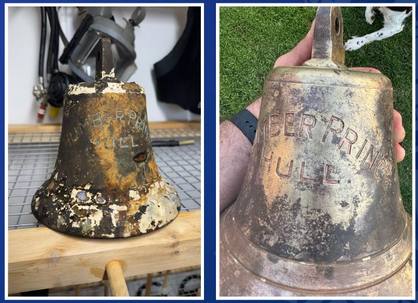
When the BBC published its version of the story, a remarkable thing happened; the bell had turned rusty.
However, there is no mention of rust or any other metallic corrosion in Nottinghamshire Police’s original press release.
From the photos on the police press release, it is obvious that the bell is made of brass or bronze, not a ferrous metal such as iron or steel, which typically rusts as it corrodes.
Wikipedia’s page on the ship’s bell gives full details of the typical materials used.
The bell itself is usually made of brass or bronze, and normally has the ship’s name engraved or cast on it.
May I suggest that the BBC’s author writes out 100 times “Iron and steel rust. Other metals corrode!“