• Fontaine’s schoolchildren now on Linux

    The French town of Fontaine (Isère) has recently converted 200 school computers from Windows to the elementary OS Linux distribution, Joinup reports.

    Nicolas Vivant, the CIO of Fontaine, has been part of the transition to open source that the local public sector has implemented over the past 10 years. The local authority opted for open source due to openness and transparency, as well as value for money.
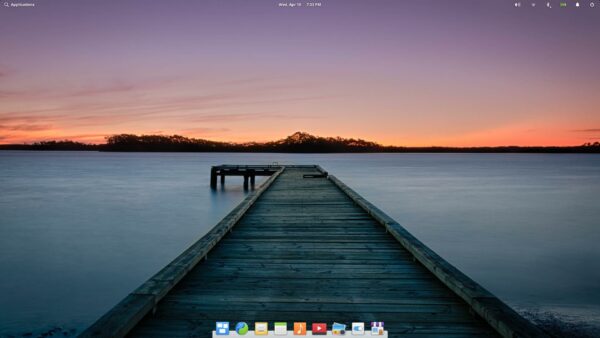
    Elementary OS desktop
    Default elementary OS| desktop

    The switch to open source started in the town hall with a change from proprietary browsers and email clients to Mozilla’s Firefox and Thunderbird. The schools’ switch to elementary OS represents stage 2.

    Some of the software used by teachers presented some problems according to Vivant, as it was only designed to run on Windows, so the wine emulator had to be used to get it working.

    However, Vivant remarked in an online event that for most users the switch to a Linux system has provided a better overall experience.

    In addition to installing Linux on school machines, the schools are also running their infrastructure Debian servers.

    According to Joinup, one of the benefits of using open source is that children’s privacy is better protected due to leaving a smaller digital footprint online, an important consideration when every third internet user in the EU is estimated to be a child.


  • Gibberish? You’re fired!

    Iceland logo

    Keith Hann, director of corporate affairs for frozen food retailer Iceland has been dismissed with immediate effect after he was found to have made disparaging remarks about both the Welsh language and Wales itself.

    The supermarket, which has its corporate headquarters on Deeside (Welsh: Glannau Dyfrdwy) in North Wales, was forced to apologise on Wednesday after reports emerged of Hann describing Welsh as “gibberish

    It also stated that Hann’s remarks did not reflect the company’s views and added it was a proud Welsh company.

    Many Welsh customers contacted Iceland on Twitter stating they would be boycotting the company’s stores as a result of Hann’s crass insensitivity.

    In addition to calling Welsh gibberish, Hann wrote on his blog that the Welsh language sounded “like someone with bad catarrh clearing his throat”.

    Furthermore, in a tweet which has since been deleted, Hann wrote that the “inhabitants of the UK’s Celtic fringe loathe all visitors“.

    Read the full story in the Daily Post.

  • The rubber stamp of approval

    Approved stampGoing back to my schooldays over 5 decades ago, I recall being taught in English language classes that to rubber stamp means officially to approve a decision without giving the matter in question any proper scrutiny or thought.

    Rubber stamping is indicative of lack of care, attention and is indicative of perfunctoriness.

    Furthermore, the definition I was taught all those long years ago is confirmed by Collins Dictionary, which states:

    When someone in authority rubber-stamps a decision, plan, or law, they agree to it without thinking about it much.

    Nevertheless, there seems to be a general trend nowadays in the press to use this verb routinely for the approval of any decision, whether or not it is preceded by lengthy or indeed any debate at all.

    It’s as if to rubber stamp has become synonymous with to approve, which is really isn’t.

    One very guilty party in this respect is the Bristol Post, now rebranded as Bristol Live by its Reach plc masters, as per this example from 12th February, where we read:

    The plan is due to be rubber stamped at a council meeting on Monday (February 15).

    If there’s one thing I know about planning meetings (having attended them. Ed.), it’s that their decisions are never rubber stamped, as councillors serving on planning committees generally tend to consider all applications in the most minute detail. There’s no waving agenda items all through in a couple of minutes, so members can retreat early to the pub or somewhere else more interesting than a council meeting room.

    I hope any passing member of the fourth estate will take note of – and act upon – the content of this little post.

  • KDE Plasma 5.21 preview

    Ever since I first starting using Linux seriously 16 years ago, KDE has always been my preferred desktop environment.

    I’ve dabbled with GNOME and other desktops, but always come back to KDE for usability, customisability and good looks.

    Now known as Plasma, the KDE desktop will soon be reaching the release of its 5.21 version.

    Below is a sneak preview of what can be expected when the new version is released, together with a tribute at the end to Gustavo Carneiro. a KDE developer who unfortunately passed away from Covid-19 in January and whose work concentrated on KDE’s Konsole terminal emulator.

    This 5.21 release of Plasma is dedicated to Gustavo’s memory.

  • TDF is 9 years old

    TDF logoToday The Document Foundation (TDF), the organisation behind the free and open source LibreOffice productivity suite, celebrates its 9th birthday.

    On 17th February 2012 The Document Foundation was registered in Berlin as a German charitable foundation (Stiftung).

    TDF had been created by members of the OpenOffice.org community to manage and develop LibreOffice, partially out of fears that Oracle Corporation would cease development of OpenOffice.org after its takeover of Sun Microsystems, the custodians of the OpenOffice.org project. The original OpenOffice.org project is now curated by the Apache Software Foundation.

    The TDF’s goal is to produce a vendor-independent office suite with ODF support in a development environment free from control by an individual company.

    This goal has been achieved too. LibreOffice is now on release version 7.1, is included as the standard office suite in many GNU/Linux distributions and been downloaded millions of times.

    Many happy returns, TDF!

  • Fake interpreter and accomplice sentenced

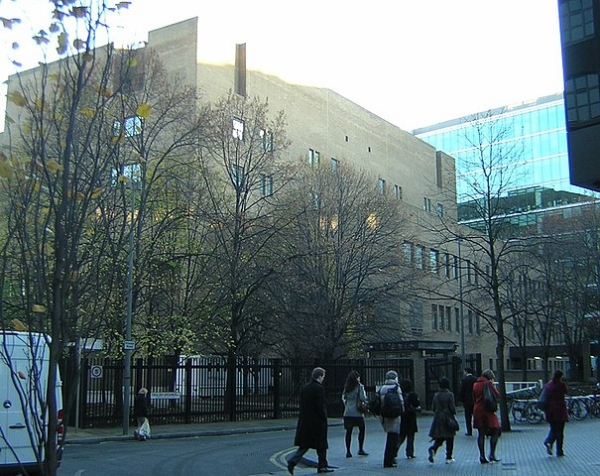
    The City of London Police have reported that Mirwais Patang, aged 27, of Hillingdon, London, who stole the identity of a legitimate court interpreter and falsely provided court interpreting services in 140 cases was sentenced to two years imprisonment, suspended for two years, at Southwark Crown Court on 12 February 2021.

    Southwark Crown Court
    Southwark Crown Court. Image courtesy of Wikimedia Commons

    Patang must also complete 300 hours of unpaid work within 24 months. He had previously pleaded guilty to 2 counts of forgery and 2 counts of fraud on 27 August 2020, plus a further 6 counts of fraud, and one count each of conspiracy to commit fraud and forgery.

    Patang first acted as an interpreter of Pashto and Dari in March 2012, using his own name and identity to register with Capita, the company contracted by the Ministry of Justice (MoJ) to provide court interpreting services between January 2012 and October 2016.

    Patang doctored a community interpreting certificate to prove his qualification to Capita and subsequently worked on 88 cases between March 2012 and August 2016, earning £35,574.

    In September 2014, Patang stole the identity of a more qualified court interpreter. By using this identity, he earned just over £30,000 working on 52 cases between September 2014 and July 2015.

    His fraudulent activity was eventually uncovered when Capita alerted HM Courts and Tribunals Service (HMCTS) to discrepancies in timesheets Patang had submitted. This resulted in the City of London Police launching a fraud investigation.

    Furthermore, evidence collected by the City of London Police showed Patang had paid his friend, Solimann David, also of Hillingdon, £1,400 to attend court on his behalf and provide translating services for eight weeks even though David also had no qualifications to act as an interpreter.

    David, also aged 27, pleaded guilty to a single count of conspiracy to commit fraud. He was also sentenced at Southwark Crown Court on 12 February 2021 to six months imprisonment, suspended for one year. He must complete 100 hours of unpaid work within 24 months.

    Detective Andy Cope, from the City of London Police’s fraud team, said:

    “The blind greed shown by Patang, and the total disregard for the implications of his actions and what it might mean for the integrity of serious criminal trials, is truly appalling. By thinking of only his own financial gain, he has undermined confidence in the criminal justice system and put victims of crime through unfair stress and worry.”

  • The new benchmark – as long as you’re white

    On a rare excursion into town, I happened to notice that Castlemead, the city’s tallest office block, is currently undergoing a refurbishment and is surrounded by site hoardings which have the usual aspirational developer’s blurb splashed across it, as can be seen below.

    General view of shuttering surrounding Castlemead site
    General view of the Castlemead site on Lower Castle Street

    Besides being the new benchmark, the refurbisher’s website describes Castlemead as follows:

    Castlemead is a city landmark office building and offers high quality refurbished open plan accommodation from 3,450 – 11,128 sq ft and the UK’s First Platinum Plus 100 Cyclingscore Accredited facilities.

    With 360 panoramic views over Bristol’s cityscape and Castlepark [sic] and with the Cabot Circus regional shopping, dining and leisure destination on your doorstep, why locate your business anywhere else?

    Nevertheless, a quick glance at the images chosen to illustrate this landmark office building’s quality reveals one glaringly obvious fact.

    This quality is only available to white people. All the figures shown are invariably Caucasian. There’s not a BAME face to be seen anywhere either on the site’s hoardings or in the CGIs used on the dedicated website.

    Happy office drones at Castlemead 1
    Spot the BAME face 1
    Happy office drones at Castlemead 2
    Spot the BAME face 2

    According to the city council’s website, 16% of the city’s population of 463,400 persons belongs to a black or minority ethnic group. That’s over 74,000 people.

    When will developers realise and start to portray a more accurate picture of our city in their very expensive fantasy doodlings?

    After all, this is not the first time the absence of non-white faces from new Bristol property developments has been pointed out. It is a phenomenon that was first highlighted back in 2009 by a fellow local blogger.

    One would have expected the city’s major property moguls to have learned something by now and made a start on accurately portraying all the kinds of people in the city who will ultimately be occupying their benchmark and landmark buildings.

    Sadly, nothing appears to have changed.

  • How to make a speech bubble in GIMP

    GIMP, also known as the GNU Image Manipulation Program, is a great free and open source graphics creation and editing suite suite, which comes as part of the standard software installation package for many GNU/Linux distributions, although it is also available for other operating systems.

    My main use for GIMP is for dealing with graphics containing text in files submitted for translation, as well as tweaking digital photographs.

    Nevertheless, every now and again the urge strikes me to learn a bit more to make the most of the software installed on my systems.

    If, like me, you have ever wondered how to add a speech bubble to an image using GIMP, help is at hand in the form of the handy video tutorial below.

    Now you too know how to put words into other people’s mouths . 😀

  • The pleasuring of St Valentine’s Day

    February 14th is St Valentine’s Day, a day normally devoted in non-pandemic times to the enrichment of florists and restaurateurs, and generally associated with the pleasures of romance and love.

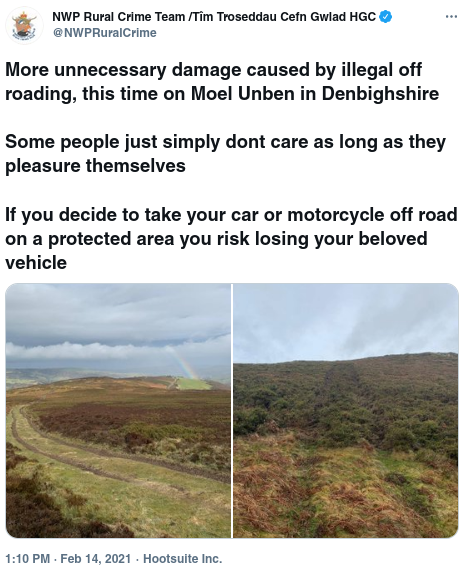
    However, the North Wales Police Rural Crime Unit had matters of countryside damage on its mind that day, when it tweeted the following.

    Tweet reads More unnecessary damage caused by illegal off roading, this time on Moel Unben in Denbighshire  Some people just simply dont care as long as they pleasure themselves   If you decide to take your car or motorcycle off road on a protected area you risk losing your beloved vehicle
    Pleasure themselves? Surely not!

    Take a close look at the second paragraph of the tweet and Mr/Ms Plod clearly meant something completely different.

    The person in charge of the force Twitter account clearly spent yesterday in a state of confusion between love and lust. 😀

    I do hope they got their vocabulary sorted out by the time they came off shift and headed home to spend time with their significant other.

  • Premises, premises

    When related to property, the noun premises is defined by Collins Dictionary as:

    a piece of land together with its buildings, esp considered as a place of business.

    When related to property, premises has since time immemorial (or even longer. Ed.) been a plural noun.

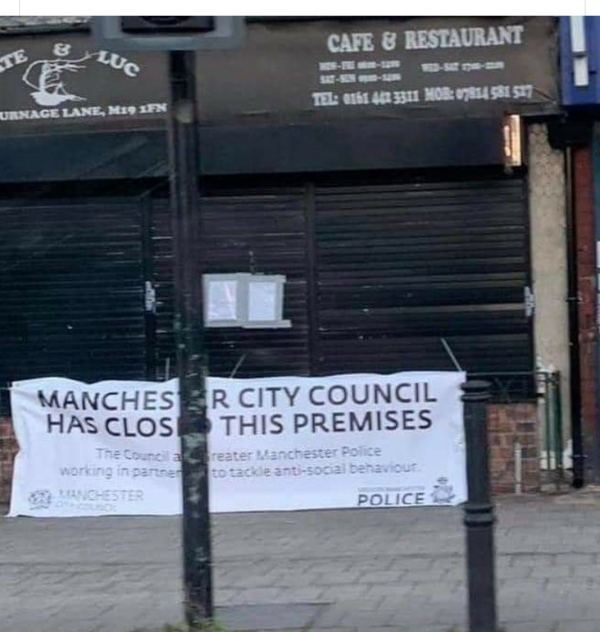
    However, it is a source of constant surprise how many people these days regard premises as a singular noun, as shown by this recent example, courtesy of Manchester City Council.

    Banner in image reads: Machester City Council has closed this premises
    A singular example

    However, it should be remembered that premise does exist as a singular noun, in which instance it takes the following definition:

    something that is supposed to be true and is used as a basis for developing an idea.

    Local authorities are not the only people to get confused about premises and premise as regards use of the plural and singular.

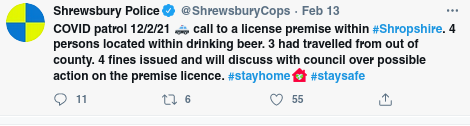
    Take this example on Twitter courtesy of the constabulary in Shrewsbury.

    Tweet reads: COVID patrol 12/2/21  🚓  call to a license premise within #Shropshire. 4 persons located within drinking beer. 3 had travelled from out of county. 4 fines issued and will discuss with council over possible action on the premise licence.
    A singular licence

    That’s right. Why have a premises licence when a premise licence will do just as well? I’m sure Mr Plod meant the former, but having a licence for a premise raises many new questions indeed.

    Professor Paul Brains of Washington State University has included the confusing of premises and premise in his book, Common Errors in English Usage. Read his simple, eloquent distinction.

    Premises are also quite particular about where any action takes place too. Anything that happens always, always takes place on them, not in them.

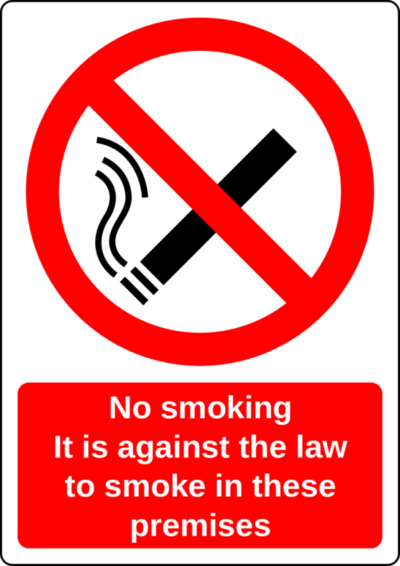
    The introduction of a blanket ban on smoking indoors gave rise to a wave of illiteracy, as exemplified by this typical example.

    Sign reads No smoking. It is against the law to smoke in these premises
    Image courtesy of Wikimedia Commons

    It does feel as though those of use who are held to higher standards of language use and/or were taught proper English (Ahem! Ed.) are fighting a losing battle. Will premises become increasingly singular? Will actions take place in them ( or it? Ed.) in future?

    For the answers to such questions, one must wait and see.

    Only time can tell as language always has been dynamic, i.e. a moving target: and what is regarded as proper usage will always be subject to change, just like language itself.

Posts navigation