German brewers will no longer be able to advertise their beers as “bekömmlich” (wholesome) following a ruling by the Federal High Court (BGH), The Local reports.
A wholesome tray of (un)wholesome beer
According to the BGH, the word “bekömmlich” has connotations of health benefits and thus cannot be used as it falls foul of European Union regulations on advertising alcohol, which must avoid any suggestion that alcohol is good for a body.
After a series of appeals through lower courts, the BGH finally ruled on Thursday ruled that breweries were not allowed to describe their beers in terms that portray them as having health benefits.
That ruling and the EU legislation puts paid to any return of Arthur Guinness’ “Guinness is good for you” advertising slogan for the Dublin’s most famous liquid export.
The situation of Sanatogen Tonic Wine (marketed in the UK as a fortified wine with an alcohol content 15%), remains unclear.
In the last 2 weeks there have been several attempts to block implementation of part 2 of the Leveson inquiry, judicial public inquiry into the culture, practices and ethics of the British press following the News International phone hacking scandal.
Part 2 of the Leveson inquiry (aka Leveson 2. Ed.) would investigate “the extent of unlawful or improper conduct within News International, other media organisations or other organisations. It will also consider the extent to which any relevant police force investigated allegations relating to News International, and whether the police received corrupt payments or were otherwise complicit in misconduct.”
However, the proponents of Leveson 2 have not given up. Yesterday the House of Lords voted in favour voted by 252 to 213 on Monday evening to back an amendment to the Data Protection Bill that called for Leveson 2 to be put back on the agenda, i.e. a full investigation into unlawful conduct by newspapers, misuse of data by social media companies and relations between the press and the police.
This overturns a decision made by MPs last week and has set up another showdown with the government.
At this point you may be wondering why the government is so keen to halt an inquiry into corporate criminality.
This is best answered in pictorial form, with no further comment being necessary.
Prime Minister Theresa May has the inhuman touch, an inability to relate to people that has led some unkind people to refer to her as the “Maybot“. Indeed, the Financial Times (the sporting pink for the casino economy. Ed.) even came up with a definition for his noun last December, i.e.:
A prime minister so lacking in human qualities that she soon requires a system reboot.
Ouch!
However, I wonder if our mainstream media have ever noticed the striking similarity between Theresa May and Twiki, the robot assistant of the eponymous hero of Buck Rogers in the 25th Century?
Twiki was mainly voiced by the late, great Mel Blanc, who provided the voices for the likes of Bugs Bunny, Daffy Duck, Porky Pig, Tweety Bird, Sylvester the Cat, Yosemite Sam, Foghorn Leghorn, Marvin the Martian, Pepé Le Pew, Speedy Gonzales, Wile E. Coyote, Road Runner, the Tasmanian Devil and many of the other characters from the Looney Tunes and Merrie Melodies cartoons stables. If, in addition to these vocal talents, he could be brought back from the grave to speak well and lie badly, the Maybot might sound less like an automaton.
We of a certain vintage remember our reading included following Dan Dare’s adventures in space against his arch-enemy, The Mekon, who with his shaven pate, does a remarkable impression of Sajid Javid, the current Home Secretary, who has recently been ushered into 2 Marsham Street, London SW1 with his dustpan and new broom to clear up the mess the Home Office has created in recent years in relation to the so-called “Windrush generation“.
Incidentally, Javid is not the first Conservative Cabinet Minister to be compared to The Mekon. One of his partisan predecessors, the late Angus Maude, who was Paymaster General in the government of Margaret Thatcher from 1979 to 1981, was nicknamed The Mekon.
On my way to the shops this fine May morning, my attention was caught by the beauty of the crab apple (Malus sylvestris) blossom on the tree in the small park that runs up the side of Bannerman Road in Easton, as shown below.
Crab apple blossom in Bannerman Road
According to the Woodland Trust, the crab apple is a native UK species which thrives in heavy soil in hedgerows, woods and areas of scrub. It’s one of the ancestors of the cultivated apple and individual trees can live up to 100 years and can grow to about 10 metres in height.
The common name “crab apple” derives from the tree’s often knarled and crabbed appearance, especially when growing in exposed places.
In the autumn our local tree produces a fine crop of crab apples, as this picture from autumn 2017 shows.
Bannerman Road’s crab apple tree bearing fruit in autumn 2017
Each autumn I tell myself I shall have to come and gather the fruit to make crab apple jelly. After all, it will be food for free (mostly!).
As an aide-memoire and incentive to myself, below is the recipe for (crab) apple jelly from my trusty 1950s vintage recipe book (hence the imperial measurements. Ed.).
Ingredients
4 lbs crab or cooking apples
2 pints water
1 stick cinnamon, or
A few cloves, or
Strips of lemon rind
1 lb of sugar per pint of juice obtained
Method
Wash the apples and wipe. Cut into quarters, but do not remove the skin or core. Put the fruit into a pan with the water and the cinnamon, cloves or lemon peel tied in a piece of muslin. Stew until the fruit is soft. Test for pectin. Remove the muslin bag. Turn the contents of the pan into a jelly bag and leave overnight to strain. Measure the juice and heat in a pan. Add 1 lb of warmed sugar to each pint of juice, stirring until all the sugar has dissolved. Bring to the boil and boil rapidly until the jelly sets when tested on a cold saucer or plate. Remove the scum. Pot and seal whilst still hot.
However, the song is nearly 20 years older than the success enjoyed with it by Laverne, Maxine and Patty, having been written by Albert Von Tilzer and lyricist Neville Fleeson and copyrighted in 1920.
Yesterday a woman whose duty it is to produce occupants of the British throne gave birth to her third child and the right-leaning part of the British press has gone into overdrive churning out sycophantic drivel to mark the occasion, with several producing supplements.
While all this pap is being fawned over by the more gullible members of the public, there are no doubt civil servants, government ministers, local government officers and others in the establishment busy using a good day to bury bad news.
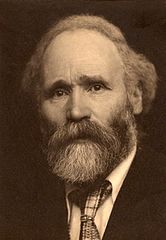
In June 1894 a previous royal birth occurred, prompting as it did then – and still does – the House of Commons to debate an address of congratulation to the monarch, in this case Queen Victoria. However, on the day the birth occurred there had been a terrible mine explosion at Pontypridd and 251 working class men and boys had lost their lives. The Government gave no sign of expressing any sympathy for the stricken town and the mourning relatives, and socialist MP James Keir Hardie sought to repair the omission by adding to the congratulation to the Queen an assurance of sympathy with the sufferers from the disaster.
His motion was out of order, but he had the right to speak and he declared in a House tumultuous with anger that the tragedy in South Wales demanded far more of the attention of the House than the birth of any baby.
Perhaps the most famous part of Hardie’s performance in the House of Commons that day is quoted below.
“From his childhood onwards this boy will be surrounded by sycophants and flatterers by the score – [cries of “Oh!,oh!] – and will be taught to believe himself as of a superior creation [cries of “Oh,oh!]. A line will be drawn between him and the people whom he is to be called upon some day to reign over. …and the end of it all will be that the country will be called upon to pay the bill. [Cries of Divide!]”
The royal grandson to whom Keir Hardie was referring grew up to be an unimpressive and irresponsible man with extreme right wing sympathies, notoriously visiting Hitler in 1937. In January 1936 he became Edward VIII. In December 1936 he abdicated before his coronation over his relationship with the American divorcee Wallis Simpson and during the Second World War was kept well away from Messrs Hitler and Mussolini by being appointed governor of the Bahamas in 1940.
The first bug hunting session for the forthcoming LibreOffice 6.1 release will be held on Friday, 27th April, The Document Foundation blog has announced.
LibreOffice 6.1, the next point release of the free and open source office suite which emphasises the use of open standards, such as the Open Document Format (ODF), is due to be made available in August this year.
To help ready the software for its release date, the LibreOffice Quality Assurance community is organising an initial bug hunting session this Friday to find, report and triage bugs. Details of the event can be found on the dedicated wiki page.
This first Bug Hunting Session will involve the first Alpha version of LibreOffice 6.1, which will be available on the pre-releases server on the day of the event. Builds will be available for Linux (DEB and RPM package formats), macOS and Windows. Users will be able to run the Alpha release in parallel with their production version – thus enabling testing without affecting users’ existing stable installations.
According to the release plan, the LibreOffice 6.1 office suite will enter beta stages of development at the end May, with a second beta planned for mid-June. After that, there should be about three RCs released between the first week of July and the first week of August with the final release being available in mid-August.
Changes are taking place at the increasingly downmarket Local World group of regional newspaper titles owned by Trinity Mirror.
These changes are also being implemented at the Bristol Post, the city’s newspaper of (warped) record, whose online version now masquerades under the misleading title of BristolLive, as any signs of sentience have yet to be medically confirmed.
As circulation has declined, so have standards to the point where it appears that greengrocers (or should that be greengrocer’s? Ed.) are cheaper to employ than what passes nowadays for journalists – or even journalist’s. This desperate move is amply illustrated by the screenshot below for the latest story lifted from scanning social media.
In the meantime, locals can expect more news from Homophone Corner (that’s a site to be seen. Ed. 😉 ) and hard-hitting stories of the “Hartcliffe man stubs toe on Bristol Bridge” variety and barely concealed advertisements masquerading as restaurant reviews, mostly for places whose obituaries subsequently describe them as “popular” when they inevitably close down less than a year later.
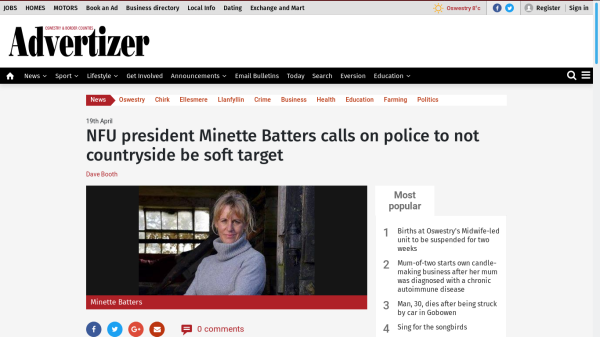
Although it’s not one of his regular local media reads, your ‘umble scribe might just start visiting the Oswestry and Border Counties Advertizer website more to keep up to date with dynamic, one could even say groundbreaking, developments in use of the English language, if the headline of the report shown below is in any way typical of modern journalism.
The same piece, by the same author, also appears in yesterday’s Whitchurch Herald, where similar sub-editing skills are in evidence.
Six litter louts have been ordered by magistrates to pay a total of £671.84 each for dropping cigarette ends in central Bristol, making a grand total of £4,031.04, yesterday’s Bristol Post reports.
The individual total of £671.84 is broken down as follows: £440 fine, £187.84 in prosecution costs and a £44 victim surcharge.
All the defendants have been given 28 days to pay.
Cigarette ends are litter too. Disposing of them properly will avoid the risk of a fine.
They were all originally caught littering on 9th and 10th November last year by civil enforcement officers working for Bristol City Council (the so-called litter police. Ed.) and were issued with £75 fixed penalty notices (FPNs) for their filthiness. Had the penalties been paid within 10 days, the culprits would only have had to pay £50 each.
As it is, they repeatedly ignored correspondence from Bristol City Council, as well as their summonses to Bristol Magistrates Court, as none of the defendants could be bothered to appear in person.
On average, more than 1,000 people have been issued with FPNs for environmental crimes such as littering and dog fouling each month since the ‘litter police’ started their work.
It’s good to see the City Council taking a tough line on litter. However, far more ‘litter police’ are needed to cover the rest of the city in addition to the centre. They have made the odd foray into a council-owned public park or two and an occasional jolly to Stapleton Road, but far more rigorous action is going to be needed by the local authority if it is to have any hope of meeting the objectives of Mayor Marvin Rees’ Bristol Clean Streets initiative, i.e. that Bristol will be measurably cleaner by 2020 in terms of litter, fly-tipping, fly-posting, graffiti, dog fouling, chewing gum and weeds (especially as the latter were only being eradicated last year if residents made enough of a fuss! Ed.).
The simple fact is that there would less strain on the public purse and less work for the council in keeping the streets and parks clean if people didn’t drop litter, allow their dogs to foul all over the place, dump fly-tipping and commit other environmental crimes.
Nevertheless, it is good to see that Bristol City Council and local magistrates are sending out a clear message to litter louts to keep Bristol tidy – or its centre at any rate.
Finally, in an opinion piece in the Bristol Post, Tristan Cork takes filthy Bristolians to task for the deplorable state residents leave the city’s parks in every time the weather gets warm. Meanwhile the council has warned people who leave rubbish in parks next to overflowing bins that they will be fined £100 if caught and that the “litter police” are now patrolling parks and have been instructed to issue fixed penalty notices for rubbish deposited around bins, as well as anything left on the grass.
Within the scope of its own cloud computing environment, the German Federal administration has opted for Nextcloud, heise reports. The software will in future be running by the Federal administration’s central IT service provider, the Federal Information Technology Centre (ITZBund). Unlike services such as Google Drive or Dropbox, Nextcloud is an open source project which users can install in their own computer centres.
The project is targeted at some 300,000 users in various authorities and ministries. They will be able to share and synchronise files centrally using the service. Stuttgart-based Nextcloud GmbH is supporting the ITZBund based on an enterprise subscription for operation and support. However, individual licences per user or per system shall not be incurred.
ITZBund tested Nextcloud with some 5,000 users in a pilot project before making its decision in favour of open source.






 In June 1894 a previous royal birth occurred, prompting as it did then – and still does – the House of Commons to debate an address of congratulation to the monarch, in this case Queen Victoria. However, on the day the birth occurred there had been a terrible mine explosion at


 It’s good to see the City Council taking a tough line on litter. However, far more ‘litter police’ are needed to cover the rest of the city in addition to the centre. They have made the odd foray into a council-owned public park or two and an occasional jolly to Stapleton Road, but far more rigorous action is going to be needed by the local authority if it is to have any hope of meeting the objectives of Mayor Marvin Rees’
  Within the scope of its own cloud computing environment, the German Federal administration has opted for