tech

  • LibreOffice 4.4.3 released

    Yesterday The Document Foundation announced the release of LibreOffice 4.4.3, the third minor release of the LibreOffice 4.4 “fresh” family, with over 80 fixes compared with the previous version, LibreOffice 4.4.2. The new features in LibreOffice 4.4.3 are listed on The Document Foundation wiki.

    People interested in technical details about the release can access the change logs for RC1 fixes and RC2 fixes respectively.

    Download LibreOffice 4.4.3

    LibreOffice 4.4.3 is available for immediate download. By following the download link, more conservative users can find the more tested LibreOffice 4.3.7. The document Foundation recommends all users update their installations to one of these two LibreOffice releases for security reasons.

    Get involved: LibreOffice 5.0 and LibreOffice Conference

    The LibreOffice community is actively working at next major release, LibreOffice 5.0, expected in late July 2015 and your correspondent is already using a development release, LibreOffice 5.0.0.0 alpha1. Pre-release versions such as this are available from http://dev-builds.libreoffice.org/pre-releases/.
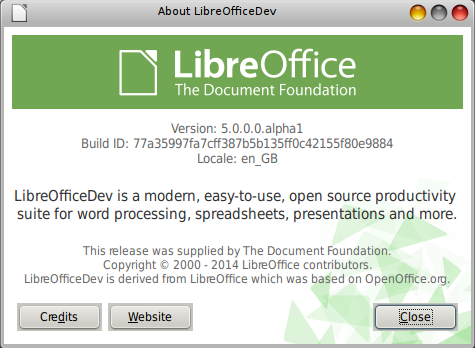
    LibreOffice 5 alpha screenshot

    The first bug hunting session on the 5.0 beta release is scheduled from 22nd to 24th May. Details of this session are on The Document Foundation wiki.

    Furthermore, the Call for Papers for LibreOffice Conference 2015 is open 15th July. The conference itself will be hosted by the Danish city of Aarhus from 23rd to 25th September.

    The LibreOffice community is growing, and the bug hunting session and conference represent exceptional opportunities to join the fun together with over 900 developers who have contributed to the code and over 3,000 volunteers who have localised the software, squashed bugs, written the manuals, spoken at conferences and acted as advocates for LibreOffice both at global and local levels.

  • Ubuntu takes to the air

    The world’s first drone powered by the Ubuntu Linux distribution has arrived, Softpedia reports.

    Erle Robotics, a Spanish company known for all types of robots powered by Linux, launched the world’s first Ubuntu-powered drone on 3rd May.

    The Erle-Copter has a flight time of some 20 minutes and can handle a payload of 2 kg.

    As regards price, the Erle-Copter Ubuntu Core special edition drone costs €399 for the very basic version, which won’t fly. If you want to buy an Erle-Copter that flies and has the basic components, you will have to pay at least €574.

    “Erle-Copter Ubuntu Core special edition drone is a Ubuntu-powered quadcopter that includes official support for new app store for drones and robots. It has official ROS support, capable of the different flight modes and [is] ideal for outdoor operations,” says Erle Robotics’ Alejandro Hernández.

    The version of Ubuntu used by the Erle-Copter is Snappy Ubuntu Core, a new version of Ubuntu for clouds and devices comprising a minimal server image with the same libraries as the conventional Ubuntu distribution, but applications are provided through a simpler mechanism.

  • Openwords on Kickstarter

    Openwords, the foreign language learning app for the world’s open language data the world’s under-served languages, which was reported on some weeks ago by this blog (posts passim), recently launched a crowdfunding campaign on Kickstarter.

    At the time of writing the Kickstarter campaign has 16 days to go and aims to raise $10,000 to take the project to the next stage.

    Foreign language learning with open data

    There are millions of people around the world who can’t learn the languages in which they’re interested.

    While the learning of major languages like Chinese, Spanish and French are supported by large companies, these firms tend to ignore lesser-known languages.

    Openwords is doing things differently to solve this problem. Openwords is mining data from the public domain assets like the Wiktionary to provide educational content for all the languages, large and small.

    Openwords graphic

    So far Openwords has mined data for 1,000 languages.

    The Openwords app has various learning modules for vocabulary, hearing, typing, amongst others. In addition, the Openwords developers are working on simple sentence translation problems. Furthermore, learners have control over the content they want to learn.

    Openwords on mobile phone

    Finally, Openwords will be an open source project.

    The aim of the Kickstarter campaign is to raise $10,000, which will be enough to develop a beta model of the Openwords app.

  • Debian 8 released

    Debian logoYesterday Debian announced the release of Debian 8, codenamed ‘Jessie’ as the latest stable release of this popular GNU/Linux distribution.

    The release will receive support and updates for the next 5 years and has been in development for the last 24 months.

    “Jessie” ships with a new default init system, systemd. The systemd suite provides many exciting features such as faster boot times, cgroups for services, and the possibility of isolating part of the services. The sysvinit init system is still available in “Jessie”.

    The UEFI (“Unified Extensible Firmware Interface”) support introduced in the previous stable release (“Wheezy”) has also been greatly improved in Jessie. This includes workarounds for many known firmware bugs, support for UEFI on 32-bit systems, and support for 64-bit kernels with 32-bit UEFI firmware (with the latter being included only on Debian’s amd64/i386 “multi-arch” installation media).

    It’s not just the Debian project’s developers that have been working hard for the release of “Jessie”. Thanks to the huge efforts of translators working on localisation, Debian can now be installed in 75 languages.

    Trying Jessie

    If you want to try Debian 8 “Jessie” without having to install it, you can use a special image, known as a live image, available for CDs, USB sticks, and network booting set-ups. For the time being, these images are provided for the amd64 and i386 architectures only. It is also possible to use these live images to install Debian. More information is available on the Debian Live homepage.

    Upgrading

    Those wishing to upgrade to Debian 8 from a previous version, such as Debian 7 “Wheezy”, are strongly advised to read the release notes as well as the installation guide for possible issues, plus detailed instructions on installing and upgrading.

    Your correspondent has been using “Jessie” on a 5 year-old laptop for the last year (posts passim), i.e from about halfway through its time as Debian’s testing stable version and has found it to be fast, stable and reliable.

    In other Debian news, the first release of the new version of Debian Edu, the special education-related distribution, based on Debian 8 “Jessie” is now in beta.

  • Stretch: the next Debian testing stable version

    Debian logoWith Debian 8, codenamed ‘jessie’, currently frozen and due for release as the next stable release at the end of April (posts passim), many may have been wondering what the next Debian testing stable release will be.

    However, this particular question has now been answered. Writing on reddit, user dimitrifromparis has revealed the next character from the Toy Story series of films to be used as a Debian release codename.

    After the jessie release, there will be a new release codename, “stretch”, and testing will be an alias for that.

    See the Debian wiki for an overview of past Debian production release codenames.

    Besides testing stable, Debian also has a testing unstable version, named sid. Sid is never released as such and is named after Sidney, the boy next door in Toy Story who always broke his toys. Needless to say, Debian sid is definitely not recommended for production environments.

  • The Wild Wild Bristol West Hustings

    ORG logoOn Friday 24th April 2015, the Open Rights Group is supporting the Wild Wild Bristol West Hustings, a chance for local voters to quiz the candidates for the Bristol West constituency – rated by commentators as either a 2-way or 3-way marginal constituency.

    The event will be from 7.00 p.m. to 10.00 p.m. and its venue is Bristol University’s Wills Memorial Building, Park Street, Bristol BS8 1RJ (map).

    In alphabetical order, the candidates attending as this post goes to press include:

    More information about the prospective Bristol West MPs is available at http//meetyournextmp.com/event/646-wild-wild-bristol-west-your-future.

    The event is free, but in order to allocate spaces fairly, you’ll have to register via EventBrite.

    The event is being supported by ORG Bristol as part of the organisers, the Greater Bristol Alliance, a coalition of local campaign groups.

    Reposted from Bristol Wireless.

  • Hungarian universities adopt ODF

    Joinup, the EU’s public sector open source news site, reports that Eötvös University and Szeged University in Hungary are increasing their use of Open Document Format (ODF).

    Between them the 2 universities have some 45,000 students.

    ODF logoIn addition, both universities have also signed licences with MultiRáció of Budapest for the deployment and support of 34,000 copies of EuroOffice, a free and open source office suite developed especially for the Hungarian market, but based on both major free and open source suites, LibreOffice and OpenOffice. EuroOffice is available in 2 versions – free and professional – for both Windows and Linux. It can also be installed in 7 languages – English (US variant), German, French, Italian, Spanish, Polish and Hungarian – which MultiRáció claims are the native languages of 85% of the EU’s population.

    The Hungarian government decided to promote the use of both EuroOffice and ODF in schools and universities in 2014. MultiRáció’s senior software developer Kázmér Koleszár described these initiatives as “an important policy change”, given that the country’s public sector had been reliant on MS Office for the preceding 15 years.

    MultiRáció is actively involved in the ODF specification, being a member of OASIS, a non-profit consortium promoting the development, convergence and adoption of open standards for the global information society.

  • Calibre 2.23 released

    Softpedia reports that the Calibre eBook reader, editor and library management package has been updated to version 2.23.

    The full list of changes since the last release can be seen in the changelog.

    screenshot of Calibre

    One of the major changes is the updating of the Qt cross-platform application framework bundled with Calibre to 5.4.1. This fixes various minor bugs, most notably improving text rendering on machines running Linux.

    Furthermore, the new release of Calibre now allows users to add an empty ebook in various formats to existing book records. What is more, the ability to create additional empty formats to the ‘Add empty book’ command has been implemented.

    Calibre 2.23 is available for download for Linux, Mac OS X and Windows.

    If you’re on a Linux machine like me, your easiest way to update Calibre to the latest version is via the command line by running the following command as root:

    wget -nv -O- https://raw.githubusercontent.com/kovidgoyal/calibre/master/setup/linux-installer.py | sudo python -c "import sys; main=lambda:sys.stderr.write('Download failed\n'); exec(sys.stdin.read()); main()"

    This sets the process in motion and you’ll have the new Calibre installed in no time.

    downloading and updating Calibre via command line

  • Plastic peregrine

    peregrine falcon image
    Peregrine falcon
    Yesterday it was a joy to discover that the peregrine falcons which nested on the old generator house by St Philip’s Bridge were nesting there again (posts passim). Talking to a gentleman on the bridge who’d been watching them through binoculars, it would appear our urban peregrines are also adapting to our urban environment and are also learning to hunt after sunset using the city’s streetlighting.

    A couple of weeks ago, my attention was caught by peregrine calls when walking down Redcliff Street. They weren’t emanating from a falcon at all, but it’s taken your correspondent until now to track down their source. Looking up at the roof of the old, soon to be redeveloped Patterson’s building, I saw the sight below.

    fake peregrine

    Note the electric wire and turntable. It’s a plastic peregrine which looks very realistic to the local gull population. It rotates on its turntable, flaps its wings and also calls like a real falcon from time to time. It won’t fool me again.

    Update 09/04/15: Today I discovered the Redcliff Street plastic peregrine has a brother not far away in the city. He’s called Brian, lives on the roof of At-Bristol and has a Twitter account.

  • Evolve OS changes name to Solus

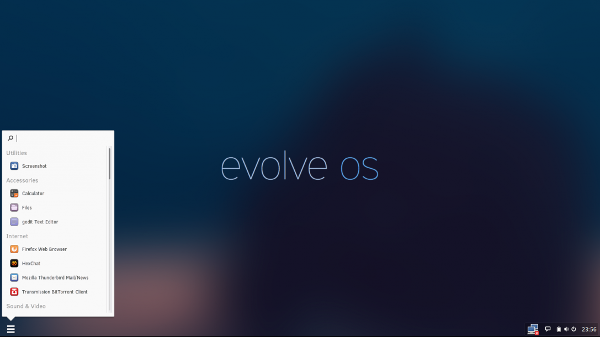
    This blog reported yesterday that the developers of the Evolve OS Linux desktop operating system had received a letter from lawyers acting for the UK’s Department for Business, Innovation & Skills informing them that BIS’ OS trade mark was being infringed and that the developers would have to pick a new name.

    Evolve OS screenshot

    Ikey Doherty of the development team has now posted the following statement on Google+:

    Thank you, everyone for helping us in the naming process! In that time, one name cropped up time and time again. A name we do own, and one indicative of our history and roots. Most importantly, the longevity, history and direct, traceable link of this name provides absolute and irrefutable evidence of prior art, and all rights to the name within this context. We have purchased solus-project.com and solus-project.net. Thus, Evolve OS will now be known (once again) as Solus. The full name for the operating system component of the project (i.e. the Linux distro) is Solus Operating System – the entirety of the project is the Solus Project.

Posts navigation