tech

  • New version of Sigil epub editor released

    In February this year John Schember announced the end of the Sigil free e-book editor on the Sigil project website due to time pressures. However, now there is a new release which is due to the contribution of developer Kevin Hendrick. In addition to some bug fixes and minor improvements, Sigil 0.8.0 mainly provides plug-in support.

    Sigil screenshot
    Sigil screenshot. Click on image for full-sized version

    Like its predecessor Sigil 0.8.0 is open source and licensed under the GNU GPLv3. Nevertheless, the plug-in system was written in a way that allows plug-ins to be released under any licence their author wants and must not necessarily be open source. Plug-ins are called upon with the aid of a plug-in launchers which is itself covered by a BSD licence. The plug-ins themselves remain independent and could also be used by other applications. The new plug-in API is similar to that of Calibre, so that some Calibre plug-ins can be used with only minor changes. John Schember’s blog provides comprehensive details of the release announcement.

    The new version of Sigil is available for download on the project’s Github page as source code, as well as for Windows and Mac OS. For Linux distros, the current release is already available for Arch Linux in the community repository, whilst for Fedora it is in testing. There are also packages for Ubuntu in various unofficial Launchpad repositories.

  • Happy birthday TDF and LibreOffice

    On 28th September 2014 The Document Foundation and the LibreOffice productivity suite will both turn four. In that time LibreOffice has had eight major releases, close to 100 million downloads, attracted over 800 new developers, a large number of active volunteers in every corner of the planet and millions of desktops “migrating” from proprietary to free office suites.

    LibreOffice is the fastest growing free software project of this decade: for 48 months in a row, it has been able to attract at least three new code contributors per month and an even higher number of volunteers active in localisation, quality assurance, marketing, communications and the development of local communities.

    Happy birthday LibreOffice

    Earlier today (25th September) The Document Foundation announced the release of LibreOffice 4.3.2; this is the second minor release of the LibreOffice 4.3 family, further improving the quality of the most advanced and feature-rich free office suite for Linux, Mac OSX and Windows. Further details of the release of LibreOffice 4.3.2 are available on The Document Foundation’s blog.

  • Introducing FixMyDocuments.eu

    FixMyDocuments.eu logoFixmydocuments.eu is a campaign aimed at helping European public sector organisations make better use of open document formats, such as ODF.
    A number of public sector organisations throughout Europe have decided to support open document formats when communicating with the public and FixMyDocuments.eu is a campaign to help them implement their decision effectively. One of the largest of these is the UK government, which recently opted for open standards for communicating and working with anyone outside Whitehall (posts passim).

    Inspired by the FixMyStreet project, FixMyDocuments.eu aims to help European public sector organisations that have decided to support ODF to implement their decision by documenting, tracking and reporting their compliance online. Anybody can report public web pages which are not compliant with the decision, which are then checked and added to a central listing which is updated weekly.

    One of the first supporters of FixMyDocuments.eu was European Commission Vice-President Neelie Kroes. In her statement of support (no. 6 on the list. Ed.) Neelie Kroes says:

    When open alternatives are available, no citizen or company should be forced or encouraged to use a particular company’s technology to access government information. No citizen or company should be forced or encouraged to choose a closed technology over an open one, through a government having made that choice first. I know a smart business decision when I see one – choosing open standards is a very smart business decision indeed.

    Well said, Neelie!

  • Under a week to go to SFD 2014

    Software Freedom Day 2014 bannerIt’s under a week to Software Freedom Day (SFD) 2014, which is being held this year on Saturday, 20th September.

    SFD is a worldwide celebration of Free and Open Source Software (FOSS). The organisers’ goal in this celebration is to educate the public all over the world about the benefits of using high quality FOSS in education, government, in business and at home – in short, everywhere!

    Software Freedom International a non-profit organisation, coordinates SFD at a global level, providing support, give-aways and a point of collaboration, but volunteer teams around the world organise the local SFD events to involve their own communities.

    For anyone wishing to organise a local event, there’s a handy start guide on the SFD wiki, as well as promotional materials.

    If you do organise an event, don’t forget to register your event and team so the event can be added to the 2014 events map.

    Software Freedom Day was established in 2004 and first observed on 28th August of that year.

    Reposted from Bristol Wireless.

  • Italy: Court of Cassation rules against “Windows Tax”

    broken WindowsItaly’s La Repubblica reported on Friday that the country’s Court of Cassation has ruled that anyone who buys a computer with pre-installed software and does not accept the terms of the licence when the computer is first booted up is entitled to a refund. The case involved was that of a Florentine consumer who’d bought a laptop with the Windows operating system pre-installed.

    The judges criticised the practice of selling PCs with a pre-installed proprietary operating system as “a commercial policy of forced distribution”. The court described this practice as “monopolistic in tendency”. It also highlighted that the practice of bundling software (affectionately known as ‘crapware’. Ed.) with the operating system means that end users are forced into using additional non-free applications due to compatibility and interoperability issues, whether they wanted these programs or not.

    The decision was welcomed by the Free Software Foundation Europe (FSFE). “This decision is both welcome and long overdue”, said Karsten Gerloff, President of the FSFE. “No vendor should be allowed to cram non-free software down the throats of users. This practice of forced distribution needs to end. We hope that the Italian authorities will turn this ruling into a real win for consumers and ensure that computer buyers can choose their device with any operating system they want, or none.”

  • Open data: Hamburg establishes transparency portal

    The Free and Hanseatic City of Hamburg has put a transparency portal online, heise reports. Data and documents from the city administration and publicly-owned companies are being made available in the schedule of information. The portal also comprises the data from the former Hamburg Open Data Portal. Amongst other things, the transparency portal makes available decisions by Hamburg’s Senate, minutes and resolutions, budget and management plans, policies and specialist guidelines, official statistics and progress reports, geodata, the tree protection register, environmental measurement data and commercial data.

    logo of Hamburg transparency portal

    The Free and Hanseatic City of Hamburg is therefore complying with the requirements of the Transparency Law, which became effective in the city in October 2013. According to this legislation, Hamburg must publish its reports, contracts and Senate decisions on the internet. Under the previous Information Freedom Law, it only had to provide information upon request.

  • Bristol’s Bitcoin machine handles £38K per month

    bitcoin logoThe Bristol Post is not renowned locally for its in-depth coverage of technology, let alone such exotic areas as crytocurrencies, but today proved an exception as it reported on the fortunes of Bristol’s only Bitcoin cash machine, which is located in Superfoods in St Stephen’s Street (review here) in the centre.
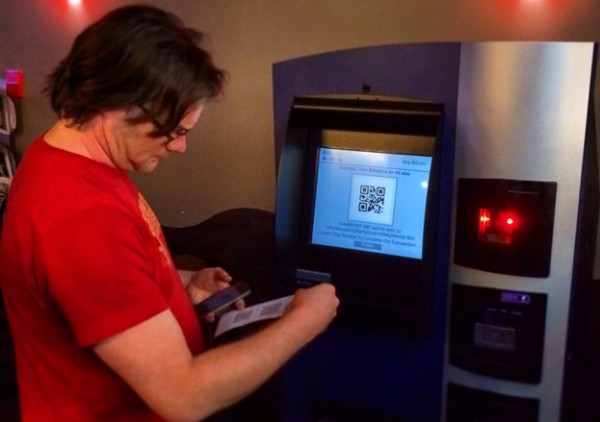
    a Bitcoin ATM similar to the one in Bristol

    SatoshiPoint, the machine’s owners have hailed it a success after the machine processed 250 transactions and the equivalent of £38,000 in Bitcoins in the month of August alone.

    SatoshiPoint’s Hassan Khoshtaghaza said: “Bristol is doing very well, in fact better than our London ATMs because there are now six of them in London so the use gets spread out. We are getting users from as far as Cardiff and Bath coming to use the machine in Bristol and our volume is increasing each month on buy and sell transactions.”

    The company recently installed a Bitcoin machine in Brighton and further cities under consideration are Cardiff, Manchester and Edinburgh, plus Newcastle Airport, according to Khoshtaghaza.

    SatoshiPoint’s Bitcoin machines accept £10 and £20 notes, but not debit or credit cards and users can buy anything from £10 to £1,500 worth of Bitcoins a day, at the live price plus 7% commission.

    Originally posted on Bristol Wireless.

  • EU public sector machine translation tool now available online

    EU flagJoinup, the European Union’s public sector open source news website, reports today that MT@EC, the Machine Translation service developed by the European Commission under the ISA programme, can now also be accessed over a secure (https) internet connection; previously it was only accessible to institutions connected to the highly secure sTESTA network. The new web access now also allows public administrations that are not connected to the sTESTA network to request access for their staff.

    MT@EC is currently available free of charge to all public sector organisations. Since the tool has been trained mainly on official EU documents, it can handle and translate texts and documents related to EU policy and collaboration in the 24 official EU languages better than other tools. A presentation of the MT@EC service, including screenshots of the user interface, is available as a PDF. Interested organisations have the opportunity to participate in ‘customisation pilot projects’, concerning which more information can be found in the document “ΜT for Member States: Description of pilots” (PDF).

    In this 2nd major release of MT@EC, the quality of the output has been further improved by adding data from more sources and by enhancing the processing for the current 6th generation of the machine translation engines. Users can now also submit PDF files, whilst support for other formats has been improved. Furthermore, language auto-detection is now available for text snippets. Users can drag and drop files if they are using the interface through the Firefox or Chrome web browsers. Users can also choose not to receive the translated text by email for confidentiality reasons but instead download it from their personal workspace in the interface.

    The European Commission (DG Translation) is organising a user conference on the machine translation service on 5th December 2014 in Brussels.

  • Welcome LibreItalia!

    Earlier today the birth was announced of LibreItalia, which has been founded by Italian members of The Document Foundation and has the objective of bringing together all the Italian users of the free and open source LibreOffice productivity suite to speed up the adoption and promotion of the suite that is designed as a free individual productivity and office automation tool capable of closing the digital divide and breaking down the barriers to information technology for the poorest in society.

    LibreItalia logo

    In addition, LibreItalia will promote the ODF/Open Document Format (ISO/IEC 26300) standard for official documents, which was recently adopted by the UK government (posts passim) as a template for all content, together with PDF/A.

    The initial Board of Directors, which will be in post for two years, consists of seven members, five of whom are directly involved in the LibreUmbria project (which was originally established to promote the use of LibreOffice in public sector organisations in the Umbria region. Ed.): Sonia Montegiove, Chair; Marina Latini, Vice-Chair and Chief Technical Officer; Giordano Alborghetti, Treasurer; and Andrea Castellani, Alfredo Parisi, Gabriele Ponzo and Italo Vignoli, directors.

    All the new association’s news about LibreOffice is featured on the LibreItalia website. To become a member of LibreItalia, you’ll need to fill in an application using the relevant form after reading the site’s About us and Articles of Association pages. The membership fee for ordinary members is a mere €10.00 (reduced to €5.00 for students) and entitles members to a libreitalia.it mailbox.

    Becoming a member of LibreItalia means supporting the values of transparency, sharing and working together, the same values which characterise the original LibreUmbria project.

    For more information, email info (at) libreitalia.it.

Posts navigation