Steve Woods

Generic carbon-based humanoid life form.

  • “Much lover,” my luvver?

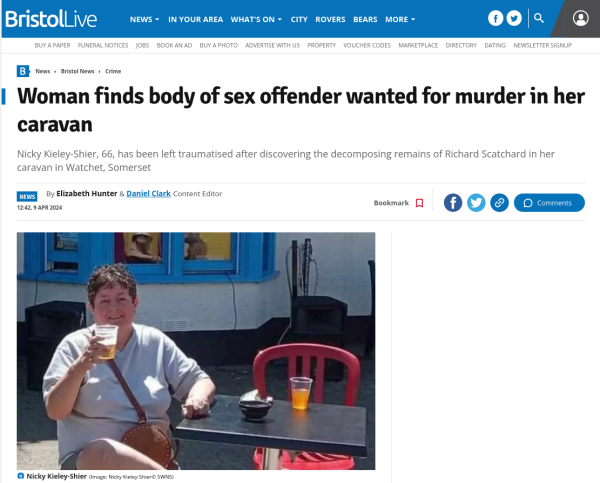
    Further evidence arrives today of the continuing decline of journalistic standards at Reach plc titles – already a bar so low it’s in danger of touching the ground.

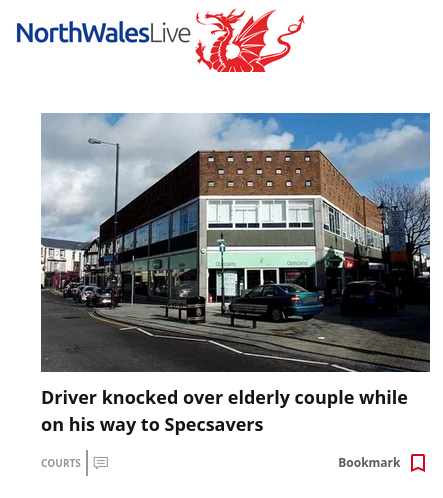
    The proof: the author of this piece in today’s Bristol (Evening) Post/Live cannot even spell one of the title’s favourite clichés – much-loved – opting for a Bristolian sounding but meaningless much lover instead.

    Headline - Tributes after much lover Antiques Roadshow expert Henry Sandon dies

    What is even more surprising is that the author is an award-winner within the journalistic trade.

    If the qualityu control for press articles is as low as that down at Bristol’s Temple Way Ministry of Truth, your ‘umble scribe wonders just how much lower it must be where gongs for hacks are involved… :-D.

  • LibreOffice Nepalese Localisation Sprint

    Language localisation is the process of adapting a product’s translation to a specific country or region. It forms the second phase of a larger process of product translation and cultural adaptation (for specific countries, regions, cultures or groups) to account for differences in distinct markets, a process known as internationalisation and localisation.

    The Document Foundation blog today reports on the Localisation Sprint held in October and November by the LibreOffice Nepali community in October and November, which bore the tagline “Unlock Native: LibreOffice Speaks Nepali“.

    LibreOffice Nepalese localisation sprint participants
    Image courtesy of The Document Foundation blog.

    The sprint was mentored by localisation expert Saroj Dhakal, Suraj Bhattarai, LibreOffice’s liaison officer and Kathmandu University engineering student Aadarsha Dhakal. Kkey open source community and student clubs from different part of Nepal were invited and the invitation was generously accepted by AskBuddie, Kathmandu University Open Source Community (KUOSC), Birendra Open Source Club (BOSC), and Nepal Open Source Klub (NOSK). Furthermore, many volunteers came forward and expressed their willingness to join in and contribute to the LibreOffice project.

    As many of the volunteers were new to the process, mentors made participants familiar with the localisation process in our tools, with a quick demonstration on how to proceed with strings, checks and different glossary terms.

    Due to major festivities there was a 19 day gap in the sprint, which eventually ended in November (making it the third longest ever Nepalese localisation event. Ed.) after several thousand strings had been localised. Well done all in Nepal!

  • Seasonal pedantry

    It’s that time of year again and, much to the discomfiture of my dear sister, Slade and Wizzard are busy filling the space in the Temples of Mammon with their decades-old guaranteed pension payment ‘Christmas’ songs, whilst in less venal environments, ‘Bah! Humbug!’ is being exclaimed by curmudgeons embracing their inner Ebenezer Scrooge and in yet other spaces, carols are being sung; and not just in church either.

    According to Wikipedia, the English word carol is derived from the Old French word carole, a circle dance accompanied by singers. Carole itself is derived from the Latin choraula. Carols were very popular as dance songs from the 1150s to the 1350s, after which their use expanded as processional songs sung during festivals, whilst others were written to accompany religious mystery plays (such as the “Coventry Carol“, written before 1534).

    Just as in normal speech, punctuation is important in singing as it determines how the words are to be sung and with what emphasis.

    How many readers have noted the comma in God rest you merry, gentlemen? The comma is essential to denote that the menfolk in question are being wished a merry time, which is a somewhat different prospect from what is brought to mind by the comma-less merry gentlemen who have clearly been indulging in Christmas cheer and probably need a lie-down and a nap.

    Here’s a handy video to explain the pendantry.


    For those who doubt the existence of the comma, here’s the sheet music for confirmation.

    Sheet music for God rest you merry, gentlemen.
    Image courtesy of Wikimedia Commons.

    Tip o’ the hat: David Allen Green

  • LibreOffice news – a beta and a pledge

    Yesterday saw the release of the first beta version of LibreOffice 24.2, the forthcoming next version of this popular free and open source office suite, which is due for release on February 2024, as announced on the LibreOffice QA blog.

    LibreOffice about window

    Your ‘umble scribe has already downloaded the beta from the development builds server for testing. So far it’s working well with my usual suite of extensions, which extend the software’s functionality.

    If anything untoward occurs with the beta, then a bug report will be filed.

    Meanwhile, in the boardroom…

    Away from coding, news has arrived that elections are to be held soon for the Board of The Document Foundation (TDF), the German-based non-profit organisation behind LibreOffice.

    Eleven member of the LibreOffice community are standing as candidates with a joint Pledge (our promise) to the LibreOffice community. It’s not just a positive vision of the future, but includes immediate action points that we can take to fix TDF from the outset.

    The eleven are Sophie Gautier, Eliane Domingos, Osvaldo Gervasi, Paolo Vecchi, Jean-Baptiste Faure, Franklin Weng, Daniel Rodriguez, Mike Saunders, me (Andreas Mantke), Jean-François Nifenecker and Enio Gemmo.

    The eleven candidates for the TDF board

    The full English text of the Pledge is reproduced below, in addition to which it has been translated into the following languages:

    The Pledge itself reads as follows verbatim:

    Our main promises to you

    We will bring back tenders.

    • We will implement tenders in a way that allows more companies to participate.
    • Having only very few and always the same bidders is not sustainable. We will bring a tender process that creates a welcoming environment for all potential bidders. We will create opportunities for everyone, from single developers to large organisations.
    • We will hear the valuable input from the Engineering Steering Committee on the important projects and will make them a reality.
    • We will work together with the valuable companies from the ecosystem, existing and new ones. Together we will achieve something good for LibreOffice and for everyone involved.

    We will be an open and transparent board from day one. We are accountable to all of you. We will not act as a closed group.

    • We will have no private board meetings, unless it is absolutely necessary. With very little room for exceptions, there will be only public meetings with a proper agenda and proper minutes that we share in time.
    • Board meetings will be at different times. We want that all community members have a chance to join, especially those who cannot participate during working hours.
    • There will be fewer, but much more effective meetings. We will focus on strategy, not on day-to-day micromanagement. Meetings every two weeks hardly work for volunteers. A lot more responsibility for everyday business can be laid in the hands of the team.
    • We promise monthly public status reports to show what the board is working on. They will be translated into many languages. We encourage and take feedback from the worldwide community to the heart. You are experts in your fields and we listen to you.
    • We will install a liquid democracy system as proper tooling for direct community participation in the foundation’s decisions.

    We will break the language barriers. English is not a requirement to participate any more.

    • We will make sure agenda and minutes for board meetings will be translated into many languages.
    • If English is used, we will use “simple plain English”, so more people can understand.
    • We promise monthly public calls with the native language community. We want to hear from you and support your activities.
    • For these calls, we will ask community members to help with live translation, so all community members can participate.
    • We will host at least one of the next two official LibreOffice Conferences out of Europe, e.g. in South America or Asia.

    We will value all contributors equally.

    • Developers and non-developers, volunteers, company employees and TDF’s team, we are all one, respectable community.
    • Nobody should be discriminated for their role. Nobody should be scared to speak out in public.
    • We will credit contributors publicly.
    • Nobody should feel like “second class” community members any more.
    We also promise you this

    We will make TDF recognized.

    • We will work hard to have TDF be recognized worldwide at governmental level and within the European Union. We will start to actively contact them as a non-profit foundation.
    • As one of the leading foundations, TDF must “sit at the table” in standards bodies and when important legislative decisions are taken. We must be seen as a trustworthy reference point of contact for office productivity.

    We will actively grow the ecosystem.

    • We will create incentives for current and new companies working with LibreOffice.
    • We will support them to enter the market.
    • Our goal is to have at least two independent companies joining the market in the next two years and many new products based on LibreOffice Technology.
    • We will not only aim at direct code contributions, but also ease of use, accessibility and documentation. There will be many more companies that can bid on tenders for work that was underloved for some time.
    • We will evaluate the hiring of an independent business partner manager, with a proper mission to achieve this goal and be accountable.
    • We will work with the ecosystem on solutions for online and mobile versions of LibreOffice, that benefit both the companies and the community.

    We will make development more fun and support our fantastic developer community.

    • We will support the community to organize more Hackfests again, ideally in different countries.
    • We will offer the developer community to evaluate new and more modern development tools that could make hacking on LibreOffice more exciting and more fun. We will let the developers independently voice what is best for LibreOffice and we are committed to invest in areas important for our developer community.
    • We will evaluate to hire one or more developers to fix the most reported bugs from the community and grow the code contributions from the foundation itself. This makes us a better free software and open source citizen.
    • We will develop a strategic development plan for the next 24 months, with measurable goals and milestones.
    • We will seek funding to implement, directly or through partners, features and improvements that would make a difference to many people and uses.
    How we will achieve our goals

    Promises are easy to make. Here is our plan how to make them a reality:

    Legal issues have been in the way for several years now. If we work together with shared goals in mind, seriously take into account our legal counsels’ advise, we can very soon focus again on actual and important projects that are not getting done right now, because too much time is spent with fights and discussions.

    We have experts in many fields in our community, in the companies and in our team – let’s source their knowledge and their passion for LibreOffice! We will encourage everyone to speak out, contribute their knowledge and bring in their unique skills and talent. We will work with trust, respect and mutual appreciation, to achieve the best for TDF.

    Good ideas need space to develop and unfold. Only then we can bring the office suite to a new threshold of effectiveness, user friendliness and only then we can evaluate new technologies for incorporation into LibreOffice.

    We will also encourage everyone to work much more with other free and open source communities or civil society organizations, to widen their horizon, contribute something good to the world and also learn what challenges others face and how they deal with them.

    Conflicts of Interest

    One of the main challenges in the past board term was conflict of interest. We don’t want endless discussions, we will implement the solution.

    Some of us are members of the team and get paid by TDF, others are working for companies that make business with LibreOffice. We know that there is no difficulty left if people with conflicts of interest are barred from being near decision making. And therefore we hereby promise and guarantee that we will keep out of all decisions and also discussions that could affect our own personal interests, and that we will declare these interests regularly.

    Board members who are also team members will work on board matters in their spare time. All board members will follow the existing conflict of interest policy and keep out from any discussion and any decision that could create a conflict of interest for them.

    Our goal is to “prevent possible conflicts of interest within the foundation” as laid down in the statutes and set a standard to follow.

    The Document Foundation has been built by the community, for the community. We are members of the community who want to run for the next election of the board, to bring TDF back to its golden times – with a happy community, working together creatively, inspiring each other, where everyone has a place to contribute to our common goal.

  • The one per cent

    Yesterday your correspondent arranged a poll on his social media account on Mastodon to coincide with the appearance of disgraced former alleged party-time prime minister Alexander Boris de Pfeffel Johnson before the Covid-19 inquiry being chaired by retired senior judge Heather Hallett.

    Needless to say, Johnson was his usual courageous self, turning up at 7.00am to avoid the crowds of bereaved relatives who’d hoped to make their feelings known to the lazy, bumbling charlatan. He did likewise today with several papers showing him arriving once again in the hours of darkness, but then again this is the same brave politician who hid in a fridge in 2019 to avoid being questions by the talentless Piers Morgan.

    There is plenty of reporting and live coverage of Johnson’s evidence to the inquiry, which is also being streamed. Today’s Guardian editorial is particularly scathing of Johnson’s performance yesterday, with its byline stating:

    Nothing in the former prime minister’s record or his testimony so far suggests he is a reliable witness or capable of genuine contrition.

    Neither reliable nor contrite; that a damning assessment.

    Anyway, back your ‘umble scribe’s social media poll. A screenshot of the result is shown below.

    Poll reads Which would you trust most? Boris Johnson or a forged £9 note?

    All that can be said is that your correspondent is shocked to learn one per cent of respondents would sooner trust a man never known to have had an intimate relationship with something known as the truth.

  • Steam returns to LWH

    Lawrence Hill station (LWH), the first/last stop into and out of Bristol Temple Meads on the Severn Beach line, has been serving the travelling public since 8 September 1863 when services began on the Bristol and South Wales Union Railway to New Passage Pier north of the city on the banks of the River estuary.

    For most of that time, services would have been hauled by steam locomotive, so there was more than a whiff of coal smoke, steam and nostalgia when your ‘umble scribe alighted from the bus to see a steam-hauled special complete with rolling stock in British Railways brown and cream livery pull up at platform 1.

    Earl of Mount Edgcumbe steam locomotive at LWH

    The train had been reversed up the line – note the rear red lamp on the front of the locomotive – so that the steam locomotive – the Earl of Mount Edgcumbe – could be turned around to haul the coaches back into Temple Meads one mile away.

    The locomotive starts to haul the carriages back towards Temple Meads.

    Eagle-eyed readers will note that the front of the locomotive in the second photo is showing a white light, not its previous red lamp.

  • LibreOffice 24.2 alpha released for testing

    According to the release plan, Libre Office 24.2*, the next version of the leading free and open source office suite, will be released at the start of February 2024, according to the LibreOffice QA blog.

    This new version’s development started in the middle of June earlier this year. Since development of 24.2 began, Since then, 4271 commits have been submitted to the code repository and more than 787 bugs had been fixed, according to the release notes.


    Screenshot of LibreOffice 24.2 alpha

    LibreOffice 24.2 Alpha1 can now be downloaded for Linux, macOS and Windows. In addition, it can be installed alongside the standard version. LibreOffice extensions, which increase the functionality of the suite, can also be installed in the new alpha. Your correspondent can report all his favourite extensions installed properly and are working as they should with the new alpha release.


    LibreOffice 24.2 about panel

    The QA blog post advises users who find any bugs to report them in Bugzilla. The only requirement needed to file a bug report is legitimate email address account in order to create a new account.

    As LibreOffice is a volunteer-driven community project all testing is appreciated. Your ‘umble scribe’s testing to date has been uneventful. 😀

    * = The Document Foundation has changed the manner in which it numbers releases; 24.2 will be the first new release under the new year and month numbering system.

  • Bizarre feudal remnants

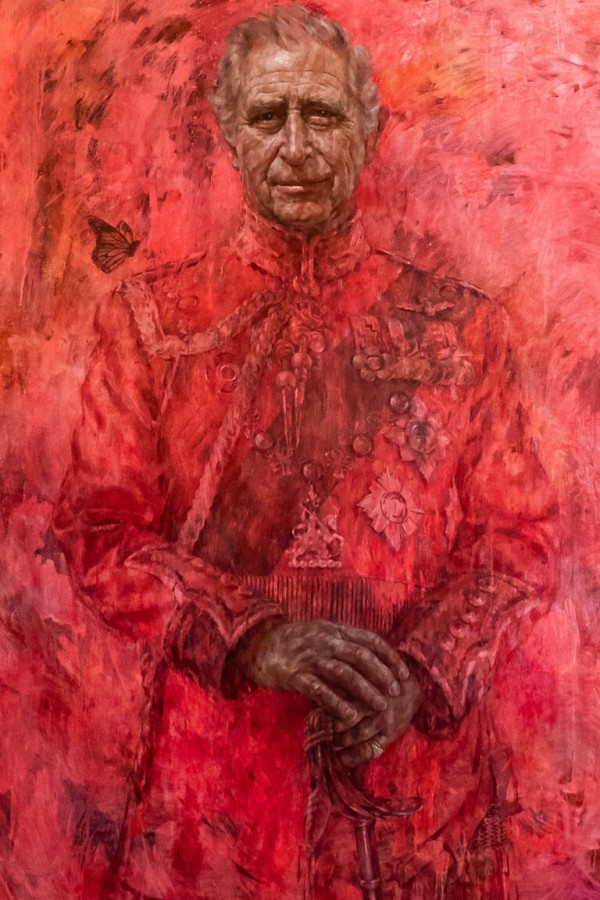
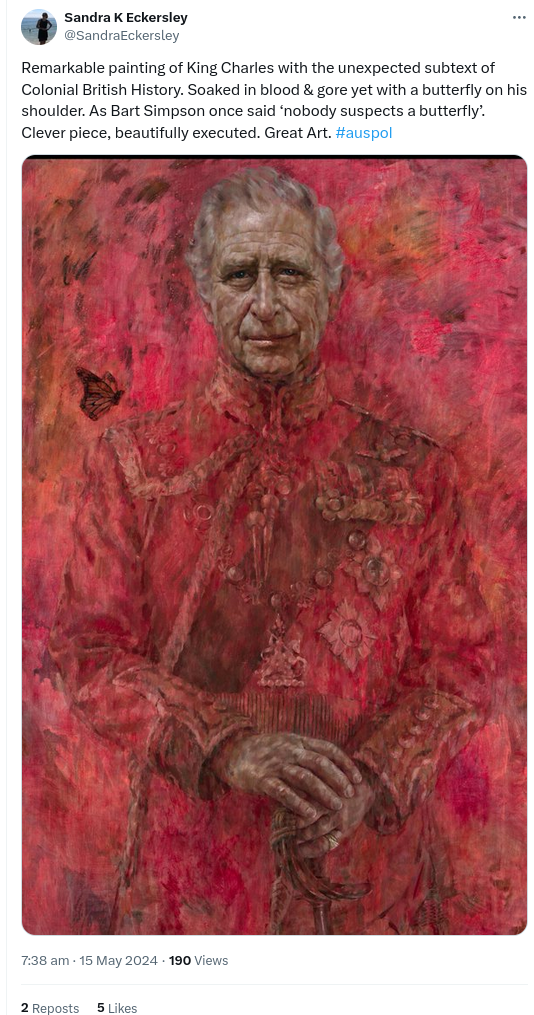
    The unelected, alleged head of state of the English EmpireNews arrived today of a bizarre feudal remnant – one used by a human bizarre feudal remnant line his own already well-stuffed pockets.

    The human bizarre feudal remnant is none other than Mr Charles Philip Arthur George Mountbatten-Windsor, alleged to be the head of state of the English Empire (which some still call the United Kingdom. Ed.), who generally masquerades under the alias of “King” Charles III.

    Today’s Guardian reveals that Mr Mountbatten-Windsor is stealing the estates of people who die intestate – i.e. without leaving a will – or with no known relatives in the territory of the Duchy of Lancaster, which consists of consists of 18,433 hectares of land holdings, including rural estates and farmland, urban developments, historic buildings, and commercial properties across England and Wales, particularly in Cheshire, Staffordshire, Derbyshire, Lincolnshire, Yorkshire, Lancashire and the Savoy Estate in London. Its principal purpose of the estate is to provide a source of independent income for Mr Mountbatten-Windsor and his heirs and successors.

    This theft of other people’s assets is covered by the legal term ‘bona vacantia‘, meaning unowned property. The same practice of ‘bona vacantia‘ is employed by the Duchy of Cornwall to provide an income for the so-called ‘Prince’ of Wales, one William Arthur Philip Louis Mountbatten-Windsor.

    The rich and powerful of this backward medieval country have been stealing the assets owned or used by others for centuries. From 1604 onwards the Inclosure Acts created legal property rights for the rich to land previously held in common in England and Wales, particularly open fields and common land. Between 1604 and 1914 over 5,200 individual acts enclosing public land were passed, affecting 28,000 km2.

    These thefts of common land were commemorated in a popular poem in the early 18th century.

    They hang the man and flog the woman
    That steal the goose from off the common,
    But let the greater villain loose
    That steals the common from the goose.


    The law demands that we atone
    When we take things we do not own,
    But leaves the lords and ladies fine
    Who take things that are yours and mine.

    This practice of appropriating land owned and used by others reached its zenith during Britain’s colonial expansion under the concept of ‘terra nullius‘, literally nobody’s land. How could allegedly primitive people claim ownership of land when nothing concerning property rights was written down, was the flawed logic behind these seizures, which reached their height in Australia, where people now commemorated by street names and public artworks were responsible for the genocide and ethnic cleansing of the indigenous people, who have no public monuments by which to remember the victims. This was documented in all its brutality by the three part 2022 TV series The Australian Wars.

    Anyway, back from nobody’s land to nobody’s property in the north of England. The Guardian has found out that the Duchy of Lancaster has been secretly using the bona vacantia funds to renovate properties owned by the alleged king and rented out for profit. The Duchy’s accounts suggest it has collected £61.8m in bona vacantia funds over the last decade. Of those, only £9.3m or 15% of the total has gone to charities, which the Duchy maintains is the main reason for collecting the funds.

    Needless to say, this news has not gone down well in areas subject to the Duchy of Lancaster’s writ.

    Andy Burnham, mayor of Greater Manchester is on record as saying:

    I think many people in the north-west will be surprised to learn that the savings and assets of friends and neighbours are being taken in this way. I don’t recall this archaic system ever being explained to anyone here nor public consent for it being given.

    Burnham furthermore added that:

    This appears to be a bizarre remnant of feudal Britain. While we await the public acts of levelling up that we have been promised, it seems this country still has silent mechanisms of levelling down at work, redistributing wealth in the wrong direction.

    Furthermore, friends of some of those whose assets have been stolen have described their use to fix up Duchy properties for future rental as ‘unethical, ‘shocking and ‘a disgrace.

    The worst decision this country ever made was to readmit Charles Stuart (son of the late tyrant) in 1660. That would have avoided any future regal robbery of people’s property either in this country or around the world.

Posts navigation