Steve Woods

Generic carbon-based humanoid life form.

  • TidyBS5 news

    A week ago yesterday, there was a meeting of the TidyBS5 task force with council officers and Councillor Marg Hickman at the offices of Up Our Street.

    It was a good opportunity for the officers to update community volunteers on what the council has done, is and will be doing.

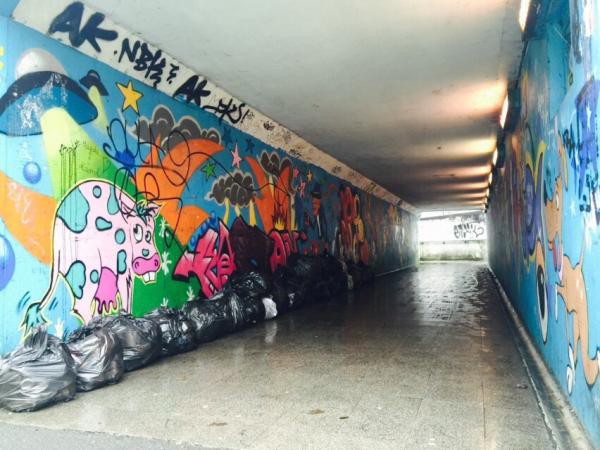
    fly-tipping in Jane Street Redfield
    Jane Street in Redfield earlier today

    For Stapleton Road a deep clean is planned for this year; this will mean giving the footways a thoroughly good scrub and removing chewing gum from their surfaces. In addition, hanging baskets will be provided on approx. 30 lamp posts to help make the street a bit more colourful and attractive.

    The city council’s streetscene enforcement team has now moved into the area and has already had some success: 5 traders have been issued with £300 fixed penalty notices for abusing the communal bins intended for household waste only. In addition, some minor offenders have been fined smaller amounts.

    Turning to communal bins, task force members have been invited to assist in devising the communal bins consultation that the council is organising for the Stapleton Road corridor. Two task force members, Hannah and myself, informed officers that we were monitoring clearance times after fly-tipping had been reported. From my own monitoring since then, communal bins seem to be implicated in some 60% of sites notified to the council.

    After the update from the offices, it was pointed out to them that, while all this attention being lavished on the Stapleton Road area was appreciated, it should not detract from equally bad problems along the Lawrence Hill/Church Road corridor, home to the infamous Jane Street (see above).

    During my discussion on social media with BCC’s Chief Enterprise Architect Gavin Beckett about open standards (posts passim), he invited me to submit feedback on using the council website; this will be done from the aspect of reporting street cleaning matters, where the website still has a couple of interesting foibles.

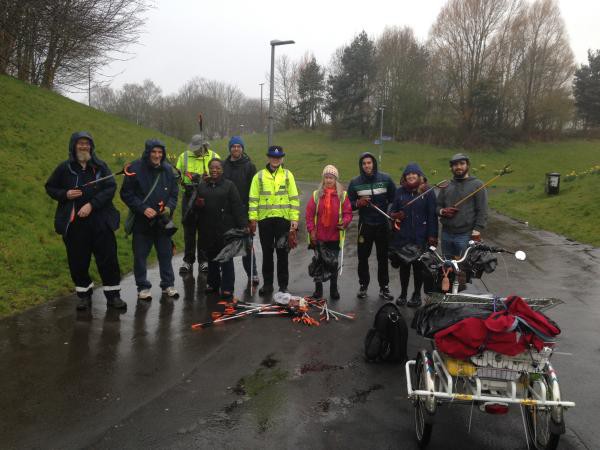
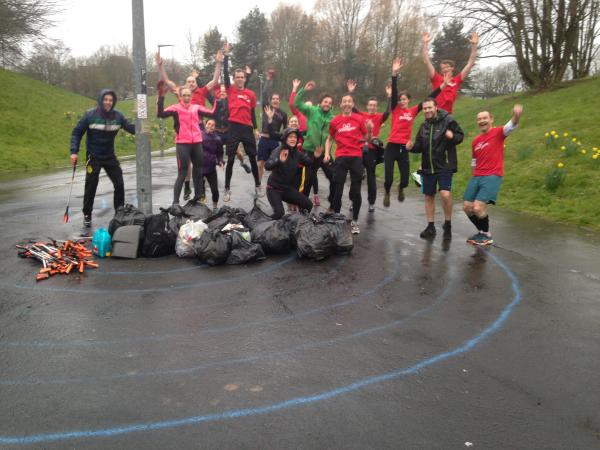
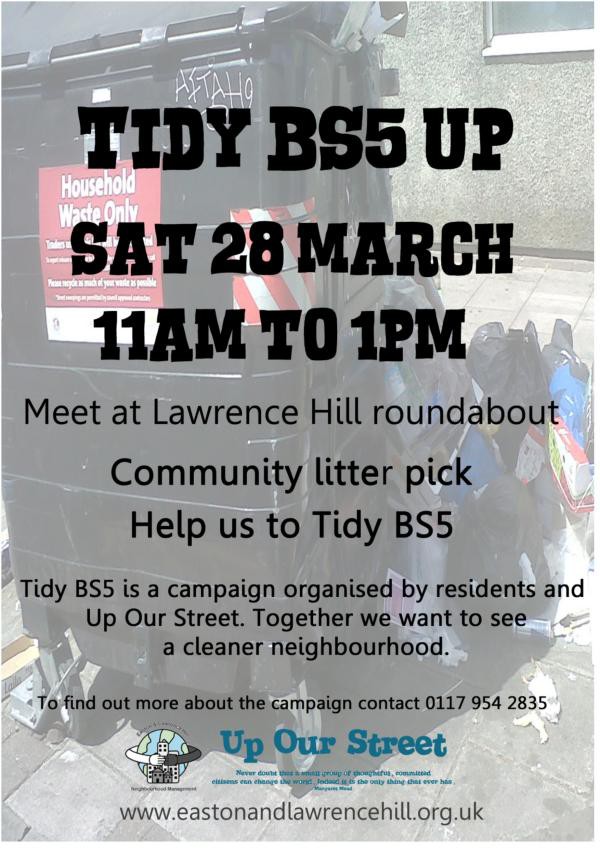
    Up Our Street is organising a community litter pick on Saturday 28th March from 11 am to 1 pm. Volunteers are asked to assemble at Lawrence Hill roundabout (map). For more details, contact Lorena on 0117 954 2835.

    Big Clean publicity poster

    Finally, don’t forget to sign the TidyBS5 e-petition!

  • Highlighting a foul practice

    Dog fouling is one of the banes of modern life; it’s filthy, a health hazard and – as any local councillor will tell you – a permanent source of correspondence for them from the electorate.

    Over in Bedminster someone has been patrolling the streets and highlighting the problem of dog fouling by spraying the canine visiting cards left in public places with yellow paint, as shown in the example below from Stillhouse Lane.

    dog poo sprayed yellow

    Over in BS5, there’s someone else who also goes round the Easton and Redfield areas with a spray can of paint attacking dog faeces, in this case spraying them fluorescent green.

    Bristolians can report dog fouling online to the City Council, who respond quickly to the laziness of dog owners who cannot be bothered to clean up after their pets.

    In closing here’s a final reminder to those who let their dogs foul the streets and don’t clean it up: it’s an offence that could land you with a fine of £80, which might be a little more inconvenient than stooping and scooping. 🙂

  • Bristol City Council & open standards – more

    BCC logoFollowing the post on Friday on Bristol City Council‘s response to my open standards FoI request (posts passim), more information has come to light.

    It was all sparked by a discussion on Twitter between myself and Alex, a leading member of the Bristol & Bath Linux Users’ Group (BBLUG).

    It all revolved around what was really meant by the phrase “not fully digital” in respect of PDF files.

    My speculation was that if text documents are scanned, these are usually converted to image-based PDFs with which the screen readers used by blind and visually impaired people can have problems.

    It turned out this was a good point, but not the real reason.

    The latter was supplied by Gavin Beckett, BCC’s Chief Enterprise Architect, who actually responded to my FoI request. It seems Gavin’s main reason for describing PDFs as “not fully digital” is that PDF is basically an attempt to make electronic files emulate paper. The move by the council away from PDF to HTML when responding to citizens is that more mobile devices (tablets and smartphones) are now being used by the public to communicate with the local authority and the latter wishes to provide the same – i.e. “fully digital” experience to all.

    Finally Gavin promised to follow up with his colleagues my gripe about using MS formats for responding to FOI requests. He conceded this was one example where PDF would be better.

  • Recommended LibreOffice extension: MultiFormatSave

    One of the great things about LibreOffice is the ability to customise and extend the software’s functionality by the use of extensions, for which there’s a dedicated website.

    If you use LibreOffice and need to save files in formats other than its native Open Document Formats (in my case, I work in Open Document format, but return work in MS Office formats and send out invoices as PDFs), then the MultiFormatSave extension is a really useful addition to your install since it can simultaneously save your file Open Document, MS Office and/or PDF formats as you choose.

    At the moment Open Document, MS Office 97 (.doc, .xls, etc.), MS Office 2007 XML (.docx, .xlsx, etc.) and PDF formats are supported.

    MultiFormatSave iconOnce installed via LibreOffice’s extension manager, MultiFormatSave adds a small icon – shown on the right – to the toolbars of your office suite’s component programs.

    Clicking on the icon will bring up the dialogue box shown below.

    MultiFormatSave dialogue box

    Saving in up to 3 formats at once is not only convenient, it can in my opinion help reduce one’s chances of falling victim to repetitive strain injury (RSI). 🙂

    More information on MultiFormatSave is available on the LibreOffice extensions site.

  • Bristol Post exclusive: Weston-super-Mare beach now motorway

    The Bristol Post is not immune to the odd error every five minutes or so and today is no exception, as is amply demonstrated by the screenshot below of an item from today’s online edition.

    picture of motorway but caption says a day on the beach at weston super mare

    Even the image tag’s alt attributes include the wording “A day on the beach at Weston-super-Mare”.

    If Weston beach has been covered in tarmac and is now reserved for use by motor vehicles, I do hope the highway engineers built it well above the high water mark for spring tides, which have a range sometimes in excess of 13 metres.

    On the other hand, the Bristol Post does have form when it comes to writing the wrong captions for images on its website (posts passim).

  • Response to open standards FoI request

    A response has been received today to my FoI request to Bristol City Council on open standards (posts passim).

    The reply was received in a record 10 working days and reads as follows:

    Bristol City Council has been a long-term supporter of open standards wherever possible. We have frequently voluntarily adopted national government policy on open standards and open source, recognising the benefits of this approach.

    We adopted StarOffice in 2005 and moved to the Open Document Format as our standard for office productivity files at the point it was incorporated in the StarOffice / OpenOffice.org products. We had to move to Microsoft Office in 2010 due to the lack of standards support in the local government applications market, partly due to the fact that national government policy was not mandated at local level and therefore did not have the desired effects on the document standards context. However we retained the ability to create, open and collaborate on ODF by implementing LibreOffice alongside Microsoft Office on all council PCs. Therefore we are already capable of using ODF to collaborate on government documents.

    In terms of publishing government documents to citizens, we have historically used PDF, but are now attempting to replace all information, advice and guidance, and application forms with fully digital services. Over time this will replace old PDF documents with HTML. If there are documents that meet a user need to download and read offline, we can produce PDF/A format from the open source PDF Creator software that is also available on every council PC.

    I’m very pleased to note that BCC has LibreOffice installed on every council machine. They kept that quiet! Perhaps they’ll use it to send me replies to my FoI requests in future instead of the propensity to use MS Office formats. But just to make sure, I’ll include a plea for a reply in an open format in all my future requests. 🙂

    Read the original FoI request and response on WhatDoTheyKnow.

  • Special opening offer

    Thanks to skimping on proof-reading, La Despensa Del Gourmet, a new Spanish delicatessen that’s recently opened in Prince Street, Bristol has a rather unusual offer at present, which sounds a bargain at £3.50!

    poster reads daily offer spanish sandwich with cock/water
    Picture courtesy of Bristol Bites

    Speculation has it that the proprietors are actually trying to offer a carbonated soft drink originally from America… However, that could be phallusy! 😉

    Hat tip: Bristol Bites.

  • GnuPG can now employ second developer

    GnuPG, the most important free encryption program, will in future be developed by two paid employees, German IT news site heise reports. After a flood of donations he has been able to employ a second developer, programmer Werner Koch stated in a blog post. “The financial crisis of The GnuPG Project is over”, he wrote.

    GNUPG logoKoch had previously developed the software virtually on his own and was experiencing financial hardship due to insufficient donations. Many supporters came forward after a report in the media: Koch said that on the first day alone €120,000 in donations was received (posts passim). Internet companies Facebook and Stripe and The Linux Foundation also supported Koch with large donations. Amongst other things, Koch wants to improve the program’s operation with the donations.

    GnuPG is the major free cryptography system. It builds upon the PGP (“Pretty Good Privacy”) encryption program developed by Phil Zimmermann. E-mail messages and other content can be protected with it so that only the sender and recipient can decrypt them. GnuPG’s system software has from time to time been developed and maintained by Koch on hos own. Other initiatives will attend to the user interface and extensions for email programs with which users can encrypt their emails.

  • Wikimedia Foundation takes NSA to court

    image of scales of justiceThe Wikimedia blog reports that yesterday the Wikimedia Foundation filed suit against the US National Security Agency (NSA) and the Department of Justice (DOJ). The lawsuit challenges the NSA’s mass surveillance programme and more specifically its large-scale search and seizure of internet communications — frequently referred to as “upstream” surveillance. The Foundation’s aim in filing this suit is to end the mass surveillance programme in order to protect the rights of the Foundation’s users around the world. It has been joined in the suit by eight other organisations (National Association of Criminal Defense Lawyers, Human Rights Watch, Amnesty International USA, Pen American Center, Global Fund for Women, The Nation Magazine, The Rutherford Institute and the Washington Office on Latin America) and represented by the American Civil Liberties Union (ACLU). The full complaint can be found here (PDF).

    “We’re filing suit today on behalf of our readers and editors everywhere,” said Jimmy Wales, founder of Wikipedia. “Surveillance erodes the original promise of the internet: an open space for collaboration and experimentation, and a place free from fear.”

    Privacy is the bedrock of individual freedom. It’s a universal right that sustains the freedoms of expression and association. These principles enable inquiry, dialogue and creation and are central to Wikimedia’s vision of empowering everyone to share in the sum of all human knowledge. When they are endangered, the Wikimedia Foundation’s mission is threatened. If people look over their shoulders before searching, pause before contributing to controversial articles or refrain from sharing verifiable but unpopular information, Wikimedia and the world are poorer for it.

    The Foundation’s case challenges the NSA’s use of upstream surveillance conducted under the authority of the 2008 Foreign Intelligence Surveillance Act Amendments Act (FAA). Upstream surveillance taps the internet’s “backbone” to capture communications with “non-U.S. persons”. The FAA authorises the collection of such communications if they fall into the broad category of “foreign intelligence information”; this includes nearly any information that could be construed as relating to national security or foreign affairs. The programme casts a vast net and consequently captures communications that are not connected to any “target”, or may be entirely domestic. This includes communications by the Foundation’s users and staff.

    The NSA has interpreted the FAA as offering it free rein to define threats, identify targets and monitor people, platforms and infrastructure with little regard for probable cause or proportionality. Wikimedia believes that the NSA’s current practices far exceed the already broad authority granted by the US Congress through the FAA. In addition, it believes such practices violate the US Constitution’s First Amendment (protection of freedom of speech and association) and the Fourth Amendment, which protects against unreasonable search and seizure.

    In addition, the Wikimedia Foundation believes that the NSA’s practices and limited judicial review of those practices violate Article III of the US Constitution, which relates to the judicial system. A specialized court, the Foreign Intelligence Surveillance Court (FISC), hears matters related to foreign intelligence requests, including surveillance. Under US law the role of the courts is to resolve “cases” or “controversies”, not to issue advisory opinions or interpret theoretical situations. In the context of upstream surveillance, FISC proceedings are not “cases” since there are no opposing parties and no actual “controversy” at stake as FISC merely reviews the legality of the government’s proposed procedures. According to the Foundation this is the kind of advisory opinion that Article III was intended to restrict.

    In 2013, the U.S. Supreme Court dismissed a previous challenge to the FAA, Amnesty v. Clapper, because the parties in that case were found to lack “standing”. Standing is an important legal concept requiring a party to show that they’ve suffered some kind of harm in order to file a lawsuit. The 2013 mass surveillance disclosures included a slide from a classified NSA presentation that made explicit reference to Wikipedia, using the Foundation’s global trademark. Because these disclosures revealed that the government specifically targeted Wikipedia and its users, Wikipedia believes it has more than sufficient evidence to establish standing.

    Reposted from Bristol Wireless.

  • Openness workshop at University of Perugia, Italy

    Sonia Montegiove writes on the Libre Umbria blog that a workshop on openness is being organised on Thursday 12th March between 3 pm and 5 pm in Hall 20 in the Faculty of Economics of the University of Perugia as part of the initiatives linked to the Umbria Digital Agenda organised by the Umbria regional government.

    publicity poster for event

    After the introduction by Loris Maria Nadotti of the Department of Economics of the University of Perugia, Giovanni Gentili, the regional government’s digital agenda officer will speak about openness in the digital agenda. He will be followed by Francesca Sensini on open government, Sonia Montegiove on open source and finally Cristiano Donato and Tommaso Vicarelli on open data.

    Each talk will last a maximum of fifteen minutes to allow time for a final debate with the lecturers and students attending.

Posts navigation