Bristol

  • BS5 bilingualism

    Bristol is a city in which, according to the 2011 census data, more than 90 languages are spoken: no surprise for the UK’s tenth most populous city.

    Given its proximity to Wales – a mere train ride or short drive away over one of the two bridges spanning the Môr Hafren (aka the Severn Sea. Ed.), there’s always been more than a bit of friendly rivalry between the city and county and South Wwales, with a topping of mutual parochial condescension reserved for near neighbours.

    Given the diverse nature of east Bristol’s population, it’s not unusual to see shop signs in languages other than English, but the Tenovus Cancer Care charity shop in St Mark’s Road (kindly note the apostrophe you prefer to ignore, Bristol City Council. Ed.), has achieved what to your ‘umble scribe’s recollection a first for BS5: a Welsh/English bilingual sign offering – on one side at least – a free health check. The reverse of that bilingual offer is in Welsh only.
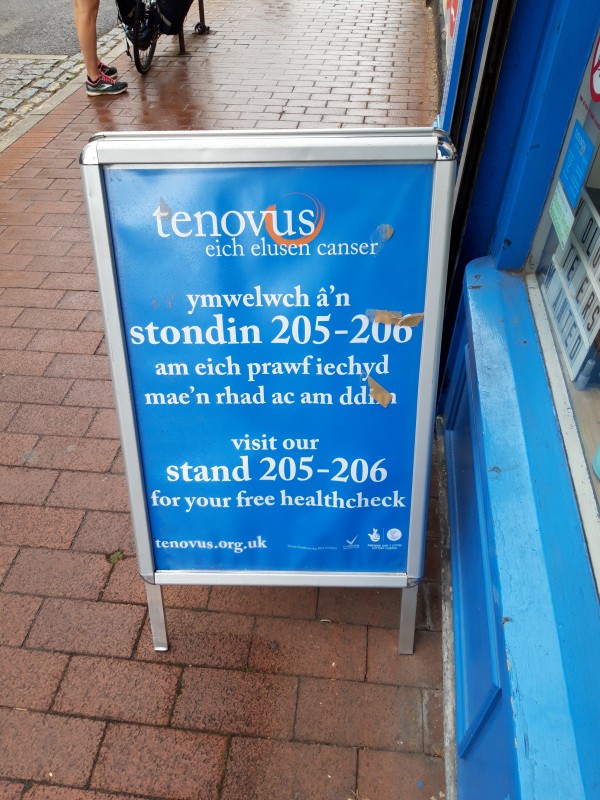
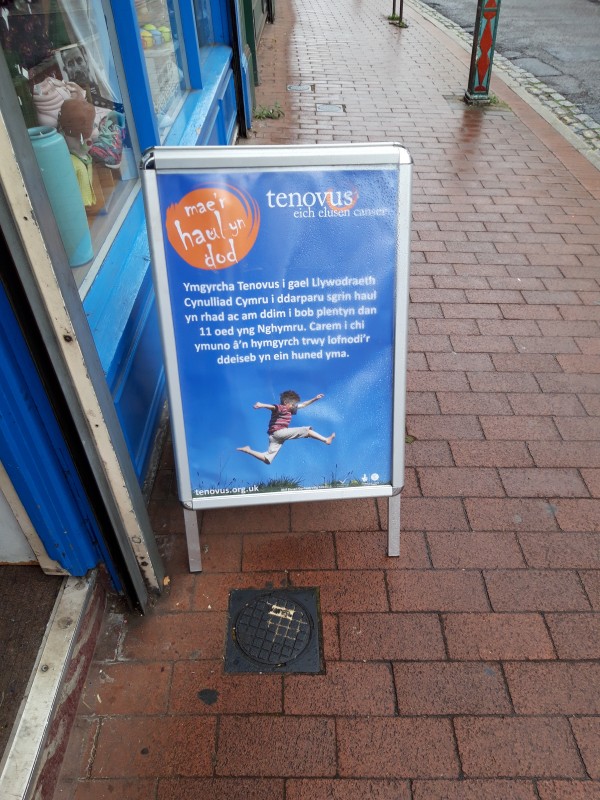
    Bilingual free check-up sign
    Cymraeg /Sais
    Welsh tenovus signage
    Cymraeg yn unig

    This is not the time that Welsh signage has turned up in use to the east of Offa’s Dyke. Back in June a Welsh bilingual road works sign was observed doing splendid work in Coventry, as Wales Online reported.
  • Local trees decide it’s autumn

    According to the Woodland Trust, “Horse chestnuts, with their mahogany-bright conkers, are the very essence of autumn.

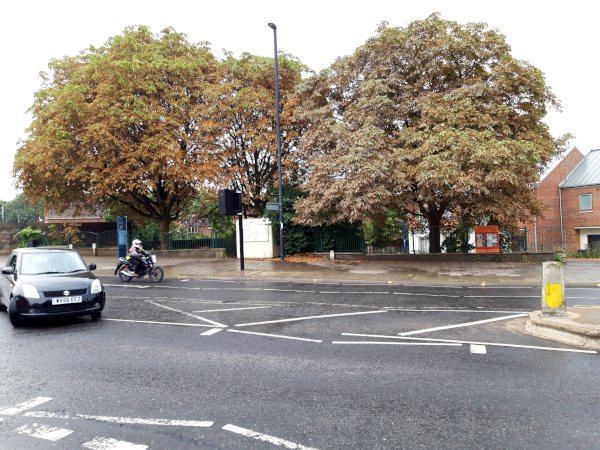
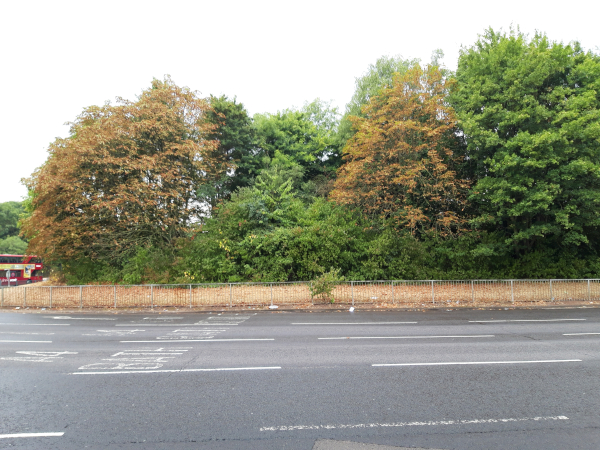
    Here in inner city BS5, the local horse chestnut trees in the centre of Lawrence Hill roundabout and on Lawrence Hill itself have decided that autumn has come already, judging by their dry and brown falling leaves and general frowzy appearance.

    Horse chestnuts in autumn colours on Lawrence Hill roundabout
    Horse chestnuts in autumn colours on Lawrence Hill roundabout
    Ayutumnal horse chestnuts on Lawrence Hill
    Ditto about a hundred metres from the roundabout

    The horse chestnut is native to the Pindus Mountains mixed forests and Balkan mixed forests of south east Europe; it was first introduced to the UK from those areas then under the administration of the Ottoman Turks in the late 16th century, being widely planted in parks, gardens, streets and on village greens.

    The tree gets its English name of horse chestnut from the scars the leaves leave on the twig when they fall, which resembles an inverted horse shoe with nail holes.

    Besides the children’s game of conkers, conkers are also used horse medicines, as additives in shampoos and as a starch substitute. Chemicals extracted from conkers can be used to treat strains and bruises.

    Just like the local hawthorns are an indicator of the approach of spring for your ‘umble scribe (posts passim), the these horse chestnuts fulfil a similar role for the approach of autumn. Below is a Woodland Trust video of the life of a horse chestnut throughout the year.

  • BS5 bees

    Bees are found on every continent except Antarctica; and they’re crucial to life on this planet since they pollinate nearly 75% of the world’s plants, which in turn produce 90% of the food consumed by humanity. Without the aid of bees plant pollination would not occur so easily, plants would die and humans and many other species of life would die out.

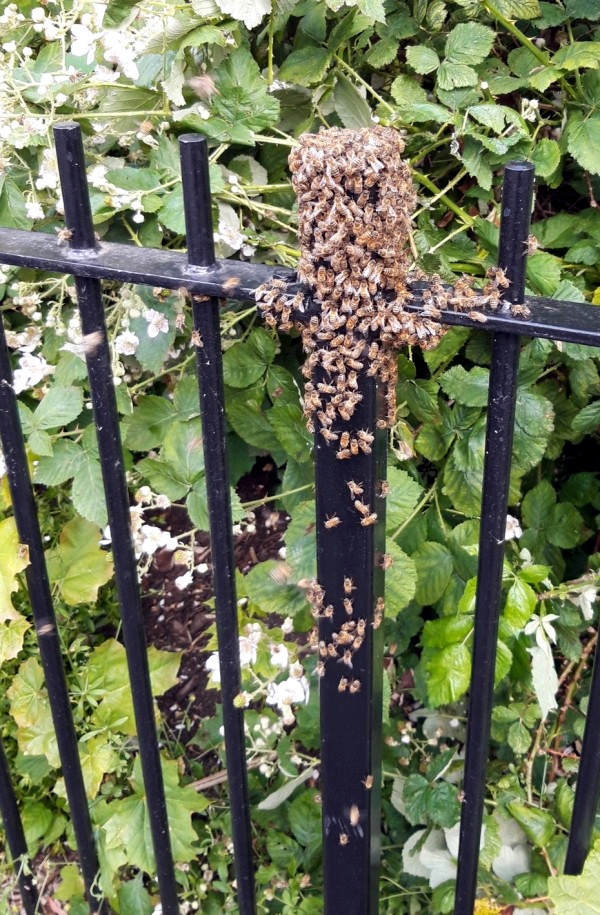
    Generally one only notices bees in the inner city in ones and twos. However, bees establish new colonies by swarms consisting of a queen and legions of workers (her daughters). On Monday your ‘umble scribe spotted this swarm in Chaplin Road in Bristol’s inner city.

    Bee swarm on railings in Chaplin Road, Bristol
    Somewhere in the seething mass is the queen

    A neighbour informed me that a beekeeper was supposed to have turned up the previous evening to deal with them. S/he had evidently paid a visit by beer o’clock when your correspondent ventured forth for a pint.

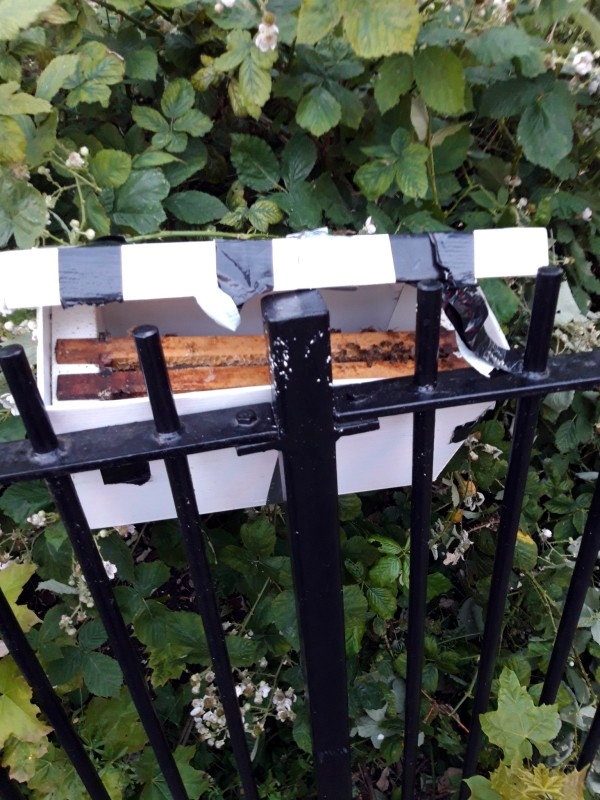
    Note the two hive frames inside the box taped to the railings
    Note the two hive frames inside the box taped to the railings

    The bees have entered the box with the hive frames, presumably after the queen was first located and transferred to the box by the beekeeper.

    Bees have long been renowned for their industry. In Old English (aka Anglo-Saxon Ed.) the eponymous hero of Beowulf has beo (i.e. bee) as the first syllable of his name; when coupled with wulf (i.e wolf, predator), this implies Beowulf was a very busy and ultimately successful hunter. In medieval times, bees themselves were regarded as a potent symbol of chastity in Christianity, whilst in Islam, honey was believed to have spiritual and physical healing powers. These religious and cultural beliefs encouraged beekeeping on a vast scale among landowners and peasants alike.

    Coming up to the 18th century, the English poet, painter and printmaker William Blake wrote the following of bees in his “The Marriage of Heaven and Hell“:
    The busy bee has no time for sorrow.

    And finally on busy bees, from the 18th to the 20th century and the late Arthur Askey.

  • 1977 and all that

    1977 was allegedly a year for celebration as Elizabeth Mountbatten-Windsor had spent 25 years as unelected head of state of the English Empire (which some still call the United Kingdom. Ed.).

    At the time I was in the final year of my degree and well remember derelict buildings in the town centre being draped in bunting in preparation for a drive-by the queen.

    All the sycophancy at that time helped turn your ‘umble scribe into a lifelong republican, i.e. someone who would like to see this country abolish the monarchy and switch to having an elected – not hereditary – head of state. This is not to be confused with a right-wing US political party spelled with an upper case first letter.

    Come right up to date and Elizabeth Mountbatten-Windsor has now been minding the shop for 70 years, a record for the country. However, support for the monarchy is not as widespread or whole-hearted as it was in 1977 and in Scotland support for the monarchy is now down to 45%, as reported by The Guardian.

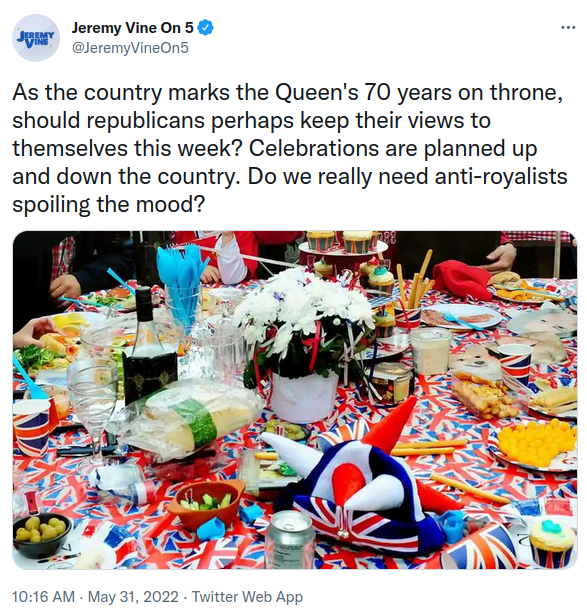
    However, that does not mean that republicans are having an easy ride for their beliefs, which they allegedly have a democratic right to express, as illustrated by the tweet below from the account of the Jeremy Vine show on Channel 5, a low point in daytime TV.

    Tweet reads As the country marks the Queen's 70 years on throne, should republicans perhaps keep their views to themselves this week? Celebrations are planned up and down the country. Do we really need anti-royalists spoiling the mood?

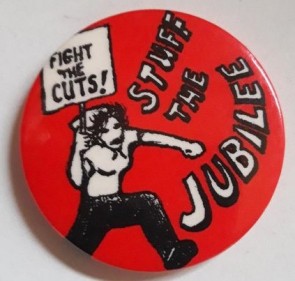
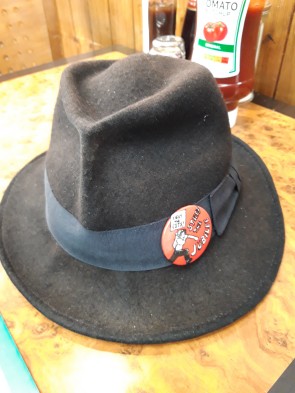
    I have no intention of being quiet. Indeed, yesterday I found the Stuff The Jubilee badge I bought in 1977 and am already wearing it with pride as per the encouragement from my ex-wife.

    Original 1977 Stuff The Jubilee badge Badge on hat

    Your correspondent won’t be the only one in east Bristol not celebrating this momentous non-event. News of three of our local pubs organising a F*ck the Jubilee punk festival has not gone down too well with some sections of the city’s populace.

    At a national level, Republic, the organisation campaigning for the abolition of the monarchy, has organised a petition to make Elizabeth the second the last monarch.

    And finally, now for something completely different…
  • More Bristol borkage

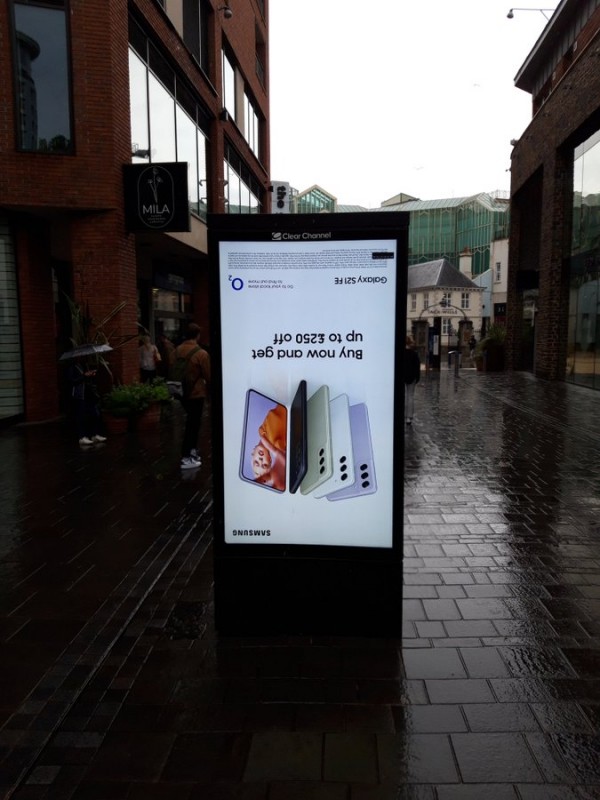
    Yesterday’s trip into Bristol’s Quarter of Mammon (aka the city’s central shopping district consisting of the dire post-war Broadmead centre, Galleries and Carboot Cabot Circus. Ed.) yielded another example of borked technology to add to the collection begun last week on my visit to the City Museum & Art Gallery (posts passim).

    Corporate graffiti, better known as advertising is all-pervasive and intrusive, but there’s no way I’d stand on my heads in the rain to read this bullshit. 😀

    advertisement displayed upside-down in Carboot Circdus
  • Borked in Bristol

    The last time your ‘umble scribe visited Bristol City Museum and Art Gallery was before the first pandemic lockdown over two years ago. There’s always lots to see and the first thing I observed was the major changes to the art exhibits. Local talent features prominently in these, including the 19th century Bristol School of Artists and prominent portrait painter and local lad Sir Thomas Lawrence PRA. Furthermore, the ceramics section has a fine selection of ware from the late 17th and early 18th century Brislington Pottery.

    However, the excellence of local art and crafts was not matched by local artefacts from the period of Roman occupation, being limited to the Thornbury Hoard (although 3,000 Roman coins on display is quite impressive. Ed.), one Samian ware bowl and a solitary drinking vessel, which is pretty poor considering the major influence and changes wrought by the Romans during the three and a half centuries that Britannia was a province of the Roman empire and ample evidence of Roman settlement and economic activity in the area. These include. for example, Abona Roman port at the confluence of the River Trym and Bristol Avon, visible remains of of Roman roads, villa sites, plus the 2 Roman pigs of lead found in 1865 in Wade Street in St Judes whilst excavations were underway on the old bank of the River Frome).

    On the other hand, the museum does have a fine natural history section, especially in respect of extinct fauna – the giant Irish elk skeleton with its antlers spanning a width of 3 metres is most impressive – and fossils and dinosaurs in particular.

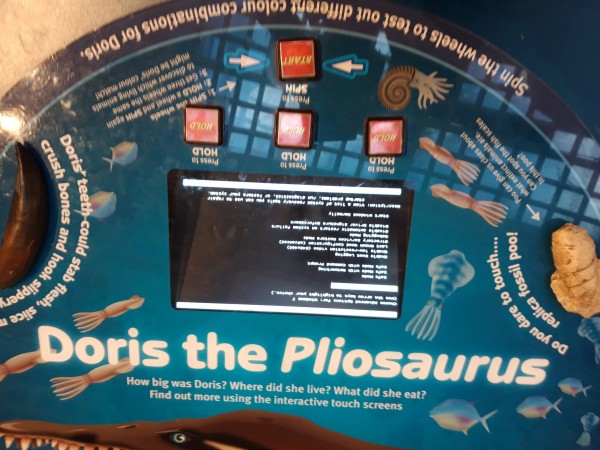
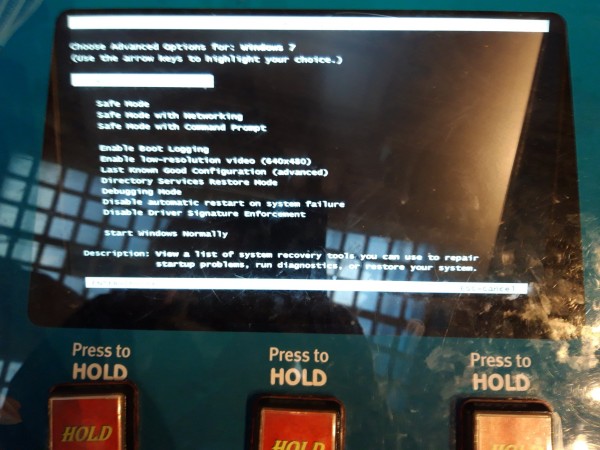
    As is well known, generations of children have displayed a passion for dinosaurs. Bristol City Museum and Art Gallery has catered for this passion by installing interactive displays. Nevertheless, any child currently wishing to learn more of the life and times of Doris the Pliosaurus would have been disappointed at the time of my visit as Doris’ display was – to use a technical term borked.

    Windows 7 not behaving for an interactive museum display Close-up of Windows 7 screen and options

    The bottom picture clearly clearly shows Microsoft’s Windows 7 misbehaving, a not uncommon undocumented feature of the Beast of Redmond’s alleged operating systems.

    If anyone desires to see more borkage in public, your ‘umble scribe would refer such readers to The Register IT news site, which has a dedicated bork section/archive.

  • Colston Four Road disappears

    What a difference a couple of days make.

    Just yesterday this blog reported on the unofficial renaming of Slaver’s Road in Easton, Bristol (posts passim).

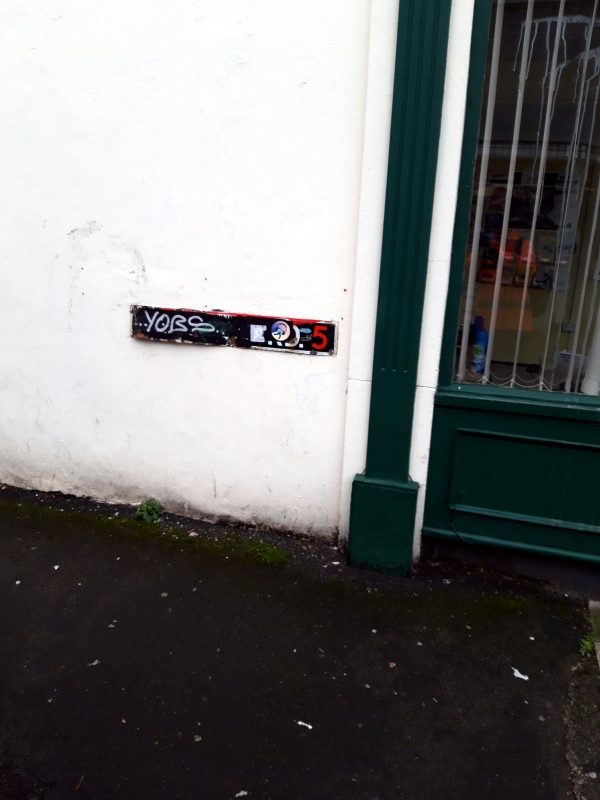
    Today your ‘umble scribe ambled past the end of the road and observed the following where the “Colston Four Road” unofficial street sign had recently been installed.

    Here yesterday. Gone today. Note the screw holes where the unofficial sign was affixed.

    Officially changing a street name is a long, involved process in which an overwhelming majority of the property owners have to agree to a proposed change.

    Changes are much swifter in the unofficial world.

  • Toppled Road renamed

    Nearly half a year ago, your ‘umble scribe reported that Colston Road in Easton, a road named after Bristol-born slave trader, insider share dealer, financier, religious bigot and former Tory MP for the city had been unofficially renamed as Toppled Road (posts passim).

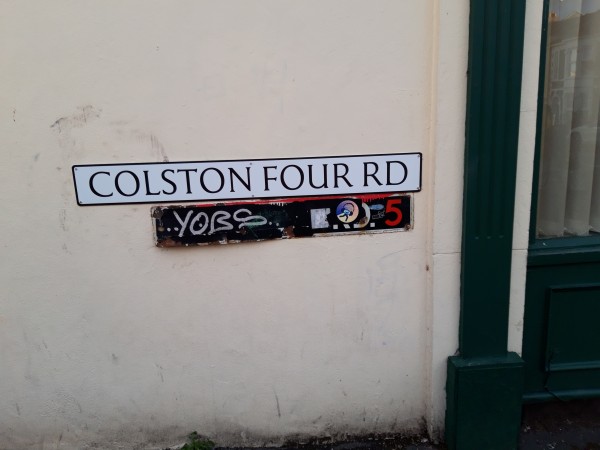
    On the other side of the road from the crudely painted Toppled Street on the side of a house, a new more official-looking street name sign has appeared in recent days.

    Colston Four Road
    The original street name sign is painted out as a token of the regard in which Eddie the Slaver is held locally.

    The new unofficial sign commemorates the acquittal by a Bristol jury of the so-called Colston Four who were tried for criminal damage when Colston’s statue in the centre of the city was brought down and dumped in the city docks during the course of a Black Lives Matter protest on 7 June 2020.

    Local residents have been uneasy for years about living in a street named after a so-called philanthropist who made his money from kidnapping, trafficking and exploiting to death thousands of unwilling Africans and have long campaigned for it to be changed, along with other reminders of the late Victorian Cult of Colston.

    Speaking to Easton councillor Barry Parsons yesterday, your correspondent asked him for an update on how the name change was progressing.

    He responded that the whole matter of street renamings was one of the topics handed over to the We Are Bristol History Commission, which has just recently issued its recommendations in respect of Colston’s statue, backing the general public view it belongs henceforth in a museum.

    However, any words of wisdom from the Commission regarding the fate of Bristol’s street names commemorating Eddie the Slaver have yet to be uttered and it would appear the matter has been (so to say) kicked into the long grass.

    In a final twist, the Bristol Post/Bristol Live is claiming that some of its less perceptive readers are “outraged at the change of name, with some actually believing the new sign has been erected by the city’s perfidious council, even though the sign’s design is clearly different to that used by the local authority, whose standard modern street name signs all include the first 3 characters of the road’s postcode

  • No ifs, no butts

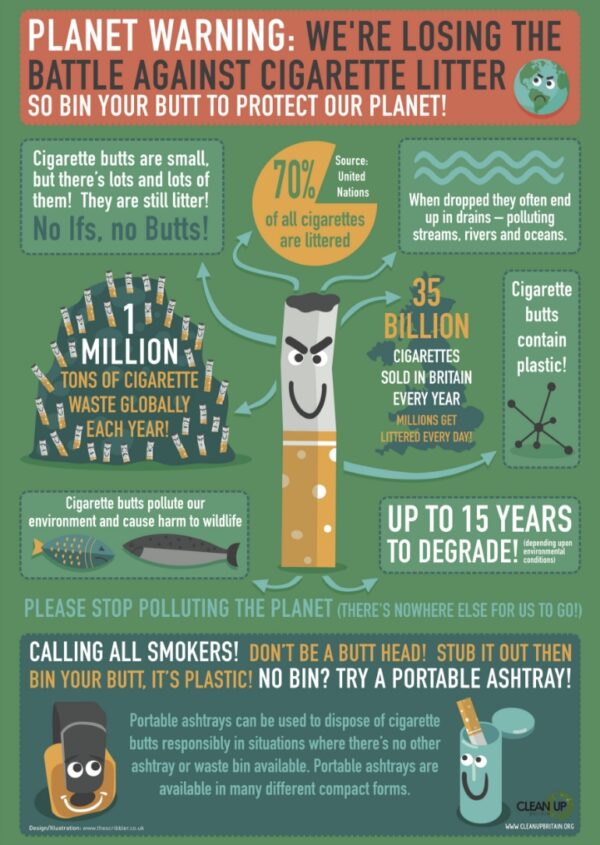
    On 21st January, Clean Up Britain launched the most comprehensive anti-cigarette litter campaign with a pilot in Bristol. Clean Up Britain eventually hopes to extend the pilot campaign to the rest of the country.

    Image courtesy of Clean Up Britain Campaign
    Background

    Anti-cigarette butt littering publicity from Clean Up BritainCigarette butts are the most littered item on the planet. Even in Britain some 27 billion cigarette butts littered in Britain every year. These dropped dog ends allow toxic contaminants to seep into the environment causing significant environmental pollution to watercourses and soil. Moreover, there are now three million e-cigarette users (aka vapers. Ed.) in Britain and e-cigarette waste is also very serious since it produces plastic, nicotine salts, heavy metals, lead, mercury and flammable lithium batteries, again endangering the soil, wildlife and watercourses.

    Clean Up Britain states it will be providing a comprehensive programme of behavioural change interventions in Bristol aimed at reducing cigarette butt littering at its source, by encouraging adult smokers to dispose of their cigarette butts properly. This will include various campaign publicity messages aimed at deterring the casual disposal of smoking waste.

    Your correspondent wonders if this initiative is being undertaken in isolation as there is no mention of it on the newsroom section of the Bristol City Council website or indeed on the wider city council website.

    How well or even whether this programme will work remains to be seen. Your ‘umble scribe will watch developments with interest.

Posts navigation