France: sign of the times
The phrase Liberty, Equality, Fraternity, which is the national motto of both France and Haiti, has changed subtly since the former adopted it formally during the 3rd Republic at the end of the 19th century. 🙂

The phrase Liberty, Equality, Fraternity, which is the national motto of both France and Haiti, has changed subtly since the former adopted it formally during the 3rd Republic at the end of the 19th century. 🙂
One perennial problem in the Easton district of Bristol where I live is fly-tipping, the illegal dumping of waste.

Some areas – such as Stapleton Road (see above picture) – have persistent problems and last night I gave a short presentation at the latest Easton & Lawrence Hill Neighbourhood Forum meeting to try and encourage other residents and those who work in the area to get involved and make Easton a tidier place.
I’m pleased to say I received whole-hearted support from local councillor Marg Hickman, who is equally concerned about the amount of litter on the streets (are fly-tipping and littering related; does one attract the other? Ed.).
Flytipping can be reported online using the council’s dedicated report form. Some people use Twitter to do so too, whilst for those with a smartphone various third party applications are available, such as My Council.
If anyone does draw attention to fly-tipping or litter on Twitter, you might like to add the hashtag #tidybs5. If you live elsewhere in Bristol you might like to adapt the #tidybs* hashtag, replacing the asterisk with the first figure of your postcode.
Yesterday I did learn prior to the Neighbourhood Forum meeting that persistence pays off: via an email from the city council I learnt that several traders on Stapleton Road are or have been served with fixed penalty notices for fly-tipping by enforcement officers. It’s a start, but I get the impression that fly-tipping will be as hard to eradicate as a Hammer horror film vampire.
Bristol will be European Green Capital in 2015. Unless it sorts out fly-tipping and other environmental problems in Easton and the city’s other less prosperous areas (like the plague of flies, dust and other industrial pollution in Avonmouth. Ed.), the accolade should be amended to read European Greenwash Capital.
 The Open Rights Group’s Blocked Project has revealed that nearly 20% of websites are blocked by web filters implemented by UK ISPs.
Those affected involve Porsche broker’s website and a political blogger/mum hoping to read an article about post pregnancy care, yet they still get blocked by filters ostensibly designed to protect young people from adult content (which apparently includes talking about alcohol, smoking, anorexia and hate speech. Ed.), indicating that ISPs are acting as censors and arbiters of what is acceptable content for their subscribers.
The extent of excessive blocking has been revealed by the Open Rights Group’s Blocked project, which is documenting the impact of filters. Web users can use a free checking tool where they can instantly check to see if a website has been blocked by filters. So far, the Open Rights Group has tested over 100,000 sites and found that over 19,000 are blocked by one ISP or another.
One of the blocked sites is the political blog, Guido Fawkes. It’s being blocked by ISP TalkTalk, which puts the latter on a par with the not exactly democratic government of the People’s Republic of China.
ISPs have also been criticised for the lack of information about how to get sites unblocked. Mum-of-one Marielle, said she was “humiliated” when she visited a shop run by mobile operator Three to find out how she could enable access to an article about post-partum care on her phone: “The manager told me that I couldn’t access filtered articles without entering a 4 digit PIN every time I wanted to read a filtered article because I had a PAYG plan” Marielle submitted a report to Three saying that the article had been incorrectly blocked, but didn’t get a response.
Other sites that have been incorrectly blocked by filters include:
www.sherights.com – this feminist rights blog was blocked by TalkTalk in April 2014. Its Editor-in-Chief says that as advertising revenue is generated by the number of site visitors and that being blocked, “directly impacts our bottom line. But, more than that, we are concerned with the message that blocking our site sends: that pro-woman, pro-equality, pro-human rights subject matter is somehow offensive, inappropriate or otherwise problematic.”
www.philipraby.co.uk – Philip Raby, who sells and services Porsches, only found out that his website was blocked by O2 when one of his customers told him. Philip says that it’s difficult to measure the financial impact of being blocked but, “we must have lost some business and, of course, it doesn’t look great telling people the site is not suitable for under 18s!”
Jim Killock, Executive Director of the Open Rights Group stated: “Through the Blocked project we wanted to find out about the impact of web filters. Already, our reports are showing that almost 1 in 5 websites tested are blocked, and that the problem of overblocking seems much bigger than we thought. Different ISPs are blocking different sites and the result is that many people, from businesses to bloggers, are being affected because people can’t access their websites.”
The original impetus for the introduction of filters came from Claire Perry, the Conservative MP for Devizes, a vociferous campaigner for protecting children from adult material. However, she should have been careful what she wished for, as her own website (which features many references to pr0n. Ed.) has also fallen victim to the ISPs’ filters.
Integrate Bristol is a local charity formed to help with the integration of young people and children who hail from other countries and cultures.
In addition, Integrate Bristol campaigns against all forms of violence and abuse against women and girls and promote gender equality; it aims to raise awareness of and promote education around these issues through its creative projects.
One of the forms of abuse Integrate Bristol campaigns against is the practice of female genital mutilation (FGM). Although strictly illegal in the UK, FGM still continues and laws set in place to protect children do not adequately ensure the protection of girls from practising cultures.
The most recent creative project organised by Integrate Bristol is the #useyourhead video. #useyourhead is the title of the song that launches the next part the campaign by Fahma Mohammed and the young people of Integrate Bristol against FGM. This had its première on Thursday 26th June at Bristol’s Counts Louse (otherwise known as City Hall by some. Ed.).
The video was filmed in many locations around Bristol and features some well-known Bristol personalities, such as the gentlemen from my local kebab shop. Also making it through to the final edit are a couple of dubious dance moves from a pair of Bristol’s minor political irritations, but don’t let that put you off enjoying the video. 🙂
If readers have any concerns regarding FGM, they can call the free 24-hour helpline on 0800 028 3550.
For more information about the work of Integrate Bristol, see http://integratebristol.org.uk/about/.
Update 04/07/2014: from @MsMottram on Twitter, news arrives that the video is now featured on the Cosmopolitan website, where it’s described as “our tune of the summer so far“.
According to a couple of my Twitter contacts, West Midlands Police are currently looking at their interpreting contract with Capita Translation & Interpreting, a name not unfamiliar this blog.
The first indication of this came yesterday from Agata McCrindle.
West Mids Police are reviewing their interpreting contract. Officers completing questionnaires. Sgt I spoke to said no improvement in 2 yrs.
— Agata McCrindle (@polish_linguist) June 26, 2014
This was followed later by Geoffrey Buckingham, Chairman of the Association of Police & Court Interpreters (ACPI).
If @WMPolice dump the @Capita_ti contract, will a proper service resume? Will #proterps trust them?
— Geoffrey (@Geoffrey_M_B) June 27, 2014
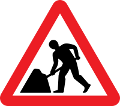 According to yesterday’s online edition of the Bristol Post, the Department of Transport is to invest the princely sum of £168 – the largest amount it has spent on tarmac for four decades – in England’s road network.
Of this total, the amount earmarked for local authorities in the Bristol area swells magically to more than £2 mn., according to a this piece by an unidentified Post hack.
The second paragraph of the report reads as follows:
The handout from a £168 funding pot which will see more than £3 million potholes filled is part of what is being billed as “the biggest investment in roads since the 1970s”.
For those who prefer their information unmangled by the illiterates of the local media, the original Department of Transport press release is available here.
A quick search of the local media reveals that every week courts all over England and Wales are having difficulty booking interpreters when they need them since Capita T&I gained the contract for providing them for the Ministry of Justice.
On Tuesday The Bolton News reported that a suspected cannabis farmer had to have his court hearing adjourned because his Vietnamese interpreter did not attend.
The defendant, Hiep Thai, was remanded in custody by Bolton Magistrates Court.
Meanwhile in Swansea Crown Court, four Latvian defendants were unable to enter pleas in a case concerning an alleged kidnapping and assault in Carmarthen, according to the Carmarthen Journal on Wednesday.
The defendants were unable to enter any pleas because the court had been unable to arrange for a Latvian interpreter to be present.
Judge Peter Heywood ordered the 4 defendants to return to Swansea Crown Court on 5th September (will Crapita be able to arrange an interpreter at such short notice? Ed.) for their next hearing, when they will be asked to enter pleas. In addition, the court was informed that a Latvian, Polish and a Bulgarian interpreter would probably be required for the trial to take place.
One defendant, Juris Udrins, remains on remand in Swansea Prison, whilst the other 3 – Aleksandrs Turcans, Armands Nikiferovs and Guntis Goldins were bailed.
Earlier today barrister Charles MacLean Cochand tweeted the following from Dorchester Crown Court:
@Barristerblog – Dorchester crown day two no interpreter. Judge finds Capita in breach. Awaiting court fd interpreter. Arrive 1400
— Chas MacLean Cochand (@ChasCochand) June 10, 2014
It is understood that the replacement Portuguese interpreter booked via Crapita is travelling to Dorchester from Nottingham, a round trip of over 400 miles. This interpreter is due to arrive at 2.00 pm, according to Mr Cochand.
Today’s online version of the Bristol Post carried a piece with a real howler of a typo in its headline, as shown by the following screenshot.

After reading the headline, I was uncertain as to whether our councillors are below the minimum age or ‘earn’ less than the minimum wage for their services.
The typographical error in the headline has since been corrected.
By equating the councillor’s allowance with a wage or salary, the Post is making yet another juvenile error. Elected members of the City Council receive allowances in recognition of the time, work and costs involved in allegedly representing the people of Bristol; a wage is defined by Collins English Dictionary as a “payment in return for work or services, esp[ecially] that made to workmen on a daily, hourly, weekly, or piece-work basis.”
Furthermore, yesterday the Post lifted this story from The Guardian about probable nuclear targets in the UK in the 1970s and completely misinterpreted the map (PDF) produced by The Guardian to accompany the piece, which clearly shows Bristol as a probable nuclear target, one of 106 around the UK. Instead the Post confidently proclaimed in its story that “Bristol was not thought to be important enough to be a target for Soviet missiles, according to government papers made public yesterday”.
Fellow local blogger Stockwood Pete commented this was “Horribly inaccurate reporting even by the Post’s low standards.”
One has to wonder if quality control is beyond the abilities of the Bristol Post.
Q: what has the EU ever done for us?
A: helped promote free and open source software!
 Several universities and companies are working collaboratively in the Ossmeter research project on a platform for evaluating and comparing open source software. The European Union is funding Ossmeter’s development to the tune of €2.6 mn. (out of total project costs of €3.4 mn. Ed.) and the software that is ultimately developed will be made available online as a free service and released as free software so it can also be deployed as an in-house quality management tool.
The aim of the project is to reduce the costs of evaluating open source software. Collecting information from associated communication channels such as newsgroups, forums and mailing lists to identify whether user questions are answered in a timely and satisfactory manner, and to estimate the number of experts and users of the software are equally as important as the researchers’ objective, as is a comparison of several open source projects with regard to usage. The platform’s capability will be tested in three use cases.
Ossmeter is being developed by nine European research and industry organisations:
The Open Group is the over-all coordinator and the University of York provides the technical coordination.
For more information on Ossmeter, read Joinup’s original post.