Media

  • Old Corruption and young Alexander

    Part-time alleged prime minister Alexander Boris de Pfeffel Johnson
    Never trust a man who combs his hair with a balloon
    Corruption and the part-time alleged prime minister of the English Empire (which some still call the United Kingdom. Ed.), one Alexander Boris de Pfeffel Johnson, are often closely entwined.

    Disregarding the current crowdfunded litigation against the government's awarding of PPE and other contracts during the pandemic, which was frequently characterised as less than transparent and evidence of a chumocracy, due to the frequent involvement of Tory party donors, I am reliably informed by Keith Flett’s blog that Johnson and his third bride Carrie Symonds recently spent a mini-honeymoon at Chequers, the grace and favour country house in Buckinghamshire provided at public expense for the use of prime ministers, alleged, part-time or other.

    Keith Flett’s blog post also comes with the interest fact that William Cobbett, the pamphleteer, journalist, Member of Parliament and farmer, referred to such sinecures as Chequers as the “Old Corruption“.

    Further delving into the topic of the Old Corruption took me to the website of St Stephen’s Chapel in Westminster, which reveals that, before the 1832 Reform Act, the “Old Corruption was a system by which the elite benefited from selling of offices, sinecures (jobs which paid a salary for little or no work) and pensions. Patrons also influenced the small electorate, often through monetary incentives, to secure election for their friends and allies to parliament“.

    However, the sale of offices and other abuses did not entirely die out after the enactment of the so-called “Great” Reform Act of 1832.

    Honours continued to be sold throughout the Victorian era, culminating in the actions of David Lloyd George when Prime Minister. Lloyd George made the practice of selling honours more systematic and more brazen, charging £10,000 for a knighthood, £30,000 for baronetcy and £50,000 upwards for a peerage, and by so doing prompting the Honours (Prevention of Abuses) Act 1925. Furthermore, practically every single prime minister since has repaid favours with honours such as a seat in the House of Lords, knighthood or such like.

    More evidence of corruption, neither ancient nor modern, but extremely blatant, emerged this past week and once again involved a certain Alexander Boris de Pfeffel Johnson, the other members of the cast being one Peter Cruddas, billionaire, and the House of Lords Appointments Commission.

    In December 2020, it was announced that Cruddas, a former Tory Party treasurer, would be made a life peerage after a nomination Johnson, despite the contrary advice of the House of Lords Appointments Commission.

    As reported by the Mirror, a few days later Cruddas made a donation of half a million pounds to the Tory Party.

    The Old Corruption is perhaps not so old at all, but surprisingly contemporary

  • Weston’s water problem

    Bristol Live, formerly the Bristol (Evening) Post, aka the Temple Way Ministry of Truth, has an enduring reputation locally for the poor quality of some of its reporting.

    The reputation was not diminished earlier this week with a report from the paper’s North Somerset correspondent on the temporary closure for improvements of the Water Adventure & Play Park, a facility managed by Weston-super-Mare Town Council.

    The report gets off to a bad start with the headline boldly and falsely proclaiming Popular Weston-super-Mare seafront water park to close this month, making it sound as if the attraction is to close permanently, not temporarily.

    Note too the use of popular, a term normally reserved by Bristol Live for failing cafés and restaurants.

    However, the real howler in the piece occurs in the obligatory quotation from a Town Council spokesperson. In his second sentence he is quoted as saying:

    We apologise for the incontinence and look forward to welcoming you back with new improvements ready for the summer holidays.

    Whether the specified incontinence originated from any communication from the council, erroneous predictive text or any other source is unclear. Nevertheless, earlier in the piece readers are informed that “the water has remained off due to covid [sic] guidelines“, so the origin of any incontinence is unclear.

    When the facility reopens, we are informed that the cost of admission is £2.50 per child.

    In view of the purported incontinence, perhaps that ought to be raised to a Tena. 😉

  • Jetty mutates into slipway during Channel crossing

    Walruses are rare visitors to British waters and even rarer ones to waters further south. Hence there has been unprecedented press interest in the travels of one in the western Atlantic, since nicknamed Wally.

    Wally was first spotted in Ireland on 15th March, before making his way to Tenby in west Wales.

    His further travels then saw him making an appearance in Cornwall, before turning up in the last week in the western French seaside town of Les Sables d’Olonne, as reported by France Bleu.

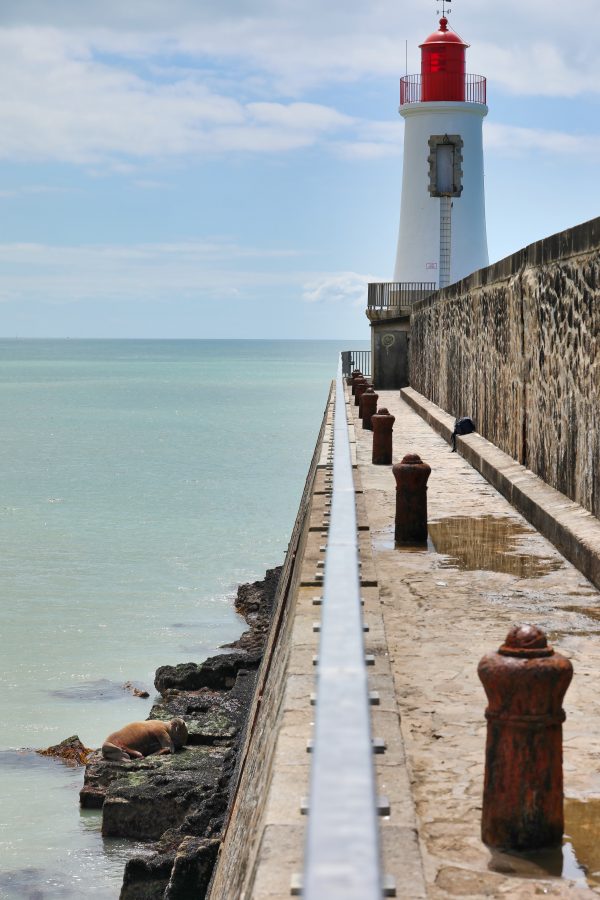
    Wally the walrus at foot of jetty in Les Sables d'Olonne
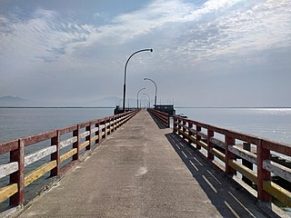
    Wally the walrus at the foot of the jetty at Les Sables d’Olonne. Not the bollards for mooring vessels. Photo courtesy of Commune des Sables d’Olonne

    Walruses are not regular visitors to the waters of western France, preferring the colder waters of more northerly latitudes.

    Indeed, France Bleu quotes Olivier Van Caennait, from the Pelagis Observatory at the University of La Rochelle, who stated:

    Às far as I’m aware, this is only the third sighted in France! The first was in 1986 in Les Landes and the second in 1996 at Oléron“.

    As with everywhere else Wally has visited, the French authorities have advised that people rein in their curiosity and stay at least 50 metres away from the walrus at all times.

    With his having spent time in west Wales, Wally’s arrival on France’s western seaboard naturally attracted the attention of WalesOnline, who managed to introduce a sly dig at those beastly French for injuring one of God’s creatures (something the Brits would never do! Ed.).

    Besides the chauvinism, the WalesOnline reporter managed to achieve a miraculous mutation in maritime infrastructure when shipping the story from western France to south Wales.

    France Bleu reported that the walrus had taken a few hours’ break on “rochers au pied de la jetée de l’entrée du port“, i.e. on rocks at the foot of the port’s entry jetty.

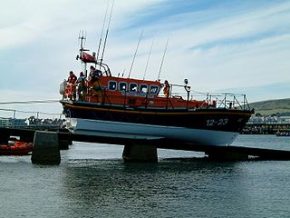
    By the time the story was posted online by WalesOnline, the port’s entry jetty had inexplicably mutated in one photo caption into a slipway. The newsroom staff clearly don’t know the difference between a jetty and a slipway, so here’s a handy photo reference for future use.

    Swanage lifeboat on slipway
    Slipway in Swanage
    Jetty at Cox's Bazaar, Bangladesh
    Jetty in Cox’s Bazaar, Bangladesh

    I have, however, given up on trying to work out what is meant by “riprap of a dike” in the WalesOnline report, but have a suspicion it might refer to a revetment. If you can abolish my ignorance, please do so in the comments below.

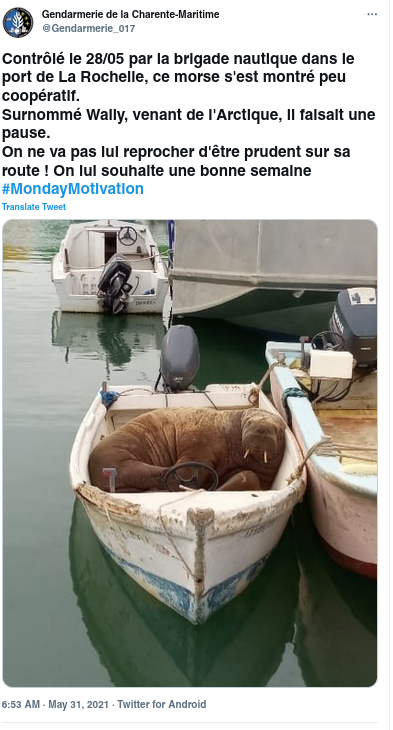
    Update 1 6/06/21: Whilst sojourning off the western French coast, Wally also visited La Rochelle, where he came to the attention of the local forces of law and order, with whom he proved “peu coopératif“.

    French gendarmerie tweet with photo showing walrus asleep in boat.

    Update 2 6/06/21: Wales Online now reports that Wally has been sighted off Spain’s Basque coast.

  • Printed manuals available for LibreOffice 7

    The Document Foundation (TDF) blog reports today that users of the TDF’s free and open source LibreOffice suite can now acquire hard copies of guides to the various modules in version 7.* of the suite (Writer, Calc, Impress, Math and Base) as well as a general Getting Started Guide.

    These new guides are full of tips, tricks and tutorials to help users get the best out of the whole office suite.

    Cover image of LibreOffice Getting Started Guide

    The guides are already available for download in both PDF and ODT versions.

    There will nevertheless always be people who appreciate hard copies of manuals, so the LibreOffice Documentation community has joined forces with online bookshop Lulu (which was started by Red Hat co-founder Bob Young) made these available guides. The guides will be printed on demand in various locations and be shipped to anywhere in the world.

    Pricing for the UK is shown as £10 per guide. Lulu also provide guides for earlier versions of LibreOffice.

  • Tree catches train?

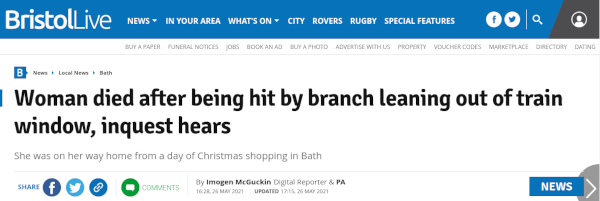
    One of the joys of reading the Bristol Post/BristolLive website is their hidden exclusives – the ones that are really newsworthy, but are buried in other pieces, such as in this example from Wednesday.

    Headline reads Woman died after being hit by branch leaning out of train window, inquest hears

    The flippant side of me wants to ask the journalist about the circumstantial details implied by the headline. What was a tree doing on the train in the first place? What kind of ticket was it sold? Where was it travelling from and to? Did it pay full price for the ticket or was it a railcard holder? Did it buy anything from the buffet during its journey? And ultimately why did it feel the need to stick a branch out of the window when the train was travelling at 75 mph, particularly as it resulted in a person’s death?

    The tragic story of a life cut short by a moment’s carelessness has been turned upside down by sloppy headline writing, which implies that part of the tree was poking out of a train window was the cause of death, rather than the deceased being careless, leaning out of a train window being struck by lineside vegetation.

    However, despite my flippancy above, I do realise and appreciate that it must be very distressing to the victim’s friends and family to have the read the circumstances of the incident so misrepresented by someone allegedly supposed to be working for an organ whic is supposed a trusted source of local news.

    As the victim came from Penarth, WalesOnline, the Reach plc’s South Wales equivalent of BristolLive, has also carried the story, but with a clear and unambiguous headline.

    Please take note, servants of the Bristol’s Temple Way Ministry of Truth.

  • Irish Sea tunnel: a distant problem

    One phrase that has come to prominence is recent years is dead cat strategy, or dead cat for short.

    This term denotes the introduction of a dramatic, shocking, or sensationalist topic to divert discourse away from a more damaging topic, according to Wikipedia.

    Which brings us to this week, which although we’ve only got as far as Wednesday has so far furnished two deceased felines ahead of the appearance of former Downing Street polecat Dominic Cummings before the combined Commons health and science and technology select committees: firstly, the announcement of part-time alleged Prime Minister Boris Alexander de Pfeffel Johnson’s forthcoming third marriage; and secondly the proposed Holyhead to Dublin road tunnel.

    Grant Shapps alias Michael Green, Sebastian Fox and Corinne StockwoodThe latter attracted my interest as the Department for Transport (DfT) is currently under the stewardship of that well-known latter-day spiv, Grant Shapps, alias Michael Green, Sebastian Fox and Corinne Stockwood (posts passim).
    Anyway, let’s examine the anatomy of the DfT’s defunct domestic pet.

    In an interview with the Financial Times, Shapps suggested a 50-mile tunnel between Wales and Ireland as an alternative to PM Johnson’s scheme for a bridge to link Scotland with Northern Ireland, another announcement of the dead feline variety made in March. Shapps’ tunnel could run between Holyhead to Dublin and had been previously been priced at £15bn. This Holyhead-Dublin link would ostensibly be twice as long as the Channel Tunnel, according to the Daily Brexit (which some still call the Express. Ed.).

    Distances seem to be a major problem for the combined intellectual might of the civil servants in the DfT and the massed ranks of the country’s free and fearless press.

    Firstly, the Channel Tunnel is 31.35 miles (50.45 km) long, so the Shapps Chute would be under twice the length of the Tunnel sous la Manche.

    Secondly, there is the very minor matter that the straight line distance between Holyhead and Dublin is 67.5 miles (108.6 km). This means one end of the tunnel would terminate several miles out in the Irish Sea.

    I wonder what lengths the feasibility study currently reported as being underway has taken this minor matter into account.

  • Another confusing headline

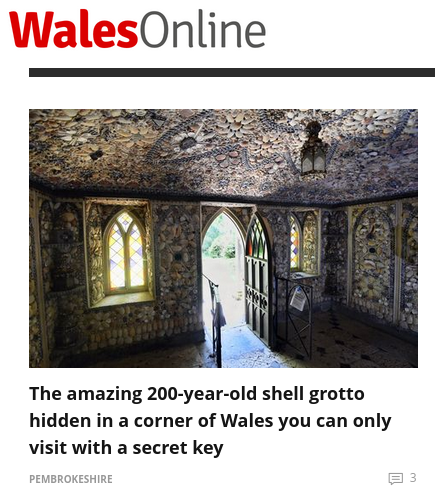
    Today the WalesOnline website features a textbook example of an ambiguous headline, i.e one that has or expresses more than one possible meaning.

    Ambiguity in a headline – or anywhere else in a piece of factual reporting – is not an example of good writing style.

    A headline should be clear, convey sufficient information to interest or pique the curiosity the (potential) reader and not be capable of being misinterpreted.

    Headline reads The amazing 200-year-old shell grotto hidden in a corner of Wales you can only visit with a secret key

    WalesOnline is part of the Reach plc* stable of regional press titles.

    Reach titles have past form with ambiguous headlines (posts passim).

    One would almost think it’s written into the group’s style guide (if it has one. Ed.).

    * The Reach stable also includes the national titles, the Daily Mirror and Daily Brexit (which some still call the Express. Ed.)

  • American Express? That won’t do nicely!

    Yesterday the Information Commissioner’s Office (ICO) reported that it had fined American Express Services Europe Ltd. (Amex) £90,000 for sending four million unlawful, unsolicited marketing emails.

    Tin of SpamIT news site The Register has done some number crunching and worked out that the fine imposed by the ICO is equivalent to 0.021p per offending email or 0.009 per cent of Amex’s annual profits.

    The regulator instigated investigations after receiving complaints from American Express customers who had specifically opted out of receiving marketing information. During its investigation the ICO found that American Express had sent over 50 million so-called “servicing emails” to customers (which anyone sensible would call spam. Ed.). The ICO revealed that between 1st June 2018 and 21st May 2019, over 4 million of those emails were marketing emails, designed to encourage customers to make purchases on their cards, thus benefiting the company financially.

    Andy Curry, the ICO’s Head of Investigations said:

    This is a clear example of a company getting it wrong and now facing the reputational consequences of that error.
    The emails in question all clearly contained marketing material, as they sought to persuade and encourage customers to use their card to make purchases. Amex’s arguments, which included, that customers would be disadvantaged if they weren’t aware of campaigns, and that the emails were a requirement of its Credit Agreements with customers, were groundless.
    Our investigation was initiated from just a handful of complaints from customers, tired of being interrupted with emails they did not want to receive. I would encourage all companies to revisit their procedures and familiarise themselves with the differences between a service email and a marketing email, and ensure their email communications with customers are compliant with the law.
  • Le Petit Robert: covid is masculine

    Image of Petit RobertFrancoinfo reports that Le Petit Robert, a popular single-volume French dictionary, reckons that “usage is law” and considers that the word “covid” is used as a masculine noun in the majority of French-speaking countries.

    In its 2022 edition, Le Petit Robert, one of the two major commercial dictionaries in France (the other being Larousse. Ed.), reckons the word “covid” is written with a lower case first letter and is also masculine.

    To designate the viral disease which has spread throughout the world, Robert distinguishes the generic term “covid“, as in the example “suspected covid“, and the specific one of “Covid-19” with a capital letter. Robert’s definition of “covid” is: “Infectious and contagious disease caused by a coronavirus”.

    Its competitor Larousse consistently uses a capital first letter, i.e. “COVID-19” or “Covid-19“.

    Doubts about gender

    Covid-19 is an acronym created in English by the International Committee on Taxonomy of Viruses (ICTV) and adopted by the World Health Organisation (WHO) in February 2020. It means 2019 coronavirus disease.

    Its gender has been the subject of doubts in French. For Le Petit Robert, it is “masculine or feminine“, but more often masculine, whereas for Larousse, it is “feminine or masculine“: more correct as feminine, but masculine for many speakers.

    When introducing its 2022 edition of the dictionary, Le Petit Robert reckons that “it is usage that dictates the law. If the feminine is adopted in French-speaking Canada, the masculine is currently used by the majority in France where the opinion of the Académie Française (the principal French council for matters pertaining to the French language. Ed.) has been late in coming, whilst the masculine was already well established”.

    Rush of words linked to the pandemic

    Le Petit Robert has added several words linked to the pandemic, some of which are very current in today’s language, such as “déconfinement” (end(ing) or lifting of lockdown), and rarer ones such as “aérosolisation” (“airborne diffusion of fine particles by aerosol”).

    French is not the only language to have experienced a surge of neologisms linked to the pandemic. German broadcaster Deutsche Welle reports that 1,200 new German terms have been inspired by this global health crisis.

  • Twitter: a correction

    The media and social media today are awash with the result of yesterday’s Hartlepool by-election which was surprisingly won from Labour by the Tories*.

    However, some of the language being used to describe the victory is prone to error, such as the example below from Twitter’s trending topics.

    Screenshot from Twitter trends showing the Conservative MP described as an MP instead of a candidate

    As the winning Tory was not the sitting MP, the correct way to describe her is as a candidate, not an MP. She only becomes an MP upon winning a parliamentary (by-)election.

    In times past such a basic error would have been picked by a sub-editor or similar, but they were all dispensed with some years ago. 🙁

    *= Hartlepool hasn’t had a Tory Member of Parliament since it was represented in Westminster by Peter Mandelson. 😉

Posts navigation