tech

  • Fedora Project wants to ban CC0 licence for software

    The CC0 Creative Commons licence exempts work form copyright claims, but does not exclude patent claims; and this presents a problem for free and open source software, as German IT news site heise reports.

    Fedora logoThe Fedora Project would like to remove the Creative Commons Zero (CC0) licence from the list of permitted software licences, as Richard Fontata from the Fedora Legal Documentation Team wrote in a post to the Fedora mailing list. The reason for the change is that the Fedora Project has agreed that software under a licence which does not exclude patent claims cannot be regarded as free and open source software (FOSS).

    Public Domain logoThe Creative Commons Zero (CC0 1.0) licence is the most liberal Creative Commons licence. It places works in the public domain, with the copyright holder waiving all copyright and related rights worldwide insofar as this is legally possible. However, the patent or trade mark rights of any party are specifically not affected by CC0, so it is thus possible to place works subject to patent rights under CC0.

    Patents against open source

    In the 2000s various companies, including Microsoft, have attempted to asset patent claims against Linux and open source software. The Open Invention Network (OIN), whose members mutually waive all patent claims against one another, came into existence as a response to these moves.

    Furthermore, in the open source world, there is the risk that companies could release code which is protected by that company’s own patents. If other developers use this code, they are unwittingly exposed to the risk of patent lawsuits. There is therefore widespread agreement in the FOSS world that open source licences must explicitly exclude the possibility of patent claims by the author*.

    In its permitted licences list the Fedora Project distinguishes between licences for software, content, documentation and fonts. CC0, which was previously listed as a permitted licence for software and content, will in future only be allowed for content. According to Fontana, it still has to be clarified whether any program packages will be affected by this change.

    *= for intellectual property purposes software is regarded as a work of literature.

  • Dorries goes to war – again and again and…

    In the beginning was World War One (1914-18), then World War 2 (1939-45).

    There have been various conflicts since 1945, but none has qualified being counted as a World War (note capitalisation) and their number has remained stuck firmly on two.

    Until today.

    Step forward one Nadine Vanessa Dorries, inexplicably elevated way beyond her subterranean ignorance threshold to serve as Secretary of State for Digital, Culture, Media and Sport, concerning whose appointment former Tory Party chairman Chris Patten is on record as saying: “And nobody should ever see the words ‘Nadine Dorries’ and ‘culture secretary’ in the same sentence”.

    Following yesterday’s humiliating by-election defeats in Tiverton & Honiton and Wakefield, Nadine fearlessly took to social media as cheerleader in chief for the Cult of the Boris, tweeting the following.

    Tweet reads This gov will remain relentlessly focused and continue to deliver for people during a post pandemic mid-war, global cost of living challenge which no Prime Minister or gov has faced the likes of since WW11

    World War 11?

    That’s nine more than are acknowledged by the generally accepted historical record.

    Whether Nadine was tweeting under the influence of digital dyslexia, innumeracy or something psychoactive has yet to come to light, but remember that part of Nadine’s brief is matters digital and the above tweet shows she cannot even use a mobile phone app – an iPhone Twitter client – competently, which bodes ill for this country.

  • Good riddance, Internet Explorer

    Internet Explorer logoTwo days ago (and not before time. Ed.) Microsoft ended support for Internet Explorer (IE) 11, the final version release of its web browser first introduced in 1994.

    Over the years, Microsoft has been steering Windows users away from IE and towards Edge, its newer browser which is based upon the free and open source Chromium browser.

    However, for those that still use sites and or pages that exploit the standards-ignoring qualities of IE, Edge does have an IE compatibility mode.

    IE’s inability to adhere to standards had in the past created lots of extra work for web developers who had to code work-arounds for IE just to get their pages to work in what was then the world’s most popular browser. It was the world’s largest browser mainly due to Microsoft bundling IE with its Windows operating system and integrating it deeply into the structure of the OS. This led to lots of angry comments in the code of webpages and style sheets, frequently employing intemperate language.

    Media – and social media – reactions to and reports of the news have been mixed. Business Matters on the BBC World Service got all misty-eyed and nostalgic earlier in the week. However, my favourite response to date is from the Twitter user known as beConjuror, drawing attention to the ‘not responding‘ feature of many of Microsoft’s fine products.

    Tweet reads Internet Explorer is NOT responding
  • Prying Google is not your friend

    The Irish Council for Civil Liberties (ICCL) is pointing its finger at Google for spying on users, French IT news website Le Monde Informatique reports. A real-time bidding (RTB) system which is actively used by the company enables it to follow and share what everyone is looking at or doing online and note down this activity’s location. RTB is the technology underpinning all online advertising and it relies on sharing of personal information without user consent, according to the ICCL.

    Google’s troubles are far from over. Widely singled out for its actions in terms of the use of personal data, the company is now in the spotlight for its tracking and advertising targeting activity. A report (PDF) published by the ICCL on 16 May accuses the search giant of an unprecedented data breach. The report sheds light on the RTB system, which works in the background on websites and in applications. “It tracks what you are looking at, no matter how private or sensitive, and it records where you go. Every day it broadcasts this data about you to a host of companies continuously, enabling them to profile you,” the report states.

    The ICCL report claims it presents the scale of this data breach for the first time.

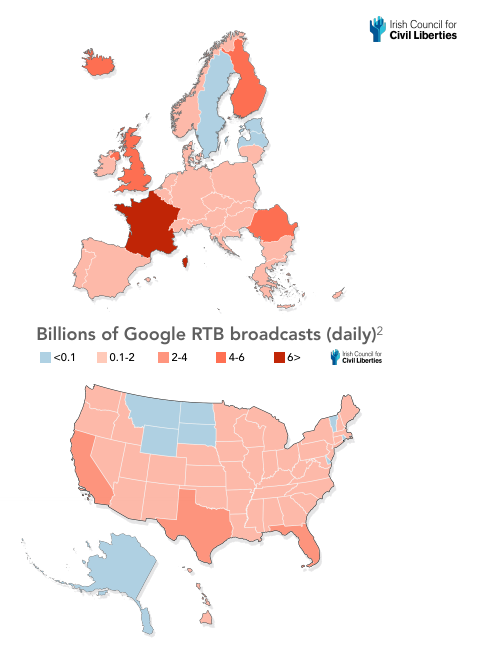
    This data breach takes place throughout the world. The RTB system “tracks and shares what users are viewing online with their location in real time 294 bn. times in the USA and 197 bn. times in Europe each day”, it states. On average a person in the USA has their online activity and location tracked 747 times a day by those using RTB. In Europe, RTB exposes personal data 376 times a day. In Germany alone, Google sends 19.6 million broadcasts about German Internet users’ online behaviour every minute that they are online. “Europeans and U.S. Internet users’ private data is sent to firms across the globe, including to Russia and China, without any means of controlling what is then done with the data”. It is a high-earning business generating more than $117 bn. in the USA and Europe in 2021.

    Maps of Europe and USA showing billions of daily Google RTB broadcasts

    Advertising is an indispensable condition of this system as the majority of advertising on websites and in applications is placed there using RTB. Advertisers spend $100 bn. annually in the USA and Europe. The RTB market’s estimated value was $91 bn. in the USA in 2021 and €23 bn. in Europe in 2019. It therefore highlights that Americans’ online activity and their locations is exposed 57% more frequently than that of users in Europe.

    Google is one of the five largest users of this real-time bidding system. No fewer than 4,698 US companies are authorised by Google to receive RTB data on people, whilst in Europe the number drops to 1,058 companies. More specifically, the data collected by Google, like what people are looking at online or doing with an application and their ‘hyperlocal‘ geographical location is broadcast 42 bn. times per day in Europe and 31 bn. times daily in the USA.

    The ICCL is working to end the RTB data breach in Europe and has litigation ongoing in three European courts, as follows:

  • More Bristol borkage

    Yesterday’s trip into Bristol’s Quarter of Mammon (aka the city’s central shopping district consisting of the dire post-war Broadmead centre, Galleries and Carboot Cabot Circus. Ed.) yielded another example of borked technology to add to the collection begun last week on my visit to the City Museum & Art Gallery (posts passim).

    Corporate graffiti, better known as advertising is all-pervasive and intrusive, but there’s no way I’d stand on my heads in the rain to read this bullshit. 😀

    advertisement displayed upside-down in Carboot Circdus
  • Research reveals websites collecting information without consent

    online spying imageToday’s Journal du Geek reports that some unscrupulous websites do not clutter up their webpages with a Submit button when visitors are filling in a form.

    If you have already filled in a web form before changing your mind, your data has doubtless been sucked up by an unscrupulous website. In a recent study carried out by researchers from 3 European universities, which will be presented at the Usenix Security conference in August, we learn that some platforms are capable of spying on every character typed on a keyboard.

    By analysing 2.8 mn. webpages on the world’s 100,000 most visited websites, the research’s assessment is definitive: in the case of a web form filled completed in Europe, nearly 2,000 of them are capable of collecting the user’s email address before that user has clicked the Send button. One of the joint authors Güne Acar of Radboud University in Nijmegen states: “We were very surprised by the results. We thought we might find a few hundred sites where your email address is collected before you send it, but the result far exceeded our expectations”.

    However, the situation in Europe remains better than that in the United States. Whereas the old continent recorded “only” 1844 cases of abusive data sucking, the same request, when sent from the United States triggered 60% more instances, for a total of 2,950 cases, a difference which can be explained in particular by the presence in Europe of the GDPR , which since 2018 has obliged platforms to obtain users’ consent before collecting data..

    How do websites record one’s data without consent?

    For all practical purposes the majority of sites collecting data before submission forwards email addresses (encrypted or unencrypted) to third party sites are generally specialist advertising campanies, which collected the data to serve up personalised advertising (aka corporate graffiti. Ed.). In some less frequent instances a key logger is used to enable the keystrokes made to be directly recorded.

    In Europe, the matter is even more sensitive since a good number of major sites, including Facebook owners Meta and TikTok were amongst the sites tested.

  • Borked in Bristol

    The last time your ‘umble scribe visited Bristol City Museum and Art Gallery was before the first pandemic lockdown over two years ago. There’s always lots to see and the first thing I observed was the major changes to the art exhibits. Local talent features prominently in these, including the 19th century Bristol School of Artists and prominent portrait painter and local lad Sir Thomas Lawrence PRA. Furthermore, the ceramics section has a fine selection of ware from the late 17th and early 18th century Brislington Pottery.

    However, the excellence of local art and crafts was not matched by local artefacts from the period of Roman occupation, being limited to the Thornbury Hoard (although 3,000 Roman coins on display is quite impressive. Ed.), one Samian ware bowl and a solitary drinking vessel, which is pretty poor considering the major influence and changes wrought by the Romans during the three and a half centuries that Britannia was a province of the Roman empire and ample evidence of Roman settlement and economic activity in the area. These include. for example, Abona Roman port at the confluence of the River Trym and Bristol Avon, visible remains of of Roman roads, villa sites, plus the 2 Roman pigs of lead found in 1865 in Wade Street in St Judes whilst excavations were underway on the old bank of the River Frome).

    On the other hand, the museum does have a fine natural history section, especially in respect of extinct fauna – the giant Irish elk skeleton with its antlers spanning a width of 3 metres is most impressive – and fossils and dinosaurs in particular.

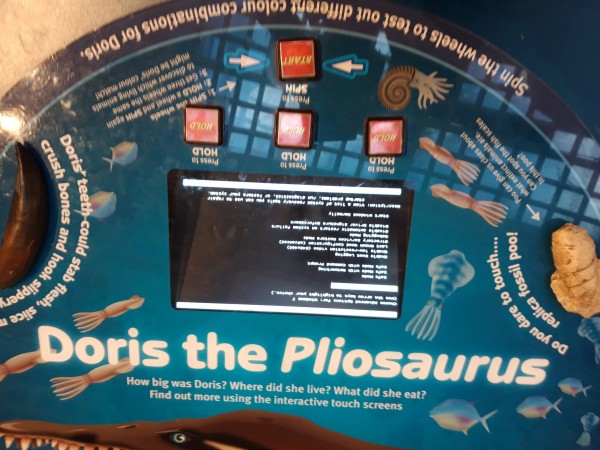
    As is well known, generations of children have displayed a passion for dinosaurs. Bristol City Museum and Art Gallery has catered for this passion by installing interactive displays. Nevertheless, any child currently wishing to learn more of the life and times of Doris the Pliosaurus would have been disappointed at the time of my visit as Doris’ display was – to use a technical term borked.

    Windows 7 not behaving for an interactive museum display Close-up of Windows 7 screen and options

    The bottom picture clearly clearly shows Microsoft’s Windows 7 misbehaving, a not uncommon undocumented feature of the Beast of Redmond’s alleged operating systems.

    If anyone desires to see more borkage in public, your ‘umble scribe would refer such readers to The Register IT news site, which has a dedicated bork section/archive.

  • Brexit – the gift that keeps on giving

    The departure of the English Empire (which some still call the United Kingdom. Ed.) from the European Union is the gift that keeps on giving, especially for anywhere located outside that backward country and in another member EU member state.

    The latest news from the unlit uplands mired in unicorn manure comes from Computer Weekly which reports on research from analysts Forrester that London has dropped down the tech rankings post-Brexit due, inter alia, to immigration woes, no doubt exacerbated by the Home Office’s hostile environment.

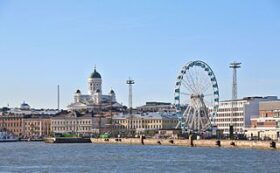
    Helsinki South Harbour
    Helsinki – Europe’s leading IT skills cluster, according to Forrester
    As regards digital skills, Forrester’s research reveals hat post-Brexit regulatory obstacles are preventing UK cities from being ranked as a leading skill cluster in Europe: the top 10 metropolitan areas with the best skills and talent clusters across Europe are Helsinki, Stockholm, Copenhagen, Berlin, Hamburg, Oslo, Munich, Vienna, Zurich, and Amsterdam, whilst London, which was often formerly recognised as Europe’s tech hub, was ranked 19th (the heyday of Silicon Roundabout seems so long ago. Ed.), whilst other British cities also slid down the rankings.

    The Forrester report’s authors state that European businesses increasingly understand the need to attract individuals with specific sector expertise as well as soft skills, commenting: “Leading businesses place diversity, partner ecosystems and innovation centres at the heart of their talent management strategies.” Furthermore, IT and business need to understand where Europe’s top skill clusters are located before they can attract and retain the best talent and to source the right skills.

  • EU eyes Apple

    If you have an iPhone, you can use Apple Pay for contactless payments; and only Apple Pay. The European Union (EU) wants to change that, according to French technology news site Frandroid.

    The European Commission has officially announced that it has notified Apple in respect of the latter’s restrictions which prevent the use of third party services to access the iPhone’s NFC (Near-Field Communication or ‘tap and go’. Ed.) capabilities, thus restricting competition in the field of contactless payments.

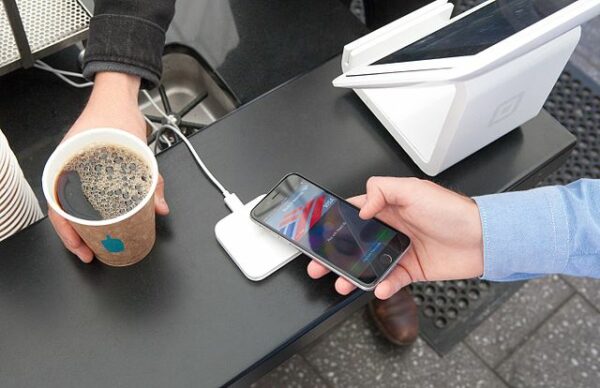
    Paying for a coffee with an iPhone and Apple Pay
    Paying for a brew with an iPhone and Apple Pay. Image courtesy of Wikimedia Commons.

    The European Commission has informed Apple of its preliminary view that it is abusing its dominant position in markets for mobile wallets on iOS devices. By limiting access to a standard technology used for contactless payments with mobile devices in stores (‘Near-Field Communication (NFC)’ or ‘tap and go’), Apple restricts competition in the mobile wallets market on iOS.

    The Commission takes issue with the decision by Apple to prevent mobile wallets app developers, from accessing the necessary hardware and software (‘NFC input’) on its devices, to the benefit of its own solution, Apple Pay.

    The EU has the power to impose fines of up to 10% of Apple’s worldwide turnover ($36 bn. or €34.10 bn.) and impose changes in commercial practices, although any fine could turn out to be lower.

    Finally, it’s worth noting that on Android it is possible to change the default contactless payment service. This is not possible on iPhones where Apple Pay is mandatory.

  • Humour and social media

    I’ve been on Twitter for 13 years now and there’s never a dull moment on the platform.

    One of my old college friends told me earlier this week he’d left the platform, describing it as a bear pit.

    Twitter can indeed by a rough and unforgiving place if one discusses politics and especially when one tries to debate with those with views diametrically opposed to one’s own. However, your ‘umble scribe has noticed over the decades that public discourse has become less respectful and courteous.

    Nevertheless, the Twitter is not all ursine-baiting gloom and doom. There are those who post photos of nature, their gardens, pets and the like which leavens the gloom and doom.

    Furthermore, there is a lot of humour on the platform too. Some of the best political quips I relate in other places have usually originated from Twitter.

    However, the humour extends to other fields than politics and its practitioners and can be gentler in such areas, as per the example below, which will appeal to lovers of language and English in particular.

    Tweet reads A truck loaded with thousands of copies of Roget's Thesaurus spilled its load leaving New York. Witnesses were stunned, startled, aghast, stupefied, confused, shocked, rattled, paralyzed, dazed, bewildered, surprised, dumbfounded, flabbergasted, confounded, astonished, and numbed.

Posts navigation