While the interminable Conservative Party leadership contest between the 2 tenth-rate rivals, one Mary Elizabeth Truss and rich boy Rishi Sunak, draws tediously on, with government administration seeming to have almost ceased despite drought, rampant inflation, surging energy prices (with the promise of higher prices to come. Ed.) and the outgoing party-time alleged prime minister Alexander Boris de Pfeffel Johnson is hardly anywhere to be seen, not even for a photo opportunity as he dives into the dressing-up box to indulge his inner Mr Benn, a new phrase has been coined – zombie government.
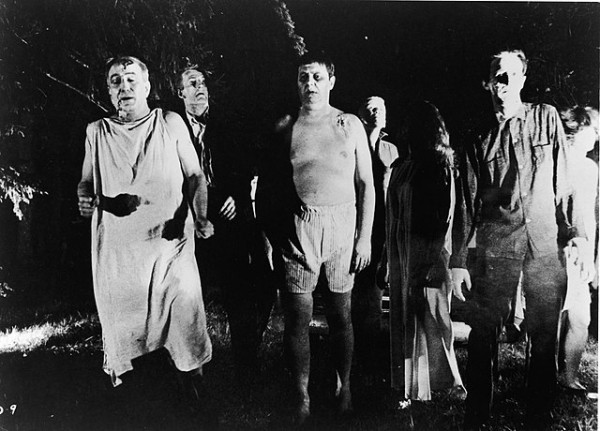
As Wikipedia states: “A zombie (Haitian French: zombi, Haitian Creole: zonbi) is a mythological undead corporeal revenant created through the reanimation of a corpse.” The English word zombie was first recorded in 1819, in a history of Brazil by the romantic poet Robert Southey, in the form of zombi. The Oxford English Dictionary gives the word’s origin as West African and compares it to the Kongo words nzambi (god) and zumbi or nzumbi (fetish).
Comparing Conservative Party ministers to reanimated corpses is disingenuous, as the latter have far more compassion.
All the crises mentioned in the first paragraph all seem to be coming to a head and combining during what is traditionally known in Britain as the silly season, which occurs during the long parliamentary summer recess, when, having no – or very little – politics to report, the newspapers and other media resort to more frivolous and lightweight items of ‘news‘.
However, all is not yet lost.
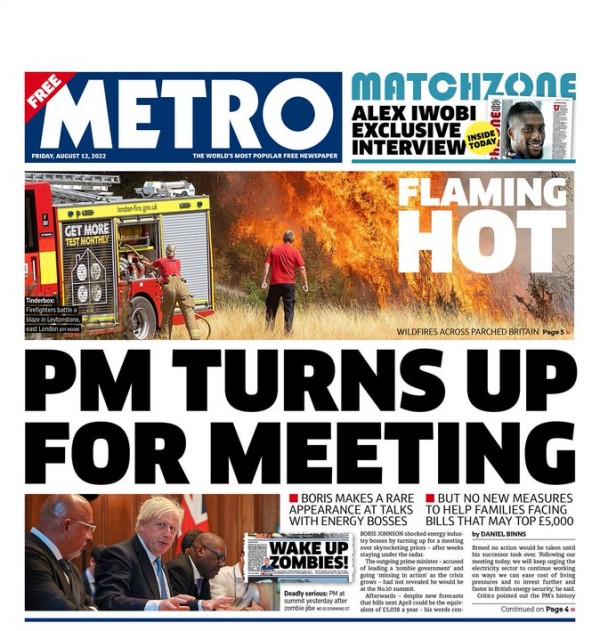
Yesterday the Metro reported that the notoriously work-shy Johnson (remember those missed COBRA meetings at the start of the pandemic? Ed.) had actually managed to turn up for a meeting, although the outcomes of the meeting stated to accompany the headline hardly seem to have made the gathering worth the effort of organising and attending.
And to think all this will continue until after the closure of the leadership poll for the 160,000 or so Tory Party members at 5pm on Friday 2nd September…
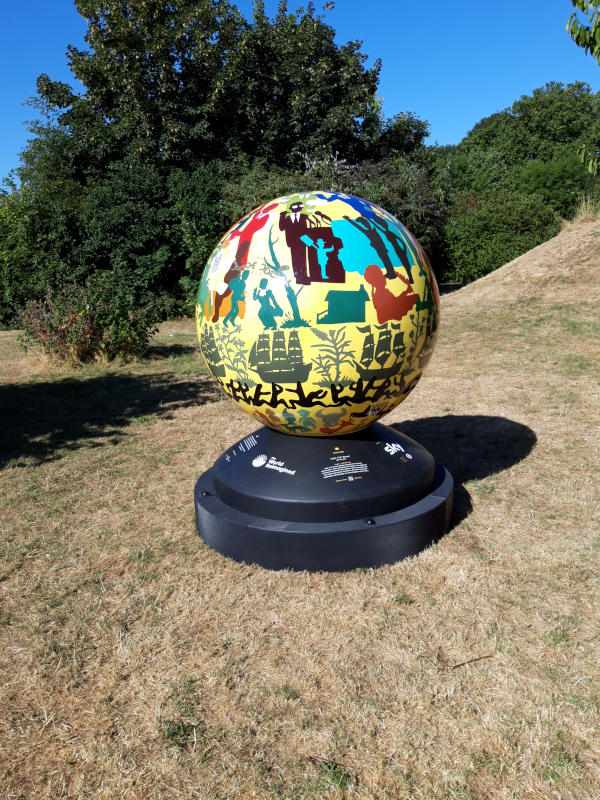
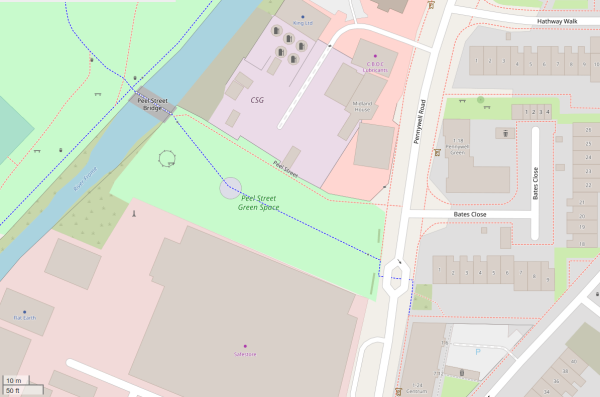
A piece of artwork has appeared on the parched grass of Peel Street Green Space, which occupies the ground between Pennywell Road and Riverside Park on the far side of Peel Street Bridge over the Frome (aka the Danny in east Bristol. Ed.).
Its arrival seems to have pre-empted the Bristol Post, which today wrote:
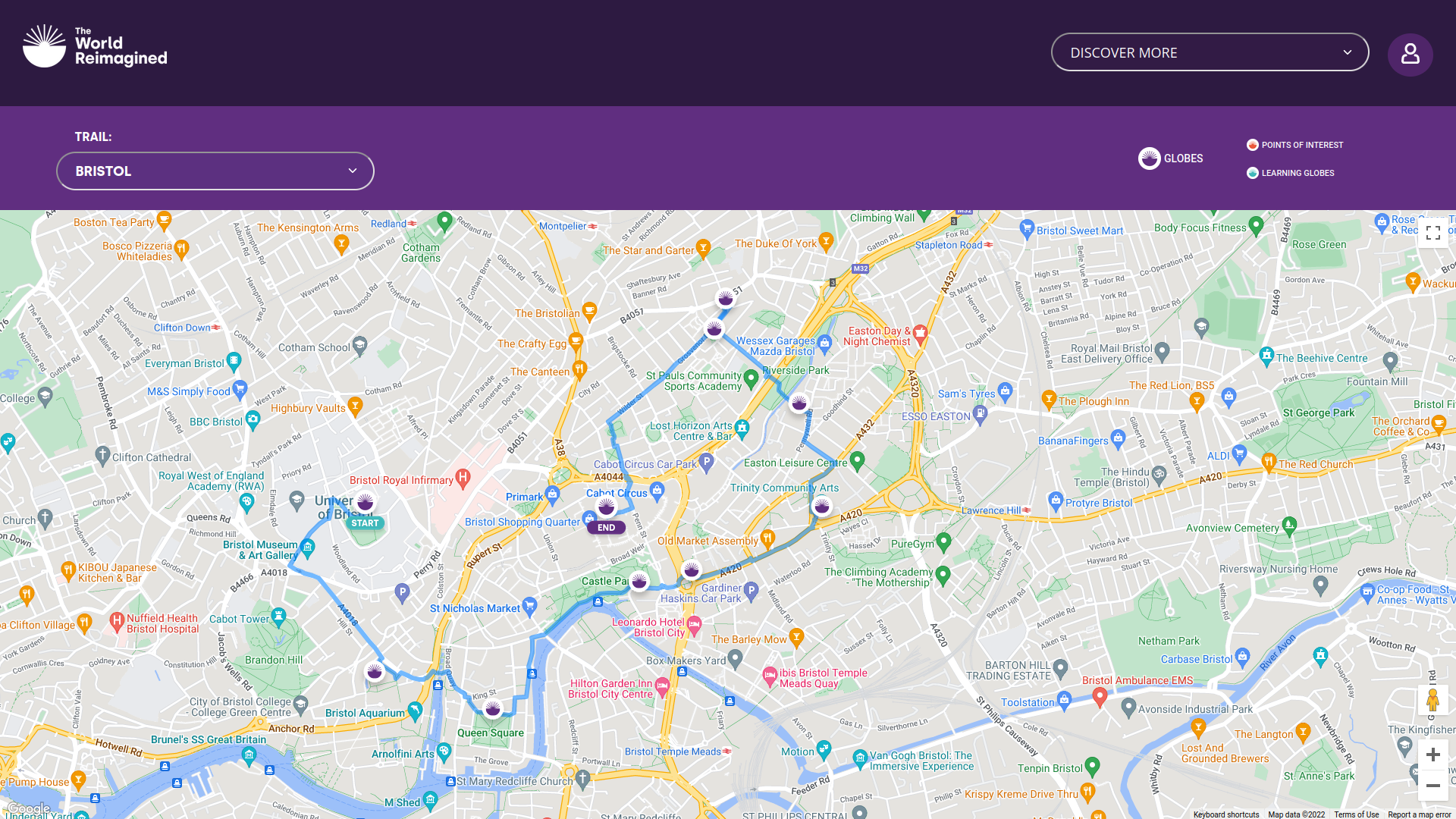
A new public art trail reflecting on colonial histories and the impact of the slave trade is coming to Bristol. More than 100 artist-designed globe sculptures will appear in seven cities across the UK from Saturday and will be free to view by the public until October 31.
The project, which is organised by The World Reimagined, aims to explore the UK’s relationship with the Transatlantic slave trade, its impact on society and how action can be taken to make racial justice a reality. The designs of the globes produced by the commissioned artists explore themes such as the culture of Africa before the slave trade and an ode to the Windrush generation.
The World Reimagined has sited 103 unique Globes across the 10 trails in 7 host cities across the UK – Bristol, Birmingham, Leeds, Leicester, Liverpool, London and Swansea. All the trails will be connected to a digital platform that enables visitors to explore the collection and the history it reflects.
French IT news site Le Monde Informatique reports that DuckDuckGo has decided to block Microsoft’s trackers in its mobile browser applications and browser plug-ins in an effort to extend its approach to privacy protection. It had already been criticised at the start of the year on the matter.
Protecting internet users from tracking and protecting their anonymity is not simple. DuckDuckGo is part of this move and was very upset to find out that as part of its agreement with the Bing search engine, Microsoft had given the green light for user tracking. This is no longer the case since from that date onwards DuckDuckGo’s CEO, Gabriel Weinberg, has stated that blocking the loading of scripts on websites by the browser was extended to Microsoft’s scripts in DuckDuckGo browser applications for iOS and Android and browser extensions (Chrome, Firefox, Safari, Edge and Opera) and that beta applications will follow next month.
DuckDuckGo is attempting to block tracking scripts from search engines and sites such as Facebook, as well as other types of tracking scripts or software. It uses what it calls third-party tracking loading protection to prevent these third-party scripts or cookies from being loaded into the browser. If they did, they could track movements on the web and build a profile of the user, their preferences, etc. If other browsers and browser plug-ins also enable users to protect their privacy, DuckDuckGo has made privacy its priority.
Delayed neutralising
Mr Weinburg’s decision was taken after the discovery at the start of the year by security researcher Zach Edwards that DuckDuckGo was blocking trackers from Google and Facebook, but was allowing some of Microsoft’s trackers via Linkedin and Bing. The discovery was then reported by BleepingComputer. “Previously, we were limited in how we could apply our third-party tracker download protection to Microsoft tracking scripts due to policy requirements related to our use of Bing as the source of our private search results,” Weinberg explained, adding that, “We’re glad that’s no longer the case. We didn’t have and don’t have similar restrictions with any other company.”
DuckDuckGo still has an advertising relationship with Microsoft, which it will maintain. Clicking through on advertisements on DuckDuckGo is anonymous and Microsoft has undertaken not to profile DuckDuckGo users. If Microsoft continues to save the user’s link, it will not associate them with a profile. On an updated support page, DuckDuckGo has provided a summary of everything which its its browser authorises and does not authorise, as well as providing details of web tracking protection.
Today’s Daily Post has a story – and accompanying video – about the efforts to make Plas Acton Garage in Wrexham the cheapest in North Wales.
Amongst the ideas implemented by the owners to keep prices down, the article states:
Regular customers can get their hands on “no strings attached” discount cards that strike a penny off every litre on the pump price indefinitely. In essence, if you topped up with roughly 50 litres of fuel you’d save 50p.
However, the owners are not offering one penny off the pump price, but ‘one pence‘, as evidenced by the voucher being held up in the video still used for the Daily Post piece.
If not the cheapest petrol station in North Wales, the wording on the voucher definitely makes it the region’s most illiterate petrol station.
The proprietors are not the first to be unaware that the singular of pence is penny. The most egregious misuse of one pence for one penny occurred at the Despatch Box in the Chamber of the House of Commons (where else? Ed.). The date was 20th March 2013, the occasion was the annual budget speech by the Chancellor of the Exchequer – one George Gideon Oliver Osborne, then aged 41 and three-quarters, who was very badly (and expensively) educated at St Paul’s School and Magdalen College, Oxford 😀 (posts passim).
During his lifetime, white supremacist mining magnate and alleged politician Cecil Rhodes was described as a ‘liability and a maniac‘ who nevertheless endowed his alma mater, Oriel College, Oxford with so much cash – £100,000 when he died in 1902 – that it duly commemorated him.
Move on one hundred and twenty years from Rhodes’ death and another ‘liability and a maniac‘ has come forward to support the deceased rich racist in the alleged government’s never-ending culture war centred on public works of art, usually involving dead white males of dubious moral character.
Which brings us to liability number two. Step forward one Nadine Vanessa Dorries, inexplicably elevated way beyond her extremely limited abilities to Secretary of State for Digital, Culture, Media and Sport (DCMS) by disgraced party-time alleged prime minister Alexander Boris de Pfeffel Johnson.
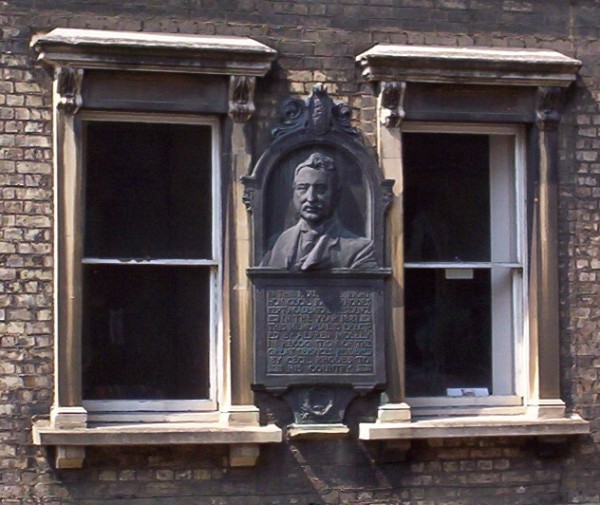
What links Rhodes and Dorries is the latter’s decision to award Grade II listed status to the plaque commemorating the Victorian imperialist Cecil Rhodes at Oriel College, as reported by The Guardian.
The Guardian goes on to report that Dorries’ decision ‘overrides an earlier judgment by Historic England determining that the plaque lacked the “richness of detail” required for listed status‘, with Historic England noting that the DCMS ‘agrees with our listing advice 99% of the time, meaning Dorries’ ruling is indeed out of the ordinary.
Dorries’ unilateral action also flies in the face of the intentions of Oriel College itself. Last year the college’s governing body published a report stating it wished to remove both the Rhodes statue and plaque: the college has since remarked it remains ‘committed to‘ removing them in spite of Dorries’ unwelcome intervention.
The statue of Rhodes has also attracted the attention of thousands of Rhodes Must Fall campaigners who have lobbied to have removed it because of Rhodes’ racist and colonialist views.
Needless to say, Dorries’ decision has not found favour with academics and campaigners. Kim Wagner, who’s a professor of imperial history at Queen Mary University of London (QMUL) remarked as follows:
This is simply what one would expect from Nadine Dorries and a discredited government, which has nothing left but the pursuit of its inept culture-war project.
Cecil Rhodes has become a rallying point for imperiophiliacs, and the slogan to ‘retain and explain’ is just part of the ongoing effort to whitewash his legacy and that of the empire more generally. Luckily, most of us don’t get our history from statues or plaques.
What little history of which Dorries is aware seems likely to have been gleaned from statues and plaques.
The inevitable DCMS spokesperson has been wheeled out to defend the ministerial edict, stating:
We are committed to retaining and explaining our heritage so people can examine all parts of Britain’s history and understand our shared past.
Update 08/08/2022: In an editorial opinion piece The Guardian yesterday described Dorries’ listing decision as ‘crass‘, as well as calling her move a ‘kneejerk [sic] response to a contemporary debate‘.
The CC0 Creative Commons licence exempts work form copyright claims, but does not exclude patent claims; and this presents a problem for free and open source software, as German IT news site heise reports.
The Fedora Project would like to remove the Creative Commons Zero (CC0) licence from the list of permitted software licences, as Richard Fontata from the Fedora Legal Documentation Team wrote in a post to the Fedora mailing list. The reason for the change is that the Fedora Project has agreed that software under a licence which does not exclude patent claims cannot be regarded as free and open source software (FOSS).
The Creative Commons Zero (CC0 1.0) licence is the most liberal Creative Commons licence. It places works in the public domain, with the copyright holder waiving all copyright and related rights worldwide insofar as this is legally possible. However, the patent or trade mark rights of any party are specifically not affected by CC0, so it is thus possible to place works subject to patent rights under CC0.
Patents against open source
In the 2000s various companies, including Microsoft, have attempted to asset patent claims against Linux and open source software. The Open Invention Network (OIN), whose members mutually waive all patent claims against one another, came into existence as a response to these moves.
Furthermore, in the open source world, there is the risk that companies could release code which is protected by that company’s own patents. If other developers use this code, they are unwittingly exposed to the risk of patent lawsuits. There is therefore widespread agreement in the FOSS world that open source licences must explicitly exclude the possibility of patent claims by the author*.
In its permitted licences list the Fedora Project distinguishes between licences for software, content, documentation and fonts. CC0, which was previously listed as a permitted licence for software and content, will in future only be allowed for content. According to Fontana, it still has to be clarified whether any program packages will be affected by this change.
*= for intellectual property purposes software is regarded as a work of literature.
Last night saw a televised debate for the Conservative Party leadership between one Mary Elizabeth Truss and Rishi Sunak.
This encounter was described as ‘acrimonious‘ by The Guardian, whilst the BBC characterised it as the two candidates’ ‘fiercest clash yet‘.
Needless to say the cheerleaders for both contenders were out in force on social media, attempting to boost the image of their favourite candidate.
These included one Nadine Vanessa Dorries, inexplicably elevated way beyond her competence to Secretary of State for Digital, Culture, Media and Sport by one Alexander Boris de Pfeffel Johnson, who has relinquished the office of leader of the CONservative Party, but remains the party-time alleged prime minister of the English Empire (which some still call the United Kingdom. Ed.).
Anyway, at some point in the proceedings Nadine took to TWitter and posted the following.
Yes. gentle reader, you read that correctly: ‘loosing‘ instead of ‘losing‘.
Off you go to Homophone Corner for a nice long sit down until you learn the error of your ways, Nadine!
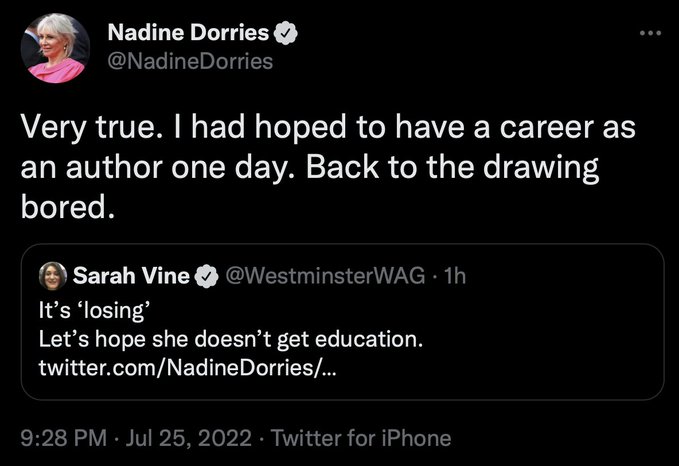
However, Nadine is not known for ever doing things by halves (ask the ostrich whose anus she ate. Ed.) and in response to being corrected (‘It’s ‘losing”. Ed.) by columnist Sarah Vine, the separated and soon to be divorced wife of Nadine’s Cabinet companion Michael Gove, responded by retweeting Ms Vine with no style at all and another howling homophone, as shown below.
An author? What has the English-speaking world done wrong to deserve such punishment?!
Your ‘umble scribe recommends that the fragrant Nadine refrains from inflicting further clichés – Irish or other – upon the reading public until she learns to write to a standard demanding a pen instead of a crayon. 😀
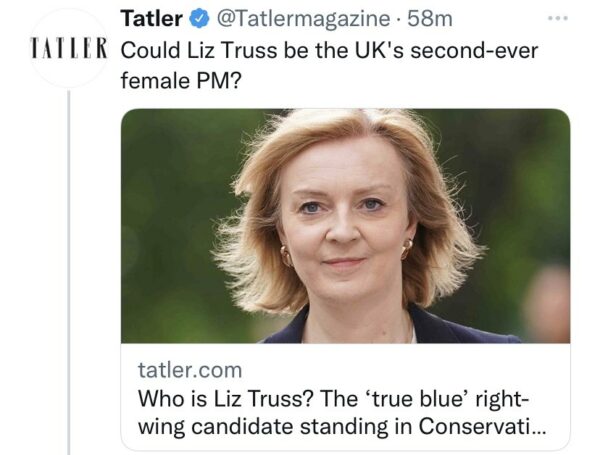
According to Wikipedia, Tatler is a British magazine published by Condé Nast Publications which is targeted towards the British upper-middle class and upper class and those interested in society events. The topics it covers include fashion and lifestyle, plus high society and politics.
Its coverage of politics cannot be said to be well researched if the following from its Twitter account is to be taken at face value.
Second-ever female PM, Tatler?
Try counting again; and this time engage your brain!
If the Tatler’s staff can’t even count to three, it has to be wondered how accurate the rest its coverage of politics actually is.
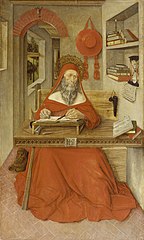
Over the years between 382 to 405 CE, a scholar called Eusebius Sophronius Hieronymus, also known as Jerome of Stridon, worked on a translation of the Hebrew bible into Latin. His translation became known as the Vulgate Bible. History remembers him as Saint Jerome, the patron saint of translators, librarians and encyclopedists.
Throughout the Catholic church Latin was the language in which God spoke and his word was transmitted until the medieval period, when calls began for translations of the bible into other languages.
Individual names are associated with the translations.
Whilst Martin Luther is rightly remembered as a seminal figure in the Protestant Reformation and scissions from the Church of Rome, he was also responsible for the translation of the bible into German, which had a tremendous impact on both the church and German culture, including fostering the development of a standard version of the German language. In the English-speaking world, whilst the first authorised version of the bible in English – the King James Version – was compiled by a committee, the overwhelming majority of the text used was in fact translated the best part of a century earlier by William Tyndale, who was executed in exile in Vilvoorde in what is now Belgium in 1536.
In those and earlier times many biblical translators were accused of heresy, a convenient crime against religion.
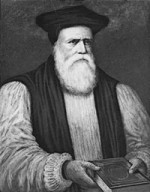
One bible translator who did not share Tyndale’s fate was William Morgan (c. 1545 – 1604), Bishop of Llandaff and of St Asaph, and the translator of the first version of the whole Bible into Welsh from Greek and Hebrew.
The bible in Welsh was the gift of Elizabeth I to Wales and went some way to redressing the crass colonialism of her father’s actions in 1536 when legislation was enacted that made important changes in the government of Wales.
Wales had previously been annexed – i.e. colonised – by the 1284 Statute of Wales, also known as the Statute of Rhuddlan. This introduced English criminal law to Wales, but Welsh custom and law were to operate in civil proceedings.
Henry’s new act declared the king’s wish to incorporate Wales within the realm. One of its main effects was to secure “the shiring of the Marches”, bringing the numerous marcher lordships within a comprehensive system of counties . Another of its effects was to introduce uniformity in the administration of justice. However, the latter entailed English being the only language of the courts of Wales. This meant that Welsh-speaking defendants appearing before the courts were dished up “justice” in a language they did not understand in proceedings in which they were unable to participate.
Furthermore, Henry’s legislation also decreed that those using the Welsh language were not to receive public office in the territories of the king of England.
Anyway, with the background out of the way, let’s get back to Bishop Morgan and his bible in Welsh.
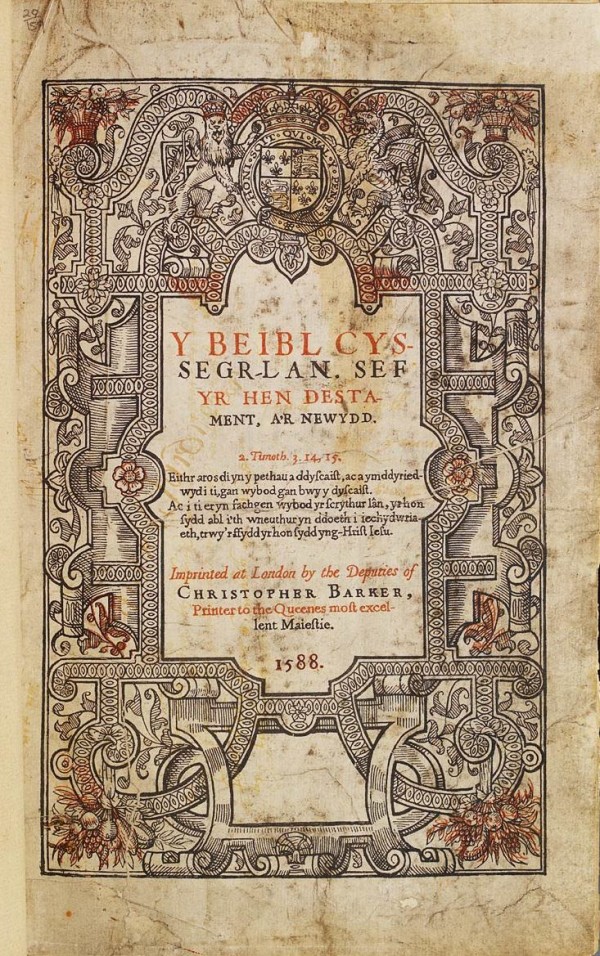
Morgan was a student at Cambridge when leading Welsh Renaissance scholar William Salesbury published his Welsh New Testament in 1567. Whilst he was pleased that this work was available, Morgan firmly believed it was important that the Old Testament also be translated into Welsh. Morgan’s work on his own translation of the Old Testament commenced in the early 1580s and this, together with a revision of Salesbury’s New Testament, was published in 1588.
The Welsh bible is dedicated to Queen Elizabeth I (English translation of dedication here). Elizabeth, a fervent Protestant, is said to be a firm supporter of the introduction of the Welsh bible in Wales as she believed it would help spread Protestantism in Wales at the expense of Catholicism.
Morgan’s translation also allowed a highly monoglot Welsh population to read and hear the Bible in the vernacular for the first time. In the long run, the Welsh Bible saved the language from possible extinction.
If readers are by now asking why your ‘umble scribe has bothered to write several hundred words on religion, politics and history in Wales, may I refer readers back to this post’s title.
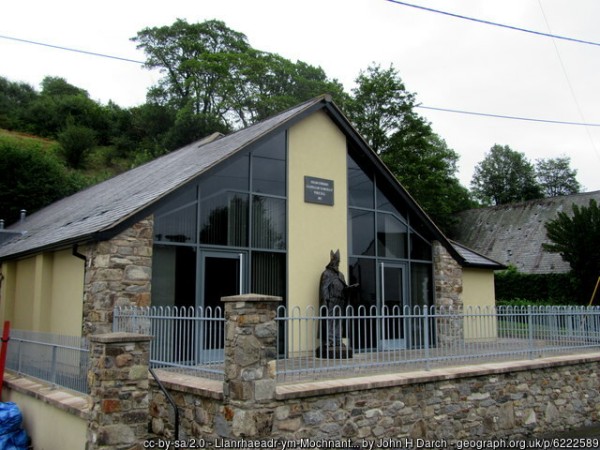
There are very few public memorials to translators (leaving to one side all those medieval painting of St Jerome in caves of varying levels of comfort. Ed.). One of these – of William Morgan himself – has just been installed in one of his old benefices, according to the Powys County Times. A decade ago sculptor Barry Davies created an oak statue of the Bishop which formerly stood outside the Public Hall in Llanrhaeadr-ym-Mochnant. The 7 foot tall statue has now been moved inside the parish church of St Dogfan by a team of local farmers, supervised by Mr Davies.
The statue of William Morgan in its initial home outside the Public Hall in Llanrhaedr-ym-Mochnant
The article states the following as the reason for the statue’s move:
The statute was commissioned 10 years ago as part of a lottery funded project in the village, but weather conditions had led to fears the statue could become damaged and so a decision to find an indoor home for the bishop was made.
Of the one thousand original copies of the first edition of Morgan’s Welsh bible produced, it is estimated that some 26 survive today. It was republished in 1620 and that edition was still in use as the standard Welsh bible until the 20th century.
In the beginning was World War One (1914-18), then World War 2 (1939-45).
There have been various conflicts since 1945, but none has qualified being counted as a World War (note capitalisation) and their number has remained stuck firmly on two.
Until today.
Step forward one Nadine Vanessa Dorries, inexplicably elevated way beyond her subterranean ignorance threshold to serve as Secretary of State for Digital, Culture, Media and Sport, concerning whose appointment former Tory Party chairman Chris Patten is on record as saying: “And nobody should ever see the words ‘Nadine Dorries’ and ‘culture secretary’ in the same sentence”.
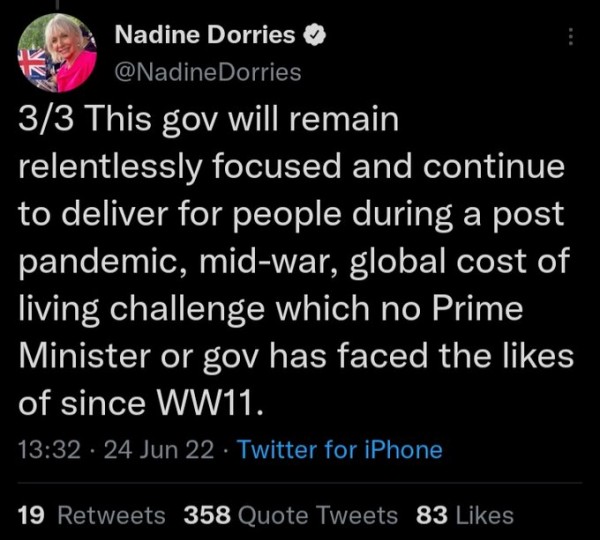
Following yesterday’s humiliating by-election defeats in Tiverton & Honiton and Wakefield, Nadine fearlessly took to social media as cheerleader in chief for the Cult of the Boris, tweeting the following.
World War 11?
That’s nine more than are acknowledged by the generally accepted historical record.
Whether Nadine was tweeting under the influence of digital dyslexia, innumeracy or something psychoactive has yet to come to light, but remember that part of Nadine’s brief is matters digital and the above tweet shows she cannot even use a mobile phone app – an iPhone Twitter client – competently, which bodes ill for this country.

 The
The  The Creative Commons Zero (CC0 1.0) licence is the most liberal Creative Commons licence. It places works in the public domain, with the copyright holder waiving all copyright and related rights worldwide insofar as this is legally possible. However, the patent or trade mark rights of any party are specifically not affected by CC0, so it is thus possible to place works subject to patent rights under CC0.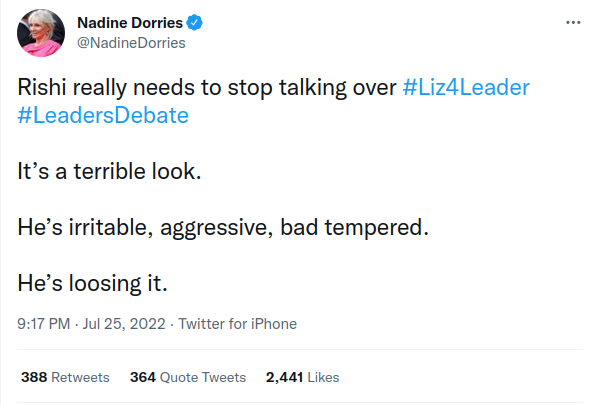
 Over the years between 382 to 405 CE, a scholar called
  One bible translator who did not share Tyndale’s fate was