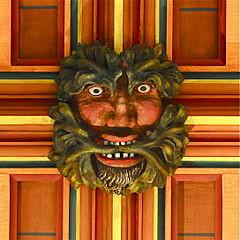
Mirror, mirror on the wall, who’s the scruffiest of them all?
Speaking from Chequers, a visibly shocked an astounded Worzel Gummidge apologised to those who had expressed their anger on social media and added: “Anyone would think I always looked as if I’d been dragged through a hedge backwards, like former London Mayor Alexander Boris de Pfeffel Johnson!”
Last week The Document Foundation blog announced the release of the LibreOffice 7.0 Getting Started Guide in Brazilian Portuguese. This new guide is based on the English language guide released last month (posts passim).
In fact the Brazilian Portuguese guide is based on the English version. Its basis was a machine translation of the English guide which was then revised by members of the LibreOffice Brazilian community. Future editions of the Getting Started Guide will be done without translation, but by writing directly in Portuguese about new features in LibreOffice and information about the suite.
Like its English counterpart, the Brazilian Portuguese Getting Started Guide outlines the development of LibreOffice and introduces each of its modules: spreadsheets (Calc), presentations (Impress), vector drawings (Draw), text processing (Writer), equations (Maths) and databases (Base). In addition to these modules, there are several chapters describing important concepts common to all modules such as styles, printing, electronic signing, macros, exporting in various formats, redacting and document classification.
Contributors to the new guide were Vera Cavalcante, Jackson Cavalcanti Jr., Timothy Brennan Jr., Flávio Schefer, Felipe Viggiano, Raul Pacheco da Silva, Túlio Macedo and Olivier Hallot.
The new Brazilian Portuguese LibreOffice 7.0 Getting Started Guide can be downloaded in PDF format.
In addition to the new guide, the Brazilian LibreOffice Community also produces its own LibreOffice magazine.
One fascinating aspect of the country’s foolhardy departure from the European Union is the fate of Britons in the 27 member states of the European Union; and more particularly how they are depicted here now that the “free and independent coastal state” of Brexitannia has “taken back control“.
Keen observers of the British media will note all foreigners seeking to come to the English Empire (which some refer to as the United Kingdom. Ed.) to settle are referred to as “migrants“. When used by the right-wing press or politicians, “migrants” has a clear pejorative tone to the effect that these people are not as good as us.
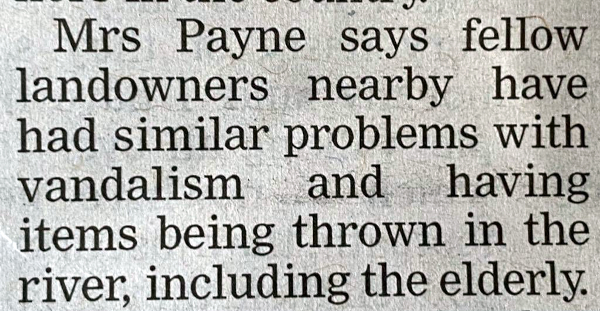
However, in line with British exceptionalism as Brits seeking to or having taken up residence abroad are termed “expats” by the fourth estate, as per this typical specimen from yesterday’s Daily Brexit, which some still call Daily Express.
Expats? Emigrés? Immigrants?
Of course, what the Daily Brexit forgets is that even in Greece and Cyprus, holders of those nice, new and allegedly blue British passports will still be classed as third country citizens by the Greek and Cypriot authorities; and if they try staying there for longer than the maximum period without applying for a residence permit, they’ll be regarded as illegal immigrants, just as they are now finding out on the Costa del Sol.
“Expat” is of course a truncation of the term “expatriate“, with the shorter form’s first recorded use in the first half of the 1960s.
When people move for work, settlement or other reasons, the language used about them is always full of meaning. In earlier, less judgemental times those who left British shores to settle abroad might have been referred to as “émigrés” or “emigrants“, whilst those coming here for permanent settlement were “immigrants“, which had more than its fair share of negative connotations in times past.
Nowadays all those negative connotations are to a certain effect by “migrant“, which, unlike “immigrant” or “emigrant” is not specific about the person’s direction of travel.
Nevertheless, I can see the exceptionalism continuing and am not expecting the Daily Brexit to refer to Brits resident abroad as “British immigrants” at any time soon. 😉
Back in February, the city council approved a motion previously submitted by the SPD, Bündnis90/Die Grünen, CDU, Die Linke+ and FDP/Bürgerliste. In the future, Free Software is to be used wherever possible and software developed or commissioned for development by the administration is to be made available to the general public.
Matthias Kirschner, President of the Free Software Foundation Europe states: “We are happy that the DO-FOSS initiative was able to convince the city of Dortmund of the principle of “Public Money? Public Code”. Free Software gives everyone the right to use, study, share and improve software for any purpose. These freedoms also benefit administrations. Public administrations that follow this principle can benefit from numerous advantages: Collaboration with other government agencies, independence from individual vendors, potential tax savings, innovation and a more solid basis for IT security. The Council’s decision means that there is now the political backing to gradually break down dependencies on proprietary vendors. We will accompany the implementation and at the same time call on other administrations in Germany and Europe to follow Dortmund’s example.“
Having been brought up in rural Shropshire, I normally wouldn’t have paid a lot of attention to corvids when I lived there.
However, things are different now I’m an inner city resident and appreciate all the birdlife I see.
As regards corvids specifically, magpies and carrion crows seem to be the most numerous. Indeed, magpies nested in the large ash tree in the ‘pocket park‘ around the corner a couple of years ago.
Furthermore, jays, those most colourful of British resident corvids, are not unknown in Easton, whilst sightings of ravens are rarer (posts passim).
Indeed, the only members of the resident 8 strong British corvid family that I’ve not seen locally over the years are the chough (which tends to prefer sea cliffs as habitat. Ed.) and hooded crow, which is more readily found found in N and W Scotland, N Ireland and on the Isle of Man as a replacement for the carrion crow.
Croydon Street crow’s nest in top of sycamore.
Monday was a lovely sunny day and returning from my constitutional, I was passing down Croydon Street when I noticed a crow alight in a nest in a roadside sycamore tree. A crow’s nest is best described as a roughly crafted collection of sticks in the fork of a tree. Most corvids are not builders of complicated or artistic-looking nests.
As I was attempting to get a halfway decent shot of the nest, the other bird in the pair turned up with fresh nest material in its beak. It can be seen in the picture below. Apologies for the wobbly camera work: I was leaning back and pointing the camera straight up at arm’s length.
Croydon Street crow’s nest with bird to left
Update: there’s also a crow’s next in a tree in the pocket park on Chaplin Road.
SUSE was the first Linux distribution I actually used as a day-to-day working system over 15 years ago. It was the distribution on which I learnt about Linux, so it has a special place in my affections.
The impetus to install it came from a friend who bought a set of 5 installation CDs off eBay for me as a present.
Later on, I treated myself to SUSE Linux Professional 9.3 for some £50. It came as a box set of 2 DVDs and 5 CDs, along with a doorstep-sized manual.
SUSE is a good, solid distribution and excellent for business use with its SUSE Enterprise Linux server and desktop offerings and paid-for support.
SUSE also sponsors the community-supported openSUSE project, which develops the openSUSE Linux distribution, which is available in both rolling release (Tumbleweed) and regular release (Leap) versions.
Founded in Germany 1992, SUSE was the first company to market Linux to business. Over the years its ownership has changed many times. In 2004 it was acquired by Novell. Novell and with it SUSE were then purchased by Attachmate (with financial assistance from Microsoft) in 2010. In 2014 Microfocus acquired Attachmate and SUSE was spun off as a separate division under the name SUSE Software Solutions Germany GmbH. Finally, EQT purchased SUSE from Micro Focus for $2.5 billion in March 2019.
News has now emerged that SUSE is being prepared for stock flotation in Europe in via an IPO in the next few months (May is mentioned as the earliest date) with Bank of America and Morgan Stanley executing the IPO with the aid of Goldman Sachs, Deutsche Bank, and Jefferies.
The BBC reports that Tesco is to introduce collection points for soft plastic packaging such as crisp packets, pet food pouches and bread bags at its stores in England and Wales.
This follows a successful trial in 2018 at 10 stores.
The roll-out will start with facilities being installed in 171 stores in south-west England and Wales.
Tesco is hoping to collect 1,000 tonnes of soft plastic a year and customers may return packaging from other retailers as well as its own packaging provided all packaging presented for collection is clean.
Soft plastic is notoriously hard to recycle and most currently ends up going to landfill or being incinerated.
Given Bristol’s wide range recycling collections, this type of plastic makes up the majority of my residual waste collected by the refuse lorry.
With this move, Tesco is finally living up to its “Every little helps” motto.
Another day and every regional newspaper in the country is replete with examples of one of its mainstays – reports of criminal cases being processed through the local courts of justice.
The details of one case in particular on the Bristol Live (formerly the Bristol Post. Ed.) website caught my eye for one single sentence.
In the relevant sentence we are told that the defendant*
stole his dad’s car keys without consent last October.
I have never before heard of an item being stolen with its owner’s consent, so let’s examine that sentence in detail.
We are told the defendant “stole his dad’s car keys“.
The dictionary definition of the verb to steal is “to take (the property of another or others) without permission or right, especially secretly or by force“. That definition includes the words without permission, i.e. without consent.
The lack of consent is implicit in verb’s definition, hence the qualification without permission is superfluous.
This brings us to another concept with which the author of the piece in question will be unfamiliar: tautology, i.e. “needless repetition of an idea, especially in words other than those of the immediate context, without imparting additional force or clearness“.
To some it may seem that I’m being overly pedantic, but as a linguist I’m all too aware that words matter as they are the only tools we have to convey meaning and in being the main source of information the press has a duty to use them properly.
* = Name omitted as having his name pop up once for a youthful misdemeanour in search engine results is enough without my adding to his woes.